
- Published on
Dua for Light in the Grave: The Prophet's Noor Supplication
- Authors

- Name
- Ahmad
- Role
- Senior Marketing Manager, Islamic education • Deen Back
بِسْمِ اللهِ الرَّحْمٰنِ الرَّحِيْمِ
In the name of God, the Most Gracious, the Most Merciful.
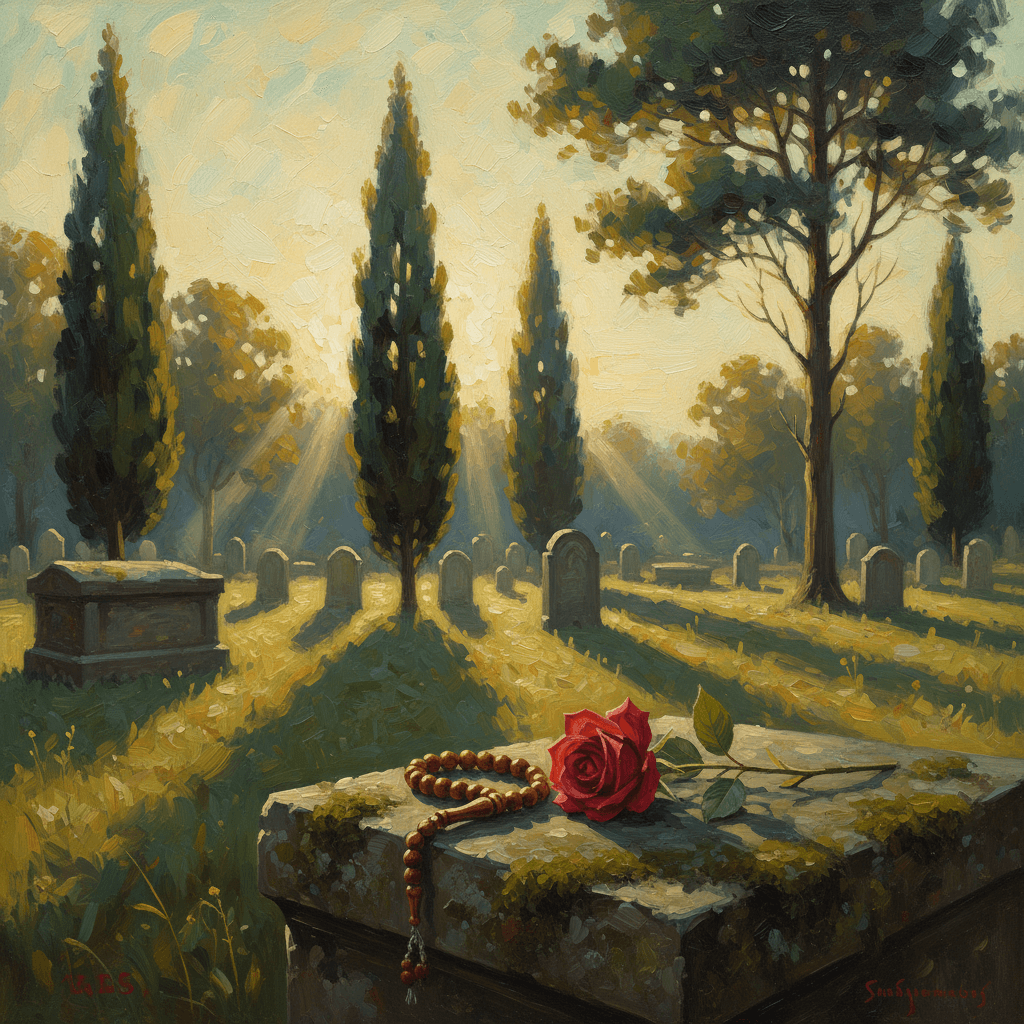
Every night, before the world was fully awake, the Prophet (peace be upon him) would rise for Tahajjud and ask Allah for something most of us never think to ask for: light in his grave.
Not just light in his heart or light in his sight — though he asked for those too. He specifically asked for noor in the place where he would one day rest. This was not morbid. It was purposeful. It was the act of a man who never forgot that the journey does not end at death.
If a man whose grave would be illuminated by prophethood still made this dua, what does that say about what we need?
The Dua
اللَّهُمَّ اجْعَلْ فِي قَلْبِي نُورًا، وَفِي بَصَرِي نُورًا، وَفِي سَمْعِي نُورًا، وَعَنْ يَمِينِي نُورًا، وَعَنْ يَسَارِي نُورًا، وَفَوْقِي نُورًا، وَتَحْتِي نُورًا، وَأَمَامِي نُورًا، وَخَلْفِي نُورًا، وَاجْعَلْ لِي فِي قَبْرِي نُورًا، وَأَعْظِمْ لِي نُورًا
Allahumma j'al fi qalbi nooran, wa fi basari nooran, wa fi sam'i nooran, wa 'an yameeni nooran, wa 'an yasari nooran, wa fawqi nooran, wa tahti nooran, wa amami nooran, wa khalfi nooran, waj'al li fi qabri nooran, wa a'thim li nooran.
"O Allah, place light in my heart, light in my sight, light in my hearing, light on my right, light on my left, light above me, light below me, light before me, light behind me — place light for me in my grave, and magnify my light for me." — (Sahih Muslim 763)
When to say it: After Witr prayer, before sleeping, or during the last third of the night before Tahajjud begins. It is a nighttime supplication in the strongest narrations, though there is no restriction on saying it at other times.
The dua moves outward from the innermost self — the heart — through every direction in space, and then forward in time, past death, into the barzakh. It asks Allah to surround you with light in every dimension of existence.
The Story Behind It
Ibn Abbas (may Allah be pleased with him) was young when this dua was revealed to him — not by a voice from heaven, but by watching the Prophet.
He had spent the night at the home of his aunt, Maymunah (may Allah be pleased with her), who was the Prophet's wife. He wanted to observe the Prophet's night prayer firsthand. He lay down on the mat beside the Prophet and Maymunah. When the night was deep and the household was still, the Prophet rose, performed wudu, and began to pray.
Ibn Abbas rose as well and stood to the Prophet's left. The Prophet moved him gently to his right. Then the Prophet prayed — eleven rak'ahs of Tahajjud and Witr — and afterward, Ibn Abbas heard him make this supplication.
The fact that Ibn Abbas memorized and transmitted it tells us something: this was not an occasional prayer the Prophet made once. It was a regular part of his night, something present and consistent enough that a young man lying nearby felt its weight and carried it forward through the generations.
How to Make This Dua Part of Your Daily Life
Most Muslims think about the grave only at funerals, or when grief forces the thought. The Prophet thought about it every night — not with dread, but with preparation. That is the difference between the nafs dragging you to a place you fear and the believer walking toward it with a lit lamp.
Attach it to your night routine. The easiest way to make this dua a habit is to say it immediately after Witr. Witr is already the end of your night prayers — it is a natural closing point. Add this dua after the final salaam. If you do not pray Witr consistently yet, even saying it before you lie down in bed is a strong start.
Understand each part as you say it. The dua asks for light in your heart first — because a dark heart cannot receive anything else. Then the senses: sight and hearing, the two primary gates through which fitna enters. Then the directions — as if asking Allah to surround you on all sides. Then the grave. Each mention is intentional. Take a breath at each phrase and mean it.
Use it as a muhasabah trigger. The line "and place light for me in my grave" is one of the most sobering phrases in the entire prophetic tradition. Saying it every night can function as a daily self-audit: am I accumulating light through my deeds today, or darkness? This is not guilt — it is clarity.
Track your consistency. Missing one night does not undo the habit. But tracking streaks — even simple mental ones — helps the practice survive the nights when you are tired or distracted.
Build the Nighttime Habits That Matter Most
DeenBack helps you track your Witr, Tahajjud, and nighttime duas — so that the practices the Prophet never missed become the ones you never miss either.


Free download. Premium features available in-app.
Related Duas
Dua for the graveyard: When visiting graves, a different supplication is used — a greeting to those who have passed. Read the full guide on dua for the graveyard for the Prophet's teaching on what to say when you walk among the dead.
Dua for good death: Asking for a good end is closely connected to asking for light in the grave. The dua for good death covers the prophetic supplications for dying in a state of faith.
Dua for the deceased: Once a loved one has passed, the duas you make for them are a direct source of light for them. See dua for the deceased for the authentic supplications for those who have died.
Common Questions
Does saying this dua guarantee light in my grave?
This dua is a sincere request to Allah — not a guaranteed transaction. What matters is that you ask sincerely and back it with deeds. The scholars teach that the light of the grave comes from the light of one's iman and actions. The dua is the asking; the deeds are the building.
Why did the Prophet ask for light in every direction AND the grave?
The comprehensive nature of the dua reflects a complete worldview: a Muslim's need for divine light is not limited to prayer time or good moods. We need it in what we see, what we hear, where we go, and where we ultimately end up. The grave is simply the last direction on the list — and the one most easily forgotten.
Is there a shorter version I can use if I forget the full dua?
Yes. Even saying Allahumma j'al li fi qabri nooran — "O Allah, place light for me in my grave" — is a valid supplication. Starting with the short version is better than not saying it at all. Gradually add more as it becomes familiar.
What if I never remember death? Is this dua for me?
It is especially for you. The Prophet said: "Remember often the destroyer of pleasures" — meaning death (Tirmidhi 2307). This dua is one of the simplest and most powerful ways to make the remembrance of death a part of your daily rhythm without turning your life into something heavy and joyless.
Closing
The Prophet did not ask for light in his grave because he was afraid. He asked because he was wise. He knew that the barzakh — the period between death and resurrection — is a reality, and that the light a person brings into that space comes from the light they built in this one.
Say this dua tonight after Witr. Say it again tomorrow. Let it become the last meaningful thing you do before sleep — a quiet acknowledgment that you are building something, night by night, that will outlast everything you can see.
Pray With Purpose. Build What Lasts.
DeenBack tracks your daily and nightly Islamic practices, from evening adhkar to Tahajjud, so you can build the consistency that makes dua a living habit — not a remembered intention.
Free download. Premium features available in-app.
Frequently Asked Questions
What is the dua for light in the grave?
The Prophet (peace be upon him) said: O Allah, place light in my heart, light in my sight, light in my hearing, light on my right, light on my left, light above me, light below me, light before me, light behind me — and place light for me in my grave, and magnify my light. (Muslim 763)
When should I say the dua for light in the grave?
The Prophet said this dua during Tahajjud and before night prayers. The most consistent practice is to say it after Witr or before sleeping. Imam An-Nawawi noted it as part of the Prophet's regular nighttime supplication.
What does noor (light) in the grave mean?
Scholars explain that the noor in the grave refers to spiritual illumination — the light of taqwa and righteous deeds that accompanies a believer in the barzakh. The grave is described as being either illuminated and spacious or dark and confined depending on one's deeds.
Is this dua in Bukhari?
A shorter version appears in Bukhari 6316. The fuller version that specifically includes 'wa fi qabri nooran' (and in my grave, light) is recorded in Sahih Muslim 763 from the narration of Ibn Abbas.
Can I say this dua in the morning as well?
Yes. While the primary narration connects it to nighttime prayer, scholars say there is nothing restricting it to that time. Asking Allah for light — in your heart, your senses, and your grave — is appropriate at any time of day.