
- Published on
Dua for Lifting Depression: Spiritual Support for Your Darkest Days
- Authors

- Name
- Ahmad
- Role
- Senior Marketing Manager, Islamic education • Deen Back
بِسْمِ اللهِ الرَّحْمٰنِ الرَّحِيْمِ
In the name of God, the Most Gracious, the Most Merciful.
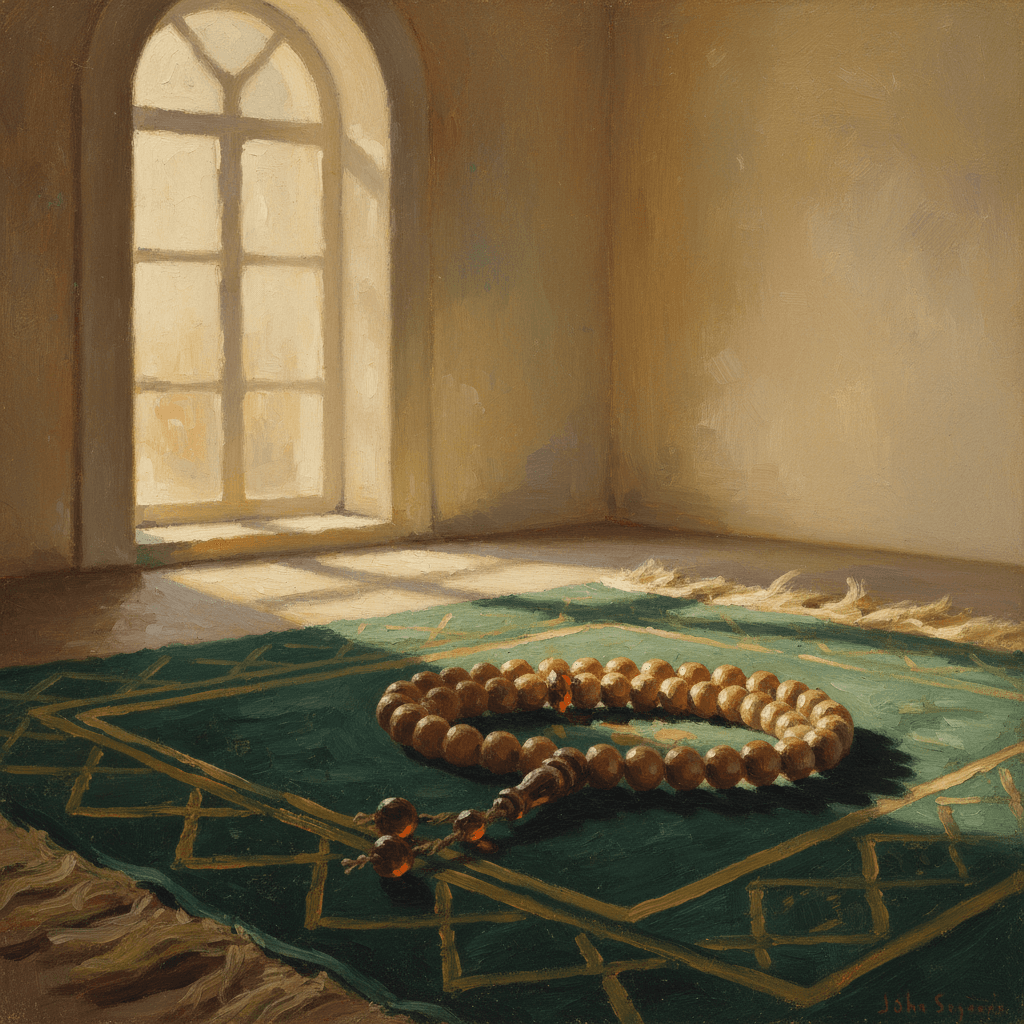
Depression is not a spiritual problem that dua alone can solve. But it is also not a spiritual problem that should be navigated without dua. These two truths need to be held together, because the Muslim community has often been forced to choose between them — told either that "just make dua and have faith" is the complete answer, or that spiritual practice has nothing to offer mental health.
Neither is true.
The Prophet ﷺ — who understood both the human capacity for spiritual resilience and the reality of human suffering — gave us a specific supplication that addresses the psychological roots of depression. He also told us to seek medicine for illness. Both matter. Both work.
The Dua for Lifting Depression
اللَّهُمَّ إِنِّي أَعُوذُ بِكَ مِنَ الْهَمِّ وَالْحَزَنِ وَالْعَجْزِ وَالْكَسَلِ وَالْبُخْلِ وَالْجُبْنِ وَضَلَعِ الدَّيْنِ وَغَلَبَةِ الرِّجَالِ
Allahumma inni a'udhu bika minal-hammi wal-hazani wal-'ajzi wal-kasali wal-bukhli wal-jubni wa dhala'id-dayni wa ghalabatir-rijal
"O Allah, I seek refuge in You from worry and grief, from incapacity and laziness, from miserliness and cowardice, from the burden of debt and from being dominated by others."
— (Bukhari 2893)
When to say it: Morning and evening as part of the daily adhkar. During moments when the depression feels acute — when the heaviness settles in, when motivation disappears, when the future looks gray. This dua is a daily anchor, not a one-time emergency measure.
Look at what it asks protection from: hamm (worry — anxiety about the future), hazan (grief — sorrow about the past or present), 'ajz (incapacity — the feeling of being unable to act), kasal (laziness — the paralysis of low energy), bukhl (miserliness), jubn (cowardice — fear that stops you from living), dhala'id-dayn (the burden of debt), and ghalabatir-rijal (being overwhelmed by or at the mercy of others). This is a clinical picture of the depression experience: future-oriented anxiety, past-oriented grief, present incapacity, paralysis, and the social helplessness of feeling overpowered.
The Prophet ﷺ named these things. He addressed them specifically. He knew they were real.
The Story Behind This Supplication
The Prophet ﷺ experienced deep grief in his own life. The year known as 'Am al-Huzn — the Year of Sorrow — saw the death of his beloved wife Khadijah and his uncle Abu Talib, both in quick succession. He lost the two people who had been his greatest sources of support and protection. He wept. He grieved. He was described by the companions as visibly changed by the losses.
And yet he never stopped his mission, never stopped leading, never stopped being the light for those around him. He grieved without being consumed by grief, not because he was above human emotion but because he had the dua and the practice and the relationship with Allah that held him together while the grief passed through him.
This dua is one of the tools of that holding together. It was not given as a quick fix but as a daily seeking of refuge — an acknowledgment to Allah, repeated every morning and evening: I am asking You to protect me from these specific things that can destroy a life from the inside.
The Companion who most visibly used this dua was Anas ibn Malik, who reported it and taught it to others. He was the Prophet's ﷺ personal servant for ten years and observed his daily practice closely. That he transmitted this specific dua as something worth preserving tells us it was not a rare supplication — it was part of the regular prophetic practice.
How to Use This Dua Alongside Practical Support
Dua works alongside, not instead of, practical action:
Say it every morning before the heaviness sets in. Depression often has a worst time — for many people, it is the morning. Saying this dua immediately after Fajr, before the day's weight has time to settle in, places it in the context of daily protection rather than crisis response.
Pair it with movement. The Prophet ﷺ was physically active — he walked, he rode, he was embodied in the world. The connection between physical movement and mental health is well-documented in both Islamic tradition and modern science. Even a five-minute walk after Fajr, combined with this dua, is a meaningful pairing.
Seek professional help without shame. The Prophet ﷺ said: "Make use of medical treatment, for Allah has not made a disease without appointing a remedy for it." (Abu Dawud 3855) Mental health professionals are among the remedies Allah has appointed. Seeking therapy or psychiatric support is not a failure of faith — it is using the resources Allah has made available.
Build the daily dua habit before you need it desperately. The worst time to start a dua practice is in the depths of depression, when motivation is at its lowest. The best time is in the ordinary days, building the habit so it is automatic when the darkness comes. Even two minutes of morning adhkar daily creates a practice that is accessible in the hard moments.
Reach out to the community. The Prophet ﷺ described the believers as one body — when one part suffers, the whole body responds with fever and sleeplessness. Isolation feeds depression. A small, real connection — with family, a trusted friend, a local community — interrupts the spiral.
Build the Daily Spiritual Practice That Supports Your Mental Health
DeenBack helps you track daily duas, morning adhkar, and dhikr habits — so that your spiritual practice is in place on the ordinary days, ready to support you when the hard ones come.


Free download. Premium features available in-app.
Related Duas for Emotional and Spiritual Support
Dua for relief from grief and anxiety:
اللَّهُمَّ إِنِّي عَبْدُكَ ابْنُ عَبْدِكَ ابْنُ أَمَتِكَ نَاصِيَتِي بِيَدِكَ مَاضٍ فِيَّ حُكْمُكَ عَدْلٌ فِيَّ قَضَاؤُكَ
Allahumma inni 'abduka ibnu 'abdika ibnu amatika nasiyati biyadika madin fiyya hukmuka 'adlun fiyya qada'uk
"O Allah, I am Your servant, son of Your servant, son of Your female servant. My forelock is in Your hand. Your judgment of me is just. I ask You by every name that is Yours..." — (Ahmad 3712 — authenticated by Al-Albani)
Dua for sadness and distress (dua of distress):
اللَّهُمَّ رَحْمَتَكَ أَرْجُو فَلَا تَكِلْنِي إِلَى نَفْسِي طَرْفَةَ عَيْنٍ
Allahumma rahmataka arju fala takilni ila nafsi tarfata 'ayn
"O Allah, Your mercy is what I hope for. Do not leave me to myself for the blink of an eye." — (Abu Dawud 5090)
For more support, see dua for depression and dua for sadness, which cover related duas for emotional support. For the broader question of navigating spiritual darkness, dua for dark times covers the prophetic duas for severe distress. For mental health specifically, dua for mental health provides additional context and duas.
Common Questions
Why does depression sometimes worsen despite regular dua and prayer? Because depression is a complex condition with biological, psychological, social, and spiritual dimensions. Dua addresses the spiritual dimension and provides real support to the others — but it does not replace psychiatric treatment for clinical depression any more than dua replaces insulin for diabetes. If regular spiritual practice is not sufficient, this is a signal to seek additional professional help, not a sign that dua "doesn't work."
What should I do when I am too depressed to pray or make dua? This is one of the most painful aspects of depression — it attacks the very practices that support recovery. Start as small as possible: even sitting on the prayer mat without praying, even saying "Ya Allah" once, even reading one verse. Allah knows what you are carrying. Intention and even the reaching toward the practice is counted. And if you miss prayers during this period, there is qada (making up prayers) — Allah's mercy accommodates human fragility.
Is there hope for a Muslim struggling with long-term depression? Yes. Always. The Prophet ﷺ said that with every hardship comes ease (Quran, 94:5-6), and that nothing befalls a believer — not even a thorn prick — except that it is an expiation for some wrong or a raising of degrees. Long-term suffering is not evidence that Allah has abandoned you. It may be the most intense form of relationship with Allah — the place where, stripped of everything else, the believer finds that only Allah remains.
You Are Not Alone in This Darkness
Depression tells you that you are alone, that it has always been this way, and that it will always be this way. All three are lies.
The Prophet ﷺ grieved. The prophets before him endured darkness that would crush most of us. They made this dua, and they kept going. They were answered.
Say the dua. Seek help. Stay connected. Keep showing up — to salah, to dua, to people, to life. The darkness has never been permanent. It will not be permanent for you.
Support Your Recovery With Consistent Daily Spiritual Practice
DeenBack helps you build a daily dua and dhikr habit that supports your mental and spiritual wellbeing — small, consistent acts of connection with Allah that matter most when you need them most.
Free download. Premium features available in-app.
Frequently Asked Questions
What is the Islamic dua for depression and anxiety?
The Prophet ﷺ taught a comprehensive dua that seeks refuge from the key roots of depression: 'Allahumma inni a'udhu bika minal-hammi wal-hazani wal-'ajzi wal-kasali wal-bukhli wal-jubni wa dhala'id-dayni wa ghalabatir-rijal' — seeking refuge from worry, grief, incapacity, laziness, miserliness, cowardice, the burden of debt and being dominated by others. (Bukhari 2893)
Is depression a sign of weak faith in Islam?
No. This is one of the most harmful misunderstandings in Muslim communities. Many prophets and companions experienced profound grief, distress, and what we would today recognize as depression. The Prophet ﷺ himself experienced deep grief during the 'Year of Sorrow.' Mental health challenges are not a verdict on your faith — they are part of being human, and they call for both spiritual and practical support.
Should I see a doctor or just make dua for depression?
Both. Dua and professional help are not competing approaches — they are complementary. The Prophet ﷺ said: 'Make use of medical treatment, for Allah has not made a disease without appointing a remedy for it.' (Abu Dawud 3855) Seeking mental health support is seeking the cure Allah has made available. Dua is not a substitute for professional care; it is spiritual support alongside it.
How many times should I say the dua for depression?
There is no specified number for this particular dua. The Prophet ﷺ recommended making it part of daily practice — morning, evening, and whenever the feeling of depression or grief is acute. Consistent daily use builds the habit and the protection over time, rather than a one-time recitation being expected to produce an immediate transformation.