
- Published on
Dua for a Job Promotion: Asking Allah to Elevate Your Career
- Authors

- Name
- Ahmad
- Role
- Senior Marketing Manager, Islamic education • Deen Back
بِسْمِ اللهِ الرَّحْمٰنِ الرَّحِيْمِ
In the name of God, the Most Gracious, the Most Merciful.
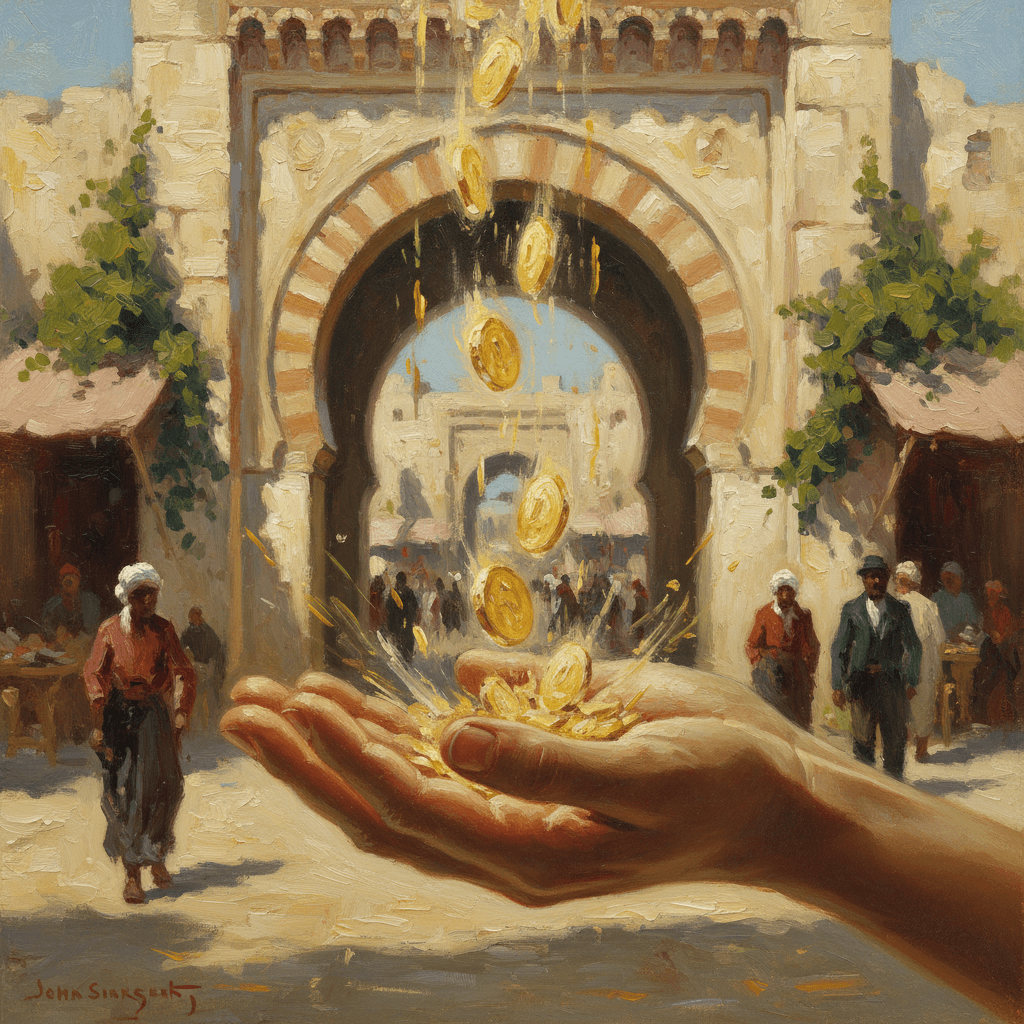
There is a particular kind of weariness in showing up every day, giving your best, and watching the recognition go elsewhere. You do the work. You know your value. But the promotion keeps getting delayed, reassigned, or given to someone who seemed less deserving.
The nafs — the lower self — starts to fill in the silence with its own story: maybe you are not good enough, maybe the system is rigged, maybe dua does not really work. That is the nafs doing what it does — creating despair from delay.
Islam offers a different framework. Your provision and your rank are already written. But the writing does not make your effort or your supplication irrelevant — they are part of how that provision reaches you.
The Dua for Career Elevation
The Prophet ﷺ taught a supplication that asks Allah directly to set right every dimension of life, including work:
اللَّهُمَّ أَصْلِحْ لِي دِينِيَ الَّذِي هُوَ عِصْمَةُ أَمْرِي، وَأَصْلِحْ لِي دُنْيَايَ الَّتِي فِيهَا مَعَاشِي، وَاجْعَلِ الْحَيَاةَ زِيَادَةً لِي فِي كُلِّ خَيْرٍ
Allahumma asliH li dini alladhi huwa 'ismatu amri, wa asliH li dunyaya allati fiha ma'ashi, waj'alil-hayata ziyadatan li fi kulli khayr
"O Allah, set right for me my religion which is the safeguard of my affairs, and set right for me the affairs of my world wherein is my living, and make life a source of increase for me in every good."
— (Sahih Muslim 2720)
The phrase waj'alil-hayata ziyadatan li fi kulli khayr — "make life a source of increase for me in every good" — is particularly powerful. You are asking Allah not just for a single promotion, but for a life trajectory that keeps climbing in goodness, skill, and contribution.
Say this dua after your five daily prayers. It takes less than thirty seconds and anchors your career ambitions within your deen.
A Second Dua — From Favour and Bounty
اللَّهُمَّ إِنِّي أَسْأَلُكَ مِنْ فَضْلِكَ
Allahumma inni as'aluka min fadlik
"O Allah, I ask You from Your bounty."
— (Sahih Muslim 713; said upon leaving the mosque)
This short dua comes from a Quranic instruction: "When the prayer is concluded, disperse through the land and seek from Allah's bounty" (62:10). The scholars note that seeking fadl — Allah's bounty — specifically means seeking provision and elevation from a source beyond your own striving.
The Story Behind This Dua
The comprehensive dua (Muslim 2720) was taught by the Prophet ﷺ as part of a set of morning and evening supplications covering every dimension of a Muslim's life. The remarkable thing about this dua is its architecture: it asks for islah — a setting-right — not just for success as the world defines it.
Islah means Allah does not simply give you what you asked for. He sets right the entire structure, including the parts of your career situation you cannot see. A promotion you are not ready for would not be islah. A promotion that comes at the right time, in the right role, with the right circumstances — that is what this dua asks for.
When the Companions made this dua, they were people who understood that Allah's involvement in their affairs was not passive oversight. They genuinely believed that calling on Allah to "set right" their worldly affairs would result in tangible changes — in doors opened, in relationships repaired, in recognition received from unexpected directions.
How to Make This Dua Part of Your Daily Career Habit
Building a daily promotion dua habit is not about superstition or replacing effort. It is about ensuring your career striving is anchored to something beyond office politics and performance reviews.
After every Fajr, before you check your phone. The morning is when the nafs is quietest and the heart is most receptive. Saying this dua before the workday mentally begins sets the frame for the entire day — you are not just an employee trying to advance; you are a servant of Allah seeking His fadl.
Pair your dua with one career action. Each week, identify one concrete action toward your promotion goals: a skill you practiced, a conversation you had, a piece of work you delivered with extra care. Make dua, then do the action. Tawakkul — relying on Allah — is not sitting idle. It is complete effort combined with complete trust.
Keep the intention pure. Before making dua for promotion, spend fifteen seconds clarifying your intention: Why do I want this? To provide better for my family, to have more impact, to use my skills more fully — these are clean intentions. To embarrass a colleague or prove someone wrong — these cloud the dua. Intention does not need to be perfect, but it should be honest.
Combine with istighfar. The Prophet ﷺ said: "Whoever makes istighfar regularly, Allah will grant him relief from every distress, a way out of every hardship, and provision from sources he never expected" (Abu Dawud 1518). Add a short daily istighfar practice alongside your promotion dua — the two work together.
Track Your Daily Career Dua Habit
DeenBack helps you build consistent supplication habits — so your dua for career elevation becomes a daily practice, not a desperate one-off request.


Free download. Premium features available in-app.
Related Duas for Work and Provision
For a comprehensive daily supplication practice around provision and good work, the dua for rizq covers seeking Allah's sustenance from every direction. When you face a specific career decision — whether to accept a new role, take a risk, or approach your manager — the dua for istikhara is the Sunnah method for seeking guidance. The dua for a job shares the morning provision supplication that pairs perfectly with the promotion dua.
اللَّهُمَّ إِنِّي أَسْأَلُكَ عِلْمًا نَافِعًا وَرِزْقًا طَيِّبًا وَعَمَلاً مُتَقَبَّلاً
Allahumma inni as'aluka 'ilman nafi'an wa rizqan tayyiban wa 'amalan mutaqabbalan
"O Allah, I ask You for beneficial knowledge, good provision, and accepted deeds." — (Ibn Majah 925)
This morning dua, when said alongside the promotion dua, creates a powerful daily supplication practice asking for both elevation and barakah in the work itself. For building the daily habit of dua and dhikr alongside your career ambitions, dua for tawakkul gives the spiritual framework for trusting Allah's timing.
Common Questions About Dua and Career Advancement
What if my workplace is toxic — should I still make dua for promotion there? Dua for promotion is really a dua for elevation in your career, not necessarily in one specific company. Add: wa in kana khayran li — and if this is good for me. You may find that the answer is a promotion elsewhere, or a door to a better environment entirely.
How do I handle envy from colleagues when I do get promoted? The Prophet ﷺ said to counter envy against you by reciting Masha'Allah la quwwata illa billah (18:39). Do not broadcast your promotion more than necessary, give sadaqah when good things happen, and ask Allah for protection from hasad — malicious envy.
Does making dua for promotion mean I should not advocate for myself at work? No. The two are complementary. Make your achievements visible in appropriate ways, have the conversation with your manager, demonstrate readiness for more responsibility. Dua without asbab — practical causes — is not the Islamic model of tawakkul. Do the asbab; trust Allah with the results.
Is it better to ask in general terms or to ask for a specific role? Both are valid. Being specific — asking for a particular position with better conditions — is encouraged in Islam. The Prophet said Allah loves specific dua. Add the qualifying phrase: "if it is good for me in my deen, my dunya, and my akhira."
Your Elevation Is Already Written — Your Dua Is Part of the Path
The scholars say that dua changes the decree by being part of the decree. When you make dua for a promotion, you are not working against Allah's plan — you are participating in it. Allah wrote that His servant would ask, and in response to that asking, something good would be sent.
Show up to work with excellence. Make your dua daily. Hand the timeline to Allah and trust that He sets right every affair of His servant who turns to Him.
Build the Habits That Carry You Through the Wait
Consistent daily dua, dhikr, and spiritual habits are what sustain you through the periods of delay. DeenBack helps you build and track these habits one day at a time.
Free download. Premium features available in-app.
Frequently Asked Questions
What is the best dua for a job promotion in Islam?
The Prophet taught a comprehensive dua: Allahumma asliH li dunyaya allati fiha ma'ashi — O Allah, set right for me the affairs of my world wherein is my living. (Muslim 2720). This directly asks Allah to improve and elevate your worldly affairs, which includes your career.
Should I wait for dua to work before taking any steps toward a promotion?
No. Dua and effort go together. The Prophet said tie your camel, then place your trust in Allah (Tirmidhi 2517). Ask for the promotion, demonstrate your skills, build relationships at work — and make dua throughout the process. Tawakkul is not passivity.
Is it wrong to want recognition and a higher position at work?
Wanting fair compensation and recognition for good work is not wrong in Islam. What matters is your intention. If you seek promotion to provide better for your family, contribute more, and use your position to do good — that is a noble intention worth supplicating for.
What if I have been making dua for a promotion for a long time with no result?
Delay is not rejection. The Prophet said Allah responds to the dua of a servant as long as he is not hasty (Bukhari 6340). Sometimes the promotion you are waiting for is preparing you through the wait itself. Keep asking, keep working, and hand the timeline to Allah.
Can I make dua to be chosen over a specific colleague for a promotion?
You can ask Allah for the position without naming anyone else. Ask for what is good for you and good for those around you. The dua with the addition: if it is good for me — aligns your asking with Allah's wisdom rather than competition.