
- Published on
Dua for Driving: The Sunnah Supplication Before Every Ride
- Authors

- Name
- Ahmad
- Role
- Senior Marketing Manager, Islamic education • Deen Back
بِسْمِ اللهِ الرَّحْمٰنِ الرَّحِيْمِ
In the name of God, the Most Gracious, the Most Merciful.
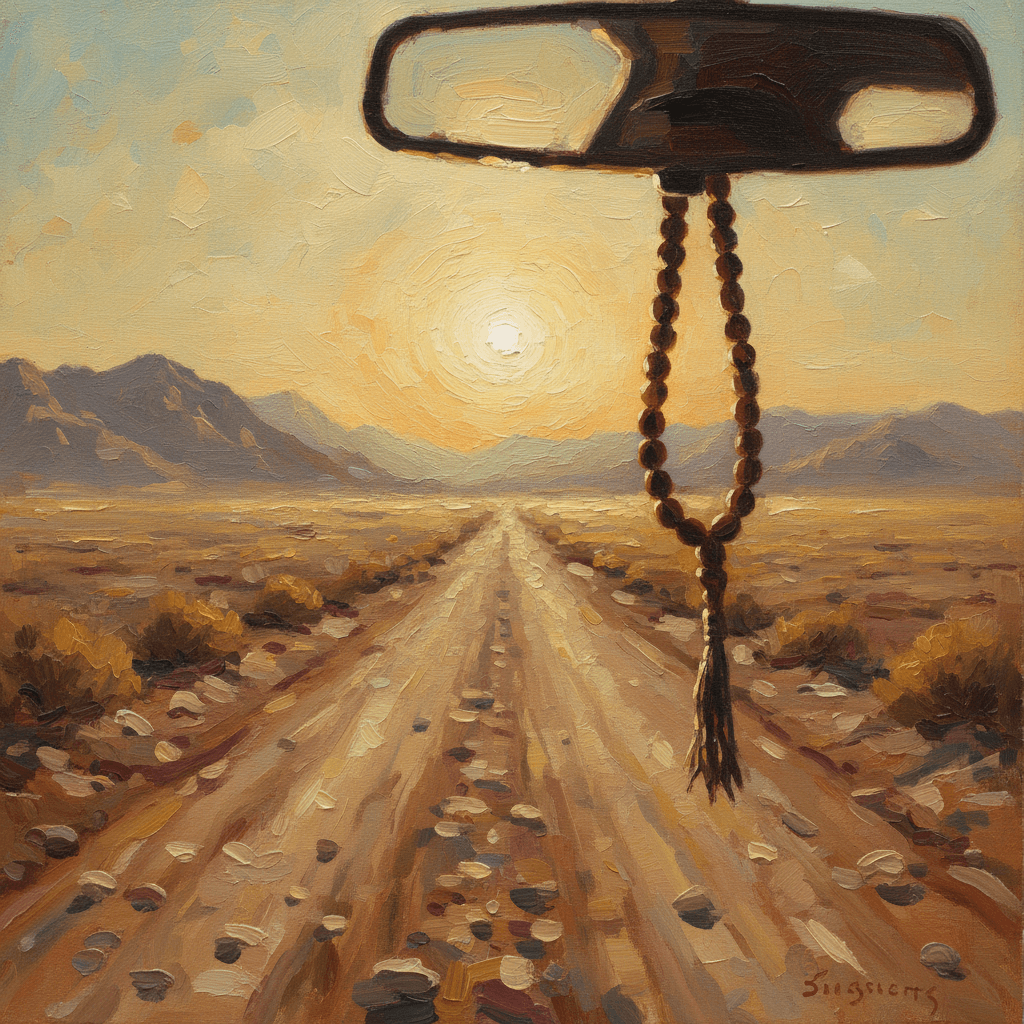
Every time you get into a car, you are placing your life in the hands of physics, other drivers, and conditions you cannot fully predict or control.
The Prophet (peace be upon him) understood this about every journey — on camelback, on foot, by sea. He understood that the vehicle beneath you, however sturdy, operates by Allah's permission and not by your own strength. That is why he never mounted a ride without specific words of remembrance.
The car has changed. The dua has not. It takes ten seconds to say. It carries the weight of Quranic acknowledgment that none of this — not the engine, not the road, not your safe arrival — is guaranteed except by Allah.
The Dua for Driving
When you get into your car, say:
سُبْحَانَ الَّذِي سَخَّرَ لَنَا هَذَا وَمَا كُنَّا لَهُ مُقْرِنِينَ وَإِنَّا إِلَى رَبِّنَا لَمُنقَلِبُونَ
Subhanal-ladhi sakhkhara lana hadha wa ma kunna lahu muqrinin, wa inna ila Rabbina lamunqalibun.
"Glory to Him who has subjected this to us, and we could never have it by our efforts, and to our Lord we shall return." — (Surah Az-Zukhruf, 43:13-14)
This is a verse of the Quran, not just a hadith — which means every letter carries the weight of divine revelation.
The phrase wa ma kunna lahu muqrinin — "we could never have it by our efforts" — is an honest statement about your relationship to the car you are sitting in. You did not make the engine. You did not produce the fuel. You did not engineer the road. Allah made all of it available to you through layers of human and natural provision He alone orchestrated.
And wa inna ila Rabbina lamunqalibun — "to our Lord we shall return" — is not a morbid thought. It is a grounding one. Every drive is temporary. Every journey points somewhere. Ultimately, all of them point to the same place.
Say it alongside the leaving-the-house dua:
بِسْمِ اللَّهِ تَوَكَّلْتُ عَلَى اللَّهِ وَلَا حَوْلَ وَلَا قُوَّةَ إِلَّا بِاللَّهِ
Bismillahi tawakkaltu 'alallah, wa la hawla wa la quwwata illa billah.
"In the name of Allah, I place my trust in Allah, and there is no power nor strength except with Allah." — (Abu Dawud 5095)
Say this at the door before reaching the car, and say the transport dua when you sit down. The two together form a complete spiritual preparation for your drive.
The Story Behind It
The Companion Ibn Umar (may Allah be pleased with him) narrated that when the Prophet (peace be upon him) settled onto his mount to begin a journey, he would say Allahu Akbar three times, then recite this same verse — Subhanal-ladhi sakhkhara lana hadha — and then continue with the full travel supplication asking for righteousness, taqwa, and ease. (Sahih Muslim 1342, sunnah.com/muslim:1342)
What stands out is the sequence. First, Allahu Akbar — three times, out loud. Then the Quranic acknowledgment of Allah's power over the vehicle. The Prophet (peace be upon him) was doing something specific: he was beginning every journey by consciously breaking from the illusion of self-sufficiency.
We live in an age where starting a car requires nothing more than pressing a button. The ease of it makes it easy to forget that the car is a trust. The road is a trust. The life in the driver's seat is a trust. The Prophet's practice forces that forgotten awareness back to the surface.
The scholars note that this dua applies to every vehicle — camel, ship, horse — and by extension to every form of modern transport: cars, buses, trains, planes. The principle is the same: something powerful and potentially dangerous has been made available to you by Allah's grace. Acknowledge it before you use it.
How to Make This Dua Part of Your Daily Life
Knowing the dua is the easy part. Having it ready before you turn the key — when you are distracted, running late, or thinking about the meeting you are heading to — requires a different kind of preparation.
Build a pre-drive ritual. Treat the dua the same way you treat your seatbelt. You would not skip the seatbelt because you were in a hurry. Train yourself to feel the same way about the dua — it is part of preparing the car, not an add-on you fit in when convenient.
Use the key as a trigger. The moment your hand reaches for the car key or the door handle, that is your cue. Say Bismillah first, then the leaving-the-house dua at the door, then the transport dua when you sit. The physical sequence of key-door-seat maps to the spiritual sequence of remembrance.
Keep it in view. Write the transliteration on a small card and clip it to your sun visor or put it on your dashboard. See it before you see the road. Within a few weeks, you will not need the card — the habit will be set.
Do not wait for long trips. The dua is not just for road trips or travel. It is for the ten-minute school run, the commute, the grocery errand. Every single time you get in the car. This is what makes it a habit rather than an occasional practice.
If you have passengers, say it out loud. Say the dua clearly enough for people in the car to hear it. Children who grow up hearing this dua before every drive will carry it for the rest of their lives. One generation of consistent practice becomes an inheritance.
Memorize it in stages. If the full Arabic feels long, start with just Bismillah and Subhanallah. Add one phrase at a time. Most people have the full dua memorized within two weeks if they say it daily. The repetition of driving gives you many opportunities to practice.
Build a Pre-Drive Dua Habit
DeenBack helps you build consistent daily dua habits — track your travel supplications and never start a journey without remembering Allah.


Free download. Premium features available in-app.
Related Duas
The dua for driving sits within a wider family of journey supplications in the Sunnah. Together they form a complete spiritual travel practice.
Dua for travel — for longer journeys, the Prophet (peace be upon him) added a comprehensive supplication asking for birr (righteousness), taqwa, and a safe return. See the full guide: dua for travel.
Dua for leaving the house — the foundation before every drive begins. When you step out the door with Bismillahi tawakkaltu 'alallah, you have already started your protection before reaching the car. Full guide: dua for leaving the house.
Dua for protection — to combine with your pre-drive practice, especially when driving in unfamiliar areas or difficult conditions. See: dua for protection.
Dua for travelling — additional supplications the Prophet (peace be upon him) taught for extended journeys, covering arrival at destinations and the return home. See: dua for travelling.
These duas are not competing with each other. They layer together into a robust practice of dhikr around every journey you take.
Common Questions
Does this dua apply every time I drive, even for short trips?
Yes. The Sunnah does not distinguish between a five-minute errand and a five-hour journey. The Prophet (peace be upon him) said the dua when mounting his ride regardless of distance. If anything, the short daily drives are where the habit matters most — because they are frequent enough to build the practice quickly.
What if I am a passenger and not the driver?
Say it for yourself regardless. You are still boarding a vehicle, still in the same position of depending on Allah for safe arrival. The dua is not only for drivers — it is for anyone riding in a vehicle. Say it quietly to yourself when you get in.
Can I say the dua in English if I have not memorized the Arabic yet?
Yes — make dua in the language you know while you are learning. But prioritize memorizing the Arabic. The specific wording is from the Quran (43:13-14), which carries a special status. The transliteration will get you there within two weeks of daily practice. Do not let imperfect Arabic stop you from saying it at all.
Should I say the dua even if I am rushing or stressed?
Especially then. The purpose of the dua is to shift your reliance from your own frantic effort to Allah before you merge into traffic. A few seconds of deliberate remembrance before a stressed drive is more valuable — not less — than on a calm, unhurried trip. Take the breath. Say the words. Then drive.
Does saying the dua guarantee I will not get into an accident?
The dua is an act of tawakkul and dhikr, not a contract for guaranteed safety. Allah alone controls outcomes. What the dua does is place you in a state of conscious surrender to Allah before you drive — which is the right state to be in regardless of what happens on the road. Pair it with careful, attentive driving.
Closing
You press the accelerator and a machine obeys. You turn the wheel and physics responds. None of it is yours. All of it is borrowed — borrowed from a Creator who subjected it to you by his grace, not your merit.
Saying Subhanal-ladhi sakhkhara lana hadha before you drive is a moment of honest accounting. You are acknowledging that the car, the road, the journey, and the arrival are all in hands greater than yours. That awareness is tawakkul. That awareness makes you a calmer, more grateful, more careful driver.
Build the habit before your next drive. Start with the door. End with the engine. Say the words with meaning — not as a ticket to safety, but as a genuine act of surrender to the One who controls every road.
Never Start a Journey Without Dhikr
DeenBack tracks your daily duas and travel supplications — building the habit of remembering Allah before every drive, every trip, every step.
Free download. Premium features available in-app.
Frequently Asked Questions
What is the dua for driving in Islam?
The dua for driving is the same dua the Prophet (peace be upon him) said when mounting any vehicle: Subhanal-ladhi sakhkhara lana hadha wa ma kunna lahu muqrinin, wa inna ila Rabbina lamunqalibun — Glory to Him who has subjected this to us, and we could never have it by our efforts, and to our Lord we shall return. It is from Surah Az-Zukhruf (43:13-14) and applies to every mode of transport including cars.
When should I say the dua for driving?
Say it when you sit in the car — before you start the engine or just after. The Sunnah is to say it at the moment of boarding the vehicle, not during the drive. Pair it with the dua for leaving the house (Bismillahi tawakkaltu alallah) before you even reach the car.
Is there a separate dua specifically for cars?
No separate car dua exists in the Sunnah — the Prophet (peace be upon him) taught one dua for all forms of riding and transport. The Quran verse (43:13-14) explicitly mentions Allah subjecting vehicles to us, which scholars apply to every conveyance from camels to cars to airplanes.
What if I forget to say the dua before driving?
Say it whenever you remember — even if you are already on the road. Say Bismillah and recite the dua. The goal is to build the habit over time until saying it before starting the engine becomes as automatic as buckling your seatbelt. Missing once is not a failure; just recommit the next time.
Does saying the dua for driving mean I don't need to drive carefully?
No. Tawakkul is not recklessness. The Prophet (peace be upon him) said: Tie your camel, then place your trust in Allah (Tirmidhi 2517). Drive safely, follow traffic laws, stay off your phone — and say the dua. Both are required. Allah's protection does not excuse human carelessness.