
- Published on
Subhanallah Wa Bihamdihi: The Most Beloved Phrase to Allah
- Authors

- Name
- Ahmad
- Role
- Senior Marketing Manager, Islamic education • Deen Back
بِسْمِ اللهِ الرَّحْمٰنِ الرَّحِيْمِ
In the name of God, the Most Gracious, the Most Merciful.
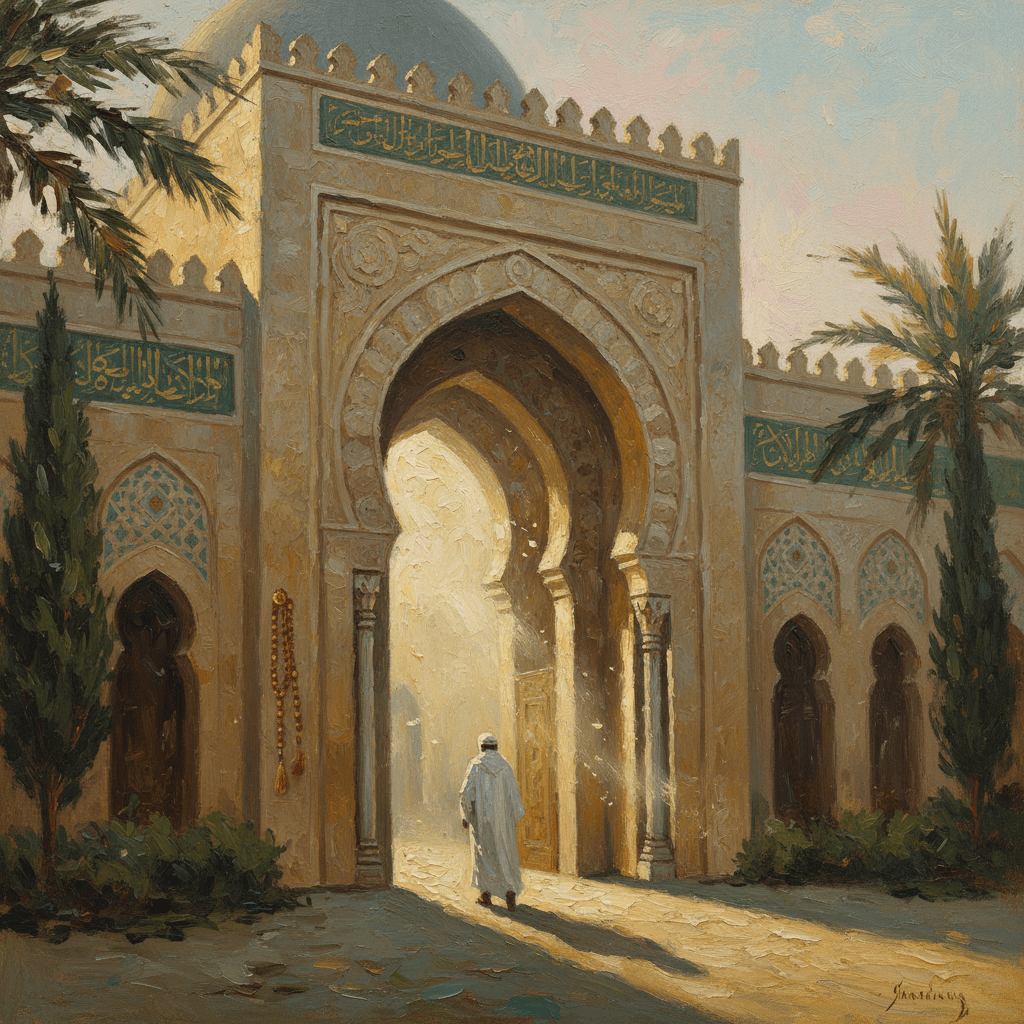
There is a phrase the Prophet ﷺ called light on the tongue and heavy on the scales. A phrase so beloved to Allah that saying it 100 times erases sins like foam swept from the surface of the sea.
Most Muslims have heard it. Many say it occasionally. Almost none say it 100 times a day.
That gap — between knowing about this phrase and actually practicing it — is exactly where DeenBack's angle lives. Not "here is the meaning" but "here is how to actually build this into your life."
The phrase is Subhanallah wa bihamdihi (سُبْحَانَ اللَّهِ وَبِحَمْدِهِ). And it is one of the most accessible, powerful habits in all of Islamic practice.
What Does Subhanallah Wa Bihamdihi Actually Mean?
سُبْحَانَ اللَّهِ وَبِحَمْدِهِ
Subhanallahi wa bihamdihi
"Glory be to Allah and His is all praise."
The phrase has two parts, each carrying its own weight.
Subhanallah (سُبْحَانَ اللَّهِ) comes from the root s-b-h, meaning to swim or glide freely without obstruction. Applied to Allah, it declares He is utterly free from every imperfection, limitation, and deficiency. No flaw, no need, no equal. This declaration is called tasbih.
Wa bihamdihi (وَبِحَمْدِهِ) means "and His is all praise." The word hamd is not ordinary praise — it is acknowledgment of perfection combined with love and gratitude. When you add wa bihamdihi, you are not just saying Allah is perfect; you are saying all praise, all gratitude, all acknowledgment of excellence belongs to Him alone.
Together: "Allah is utterly perfect and free from all deficiency, and all praise belongs to Him."
This is not just a nice sentiment. It is a complete theological statement in eight Arabic words.
Why the Prophet Called It the Most Beloved Phrase
سُبْحَانَ اللَّهِ وَبِحَمْدِهِ، سُبْحَانَ اللَّهِ الْعَظِيمِ
Subhanallahi wa bihamdihi, Subhanallahil Azim
"Glory be to Allah and His is all praise; Glory be to Allah, the Most Great."
"Two words which are light on the tongue, heavy in the balance, and beloved to the Most Merciful." — (Sahih Bukhari 6682, Sahih Muslim 2694)
The Prophet ﷺ highlighted this specific phrase among thousands of possible forms of dhikr. The characteristic he emphasized was the ratio: light on the tongue but heavy on the scale. You invest almost nothing and receive enormous reward.
This is not a transaction — it is an act of love. You are simply acknowledging what is already true about Allah: that He is perfect and all praise belongs to Him. He loves hearing this acknowledgment from you.
The second hadith sharpens the reward further:
"Whoever says Subhanallahi wa bihamdihi 100 times in a day will have his sins erased, even if they were as abundant as the foam of the sea." — (Sahih Bukhari 6405)
One hundred repetitions. That is approximately three to four minutes of actual time. For a slate wiped clean of sins accumulated during the day. This is one of the best deals in the entire Sunnah.
Why Modern Muslims Miss This
Understanding the hadith is not the problem. Most Muslims who know this still do not say it 100 times daily. Why?
Because the nafs (lower self) hijacks your idle moments before you do. You unlock your phone to commute, to wait, to fill small silences — and before you have made any conscious choice, you are scrolling. The competing habit is already deeply grooved.
The issue is not willpower or knowledge. It is the absence of a trigger. Without a consistent prompt to begin the dhikr, the moment passes and the nafs fills it with something else.
The Prophet ﷺ understood this. He linked specific dhikr to specific moments: after salah, before sleeping, in the morning and evening. He gave each form of remembrance a container in the day — a predictable prompt that fired the practice automatically.
"The most beloved deeds to Allah are those done consistently, even if they are small." — (Sahih Bukhari 6464)
Consistent and small is the whole model. Not 1,000 on the weekend. 100 every single day.
How to Build This Into Your Daily Life
After Fajr — the clearest window. Sit for four minutes after your morning prayer before touching your phone. Say Subhanallah wa bihamdihi 100 times. Count on your right hand (a Sunnah — Abu Dawud 1502) or use a tasbih counter. This places the 100-repetition habit in the most protected part of your day, before the world's demands begin.
Anchor it to your commute. If Fajr is not realistic as a counting window, use your first daily commute. Walking, driving, or riding — these are unstructured moments the nafs will claim. Claim them first.
Stack onto post-salah tasbih. After each prayer, the standard practice is Subhanallah 33 times, Alhamdulillah 33 times, Allahu Akbar 34 times. Subhanallah wa bihamdihi 100 times is a natural extension of this existing habit — you are already in dhikr mode, so extending it by a few minutes costs almost no additional effort.
Use visual reminders. A tasbih bead at your desk, a sticky note on your bathroom mirror, a phone wallpaper with the phrase. External prompts bridge the gap until the habit is automatic.
Track your streak. The Prophet said consistent deeds — even small ones — are most beloved to Allah. A streak creates the accountability that makes consistency real. Missing one day is discouraging. Missing your streak is a concrete signal that something needs to shift.
Track Your Daily Subhanallah Wa Bihamdihi
DeenBack tracks your daily dhikr streaks — so you can build the 100-repetition habit that the Prophet described as a sea-foam-erasing practice, one consistent day at a time.


Free download. Premium features available in-app.
Subhanallah Wa Bihamdihi in the Morning and Evening Adhkar
The morning and evening adhkar (remembrances) are the prophetic bookends to the day. While the 100-repetition hadith does not specify morning or evening, the phrase appears naturally in both the morning and evening routines of the Companions.
The Prophet ﷺ said: "Whoever says Subhanallah wa bihamdihi in the morning and evening 100 times, no one will come on the Day of Resurrection with anything better than him, except someone who said the same thing or more." (Muslim 2692)
This hadith establishes the morning-evening context explicitly. Splitting the 100 — 50 after Fajr and 50 after Asr or Maghrib — is a practical way to distribute the practice and connect it to the adhkar routine.
For the complete morning and evening structure, see how to do morning adhkar. For the foundational meaning of the tasbih phrase, see subhanallah meaning. For the companion phrase that completes the triad, see alhamdulillah meaning.
Signs You Are Growing in This Practice
When the habit is taking root:
- You reach for the phrase during idle moments before reaching for your phone
- The post-salah dhikr feels incomplete if you skip the extension to 100
- You find yourself saying it automatically when something overwhelms you
- Sleep feels different when you have done the 100 repetitions before lying down
These are quiet signs, not dramatic ones. They indicate the tongue is training the heart — which is exactly what consistent dhikr is designed to do.
Common Questions
Does it have to be in Arabic? The words should be in Arabic for the specific reward mentioned in the hadith. The Prophet taught the exact Arabic form, and the reward is connected to that form. Saying the English translation has its own value but is distinct.
Can I use an app or counter? Using any tool — tasbih beads, a counter app, finger counting — is permissible. The Prophet himself used finger counting (Abu Dawud 1502). What matters is that you complete the repetition sincerely, not the method of tracking.
What if I lose count? Start from where you can confirm. The default position in Islamic practice is that uncertainty does not cancel certainty — if you are unsure whether you said 80 or 90, assume 80 and continue. The nafs uses doubt as an excuse to quit; don't let it.
Is there any time when I should NOT say this? No. Subhanallah wa bihamdihi can be said in any state, at any time, in any place. Unlike some dhikr that has specific rulings (e.g., Quran recitation and ritual purity), this form of remembrance has no such restrictions.
The Simplest Habit With the Heaviest Return
The Prophet ﷺ could have pointed Muslims toward the hardest, most demanding practices as signs of faith. Instead, he pointed to a phrase that takes four minutes. Light on the tongue, heavy on the scale, beloved to the Most Merciful.
The only thing standing between you and 100 repetitions today is the decision to start.
For building a complete dhikr habit that includes this phrase and more, see how to build daily Islamic habits. For the complete list of names and phrases that deepen your relationship with Allah, see 99 names of Allah.
Start Your Subhanallah Wa Bihamdihi Streak Today
DeenBack makes it easy to track your daily 100-repetition dhikr goal — building the consistent practice that transforms small daily acts into a lifetime of remembered sins erased.
Free download. Premium features available in-app.
Frequently Asked Questions
What does Subhanallah wa bihamdihi mean?
Subhanallah wa bihamdihi means 'Glory be to Allah and His is all praise.' It combines tasbih (declaring Allah free of all imperfection) with hamd (directing all praise to Him). The Prophet called it one of the most beloved phrases to the Most Merciful.
How many times should I say Subhanallah wa bihamdihi?
The Prophet said whoever says Subhanallah wa bihamdihi 100 times in a day will have his sins erased, even if they were like the foam of the sea (Sahih Bukhari 6405). Aim for 100 times daily, ideally after Fajr or spread across the day.
What is the difference between Subhanallah and Subhanallah wa bihamdihi?
Subhanallah declares that Allah is free from all imperfection. Subhanallah wa bihamdihi adds the dimension of praise — not only is He perfect, but all praise belongs to Him. The extended phrase is considered more complete and was specifically identified by the Prophet as more beloved to Allah.
Is Subhanallahil Azim the same phrase?
Subhanallahil Azim means 'Glory be to Allah, the Most Great.' The Prophet said 'Subhanallahi wa bihamdihi, Subhanallahil Azim' — these two together are light on the tongue, heavy on the scale, and beloved to the Most Merciful (Sahih Bukhari 6682). They are closely related but distinct phrases, often said together.
When is the best time to say Subhanallah wa bihamdihi?
Any time is valid, but the most rewarding contexts are: after each of the five prayers, during morning and evening adhkar, before sleeping, and while commuting or doing chores. The Prophet said 100 times daily brings the sea-foam reward, so consistent practice throughout the day is better than one large sitting.