
- Published on
An-Noor Meaning: Allah as The Light — Understanding This Beautiful Name
- Authors

- Name
- Ahmad
- Role
- Senior Marketing Manager, Islamic education • Deen Back
بِسْمِ اللهِ الرَّحْمٰنِ الرَّحِيْمِ
In the name of God, the Most Gracious, the Most Merciful.
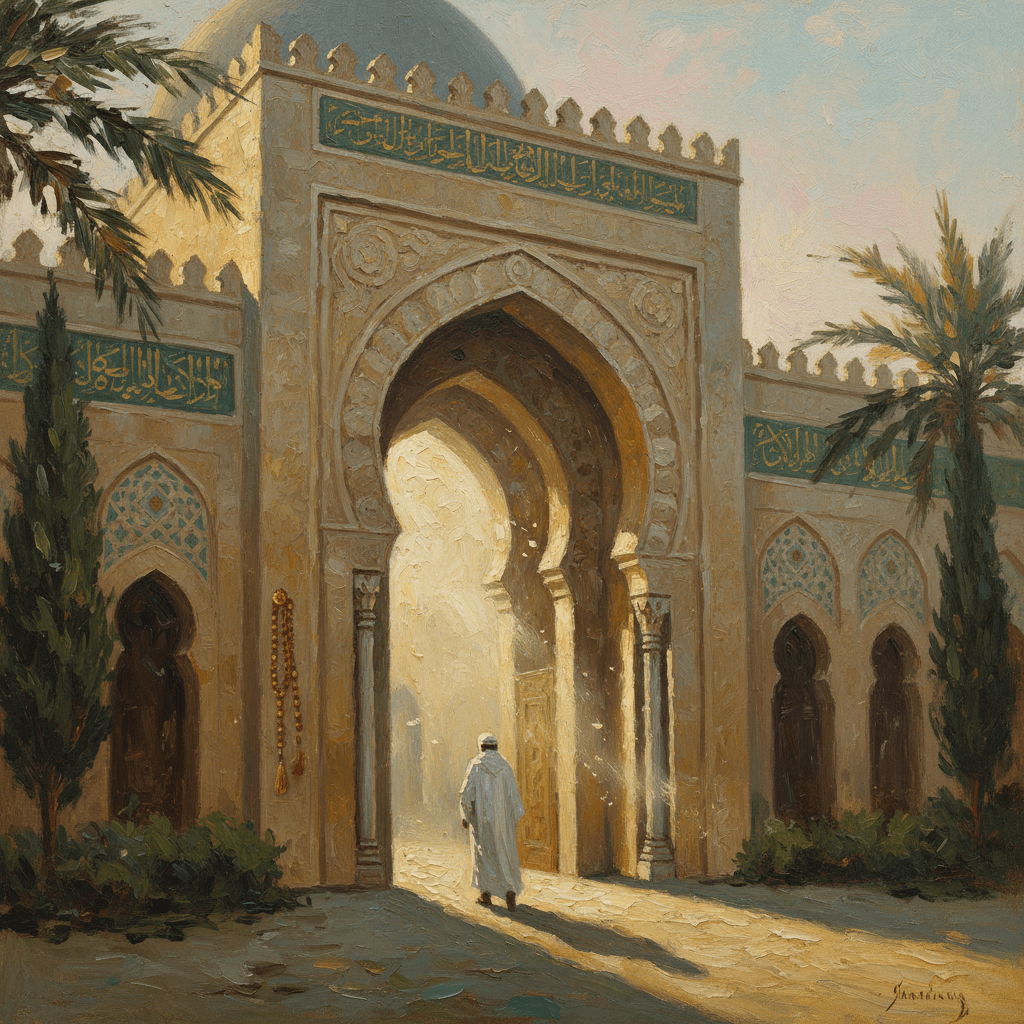
There is a surah in the Quran named after Light. And in its thirty-fifth verse sits one of the most famous, most analyzed, most beautiful passages in all of scripture — a description of Allah as the Light of the heavens and earth.
That verse is the heart of understanding the name An-Noor.
What An-Noor Actually Means
An-Noor (النُّور) is one of the 99 names of Allah (al-Asma ul-Husna). The word noor in Arabic means light — not the physical light of the sun, though that too is a manifestation, but the broader reality of illumination: guidance, truth, clarity, understanding.
The name An-Noor applied to Allah carries a specific theological weight. It does not simply mean that Allah made light. It means that Allah is the source and essence of all true light. Every photon of physical light, every moment of spiritual clarity, every illumination of understanding — these all derive from Him.
Ibn al-Qayyim wrote that among the meanings of Allah as An-Noor is that:
- He is illuminated in Himself (His own essence is light, and the Hadith Qudsi states: "His hijab is light — if He were to remove it, the glorification of His face would burn everything His sight reaches." — Sahih Muslim 179)
- He illuminates creation — the sun, moon, and every light in the universe
- He illuminates the hearts of believers — through the Quran, through the Prophet ﷺ, through guidance
Ayat-un-Noor — The Verse of Light
The most profound expression of this name in the Quran:
اللَّهُ نُورُ السَّمَاوَاتِ وَالْأَرْضِ ۚ مَثَلُ نُورِهِ كَمِشْكَاةٍ فِيهَا مِصْبَاحٌ ۖ الْمِصْبَاحُ فِي زُجَاجَةٍ ۖ الزُّجَاجَةُ كَأَنَّهَا كَوْكَبٌ دُرِّيٌّ يُوقَدُ مِنْ شَجَرَةٍ مُبَارَكَةٍ زَيْتُونَةٍ لَا شَرْقِيَّةٍ وَلَا غَرْبِيَّةٍ يَكَادُ زَيْتُهَا يُضِيءُ وَلَوْ لَمْ تَمْسَسْهُ نَارٌ ۚ نُورٌ عَلَىٰ نُورٍ
"Allah is the Light of the heavens and earth. The example of His light is like a niche within which is a lamp, the lamp is within glass, the glass as if it were a pearly star, lit from the oil of a blessed olive tree, neither of the east nor of the west, whose oil would almost glow even if untouched by fire. Light upon light."
— (Quran, An-Noor, 24:35)
Noorun ala noor — Light upon light.
The great exegetes spent volumes unpacking this one verse. The niche (mishkaat) is understood by many scholars as the chest of the believer. The lamp is the heart. The glass is the purity of the soul. The oil of the blessed olive tree is prophetic guidance. The fire is divine tawfiq — the enabling grace from Allah. And the result: noorun ala noor — the light of the heart combining with the light of divine guidance, producing a luminosity that overwhelms all darkness.
This is the experiential reality of Islam for those who practice it sincerely. Not doctrine, but light.
Why Modern Muslims Struggle With Feeling This
The crisis of spiritual darkness is one of the most common experiences reported by Muslims. People who pray, who fast, who say the right words — but feel empty. Feel like the light is not there. Feel like they are going through motions.
The name An-Noor points to the reason and the remedy. Spiritual darkness is not the absence of Allah — He is always An-Noor, always illuminating. Spiritual darkness is the accumulation of veils between the heart and that light.
What creates veils? The Quran and Sunnah identify several:
- Sin (dhunub), especially persistent and unrepented sin
- Heedlessness (ghafla) — mechanically performing worship without presence
- The company of those far from Allah
- Excessive attachment to the dunya — its entertainment, its anxieties, its social pressures
- The whispers of Shaytan, which the Quran explicitly contrasts with Allah's light (2:257)
The path to An-Noor is not to generate light from within yourself — you cannot. It is to remove the veils so His light can enter.
How to Seek Divine Light Daily
The Dua for Light — From the Sunnah
The Prophet ﷺ taught a comprehensive dua for divine illumination, said after wudu or during the night prayer:
اللَّهُمَّ اجْعَلْ فِي قَلْبِي نُورًا، وَفِي لِسَانِي نُورًا، وَاجْعَلْ فِي سَمْعِي نُورًا، وَاجْعَلْ فِي بَصَرِي نُورًا، وَاجْعَلْ مِنْ خَلْفِي نُورًا، وَمِنْ أَمَامِي نُورًا، وَاجْعَلْ مِنْ فَوْقِي نُورًا، وَمِنْ تَحْتِي نُورًا
Allahumma aj'al fi qalbi nooran, wa fi lisani nooran, waj'al fi sam'i nooran, waj'al fi basari nooran, waj'al min khalfi nooran, wa min amamii nooran, waj'al min fawqi nooran, wa min tahti nooran
"O Allah, place light in my heart, light on my tongue, light in my hearing, light in my sight, light behind me, light in front of me, light above me, light below me."
— (Sahih Muslim 763)
This dua is extraordinary in its scope: light in every direction, every faculty, every dimension of existence. Saying this regularly is an active request to An-Noor for His illumination.
Quran as Light
Allah describes the Quran as noor — light: "There has come to you from Allah a light and a clear Book." (5:15). The Quran is not just information — it is light that penetrates the heart and illuminates from within. This is why consistent Quran recitation produces a qualitative change in the believer's inner life, not just their knowledge base.
Salah as Light
The Prophet ﷺ said: "The prayer is light." (Sahih Muslim 223). Each prayer is a direct connection to An-Noor — a renewal of the light that the busyness of the day tends to dim. The Muslim who prays five times daily is receiving light five times daily. Missing prayer is not just missed obligation — it is missed light.
Dhikr as Light
The remembrance of Allah (dhikr) is described in the Quran as the practice that makes the heart come alive (13:28). It is, functionally, plugging into the source of light. The heart disconnected from dhikr is a lantern with no flame — structurally intact but dark.
Fill Your Day With Divine Light Through Dhikr
DeenBack helps you build a consistent dhikr and prayer habit — the daily practices that open the heart to Allah's light and keep the spiritual flame burning.


Free download. Premium features available in-app.
Signs of Progress — When Light Is Entering
How do you know the divine light of An-Noor is growing in your heart? Some signs the scholars describe:
- Discernment increases. You can distinguish truth from falsehood more easily — this is the furqan (criterion) the Quran associates with taqwa (3:68).
- The dunya feels lighter. Attachment to worldly things — money, status, validation — naturally loosens. What the nafs clung to begins to feel less essential.
- Ibadah begins to feel meaningful. Prayer, Quran, dhikr shift from feeling mechanical to genuinely reaching something. Not every day — but consistently more often.
- Gratitude becomes more natural. Beauty in the world is noticed and attributed correctly. Alhamdulillah comes from the heart, not just the lips.
- Difficult situations produce patience rather than panic. Not because the difficulties disappear, but because the heart has a reference point — the Light that does not go out.
These are not dramatic mystical experiences. They are quiet, consistent changes that come from consistent practice.
Common Questions
Why does Allah describe Himself as "Light"? Can He literally be compared to light? No — the tanzih (transcendence) of Allah means He is beyond all comparison. Scholars understand the verse "Allah is the Light" not as a literal comparison with photons but as an attribute pointing to a divine quality that transcends physical light. He is the Source that enables all illumination — physical and spiritual — in a way that cannot be fully captured by human language.
Can I name my child An-Noor? "An-Noor" as a divine name should not be given to humans with the definitive article implying the divine attribute. The name "Noor" (without "An-") is perfectly acceptable for girls and refers to created light — it is a common, beautiful, and completely appropriate Muslim name.
Is Surah An-Noor (chapter 24) related to this name? Yes. Surah An-Noor is named for the famous Ayat-un-Noor (24:35). The surah itself deals with themes of moral purity, social ethics, and spiritual enlightenment — all dimensions of what it means to live in the light of An-Noor's guidance.
For related duas, see dua for light in heart and dua for noor. For the broader context of the divine names, 99 names of Allah with meaning and asma ul husna benefits provide the full picture.
The Light That Never Goes Out
The remarkable thing about Allah as An-Noor is that He does not fluctuate. He does not dim when you fail. He does not withdraw when you sin. The sun continues to rise — your clouds may block it, but the sun does not disappear.
Your spiritual task is not to create light — it is to clear the clouds. Tawbah removes the clouds of sin. Consistent salah keeps the connection open. Dhikr prevents the clouds of heedlessness from gathering. Quran recitation lets the light enter through words that are themselves light.
Al-Imam al-Ghazali wrote that the heart in its natural state is a mirror facing the divine light. Sin, heedlessness, and excessive worldly attachment are rust on the mirror. The practice of Islam — all of it — is the polishing of that mirror.
Polish it daily. The light is waiting.
Start Polishing Your Mirror Today
DeenBack tracks your daily salah, dhikr, and Quran habits — the consistent practices that polish the heart and open it to the light of An-Noor.
Free download. Premium features available in-app.
Frequently Asked Questions
What does An-Noor mean in Islam?
An-Noor (النُّور) means The Light. It is one of the 99 names of Allah (Asma ul Husna). This name signifies that Allah is the source of all light — physical, spiritual, and metaphysical. He is the Light that illuminates the heavens and earth, and He guides to His light whoever He wills.
Where does the name An-Noor appear in the Quran?
The most famous reference is Ayat-un-Noor (Quran 24:35): 'Allah is the Light of the heavens and earth. The example of His light is like a niche within which is a lamp...' This ayah is considered one of the most profound in the Quran and directly attributes the essence of Light to Allah.
How is Allah The Light (An-Noor)?
Allah is An-Noor in three senses: He is light in Himself (His essence is light), He gives light to the heavens and earth through His creation and guidance, and He is the light of the hearts — guiding believers through the Quran, the Prophet ﷺ, and divine tawfiq (divine enabling). Everything illuminated in existence derives its light from Him.
Can I use An-Noor as a name for my child?
An-Noor as a name for Allah should not be given to humans as-is (with the definite article 'An-'). However, 'Noor' without the definitive article is a common and beautiful Muslim name for girls meaning light — it refers to created light, not to divine light. Many scholars accept this distinction.
What is the dua for light in Islam?
The Prophet ﷺ taught a comprehensive dua for divine light: 'Allahumma aj'al fi qalbi nooran, wa fi lisani nooran, wa aj'al fi sam'i nooran...' — O Allah, place light in my heart, light on my tongue, light in my hearing...' This dua appears in various forms in Sahih Muslim (763) and Sahih Bukhari (6316).