
- Published on
Al-Quddus Meaning: How the All-Pure Name of Allah Purifies Your Heart
- Authors

- Name
- Ahmad
- Role
- Senior Marketing Manager, Islamic education • Deen Back
بِسْمِ اللهِ الرَّحْمٰنِ الرَّحِيْمِ
In the name of God, the Most Gracious, the Most Merciful.
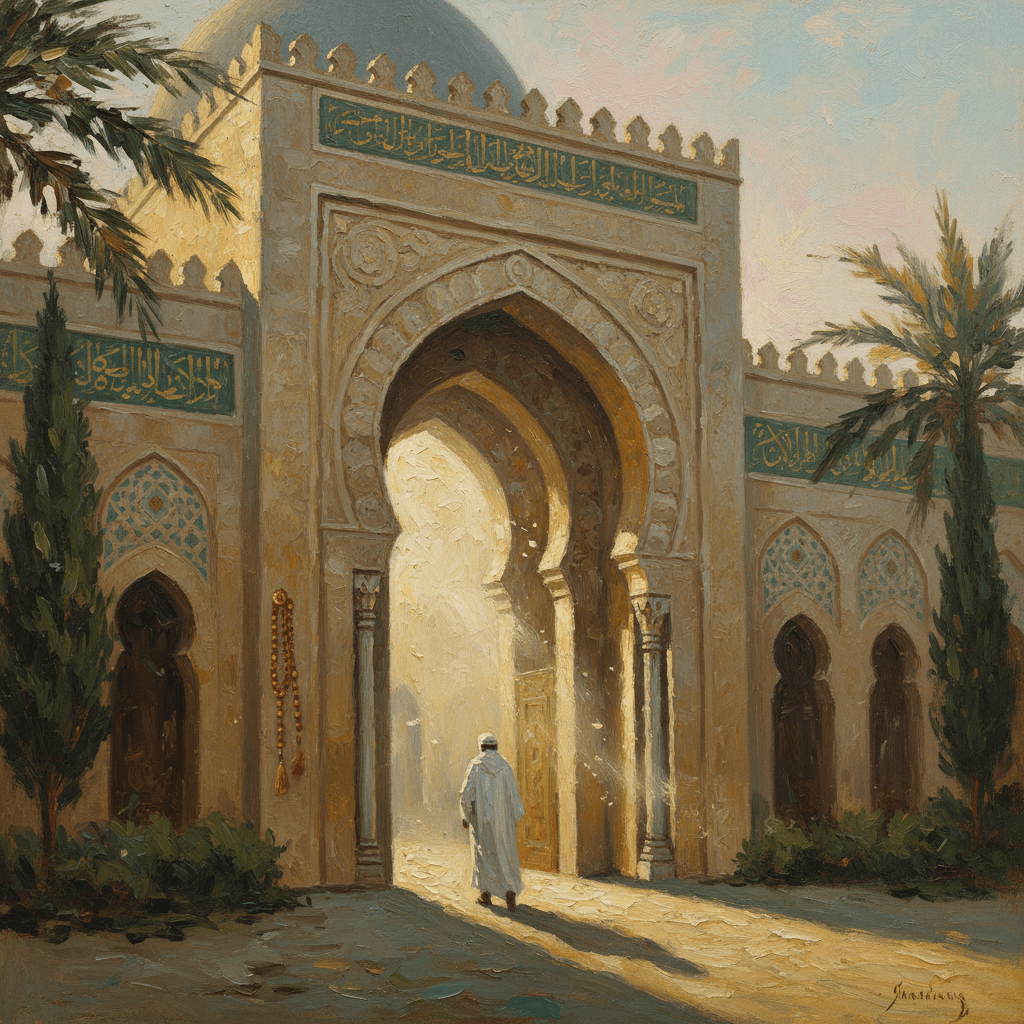
You have felt it — the moment you step away from prayer and realize your mind was somewhere else for most of it. The moment you complete dhikr and know your tongue was moving but your heart was absent.
There is something about standing before the Absolutely Pure that makes our own impurity impossible to hide from ourselves.
That is not a bad feeling. That is Al-Quddus working on you.
What Al-Quddus Actually Means
Al-Quddus — الْقُدُّوسُ — comes from the Arabic root q-d-s, which carries the meaning of absolute holiness and purity. This is not the kind of purity that requires effort, the purity that you achieve and then maintain. This is the purity that is intrinsic, complete, and without the slightest shadow of imperfection.
هُوَ اللَّهُ الَّذِي لَا إِلَٰهَ إِلَّا هُوَ الْمَلِكُ الْقُدُّوسُ السَّلَامُ
Huwal-Allahul-ladhi la ilaha illa huwa al-Maliku al-Quddusus-Salam
"He is Allah, there is no god but Him — the King, the Holy, the Source of Peace..."
— (Surah Al-Hashr, 59:23)
Notice what comes before and after Al-Quddus in this verse: Al-Malik (the King) and As-Salam (the Source of Peace). The Quran is not randomly placing these Names. Al-Quddus sits between absolute authority and absolute peace — because purity is the bridge between power and tranquility. Only the Absolutely Pure can be the Source of Peace without any corruption of that peace.
Al-Quddus also appears in Surah Al-Jumu'ah (62:1), where everything in the heavens and earth glorifies Allah, described as "the King, the Holy, the Mighty, the Wise." When the angels glorify Allah, the hadith tells us they say:
سُبُّوحٌ قُدُّوسٌ رَبُّ الْمَلَائِكَةِ وَالرُّوحِ
Subbuhun Quddusun Rabbul-malaikati war-ruh
"He is glorified, He is holy, the Lord of the angels and the Spirit."
— (Sahih Muslim 487)
The Prophet ﷺ himself recited this in his ruku and sujood. It was the whisper of the prophets, the praise of the angels, and now it is available to you in every prayer.
Why Modern Muslims Struggle With This
Here is the paradox of Al-Quddus: the more we understand how absolutely pure Allah is, the more aware we become of our own impurity.
This can go two ways. It can push you toward growth — "I want to bring something cleaner to this worship." Or it can push you into shame-spiraling — "I am too impure to even approach Allah properly."
The nafs loves the shame spiral, because shame is paralysis. Shame says: "You do not deserve to pray after what you did." Shame says: "Your wudu is fine physically, but you are spiritually dirty." Shame says: "Skip it."
The correct response to Al-Quddus is not shame — it is the response the Prophet ﷺ modeled: more glorification, more istighfar (seeking forgiveness), and more prayer. Not less. Because you approach the Absolutely Pure not with perfect purity (which you can never have) but with sincere desire for it. And Al-Quddus — the Holy — accepts the sincerely repentant heart that is moving in His direction, even if it is still imperfect.
How to Practice This Daily
1. Let Al-Quddus motivate your purification, not paralyze you
Every time you make wudu, you are doing more than a physical act. You are preparing to stand before Al-Quddus. Let that Name be in your awareness as the water runs over your hands, your face, your arms.
The Quran connects physical and spiritual purification repeatedly. The Prophet ﷺ said:
"Purity is half of iman."
— (Sahih Muslim 223)
Not because washing your hands makes you righteous, but because the external discipline of physical purification trains and reflects an internal orientation toward Allah's purity.
2. Use the al-Quddus dhikr in your ruku and sujood
The Prophet ﷺ is narrated to have recited Subbuhun Quddusun Rabbul-malaikati war-ruh in his ruku and sujood. If you want to bring this Name into your body — because that is how spiritual practice works, it becomes embodied — start saying this in your sujood.
Sujood is the closest you physically get to Allah in salah. Your face is on the ground. You are in the posture of complete submission. And in that moment, you are saying: "The One I am submitting to is Absolutely Holy."
3. Clean your intentions before worship
Al-Quddus invites you to bring the clearest intentions you can. Before salah, pause for three seconds. Why are you praying? Is it for show? Habit? Fear? Or because the Absolutely Pure deserves your attention?
You will not always get the intention perfectly clean — that is part of being human. But the practice of checking it moves your worship from autopilot to presence.
4. Respond to your sins with movement, not paralysis
When you sin — and you will — the response Al-Quddus calls for is not "I am too dirty, I cannot pray." The response is immediate tawbah, immediate return, and immediate re-engagement with worship. The Quran says: "Indeed, Allah loves those who are constantly repentant and loves those who purify themselves." (Surah Al-Baqarah, 2:222)
The word "constantly repentant" is key. It is not about being sin-free. It is about being perpetually turned toward Al-Quddus.
Build habits that honor Al-Quddus every day
DeenBack tracks your daily salah, wudu habits, dhikr, and Quran recitation — helping you approach the Absolutely Pure with more consistency, more intention, and more presence every single day.


Free download. Premium features available in-app.
Signs of Progress
You know Al-Quddus is working in your heart when:
- Wudu feels like a meaningful preparation, not just a routine checklist
- You naturally pause before worship to make your intention more sincere
- You respond to your own sins with immediate tawbah rather than prolonged shame
- Salah feels qualitatively different from other activities — not just a time slot, but a different mode of being
These shifts are gradual. But they are real.
Explore the Names Together
Al-Quddus pairs naturally with several other Names that deepen the same themes:
- Asma ul-Husna benefits — the complete framework for understanding all 99 Names
- 99 names of Allah with meaning — a full reference for reflection
- What is taqwa in Islam — because taqwa (God-consciousness) is the spiritual posture that Al-Quddus naturally cultivates
- Names of Allah for protection — companion Names that pair with Al-Quddus's call to purity
Common Questions
How is Al-Quddus different from Al-Tahir (the Pure)? Al-Tahir is not one of the commonly listed 99 Names but appears in Islamic literature. Al-Quddus, which appears in the Quran, is the more comprehensive term — it includes freedom from all defects, all needs, all partners, and all imperfections in the most absolute possible sense. Al-Quddus is beyond any comparison.
Does saying Al-Quddus's name help me become purer? Directly invoking a Name of Allah changes your internal orientation, which changes your behavior. Saying "Ya Quddus" before salah does not magically purify you — but it places your mind in the correct frame for what follows. Purity grows through consistent practice: wudu, truthful speech, clean intentions, avoidance of sin. Al-Quddus is the goal that motivates the practice.
Can I say "Subhana Rabbiya Al-Quddus" as dhikr? The specific phrases in ruku and sujood that include Al-Quddus are Subbuhun Quddusun Rabbul-malaikati war-ruh (Sahih Muslim 487). You can also use "Subhana Rabbiya al-Quddus" as general glorification — it follows the form of established tasbih and is widely used in Islamic tradition.
Closing
Al-Quddus is the Name that holds a mirror up to your soul.
Not to shame you. Not to paralyze you. But to show you where you are, where He is, and invite you to keep moving in His direction.
Every wudu you make is a small movement toward Al-Quddus. Every honest intention before salah is a step. Every istighfar after a sin is a reset that He — the Holy, the Tawwab — accepts.
You are not required to be perfect. You are required to be moving toward Him. That is what Al-Quddus calls you to.
Move toward purity, one day at a time
Al-Quddus invites you into a life of increasing purity and presence. DeenBack helps you track the daily habits — prayer, wudu, dhikr, Quran — that keep you oriented toward Him.
Free download. Premium features available in-app.
Frequently Asked Questions
What does Al-Quddus mean?
Al-Quddus (الْقُدُّوسُ) means the Absolutely Pure, the Sacred, the Holy. It comes from the Arabic root q-d-s which means holiness and purity at the highest level. Unlike human purification which is relative and temporary, Allah's purity is absolute and complete — He is free from all defects, needs, partners, and imperfections.
Where does Al-Quddus appear in the Quran?
Al-Quddus appears twice in the Quran — in Surah Al-Hashr (59:23) and Surah Al-Jumu'ah (62:1), where Allah is described with this Name alongside Al-Malik (the King), Al-Aziz (the Mighty), and Al-Hakeem (the Wise). Both appearances are in contexts that describe Allah's complete sovereignty and perfection.
How does reflecting on Al-Quddus help me in daily life?
Al-Quddus reminds you that the One you worship is completely pure — which means what you bring to that worship matters. Reflecting on Al-Quddus naturally motivates you to purify your intentions, clean your heart from riya (showing off) and hasad (envy), and approach every prayer in a state of wudu and sincere focus.
Is Al-Quddus one of the 99 Names of Allah?
Yes. Al-Quddus is one of the 99 Most Beautiful Names (Asma ul-Husna). The hadith in Sahih Bukhari (2736) references this list, and Al-Quddus is included in the classical scholarly compilations of the Names based on Quranic and hadith evidence.
What dhikr can I say using the name Al-Quddus?
The Prophet ﷺ recited in ruku and sujood: 'Subbuhun Quddusun Rabbul-malaikati war-ruh' — 'He is glorified, He is holy, the Lord of the angels and the Spirit' (Sahih Muslim 487). This is a dhikr that directly invokes Al-Quddus's purity. You can also recite 'Subhanaka Allahumma wa bihamdika, Ashhadu alla ilaha illa anta, Astaghfiruka wa atubu ilayk' — the glorification that connects purity of Allah with our need for forgiveness.