
- Published on
Al-Jabbar: The Name of Allah That Heals the Broken
- Authors

- Name
- Ahmad
- Role
- Senior Marketing Manager, Islamic education • Deen Back
بِسْمِ اللهِ الرَّحْمٰنِ الرَّحِيْمِ
In the name of God, the Most Gracious, the Most Merciful.
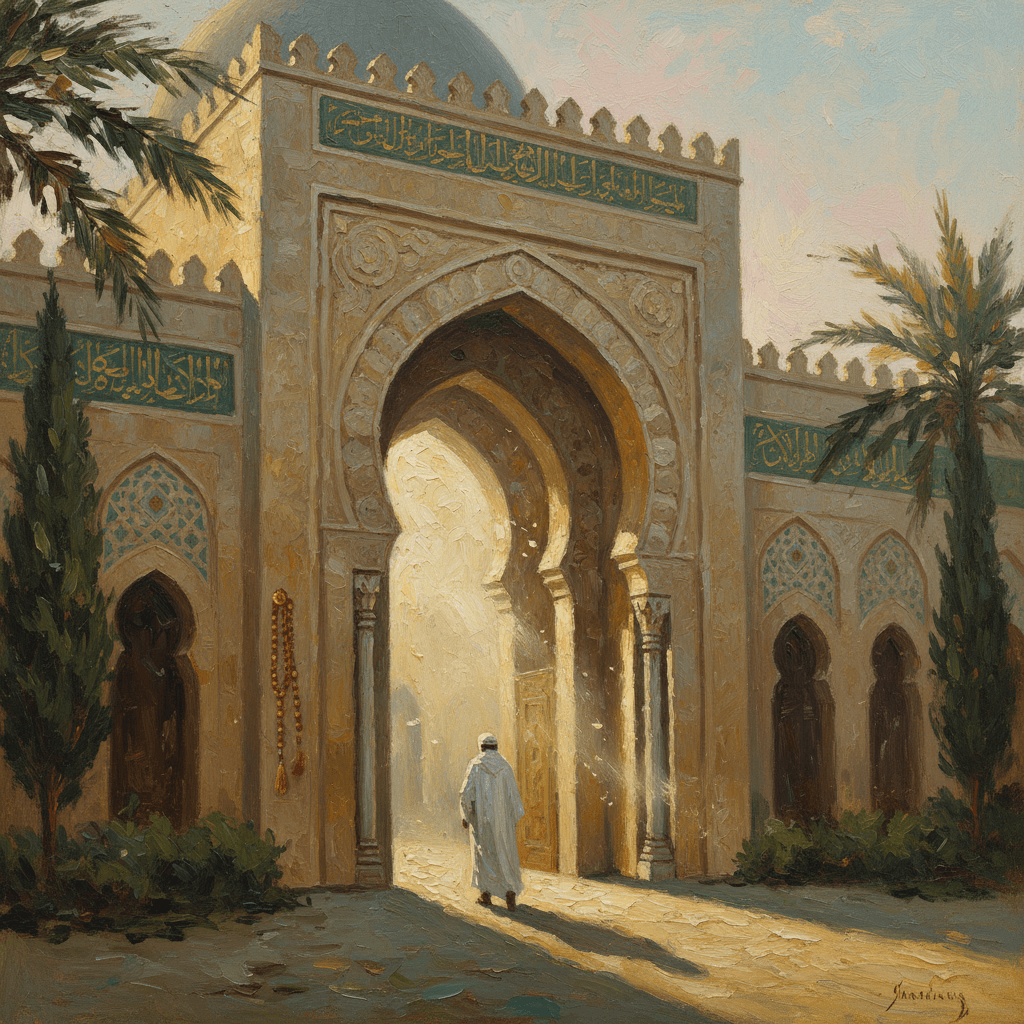
There is something you feel after a certain kind of failure. Not embarrassment. Not just regret. The specific sensation of being broken — like something inside cracked and did not set properly, and now you move differently.
Maybe it was a relationship. A business that collapsed. A sin you committed again after you swore you had stopped. A part of your deen that you let go of for so long that you cannot seem to find it again.
For these moments, there is a name of Allah that speaks directly to where you are: Al-Jabbar — الجبار.
What Al-Jabbar Actually Means
The name Al-Jabbar carries two distinct and complementary meanings, both rooted in the Arabic root j-b-r (ج-ب-ر).
The Compeller: The One whose will is absolute and irresistible. Allah is not a being who can be opposed, overridden, or thwarted. When He decides something, it happens. This aspect of Al-Jabbar describes His supremacy over all creation.
The Restorer: The One who sets broken things right. In classical Arabic, a jabbar was a bone-setter — someone who took fractured bones and aligned them so they could heal. The practice of jabr (bone-setting) gave mathematics the word algebra — al-jabr, the restoration of broken parts of an equation.
Al-Jabbar is both: the One who holds authority over everything, and the One who restores what is broken within it. The combination is unique. There are names for Allah's power. There are names for Allah's mercy. Al-Jabbar is the name for the power that operates specifically toward restoring the broken.
Where Al-Jabbar Appears in the Quran
Allah lists Al-Jabbar explicitly in Surah Al-Hashr:
هُوَ اللَّهُ الَّذِي لَا إِلَٰهَ إِلَّا هُوَ الْمَلِكُ الْقُدُّوسُ السَّلَامُ الْمُؤْمِنُ الْمُهَيْمِنُ الْعَزِيزُ الْجَبَّارُ الْمُتَكَبِّرُ
"He is Allah, other than whom there is no deity: the King, the Holy, the Peace, the Granter of Security, the Overseer, the Exalted in Might, the Compeller, the Superior."
— (Surah Al-Hashr, 59:23)
This is one of the densest clusterings of Allah's names in the Quran. Al-Jabbar appears here alongside names that describe His sovereignty, His holiness, His protection, and His exaltation. The name is placed at the heart of a verse about who Allah fundamentally is — not what He does on certain occasions, but His essential nature.
For more on the names appearing alongside Al-Jabbar in this verse, see Al-Muhaymin meaning and Al-Quddus meaning.
Why Al-Jabbar Matters to the Struggling Muslim
Most Muslims encounter Al-Jabbar as "the Compeller" and leave it at that. The compeller feels distant — powerful, yes, but not immediately applicable to a Tuesday morning when you are trying to get up for Fajr and failing again.
But the bone-setter dimension changes everything.
When a bone breaks and heals incorrectly, the treatment is re-fracture and proper setting. The bone-setter causes temporary pain for permanent restoration. The process is not gentle. But the intention behind it is entirely toward health.
This is the model of Al-Jabbar. When circumstances break your plans, when your nafs repeatedly breaks your commitments, when life fractures the version of yourself you thought you were becoming — Al-Jabbar is the One whose power moves toward restoration. Not just power. Not just judgment. Specifically: restoration of the broken.
The Prophet ﷺ said:
"Wondrous is the affair of the believer, for there is good for him in every matter — and this applies only to the believer. If good times come his way, he expresses gratitude to Allah and that is good for him. If hardship comes his way, he endures it patiently and that is also good for him."
The one who calls on Al-Jabbar in their brokenness is not asking for things to go back to how they were. They are asking for what Al-Jabbar actually does: to set the fracture right, in whatever form restoration needs to take.
Call on Al-Jabbar Through Consistent Daily Dhikr
DeenBack helps you build a dhikr habit that goes beyond routine — turning each name of Allah into a living remembrance that transforms how you handle hardship and brokenness.


Free download. Premium features available in-app.
How to Engage With Al-Jabbar in Daily Life
In sujood (prostration): The Prophet ﷺ used to make long, personal duas in sujood. This is the place where you are closest to Allah. Name your brokenness here. "Ya Jabbar — you are the Restorer. This part of me is broken. I am not asking you to remove the pain. I am asking you to set it right."
When plans collapse: When something you invested in — time, money, effort, hope — falls apart, Al-Jabbar is the name to call on. Not to get the thing back necessarily, but to trust that the One who is Compeller over all circumstances is also the One who restores.
When you relapse into a sin: The cycle of sinning and returning is one of the most demoralizing patterns in a Muslim's spiritual life. Calling on Al-Jabbar specifically — rather than just asking for forgiveness generally — reframes the request: you are not just asking for the slate to be wiped. You are asking for the fracture in your will to be properly set so it heals correctly this time.
In your morning dhikr: After Fajr, add "Ya Jabbar" to your personal dhikr, especially during periods of difficulty. Combine it with names of Allah for healing and names of Allah for protection.
Signs of Progress
You are engaging meaningfully with Al-Jabbar when:
- Setbacks stop feeling permanent — you begin to sense that the One who holds all things is also the One who restores
- You stop hiding your brokenness from Allah in dua and start bringing it to Him specifically
- You can sit with the pain of a fracture — spiritual or otherwise — without panicking, because you know the Bone-Setter is present
Common Questions
Is Al-Jabbar one of the 99 names of Allah? Yes. Al-Jabbar is listed among the 99 names (asma ul husna) and appears explicitly in the Quran (59:23). It is one of the names whose dual meaning — compeller and restorer — repays serious reflection.
Is it disrespectful to address Allah as Al-Jabbar when asking for help? Not at all. Calling on Allah by His names in dua is explicitly encouraged in the Quran: "And to Allah belong the best names, so invoke Him by them" (7:180). Calling on Al-Jabbar specifically when you feel broken is precisely the appropriate use — you are addressing Allah by the attribute most relevant to your need.
Does Al-Jabbar imply that Allah forces good onto people against their will? No. "Compeller" in the context of Al-Jabbar refers to Allah's supremacy — His will cannot be thwarted. It does not mean He removes human free will. The restoration meaning is voluntary — you turn to Him for it. See also what is taqwa in Islam for a discussion of Allah's sovereignty alongside human responsibility.
Let Al-Jabbar Be Your Daily Anchor in Hard Times
DeenBack gives you a space to build a dhikr practice rooted in the names of Allah — so that when brokenness comes, you have a practiced habit of turning to the One who restores.
Free download. Premium features available in-app.
Frequently Asked Questions
What does Al-Jabbar mean?
Al-Jabbar (الجبار) has two primary meanings: The Compeller — the One whose will is absolute and cannot be opposed; and The Restorer/Repairer — the One who sets broken things right. In classical Arabic, jabara means to set a broken bone. Al-Jabbar is the One who heals, restores, and completes what is broken in His creation.
Where does Al-Jabbar appear in the Quran?
Al-Jabbar appears explicitly in Surah Al-Hashr (59:23): 'He is Allah, other than whom there is no deity, the King, the Holy, the Peace, the Granter of Security, the Overseer, the Exalted in Might, the Compeller (Al-Jabbar), the Superior.' This is one of the few ayat listing multiple names of Allah together.
How is Al-Jabbar different from Al-Aziz or Al-Qadir?
Al-Aziz (the Mighty) emphasizes Allah's undefeatable power. Al-Qadir (the Able) emphasizes His ability to do anything. Al-Jabbar combines power with restoration — He compels creation by His will and simultaneously restores what is broken in it. It is the name that links divine authority with divine mercy toward the broken and the struggling.
Can I make dua using the name Al-Jabbar?
Yes. The Prophet ﷺ said: 'Subhana rabbi al-a'la' (Glory be to my Lord, the Most High) is said in sujood, which uses the name Al-A'la. Similarly, calling on Allah by His names is encouraged in dua: 'Ya Jabbar, restore what is broken in me.' Calling on Al-Jabbar specifically is appropriate when you feel broken, overwhelmed, or when circumstances have crushed your plans.
What is the connection between Al-Jabbar and bone-setting in Arabic?
The Arabic root j-b-r (ج-ب-ر) is the root for both the name Al-Jabbar and the medical practice of jabr — setting broken bones. A bone-setter in classical Arabic medicine was called a jabbar. This root gives Al-Jabbar its secondary meaning: the One who mends, sets right, and restores. The same root gave mathematics its word 'algebra' — from al-jabr, meaning the restoration of broken parts of an equation.