
- Published on
What Is Shab e Barat? The Night of Forgiveness Explained
- Authors

- Name
- Ahmad
- Role
- Senior Marketing Manager, Islamic education • Deen Back
بِسْمِ اللهِ الرَّحْمٰنِ الرَّحِيْمِ
In the name of God, the Most Gracious, the Most Merciful.
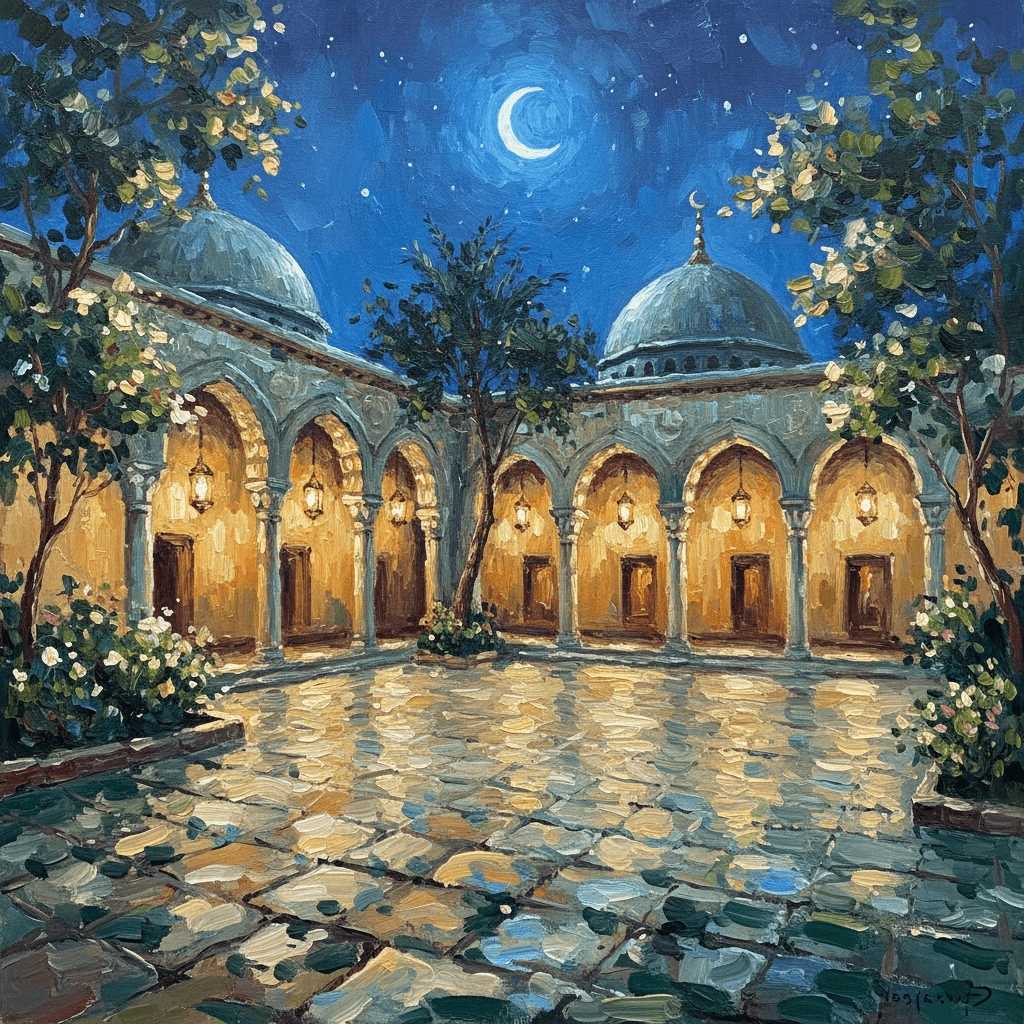
There are nights in the Islamic calendar that carry a different quality of possibility. Nights when the ordinary rules of du'a and repentance seem amplified, when the distance between the servant and Allah feels thinner.
The 15th of Sha'ban is one such night.
Across the Muslim world — from South Asia to Southeast Asia to the Arab world — Muslims have set aside this night for worship, seeking forgiveness, and extended prayer. Understanding what is established and what is cultural addition is essential if you want to spend this night in a way that is genuinely meaningful.
What the Night Actually Is
Shab e Barat (شب برات) is a Persian/Urdu term meaning "Night of Freedom" or "Night of Absolution." In Arabic it is called Laylat al-Bara'ah or Laylat al-Nisf min Sha'ban — the night of the middle of Sha'ban.
The 15th of Sha'ban falls in the middle of the eighth month of the Islamic calendar, roughly two weeks before Ramadan begins. As a night, it begins at Maghrib of the 14th and ends at Fajr of the 15th.
The significance comes from several hadith. The most cited is narrated from Mu'adh ibn Jabal (ra) that the Prophet ﷺ said:
"Allah looks at His creation on the night of the 15th of Sha'ban and forgives all of them except one who associates partners with Him or harbors enmity in his heart." — (Ibn Hibban 5665; authenticated by numerous scholars including Sheikh al-Albani)
Another narration describes Allah descending to the lowest heaven — as He descends every night in the last third — with expanded mercy on this specific night, calling out: "Is there anyone seeking forgiveness that I may forgive them? Is there anyone seeking provision that I may provide for them? Is there anyone in distress that I may relieve their distress?" (Tirmidhi 739)
This is the theological core: a night of expanded divine attention, mercy, and forgiveness.
Why Modern Muslims Struggle to Relate to This Night
The cultural observances around Shab e Barat in South Asia include fireworks, sweets, communal celebrations, and elaborate lighting displays. For many Muslims who grew up with these traditions, the night is associated with family and festivity rather than personal repentance.
For other Muslims — particularly those influenced by more austere scholarship — the entire night is dismissed as innovation because the specific hadith are debated.
Both extremes miss what is most valuable: a night that has genuine evidential basis for spending in worship, provided you strip away cultural additions that have no Prophetic foundation.
The nafs will use the controversy as an excuse. "Scholars disagree, so why bother?" That is the nafs talking. The principle of seeking forgiveness — any night, any opportunity — is not controversial. If this night carries extra virtue, excellent. If not, you have still spent a night in prayer and istighfar. That is never wasted.
How to Spend Shab e Barat Well
The Prophetic pattern for nights of special virtue is simple and consistent. It does not involve elaborate new rituals. It involves what the Prophet ﷺ always did when seeking extra nearness to Allah: voluntary prayer, dua, and recitation.
Pray night prayers (qiyam al-layl). The night begins at Maghrib. Pray Maghrib and Isha, then continue with nafil (voluntary) prayers after Isha. There is no specific number of rakats tied to this night in authentic hadith — simply pray as much as you are able, as the Prophet ﷺ regularly did on any significant night.
Make intensive istighfar. The night is specifically linked to forgiveness. Use it:
أَسْتَغْفِرُ اللَّهَ الْعَظِيمَ الَّذِي لَا إِلَٰهَ إِلَّا هُوَ الْحَيُّ الْقَيُّومُ وَأَتُوبُ إِلَيْهِ
Astaghfirullahal-'Azim alladhi la ilaha illa huwal-Hayyal-Qayyum wa atubu ilayh
"I seek forgiveness from Allah the Magnificent, besides whom there is no god, the Ever-Living, the Self-Sustaining, and I repent to Him."
The how to make sincere tawbah guide is worth reading before this night — genuine repentance has conditions, and sincerity matters more than volume. The dhikr for forgiveness practice pairs naturally with the night's emphasis on istighfar.
Make dua for the living and the deceased. Visiting graves or praying for deceased relatives and family members is narrated for this night from the Prophet ﷺ, who went to the Baqi cemetery and prayed for the deceased. (Sahih Muslim 974) This is the authentic Sunni practice connected to the night.
Fast the day of the 15th. The Prophet ﷺ fasted extensively in Sha'ban — more than any other month. (Sahih Muslim 1156) The 15th is also one of the three "white days" (ayyam al-beed: 13th, 14th, 15th of each month) that the Prophet ﷺ encouraged as a regular Sunnah fast.
Turn Special Nights Into Consistent Practice
DeenBack helps you build on the momentum of nights like Shab e Barat — tracking your daily istighfar, prayer, and dua so every night carries spiritual weight, not just the celebrated ones.


Free to download. A paid plan is required to use the app’s tools.
What Has No Basis in This Night
Being honest about what is and is not established protects the authenticity of your practice:
Fireworks and lighting: No Prophetic or scholarly basis. Purely cultural.
Specific communal prayers with a fixed number of rakats: No authentic narration ties specific numbers to this night.
Distributing sweets: Cultural tradition, not Sunnah.
The belief that everyone's fate for the next year is written on this night: This is sometimes confused with Laylatul Qadr (in Ramadan), which is the established night of divine decree. The 15th of Sha'ban is a night of forgiveness, not the night of qadr.
Strip these away and what remains is pure and powerful: a night of prayer, dua, istighfar, and remembrance.
Signs Progress: Preparing for Ramadan
Sha'ban is the month before Ramadan. The Prophet ﷺ fasted in Sha'ban to prepare — spiritually and physically — for the great month. Shab e Barat, in the middle of Sha'ban, is a natural midpoint: take stock of where your practice is, make tawbah for what has been neglected, and set intentions for Ramadan.
This is not the scholarly justification for the night — the hadith provide that. But it is the practical wisdom. A Muslim who spends the 15th of Sha'ban in sincere worship is more spiritually ready for Ramadan than one who waits until Ramadan itself to begin.
The how to prepare for ramadan guide walks through the full preparation framework.
Common Questions
Is Shab e Barat the same as Laylatul Qadr? No. Laylatul Qadr is in the last ten nights of Ramadan — the night of divine decree, when the Quran was first revealed. It is the greatest night of the year, established without dispute. Shab e Barat is the 15th of Sha'ban, two months earlier, and is associated with divine mercy and forgiveness specifically.
Are the hadith about Shab e Barat authentic? Scholars differ. The most rigorous position is that some hadith on this night are acceptable (hasan) and sufficient to establish the night's virtue, while others are weak. The majority of hadith scholars throughout history have accepted the night's virtue. Acting on hasan hadith for voluntary worship is the standard Islamic scholarly approach.
What about visiting graves on this night? The Prophet ﷺ visited Al-Baqi cemetery on the night of the 15th of Sha'ban and prayed for the deceased. This specific act is authentic and established. (Sahih Muslim 974)
Can I recite specific surahs on this night? There is no narration specifying particular surahs for Shab e Barat beyond what is generally recommended for night prayer (Al-Mulk before sleep, Surah Al-Baqarah for protection). Recite what you know well and can recite with presence.
A Night Worth Using
Whether you have grown up with elaborate Shab e Barat celebrations or have been told the night has no basis — the practical answer is the same: a night when authentic hadith indicate expanded divine mercy is a night to be awake, to be in prayer, to be asking for forgiveness.
You do not need a scholarly certificate of authenticity to make dua tonight. You need sincerity and the courage to sit with your Lord in the quiet of the night.
Build a Practice That Makes Every Night Count
Do not limit your night worship to once a year. DeenBack helps you track nightly prayers, dhikr, and dua so spiritual momentum builds all year, not just on celebrated nights.
Free to download. A paid plan is required to use the app’s tools.
Frequently Asked Questions
What is Shab e Barat?
Shab e Barat (the Night of Absolution) refers to the night of the 15th of Sha'ban — the eighth month of the Islamic calendar. Several hadith describe Allah's special mercy and forgiveness descending on this night. The name comes from Persian/Urdu and means 'Night of Freedom (from hellfire).' In Arabic it is called Laylat al-Bara'ah or Laylat al-Nisf min Sha'ban.
Is Shab e Barat mentioned in the Quran or hadith?
The night is mentioned in several hadith, though scholars differ on their strength. The most cited is from Mu'adh ibn Jabal (ra) that the Prophet ﷺ said: 'Allah looks at His creation on the night of the 15th of Sha'ban and forgives all of them except one who associates partners with Him or harbors enmity.' (Ibn Hibban, graded as acceptable by scholars like Albani). Some scholars also link it to Surah Ad-Dukhan (44:3-4) which mentions 'a blessed night' — though most scholars say this verse refers to Laylatul Qadr.
What should I do on Shab e Barat?
Spend the night in voluntary prayer, dua, istighfar (seeking forgiveness), and recitation of Quran. Fast the day of the 15th of Sha'ban if possible — the Prophet ﷺ used to fast frequently in Sha'ban. Avoid cultural innovations (fireworks, sweets distribution, communal celebrations) that have no Prophetic basis. The night is for personal worship and sincere repentance.
Is fasting on the 15th of Sha'ban authentic?
Fasting in Sha'ban is established — the Prophet ﷺ fasted more in Sha'ban than any other month besides Ramadan. (Sahih Muslim 1156). Specifically fasting the 15th (White Days fasting — 13th, 14th, 15th) is also a general Sunnah. Some scholars add that fasting specifically on the 15th of Sha'ban has extra virtue based on associated narrations.
Do scholars agree on the significance of Shab e Barat?
Scholars are divided. The majority of scholars in the Subcontinent and many in Southeast Asia and the Arab world acknowledge Shab e Barat as a night of special virtue based on the hadith in Ibn Hibban and others. Some scholars (including a minority in Saudi Arabia) consider the specific hadith too weak to act upon. The balanced position: the general principle of Allah's expanded mercy on this night is supported by acceptable narrations; specific innovations (fireworks, public celebrations) have no basis.