
- Published on
White Days Fasting: The Sunnah of Ayyam al-Beed Explained
- Authors

- Name
- Ahmad
- Role
- Senior Marketing Manager, Islamic education • Deen Back
بِسْمِ اللهِ الرَّحْمٰنِ الرَّحِيْمِ
In the name of God, the Most Gracious, the Most Merciful.
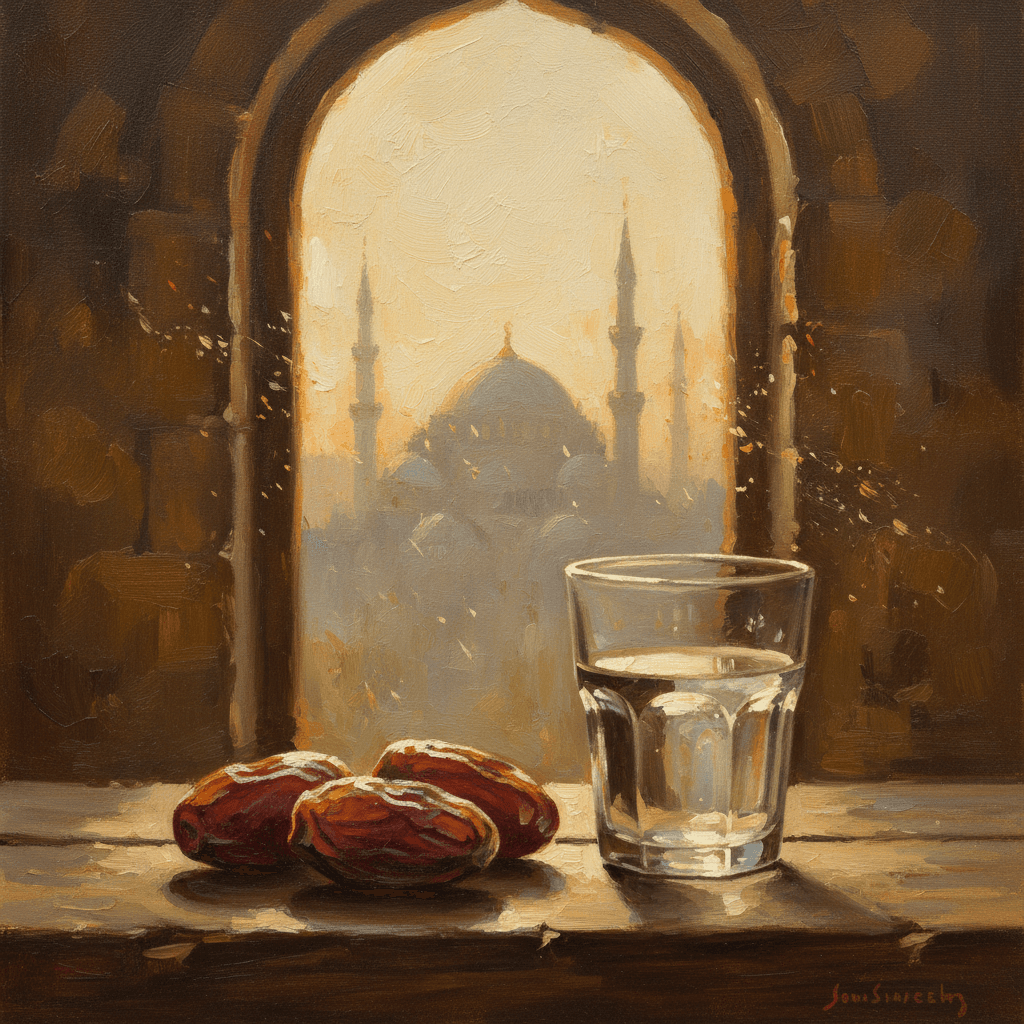
Three days a month. That is the entire ask.
And yet the Prophet ﷺ said that fasting those three days is equivalent in reward to fasting the entire month. Not as a vague promise — as a precise Islamic calculation. Three days, each multiplied tenfold, equals thirty. You fast one tenth of the month and receive credit for all of it.
This is the beauty of Ayyam al-Beed — the white days of fasting — and it is one of the most accessible yet neglected sunnahs for Muslims who want to build a consistent voluntary worship habit.
What Are the White Days and Why That Name
Ayyam al-Beed (أَيَّامُ الْبِيضِ) literally translates as "the white days" — named for the full moon nights that illuminate these three days of each lunar month. The nights of the 13th, 14th, and 15th of every Islamic month are when the moon is at or near its fullest, and the sky, according to the classical Arabic tradition, is white with moonlight.
The Prophet Muhammad ﷺ fasted these days consistently. Abu Dharr al-Ghifari رضي الله عنه reported:
"The Prophet ﷺ commanded us to fast three days of every month: the 13th, 14th, and 15th." — (Sunan al-Nasa'i 2424)
And the theological foundation:
"Fasting three days of every month is like fasting the whole year." — (Sahih Bukhari 1979)
This multiplication principle — where each good deed is rewarded tenfold — is stated explicitly in the Quran: "Whoever comes with a good deed will have ten times the like of it." (Surah Al-An'am, 6:160)
Why These Three Days Specifically
The lunar significance is real but secondary to the prophetic command. The deeper wisdom is in the structure: three days spread across the middle of the month creates a rhythm of voluntary fasting that is regular, manageable, and sustainable.
Compare this to other voluntary fasting schedules:
- Monday/Thursday fasting: two days per week, roughly eight to nine days a month
- White days: three days a month, spread over a single block
- David's fast: every other day — intense and not for most
White-day fasting is the most accessible entry point. Three days a month is less demanding than weekly fasting, gives an equivalent or greater proportional reward, and creates a strong anchor for building voluntary worship habits.
The Self-Improvement Angle: Why This Sunnah Matters for Your Nafs
Fasting is one of the most direct tools in Islam for disciplining the nafs — the lower self that pulls toward immediate gratification.
The Prophet ﷺ linked fasting explicitly to self-control: "Fasting is a shield." (Sahih Bukhari 1894) A shield against what? Against desire, against impulse, against the nafs that wants what it wants right now.
Three days of voluntary fasting each month keeps the muscle of self-restraint active. It is the spiritual equivalent of maintaining physical fitness between major events: you are not sprinting, but you are not letting the capacity atrophy either.
For Muslims who struggle with breaking bad habits — overeating, scrolling mindlessly, giving in to desires they know are harmful — regular voluntary fasting is one of the most powerful behavioral training tools the Sunnah provides. The discipline of saying no to food trains the discipline of saying no in other areas.
How to Start Building the White-Day Habit
Find the dates first. The challenge with white-day fasting is tracking when the 13th-15th fall in the Islamic calendar. Download an Islamic calendar app or check a reliable Islamic resource at the start of each month. Calendar your three days in advance — treat them like scheduled appointments.
Start with just one day. If three days in a row feels like too much initially, start with the 14th (the fullest moon night). One day of voluntary fasting is infinitely better than zero. Add the surrounding days as you build the habit.
Stack it with your existing routine. On white-day mornings, perform a suhoor even if it is minimal — a glass of water and a date. Use the extra pre-Fajr time for dhikr or Quran, which is one of the hidden benefits of voluntary fasting: you naturally wake earlier with intention.
Pair it with intention. Before each white-day fast, make a clear intention: "I am fasting today as the sunnah of the Prophet ﷺ, seeking the reward of a full month's worth of fasting from Allah." The intention has to be made before Fajr, and naming it specifically anchors your motivation.
Log your fasts. Whether you use a physical journal or an app, tracking your white-day fasts creates accountability and lets you see your consistency build over months. The Prophet ﷺ loved consistent deeds done regularly, even if small. Seeing your streak builds motivation to continue.
Build Your Voluntary Fasting Habit
DeenBack helps you track your voluntary fasts — white days, Mondays, Thursdays, and more — building the habit consistency that turns occasional worship into a steady practice.


Free download. Premium features available in-app.
White Days Versus Monday-Thursday Fasting
Both are authentic sunnahs with strong foundations. They are not mutually exclusive — in fact, many committed Muslims do both. But if you are choosing where to start:
White days are better for people with unpredictable weekly schedules, since the three days come in a single cluster and are planned months in advance.
Monday-Thursday fasting is better for people who do well with weekly rhythm and who already have a consistent weekly routine they can anchor the fasts to.
Both practices train the same underlying quality: the voluntary choice to restrict yourself for the sake of Allah. See fasting on Monday and Thursday for a full guide to that sunnah.
Related Practices
For the dua for beginning fasting each morning, the intention and opening supplication are exactly the same for voluntary fasts as for Ramadan. The dua for breaking fast after iftar is equally applicable.
For questions about what invalidates a voluntary fast, see what breaks your fast. The same rules apply — food, drink, and sexual intimacy during daylight hours.
Signs This Habit Is Taking Root
You know white-day fasting is becoming a genuine habit when:
- You remember the days are coming before you have to check — they are on your internal radar
- The three-day block feels normal rather than difficult by the second or third month
- You notice your general discipline in other areas (diet, prayer, screen time) tightens slightly in the white-day week
- The thought of a full month without fasting them feels like something is missing
Common Questions
What if I miss one of the three days? You do not need to make it up. White-day fasting is voluntary. If you miss one day due to illness, travel, or menstruation, simply continue with the days you can and aim to complete all three next month.
Can I fast the white days during Ramadan? No — you are already obligatory fasting during Ramadan. You cannot "double count" the white days during Ramadan. Resume the white-day practice in Shawwal.
What if I have a health condition that makes fasting difficult? Voluntary fasts are not obligatory — there is no sin in not fasting them. If you have a condition that makes even voluntary fasting medically inadvisable, consult a physician and consider alternative acts of worship (sadaqah, extra dhikr, extra Quran recitation) on those days.
Three Days That Change Everything
The Prophet ﷺ was the busiest, most spiritually burdened person who has ever lived — and he fasted these three days every month. He found the structure, the discipline, and the reward worth the small sacrifice.
Three days a month. Start next lunar month, when the 13th arrives. Your future self — the one who has been doing this for six months, a year, three years — will look back at that first white-day fast as the beginning of something real.
Never Miss the White Days Again
DeenBack notifies you when the white days are approaching and helps you track your voluntary fasting streak — making this beloved sunnah a natural part of your month.
Free download. Premium features available in-app.
Frequently Asked Questions
What are the white days in Islam?
The white days (Ayyam al-Beed) are the 13th, 14th, and 15th of every lunar month in the Islamic calendar — the nights when the moon is full and the sky is brightest. The Prophet Muhammad ﷺ used to fast these three days every month and commanded Abu Dharr to observe them as well. (Sunan al-Nasa'i 2424)
When exactly are the white days each month?
The white days are the 13th, 14th, and 15th of the Islamic (Hijri) lunar month. Since the Islamic calendar shifts relative to the Gregorian calendar each year, the dates change from month to month. You can find the current Islamic date using any Islamic calendar app or website. Note: the 13th of Dhul Hijjah is excluded by some scholars because it falls on a day of Tashreeq when fasting may be restricted.
Is fasting on the white days obligatory?
No, fasting the white days is a highly recommended sunnah, not an obligation. Missing them carries no sin. However, the Prophet ﷺ was consistent in observing them and commanded them explicitly to his companion Abu Dharr — which gives them a strong sunnah status above ordinary voluntary fasting.
What is the reward for fasting the white days?
The Prophet ﷺ said: 'Fasting three days of every month is like fasting the whole month.' (Sahih Bukhari 1979). This is because a good deed is multiplied ten times — three days multiplied by ten equals thirty, covering the full month. Doing this consistently means you receive the reward of perpetual fasting without ever actually fasting perpetually.
Can women fast white days during menstruation?
Women cannot fast during menstruation, including if the white days fall during that time. If the white days overlap with menstruation, simply begin again next month. The sunnah is ongoing — missing a month does not require making it up, since white-day fasting is voluntary. Resume the habit the following month.