
- Published on
What Is Eid al-Fitr? Meaning, Practices, and How to Celebrate It Right
- Authors

- Name
- Ahmad
- Role
- Senior Marketing Manager, Islamic education • Deen Back
بِسْمِ اللهِ الرَّحْمٰنِ الرَّحِيْمِ
In the name of God, the Most Gracious, the Most Merciful.
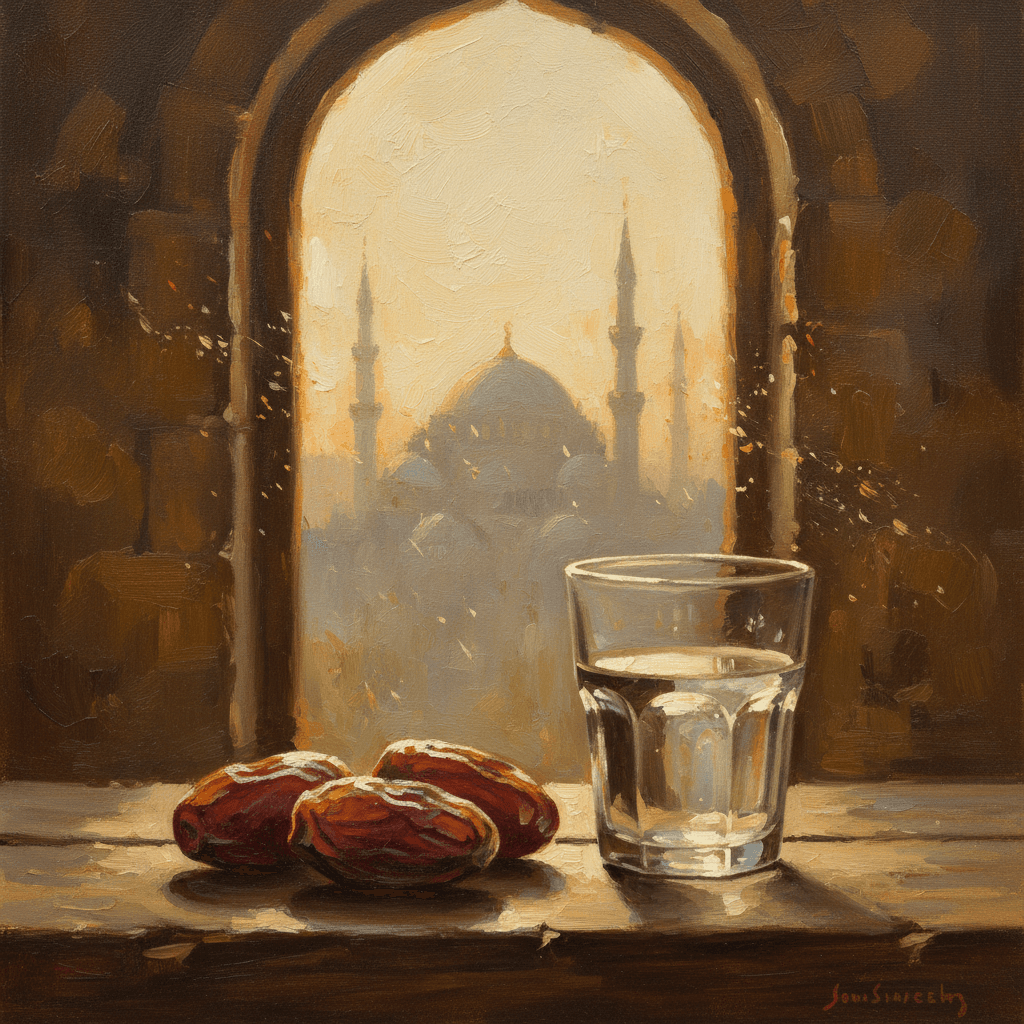
After a month of fasting from before dawn to sunset, of extra prayers and Quran and self-restraint — there is a day where Allah says: stop fasting. Now eat. Now celebrate. Now come together.
Eid al-Fitr is that day. And it is a profound theological statement: the completion of ibadah deserves to be honored with joy.
But for many Muslims, Eid risks becoming just a party — disconnected from what came before it. Understanding what Eid al-Fitr actually is, what the Prophet ﷺ actually did on that day, and how to carry the Ramadan momentum forward is what transforms it from a calendar event into a spiritual milestone.
What Eid al-Fitr Actually Means
'Eid (عِيدٌ) in Arabic comes from the root 'ada, meaning to return, to come around again. It is a recurring celebration — something that comes back each year. Fitr (فِطْرٌ) comes from the same root as iftaar (breaking fast) and fitrah (natural disposition). Together, Eid al-Fitr is the Festival of Breaking the Fast.
It is the first day of Shawwal, the month immediately following Ramadan. The Islamic lunar calendar means it shifts about 11 days earlier each solar year, cycling through all seasons over roughly 33 years.
Allah established Eid not as a human tradition but as divine legislation:
قَدْ أَفْلَحَ مَن تَزَكَّىٰ وَذَكَرَ اسْمَ رَبِّهِ فَصَلَّىٰ
"He has certainly succeeded who purifies himself and mentions the name of his Lord and prays."
— (Surah Al-A'la, 87:14-15)
Many scholars connect this verse to the Eid prayer — the act of purification (Zakat al-Fitr), the dhikr (Eid takbeer), and the prayer together as one complete act of celebration through worship.
How the Prophet Celebrated Eid
The Sunnah of Eid al-Fitr is detailed and specific. The Prophet ﷺ approached Eid with deliberate joy — not the passive kind, but active, participatory celebration marked by distinct practices.
He took ghusl before the Eid prayer. Narrated by Ibn Abbas رضي الله عنه, the Prophet bathed on the morning of both Eids. Spiritual cleanliness matched the external celebration.
He ate an odd number of dates before leaving for Eid prayer. Specifically, the sunnah is to eat an odd number (3, 5, 7) of dates before the Eid al-Fitr prayer. (Bukhari 953) This breaks the fast in a blessed way and signals that Ramadan fasting is complete.
He wore his best clothing. The Prophet wore his finest clothes for both Eids. Eid is a day of beauty and dignity, not austerity.
He recited the Eid takbeer aloud. The takbeer of Eid — Allahu Akbar, Allahu Akbar, la ilaha illallah, Allahu Akbar, Allahu Akbar, wa lillahil hamd — is recited from the night of Eid (when the moon is sighted) through the Eid prayer. The streets should ring with it.
He took a different route back from the Eid prayer. This Sunnah is often overlooked — the Prophet took one route to the Eid prayer and a different route back. (Bukhari 986) Scholars offer multiple wisdoms for this: greeting more people, allowing more Muslims to benefit from seeing the Prophet, and maximizing the blessing of the Eid occasion.
The Essential Act: Zakat al-Fitr
Before any celebration, there is an obligation: Zakat al-Fitr — the obligatory charity of Eid. This must be paid before the Eid prayer, on behalf of every member of the household, including children.
The Prophet ﷺ made it obligatory: "The Messenger of Allah ﷺ made Zakat al-Fitr obligatory as a purification for the fasting person from idle talk and obscenity, and as food for the poor." (Abu Dawud 1609)
The amount is typically one _sa'* (roughly 2-3 kg) of the staple food of your area, or its cash equivalent. Many scholars recommend giving it early enough — even days before Eid — so that poor families can prepare for the celebration properly. The purpose is not just charity but ensuring that no Muslim faces Eid without the means to celebrate.
Why Modern Muslims Struggle to Carry Eid's Meaning
Eid has become a challenge in Muslim-minority contexts. The day falls on whatever day it falls — often a weekday when school and work do not stop. The celebration can feel squeezed into a few hours between obligations, or inflated into a multi-day shopping event that has little to do with Ramadan.
The nafs also plays a role: after 30 days of discipline, Eid can become a rebounding free-for-all. Every haram thing that was avoided in Ramadan gets rationalized as "Eid celebration." This is a trap.
The Sunnah of Eid is joyful but bounded. Celebration within Islam's framework — not as an exception to it. The Prophet did not use Eid as a day to abandon his character. The Companions did not treat it as permission to recover every desire that was suppressed in Ramadan.
How to Practice Eid Al-Fitr This Year
Pay Zakat al-Fitr early. Do not leave it to the last minute. Calculate your household's obligation and pay it before the Eid prayer — ideally a day or two before, so the recipients receive it in time.
Make takbeer the night before and morning of. Set a reminder on the eve of Eid. Walk to the Eid prayer saying takbeer. This is an act of worship that the culture of Eid often absorbs into background noise — make it intentional.
Attend the Eid prayer in congregation. This is emphasized as highly recommended by all schools and obligatory by the Hanbali and Hanafi schools. The Eid prayer is the communal declaration that Ramadan was completed. Missing it to sleep in misses the point.
Prioritize family visits and reconciliation. Eid is the Islamic occasion for mending relationships. If you have a broken family connection — a relative you have not spoken to — Eid is the mandated moment to initiate repair.
Make the dua accepted in Ramadan keep going. The Ramadan habit of consistent dua for morning, regular dhikr after salah, and daily Quran should not end on Eid night. The goal of Ramadan is to install habits — Eid is the test of whether they were installed or merely rented.
Carry Your Ramadan Habits Past Eid
DeenBack helps you maintain the daily Islamic habits you built in Ramadan — prayer, dhikr, Quran, and dua — so Eid becomes a launchpad rather than a landing point.


Free download. Premium features available in-app.
Signs That You Celebrated Eid Correctly
A well-observed Eid leaves you more connected to your deen, not less. Specific markers:
- You paid Zakat al-Fitr and felt the weight of that responsibility
- You attended the Eid prayer and were genuinely moved by the takbeer
- You called or visited at least one relative you had neglected
- You broke the fast for the first time with gratitude rather than relief
- By Eid evening, your post-Ramadan salah streak was still intact
Common Questions
Is it permissible to fast the six days of Shawwal immediately after Eid? Yes — and it is highly recommended. The Prophet said: "Whoever fasts Ramadan and follows it with six days of Shawwal, it is as if he has fasted the entire year." (Muslim 1164) But you cannot fast on Eid day itself — the six days begin from the 2nd of Shawwal. See six fasts of Shawwal for the full guide.
Is celebrating Eid al-Fitr in a non-Islamic country allowed? Yes — Eid is a worldwide Muslim celebration and not geographically limited. Muslims around the world celebrate it regardless of the cultural or political context they live in.
What is the difference between Eid al-Fitr and Eid al-Adha? Eid al-Fitr celebrates the completion of Ramadan fasting. Eid al-Adha (the Festival of Sacrifice) marks the culmination of the Hajj pilgrimage and commemorates Ibrahim's willingness to sacrifice his son. Both are Divinely ordained celebrations but with distinct origins and practices.
Can women attend the Eid prayer? Yes — the Prophet ﷺ explicitly commanded that women, including those menstruating (who would not pray but could still witness the khutbah), attend the Eid prayer grounds. He called it a communal gathering for all Muslims.
The Theology Behind the Celebration
Eid al-Fitr is a divine response to human effort. After 30 days of fasting, prayer, Quran, and striving against the nafs, Allah calls you to a celebration. Not to reward you for earning it — but to express that the effort was seen, accepted, and honored.
Taqabbalallahu minna wa minkum — may Allah accept from us and from you — is not just a social formula. It is the deepest Eid prayer: that the month of effort was not wasted, that it was lifted to Allah and received.
Celebrate fully, with your whole family, with food and warmth and reconnection. Then wake up for Fajr on the second day of Shawwal and keep going.
Make Every Day After Ramadan Count
DeenBack is your accountability partner beyond Ramadan — helping you maintain the prayer, dhikr, and Quran habits that make every month a spiritual month.
Free download. Premium features available in-app.
Frequently Asked Questions
What does Eid al-Fitr mean?
Eid al-Fitr means the Festival of Breaking the Fast. Eid means celebration or festival, and Fitr comes from the word iftar — breaking fast. It marks the end of the month of Ramadan and the beginning of Shawwal.
When is Eid al-Fitr?
Eid al-Fitr falls on the first day of Shawwal, the month following Ramadan in the Islamic lunar calendar. The exact date depends on the sighting of the new moon and varies by about 10-11 days each year on the Gregorian calendar.
What are the main acts of worship on Eid al-Fitr?
The key practices are: paying Zakat al-Fitr before the Eid prayer, performing the Eid prayer in congregation, wearing best clothes, eating something sweet before the prayer (sunnah), saying the Eid takbeer, and visiting family. It is also sunnah to use a different route returning from the prayer.
Is fasting on Eid al-Fitr allowed?
No — fasting on the day of Eid al-Fitr is forbidden (haram). The Prophet explicitly prohibited fasting on the two Eid days. Eid is a day of eating, celebration, and gratitude, by divine design.
How do you greet someone on Eid al-Fitr?
The most authentic Eid greeting is Taqabbalallahu minna wa minkum — "May Allah accept from us and from you." Eid Mubarak is also widely used and perfectly fine. The Companions greeted each other this way after the Eid prayer.