
- Published on
La Hawla Wala Quwwata Illa Billah: A Treasure of Paradise
- Authors

- Name
- Ahmad
- Role
- Senior Marketing Manager, Islamic education • Deen Back
بِسْمِ اللهِ الرَّحْمٰنِ الرَّحِيْمِ
In the name of God, the Most Gracious, the Most Merciful.
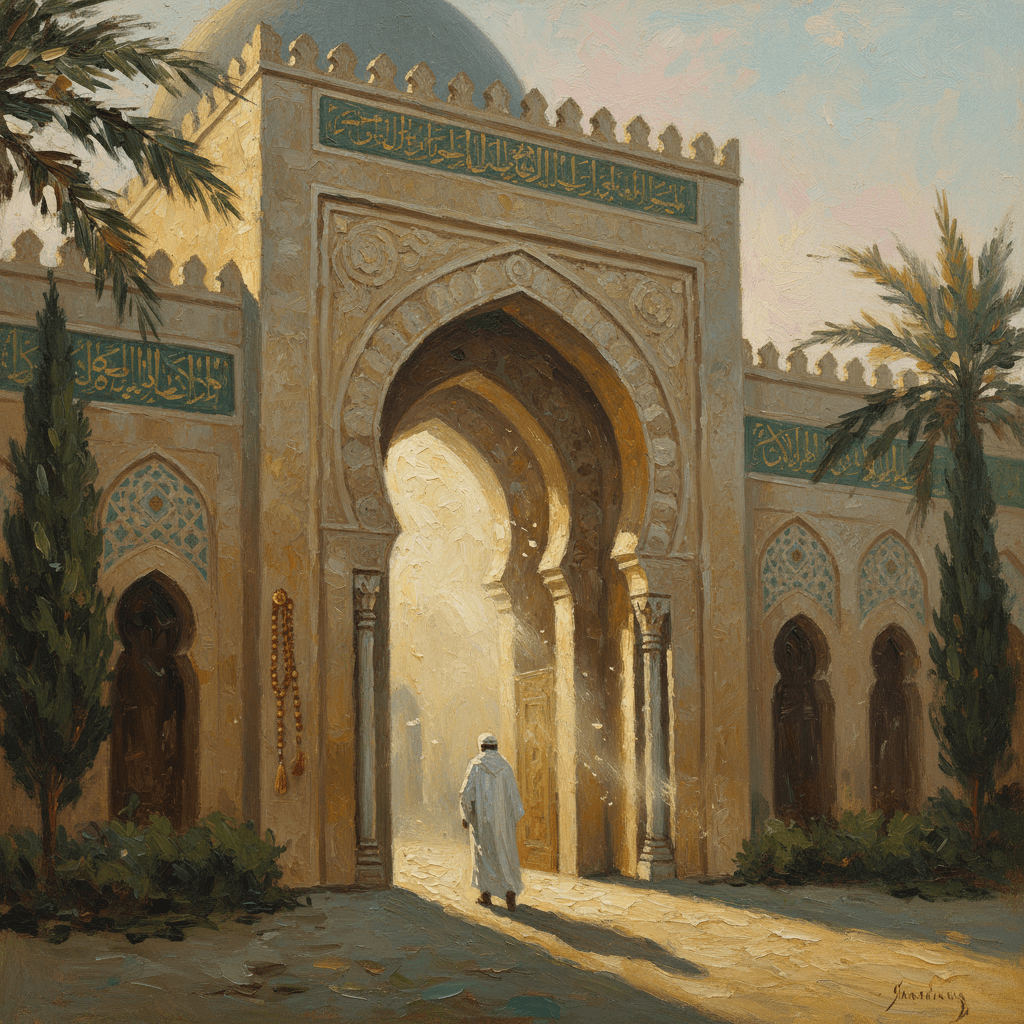
There are moments when you feel genuinely powerless. Not just tired, not just frustrated — but that specific feeling of being up against something you cannot change, cannot escape, and cannot overcome on your own.
Those moments are exactly when this phrase was made for.
La hawla wala quwwata illa billah (لَا حَوْلَ وَلَا قُوَّةَ إِلَّا بِاللَّهِ) — "There is no might nor power except with Allah" — is not just a consolation phrase. The Prophet ﷺ called it a treasure from the treasures of Paradise. That description carries a specific message: this is not cheap words. This is real currency.
What It Actually Means
لَا حَوْلَ وَلَا قُوَّةَ إِلَّا بِاللَّهِ
La hawla wala quwwata illa billah
"There is no might nor power except with Allah."
The phrase has two components:
La hawla (لَا حَوْلَ): The word hawl comes from the Arabic root meaning to move, to change state, to shift from one condition to another. La hawla declares: "I have no ability to change my situation, no power to shift from one state to another, on my own."
Wala quwwata (وَلَا قُوَّةَ): Quwwa means power, strength, and capability. Wala quwwata adds: "And I have no strength either."
Illa billah (إِلَّا بِاللَّهِ): "Except with Allah."
Put together: every ability you have to move, to act, to resist, to succeed — it all originates from Allah. You are not the ultimate source of your own power. He is.
This is not a statement of despair. It is a statement of liberation. When you acknowledge that the source of all power is Allah, you stop carrying the weight of outcomes alone. You stop believing your effort is the whole equation. You become free to act while trusting the result to its actual Owner.
Why the Prophet Called It a Treasure
"Shall I not tell you of a treasure from the treasures of Paradise? It is: La hawla wala quwwata illa billah."
— (Sahih Bukhari 7386, Sahih Muslim 2704)
The Prophet ﷺ said this to Abu Musa al-Ash'ari during a journey. The setting is significant: they were traveling, which in the Prophet's time meant physical hardship, uncertainty, and vulnerability. He chose that moment to point to this phrase as a treasure.
Scholars explain that it is a treasure for several reasons:
- It is one of the doors to tawakkul (complete reliance on Allah)
- It protects the believer from arrogance, since it attributes power to its true source
- It is a cure for waswas — obsessive worry about outcomes you cannot control
- It was specifically identified by the Prophet as something worth carrying through life
Ibn Rajab al-Hanbali wrote that this phrase is "the sword of the believer against the nafs, against the shaytan, and against the hardships of the world." It cuts through the illusion that you are in control — and that illusion is the root of most anxiety.
When to Say It
After the adhan. When the muezzin calls "Hayya alas-salah" (come to prayer) and "Hayya alal-falah" (come to success), the prescribed response is La hawla wala quwwata illa billah. (Sahih Bukhari 612). This is one of the most regularly missed Sunnah practices — most people simply listen to the adhan without responding verbally. The phrase in this context acknowledges: the call to success is real, but the power to respond to it comes from Allah.
In moments of helplessness. When you face a situation beyond your control — a health challenge, a relationship difficulty, a financial crisis — this phrase is the Islamic response. Not a passive shrug, but a conscious redirection of the burden to its proper location.
When temptation is strong. The nafs and shaytan pressure you toward what you know is wrong. In those moments, saying La hawla wala quwwata illa billah is not just words — it is a declaration that the power to resist comes from Allah, not from your own willpower. Then ask Allah explicitly for that power.
During the morning and evening adhkar. Incorporating this phrase into your regular morning and evening remembrance (adhkar) means it becomes a daily orienting statement, not just an emergency response. For the full morning adhkar structure, see how to do morning adhkar.
When waswas attacks. Obsessive doubt and anxiety feed on the feeling that everything depends on you. When waswas strikes during prayer or daily life, La hawla wala quwwata illa billah cuts it off by locating power in Allah rather than in your own mental loops. See how to overcome waswas in Islam.
Why Modern Muslims Underuse This Phrase
The phrase is known. Most Muslims could recite it from memory. But knowing it and deploying it at the right moments are different things.
The modern culture of self-sufficiency runs directly against La hawla wala quwwata illa billah. We are trained to believe that success depends entirely on effort, planning, and willpower — and that acknowledging dependence is weakness. The nafs loves this framing because it puts us at the center.
The phrase feels most awkward exactly when it is most needed: in the middle of a crisis, when the instinct is to grip tighter, work harder, and try to control more. The person who says La hawla wala quwwata illa billah in that moment and means it is not giving up. They are making the most sophisticated spiritual move available: transferring the burden of the outcome to the One who actually holds it.
وَمَن يَتَوَكَّلْ عَلَى اللَّهِ فَهُوَ حَسْبُهُ
"And whoever relies upon Allah — then He is sufficient for him."
— (Surah At-Talaq, 65:3)
Build a Daily Dhikr Practice That Includes Al-Hawqala
DeenBack tracks your daily dhikr and adhkar streaks — helping you make La Hawla Wala Quwwata Illa Billah a regular practice, not just an emergency measure.


Free download. Premium features available in-app.
How to Make It a Daily Practice
Respond to every adhan. The five daily prayers give you five built-in moments to say this phrase. Train yourself to respond to the muezzin's call for prayer and success with La hawla wala quwwata illa billah. Over time, this creates five daily moments of conscious reliance on Allah.
Use it as a stress interrupt. When you feel anxious, overwhelmed, or powerless, say it before doing anything else. This is not avoidance — it is reorientation. After saying it, you can still take action; but the action comes from a clearer place.
Add it to post-salah dhikr. After the standard tasbih (33 Subhanallah, 33 Alhamdulillah, 34 Allahu Akbar), add several repetitions of La hawla wala quwwata illa billah. It fits naturally as an extension of the post-prayer remembrance.
For related phrases that build the complete dhikr toolkit, see astaghfirullah meaning and subhanallah meaning.
Signs This Phrase Is Taking Root
When La hawla wala quwwata illa billah moves from words to posture:
- You notice a shift in how you respond to things going wrong — less grip, more trust
- The adhan response becomes automatic
- When the nafs says "it's all up to you," you recognize it as a lie immediately
- You feel less exhausted by outcomes because you have stopped carrying what was never yours to carry
Common Questions
Is it disrespectful to say this casually throughout the day? Not at all. The Prophet ﷺ encouraged abundant dhikr in all states. Saying La hawla wala quwwata illa billah during ordinary moments — commuting, doing chores, walking — is encouraged. The Quran says: "Remember Allah, standing, sitting, and lying on your sides." (Al-Imran 3:191)
Can I say it in a shortened form? The full phrase is what the Prophet taught. It can be said at normal conversational speed — it takes only a few seconds. Compressing or shortening it changes the meaning. Say the full phrase.
Is there a specific number recommended? The adhan context is once (in response to each of the two calls). For general dhikr, there is no fixed number — say it as often as feels natural and sincere.
The Treasure Is Already in Your Hands
The Prophet ﷺ did not point to something rare, expensive, or difficult to obtain. He pointed to eight Arabic words that take three seconds to say. Words that, when said with understanding, can fundamentally change how you carry your life.
A treasure. Already available. Waiting for you to pick it up.
Start Using This Treasure of Paradise Every Day
DeenBack makes it easy to track your daily dhikr practice — including La Hawla Wala Quwwata Illa Billah — building the daily reliance on Allah that transforms struggle into strength.
Free download. Premium features available in-app.
Frequently Asked Questions
What does La Hawla Wala Quwwata Illa Billah mean?
La hawla wala quwwata illa billah means 'There is no might nor power except with Allah.' It is a declaration that all ability to avoid evil and all power to do good ultimately comes from Allah alone — not from your own strength, willpower, or planning.
Why is it called a treasure of paradise?
The Prophet said: 'Shall I not tell you of a treasure from the treasures of Paradise? It is: La hawla wala quwwata illa billah.' (Sahih Bukhari 7386, Sahih Muslim 2704). The scholars explain that it is a treasure because of its immense reward and because it contains the key to real reliance on Allah.
When should I say La Hawla Wala Quwwata Illa Billah?
After hearing the adhan (it is part of the traditional response to the muezzin's call), during times of difficulty and helplessness, when facing something beyond your control, when trying to resist temptation, or as general dhikr throughout the day. It is especially powerful in moments when you feel powerless.
What is the short form of this phrase?
The phrase is sometimes referred to as al-hawqala (الحوقلة) — a compressed word formed from the phrase's key letters. This is similar to how basmalah refers to bismillah, or hamdala refers to alhamdulillah. The short name al-hawqala is used by scholars when referencing this practice.
Is there a dua after the adhan that includes this phrase?
Yes. After the adhan, when the muezzin says 'Hayya alas-salah' (come to prayer) and 'Hayya alal-falah' (come to success), the response is 'La hawla wala quwwata illa billah.' This is one of the most well-established practices related to the phrase. (Sahih Bukhari 612)