
- Published on
Names of the Angels in Islam — Who They Are and What They Do
- Authors

- Name
- Ahmad
- Role
- Senior Marketing Manager, Islamic education • Deen Back
بِسْمِ اللهِ الرَّحْمٰنِ الرَّحِيْمِ
In the name of God, the Most Gracious, the Most Merciful.
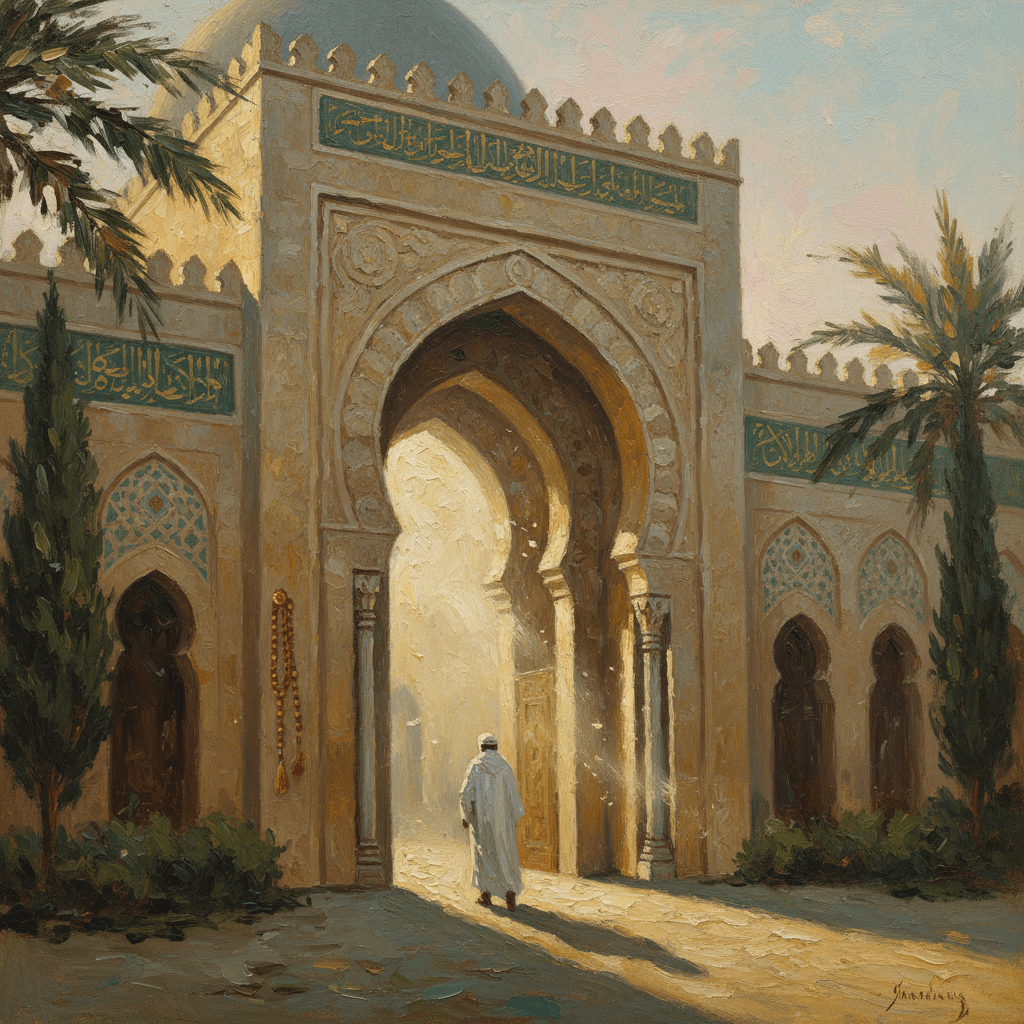
You cannot see them. They cannot disobey Allah. They are constantly at work — recording your deeds, carrying revelation, managing the affairs of the cosmos, waiting at the gates of Jannah and Jahannam.
The angels are not a poetic metaphor in Islam. They are real, created beings — made from light, without free will to disobey, fulfilling their assigned roles with complete precision. Believing in them is not optional: it is the second pillar of iman.
Most Muslims can name Jibreel. Far fewer know the rest. And knowing them — really understanding who they are and what they do — changes how you experience your daily worship.
What Angels Are in Islam
The Quran describes the origin of angels directly:
الْحَمْدُ لِلَّهِ فَاطِرِ السَّمَاوَاتِ وَالْأَرْضِ جَاعِلِ الْمَلَائِكَةِ رُسُلًا أُولِي أَجْنِحَةٍ مَّثْنَى وَثُلَاثَ وَرُبَاعَ
"All praise is due to Allah, Creator of the heavens and earth, who made the angels messengers having wings, two or three or four."
— (Surah Fatir, 35:1)
The Prophet ﷺ told us they are created from light — a substance different from humans (clay/earth) and jinn (smokeless fire):
"The angels were created from light, the jinn were created from smokeless fire, and Adam was created from what was described to you."
— (Sahih Muslim 2996)
Angels have no gender, do not eat or drink, do not sin, do not tire, and worship Allah continuously. The Quran says of those who carry the Throne: "They glorify the praises of their Lord, believe in Him, and ask forgiveness for those who believe." (Ghafir, 40:7).
The Major Angels and Their Roles
Jibreel (جِبْرِيل) — The Angel of Revelation
Jibreel is the most frequently mentioned angel in the Quran. He is the intermediary between Allah and His prophets, carrying revelation:
نَزَلَ بِهِ الرُّوحُ الْأَمِينُ عَلَى قَلْبِكَ لِتَكُونَ مِنَ الْمُنذِرِينَ
"The Trustworthy Spirit has brought it down upon your heart, that you may be of the warners."
— (Surah Ash-Shu'ara, 26:193-194)
The Prophet ﷺ described seeing Jibreel in his true form twice — the first time filling the horizon. He has 600 wings (Sahih al-Bukhari 3232). He is also called Ruh al-Qudus (Holy Spirit), Al-Ruh al-Amin (the Trustworthy Spirit), and Ruh (the Spirit). Jibreel was also with the Prophet ﷺ throughout his prophethood — a constant presence in the divine mission.
Mikail (مِيكَائِيل) — The Angel of Provision
Mikail is responsible for provisions — rain, wind, crops, and the distribution of sustenance across the creation. He is mentioned alongside Jibreel in the Quran:
"Whoever is an enemy to Jibreel — for he has brought it down upon your heart by permission of Allah — or to Mikail — then indeed, Allah is an enemy to the disbelievers."
— (Surah Al-Baqarah, 2:97-98)
Mikail is rarely described in prophetic narrations in the same detail as Jibreel, but his rank is comparable. Scholars note that between the two, Jibreel is given precedence — and it is significant that their mention together in the Quran is in the context of divine mercy.
Israfil (إِسْرَافِيل) — The Angel of the Trumpet
Israfil is the angel assigned to blow the Soor (trumpet/horn) that will signal the end of the world and the start of the resurrection. Though not mentioned by name in the Quran, he is consistently described in authentic hadith:
The Prophet ﷺ said: "How can I be at ease when the one with the Horn has put it to his lips and is tilting his forehead, waiting to be commanded to blow?" (Tirmidhi 2431). He blows it twice: once to cause the death of everything, and once to cause the resurrection.
Malak al-Mawt / Izrael (مَلَكُ الْمَوْت) — The Angel of Death
The Quran refers to him as "the Angel of Death who is given charge of you" (As-Sajdah, 32:11). Known in tradition as Izrael, he is responsible for taking the souls of the dying — gently for the believers, roughly for the disbelievers. He is described as having helpers who assist in this task.
Knowing that a specific, noble angel has been assigned to receive your soul at death transforms how you think about that moment. The Prophet ﷺ said the good soul is drawn out like a drop of water from a waterskin, while the disbelieving soul is pulled out like iron spikes through wet wool. (Ibn Majah 4262). The state of your death is shaped by the state of your life.
Munkar and Nakir (مُنكَر وَنَكِير) — The Angels of the Grave
After death, these two angels come to question every person in the grave. The questions are three:
- Who is your Lord?
- What is your religion?
- Who is this man (the Prophet ﷺ)?
The Prophet ﷺ said: "When the deceased is placed in his grave, two blue-black angels come to him. One is called Munkar, the other Nakir..." (Tirmidhi 1071). The believer answers clearly and with confidence. The hypocrite or disbeliever cannot answer.
This is why the Prophet ﷺ regularly sought refuge from the punishment of the grave — and why you should too. The grave begins immediately. Preparation begins now.
Kiraman Katibin / Raqib and Atid (كِرَامًا كَاتِبِينَ) — The Recording Angels
Every person has two angels assigned to them — one on the right recording good deeds, one on the left recording bad deeds:
مَا يَلْفِظُ مِن قَوْلٍ إِلَّا لَدَيْهِ رَقِيبٌ عَتِيدٌ
"He utters no word except that with him is an observer, prepared."
— (Surah Qaf, 50:18)
The Prophet ﷺ noted that the angel on the left delays recording a bad deed for six hours — in case the person repents, seeks forgiveness, or does a good deed that cancels it out. (Classified as hasan by some scholars, sourced from various hadith collections). The angel on the right records good deeds immediately.
Ridwan (رِضْوَان) — Guardian of Jannah
Ridwan is the keeper of Jannah, mentioned in the Quran in the context of those who enter:
"And those who feared their Lord will be led to Jannah in groups until, when they reach it while its gates have been opened and its keepers say: 'Peace be upon you; you have done well, so enter it to abide eternally.'"
— (Surah Az-Zumar, 39:73)
Malik (مَالِك) — Guardian of Jahannam
Malik is the keeper of the Fire. The Quran records that the people of Jahannam will call out to him:
"And they will call out: 'O Malik, let your Lord put an end to us!' He will say: 'Indeed, you will remain.'"
— (Surah Az-Zukhruf, 43:77)
Make Your Iman Real — Build Daily Habits That Reflect It
DeenBack helps you turn belief in the unseen into daily practice — dhikr, dua, and habits that build the iman you want to die upon.


Free download. Premium features available in-app.
Why Knowing the Angels Changes Your Worship
Knowing that Raqib and Atid are recording your every word changes what you say. Knowing that Munkar and Nakir will question you in the grave motivates you to prepare — to know your Lord, your religion, and your Prophet ﷺ not just intellectually but from lived daily practice. Knowing that angels make dua for you when you sit in remembrance of Allah makes dhikr feel less like a solo act.
The Prophet ﷺ said: "When a group of people sit together remembering Allah, the angels surround them, mercy covers them, tranquility descends upon them, and Allah mentions them to those who are with Him." (Sahih Muslim 2700).
You are not alone when you remember Allah. You are in company.
Common Questions
Are the angels ever mentioned as being with us during salah?
Yes. The Prophet ﷺ said: "If you knew what I know, you would pray more and laugh less." (Sahih al-Bukhari 6485). In salah specifically: "Do not pray toward the graves and do not sit on them." (Sahih Muslim 972) — suggesting the dignified nature of spaces associated with divine presence. More explicitly: angels descend on the rows in salah, which is why the Prophet ﷺ emphasized straightening rows and filling gaps. See what is iman in Islam for the complete framework.
Are there evil angels?
Angels in Islam are incapable of disobedience — they only obey Allah. There are no "fallen angels" in Islamic theology. Shaytan (Iblis) is a jinn, not an angel — this is explicit in the Quran (Al-Kahf, 18:50). The jinn have free will and Iblis chose to disobey. Angels do not have that choice.
Do we have guardian angels?
There are angels that protect humans by Allah's command. The Quran says: "For him (each person) are successive (angels) before and behind him, who protect him by the decree of Allah." (Ar-Ra'd, 13:11). These are distinct from the recording angels — they are protectors. They leave during sinful acts and when a person invites harm. This is why the Islamic protection dua (Bismillah, Audhu billah, the three Quls) matters practically.
Is it right to make dua asking angels to help us?
Dua is made to Allah alone — not to angels, not to prophets. However, you can ask Allah to send His angels to assist you. There is also the established practice of reciting certain duas that angels are known to respond to — such as the du'a that brings blessings from Allah and the angels (see 99 names of Allah and associated duas). See what is jannah and what is the day of judgment to understand the angels' roles in the afterlife.
Closing
The angels are not background figures in Islamic theology. They are active, present, and engaged with the human story right now — recording, protecting, questioning, delivering, waiting. Their existence is not abstract theology — it is a felt reality that shapes how the practicing Muslim lives.
When you raise your hands in dua, angels say "Amin." When you enter a gathering of remembrance, angels surround it. When you lie down to sleep, angels ask Allah to forgive you. And when you take your final breath, a noble being from creation will receive your soul.
Let that knowledge pull you toward better deeds, not away from them.
Live Like You Are Watched — Because You Are
DeenBack helps you build daily dhikr, dua, and worship habits that reflect your belief in the unseen world — angels included.
Free download. Premium features available in-app.
Frequently Asked Questions
What are the names of the major angels in Islam?
The major angels named in Islamic tradition include: Jibreel (Gabriel) — the angel of revelation; Mikail (Michael) — the angel of provision; Israfil — the angel who will blow the trumpet; Izrael/Malak al-Mawt — the angel of death; Munkar and Nakir — who question the deceased in the grave; Ridwan — guardian of Jannah; Malik — guardian of Jahannam; Raqib and Atid — the two recording angels; and Kiraman Katibin — the honorable scribes.
Is belief in angels a pillar of iman?
Yes. Belief in angels is the second of the six pillars of iman, established in the hadith of Jibril: 'Iman is to believe in Allah, His angels, His books, His messengers, the Last Day, and divine decree.' (Sahih Muslim 8). It is also confirmed in the Quran: 'The Messenger believes in what was revealed to him from his Lord, as do the believers. All believe in Allah, His angels, His books, and His messengers.' (Al-Baqarah, 2:285)
What is the role of Jibreel in Islam?
Jibreel (AS) is the most important angel mentioned in the Quran. He is the bearer of divine revelation — it was Jibreel who brought the Quran to the Prophet Muhammad ﷺ, the Torah to Musa (AS), the Injeel to Isa (AS), and the Zabur to Dawud (AS). The Quran calls him Ruh al-Qudus (the Holy Spirit) and describes him as 'mighty in power' (Al-Najm, 53:5-6).
How many angels are there in Islam?
Angels are innumerable — no authentic hadith gives a precise total count for all angels. However, some narrations give specific numbers for specific tasks. For example, the Prophet ﷺ described al-Bayt al-Ma'mur (the heavenly house) as being visited by 70,000 angels every day, never returning (Sahih al-Bukhari 3207). The overall number is known only to Allah.
What are Raqib and Atid in Islam?
Raqib and Atid are the two recording angels (Kiraman Katibin — 'the Honorable Scribes') mentioned in the Quran: 'When the two receivers receive, seated on the right and on the left, he utters no word except that with him is an observer prepared.' (Qaf, 50:17-18). One records good deeds, the other records bad deeds. Every human being has two of these angels assigned to them.