
- Published on
Names of Allah for Marriage: How to Call on Him for Love
- Authors

- Name
- Ahmad
- Role
- Senior Marketing Manager, Islamic education • Deen Back
بِسْمِ اللهِ الرَّحْمٰنِ الرَّحِيْمِ
In the name of God, the Most Gracious, the Most Merciful.
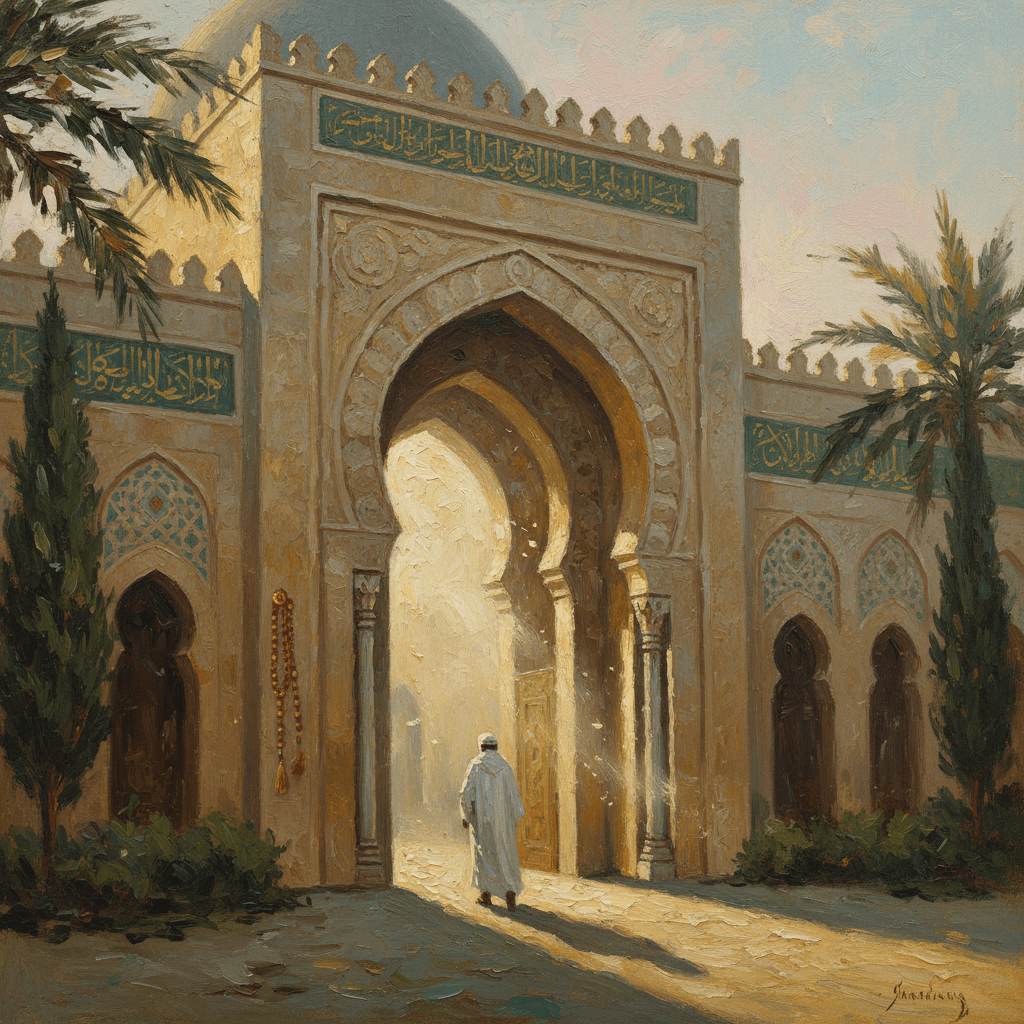
There is a particular ache that comes with waiting for a spouse. The longing is not just for company — it is for a specific kind of peace. The kind that comes from a righteous partner who reminds you of Allah, who sits across from you at suhoor, who makes dua with you. And there is a different kind of exhaustion that settles into a marriage when the love feels distant, when conversations have dried up, when you wonder whether what you once had can be found again.
In both situations, Muslims are told to make dua. But dua made without understanding who you are calling upon is like dialing a number without knowing who picks up. The Names of Allah change that. They are not a formula or a ritual shortcut — they are a way of knowing, truly knowing, the One you are turning to. And that knowing is what transforms a repeated phrase into a conversation.
What It Actually Means to Call on Allah by His Names
The instruction is directly from the Quran:
وَلِلَّهِ الْأَسْمَاءُ الْحُسْنَىٰ فَادْعُوهُ بِهَا
Wa lillahi al-asma'u al-husna fad'uhu biha.
"And to Allah belong the best names, so invoke Him by them." — (Surah Al-A'raf, 7:180)
This is not a suggestion. It is an instruction embedded in a verse about how to approach Allah. When you call on Him by His Names, you are directing your request not into the abstract, but toward a specific attribute of the One who can answer.
For matters of marriage, several Names stand out:
اَلْوَدُودُ (Al-Wadud) — The Loving, the Most Affectionate. This Name appears in Surah Al-Buruj (85:14) as one of Allah's own self-descriptions. When you call on Al-Wadud in the context of marriage, you are asking the source of all love to place that love between you and a spouse, or to renew it between you and the one you already have.
اَلْجَبَّارُ (Al-Jabbar) — The Compeller and Restorer. Al-Jabbar is often understood as power, but in Arabic the root also carries the meaning of setting a broken bone — restoring what was fractured. For marriages that feel shattered, this is the Name to bring.
اَللَّطِيفُ (Al-Latif) — The Subtle, the Gently Kind. Al-Latif is the Name for circumstances where the solution cannot come from any visible direction. It is the Name of hidden arrangements, of doors that open from angles you never watched. When you cannot see how your situation could possibly change, call on Al-Latif.
اَلْمُجِيبُ (Al-Mujeeb) — The Responsive, the Answerer of Prayers. For the person lying awake wondering whether their dua is even being heard, Al-Mujeeb is the direct answer: yes, He responds. This Name is a reminder before it is a request.
اَلْقَادِرُ (Al-Qadir) — The All-Powerful. When the situation looks humanly impossible — the compatibility is not there, the circumstances are against you, the odds seem too long — Al-Qadir is the Name that moves beyond human calculation entirely.
Think of each Name as a different key. Some doors in your situation need Al-Wadud's love. Others need Al-Mujeeb's responsiveness. Others need Al-Latif's subtle, unseen arrangements. Learning the 99 Names of Allah is not just an act of knowledge — it becomes a practical tool for the most important conversations of your life.
Why Modern Muslims Struggle With This
The most common problem is not lack of dua — it is reducing dua to a transaction. "If I say this Name 100 times, my spouse will come." This turns the act of calling on Allah into a vending machine interaction, and when the vending machine does not deliver on schedule, people stop using it.
The second problem is giving up. Dua for marriage is sometimes answered quickly. More often, it is answered slowly, through a series of circumstances that only become visible in hindsight. The one who stops after a month of asking will miss what was being arranged.
A third issue: many Muslims treat social media and marriage apps as the primary strategy and dua as the backup. This is inverted. Apps and wali introductions are the means — the asbab. Dua is the conversation with the One who controls the means.
Perhaps the most painful struggle is the whisper of the nafs that says, "You are not good enough for Allah to bless you with a spouse." That whisper is not humility — it is a misunderstanding of Al-Mujeeb. Allah's responsiveness is not conditional on your level of righteousness. It is conditional on your asking and your trust. You do not earn the right to be heard. You are heard because He is Al-Mujeeb, not because you are perfect.
For a deeper look at how Allah's names bring benefits into everyday life, that post explores the broader spiritual practice.
How to Practice This Daily
For Those Seeking a Spouse
The goal is not intensity — it is consistency. After Fajr, when the mind is quiet and the day has not yet arrived, add this:
Ya Latif, Ya Mujeeb, Ya Wadud — 33 times each. This is not a magic number. It is a deliberate repetition long enough that you are forced to stay present with each Name rather than rushing through it.
Pair this with the Quranic dua of the righteous servants:
رَبَّنَا هَبْ لَنَا مِنْ أَزْوَاجِنَا وَذُرِّيَّاتِنَا قُرَّةَ أَعْيُنٍ
Rabbana hab lana min azwajina wa dhurriyyatina qurrata a'yun.
"Our Lord, grant us from among our wives and offspring comfort to our eyes." — (Surah Al-Furqan, 25:74)
This dua asks for a spouse who is a source of peace — not just a spouse. The specificity of that ask matters. You are not just asking for marriage; you are asking for the right marriage.
Surah Maryam and Surah Taha both contain duas made by prophets in moments of deep personal need — for family, for offspring, for what seemed impossible. Reading them regularly, even just a few verses, connects your situation to a long history of Allah answering the prayers of those who thought their situation was unsolvable. You can also explore the dua for finding a spouse for a dedicated set of supplications to pair with this practice.
For Those in an Existing Marriage
Call on Al-Wadud to place love: say aloud, or in your heart, "Ya Wadud, place love and mercy between us as You described in Your Book." This references what Allah Himself promised:
وَجَعَلَ بَيْنَكُم مَّوَدَّةً وَرَحْمَةً
"He placed between you love and mercy." — (Surah Ar-Rum, 30:21)
You are not asking Allah for something foreign to your marriage. You are asking Him to restore what He Himself placed there.
Call on Al-Jabbar to heal. Not to force your spouse to change — but to ask Allah, the Restorer of broken things, to work on what feels fractured. And add the dua of reconciliation from the Sunnah:
اَللَّهُمَّ أَلِّفْ بَيْنَ قُلُوبِنَا
Allahumma allif bayna quloobina.
"O Allah, unite our hearts."
This is a dua of complete trust — you are placing the condition of your hearts in Allah's hands, not trying to engineer the outcome yourself.
Building the Habit
After every salah, add one Name-based dua. Not a long one. Even ten seconds of meaning is worth more than two minutes of repetition without presence. Over time, you will notice something: the names you call on begin to shape you. The one who calls on Al-Wadud daily starts to embody warmth. The one who calls on Al-Latif begins to trust the unseen. The practice changes the one making it.
Build Your Daily Dua for Marriage
DeenBack helps you build a consistent dua habit — so your call to Al-Mujeeb never gets drowned out by daily distractions.


Free download. Premium features available in-app.
Signs of Progress
Progress in dua is not always a changed situation — it is first a changed heart. The early sign that your dua practice is working is a shift from desperation to trust. You still want what you are asking for, but the urgency becomes less frantic. The waiting becomes less hollow.
A second sign: your character begins to improve in the areas you are praying about. The one asking for a loving marriage starts becoming more patient with people. The one asking for a righteous spouse starts strengthening their own salah. This is not coincidence — it is Allah responding to your request by beginning the transformation in you first.
The deepest sign is a kind of peace in the waiting itself. Not resignation. Not giving up the ask. But a settled trust that the One you are talking to is handling it, and He is good at what He does. For a fuller understanding of this kind of trust, the post on what tawakkul in Islam actually means goes deeper.
Common Questions
Which name of Allah is best for finding a spouse?
There is no single "best" name — but the combination of Al-Mujeeb (The Responsive) and Al-Latif (The Subtle) covers the two most common struggles: wondering if your dua is heard at all, and wondering how it could possibly be arranged given your circumstances. Al-Wadud is the Name to add once you are in a relationship, to ask Allah to fill it with love.
How many times should I repeat Allah's names for marriage dua?
There is no fixed number required for dua to be answered — the idea of a "correct" repetition count often leads people to focus on the count instead of the meaning. That said, repetition does build presence and sincerity over time. 33 repetitions after Fajr is a manageable, meaningful number — not because the number is sacred, but because it is long enough to require focus.
Can I ask Al-Jabbar to fix my marriage?
Yes, and it is an appropriate use of this Name. Al-Jabbar is the One who compels and restores — He does not need your spouse to be willing to change in order to work. What you are doing when you call on Al-Jabbar for your marriage is acknowledging that this is beyond your own power to fix, and handing it to the One whose power is without limit. That is exactly what the Name invites.
Is there a specific dua from the Quran for marriage?
Yes. The dua from Surah Al-Furqan (25:74) — Rabbana hab lana min azwajina wa dhurriyyatina qurrata a'yun — is the most directly relevant. It was said by the servants whom Allah described as the 'ibad al-Rahman, the servants of the Most Merciful, and it asks for a spouse who is a comfort to the eyes rather than just a spouse. This distinction matters: you are asking for a blessed marriage, not just a marriage. For a full collection of marriage duas, that post covers the complete range.
Closing
The One you are calling upon — Al-Wadud, Al-Mujeeb, Al-Latif — knows your situation in more detail than you do. He knows the name of the person He has planned for you, if that is what He wills. He knows which conversation in your marriage most needs His intervention. He knows what is happening in the heart you cannot read.
Knowing His Names does not give you control over the outcome. It gives you clarity about who holds that control. And that clarity is exactly what turns anxious waiting into grounded trust.
Keep calling. Keep naming. He is Al-Mujeeb — the One who responds.
Make Dua for Marriage a Daily Habit
Track your daily dua practice with DeenBack and call on Allah by His most beautiful names — consistently.
Free download. Premium features available in-app.
Frequently Asked Questions
Which name of Allah is best for marriage?
Al-Wadud (The Loving) is called upon for placing love between hearts. Al-Mujeeb (The Responsive) for those waiting for a spouse. Al-Latif (The Subtle) for situations that need Allah's gentle, unseen arrangement.
Is there a dua from the Quran for marriage?
Yes — a powerful Quranic dua is: Rabbana hab lana min azwajina wa dhurriyyatina qurrata a'yun (Our Lord, grant us from among our wives and offspring comfort to our eyes) from Surah Al-Furqan, 25:74.
Can I call on Al-Jabbar to fix my marriage?
Yes — Al-Jabbar means the Compeller and Restorer. Calling on this name is particularly appropriate for situations where reconciliation feels impossible and you need Allah's power to restore what is broken.
How often should I make dua for marriage using Allah's names?
Consistency matters more than quantity. Calling on these names after every salah — even briefly — is more powerful than a once-in-a-while long session. Build it as a daily habit.