
- Published on
La Ilaha Illallah Meaning: The Declaration That Changes Everything
- Authors

- Name
- Ahmad
- Role
- Senior Marketing Manager, Islamic education • Deen Back
بِسْمِ اللهِ الرَّحْمٰنِ الرَّحِيْمِ
In the name of God, the Most Gracious, the Most Merciful.
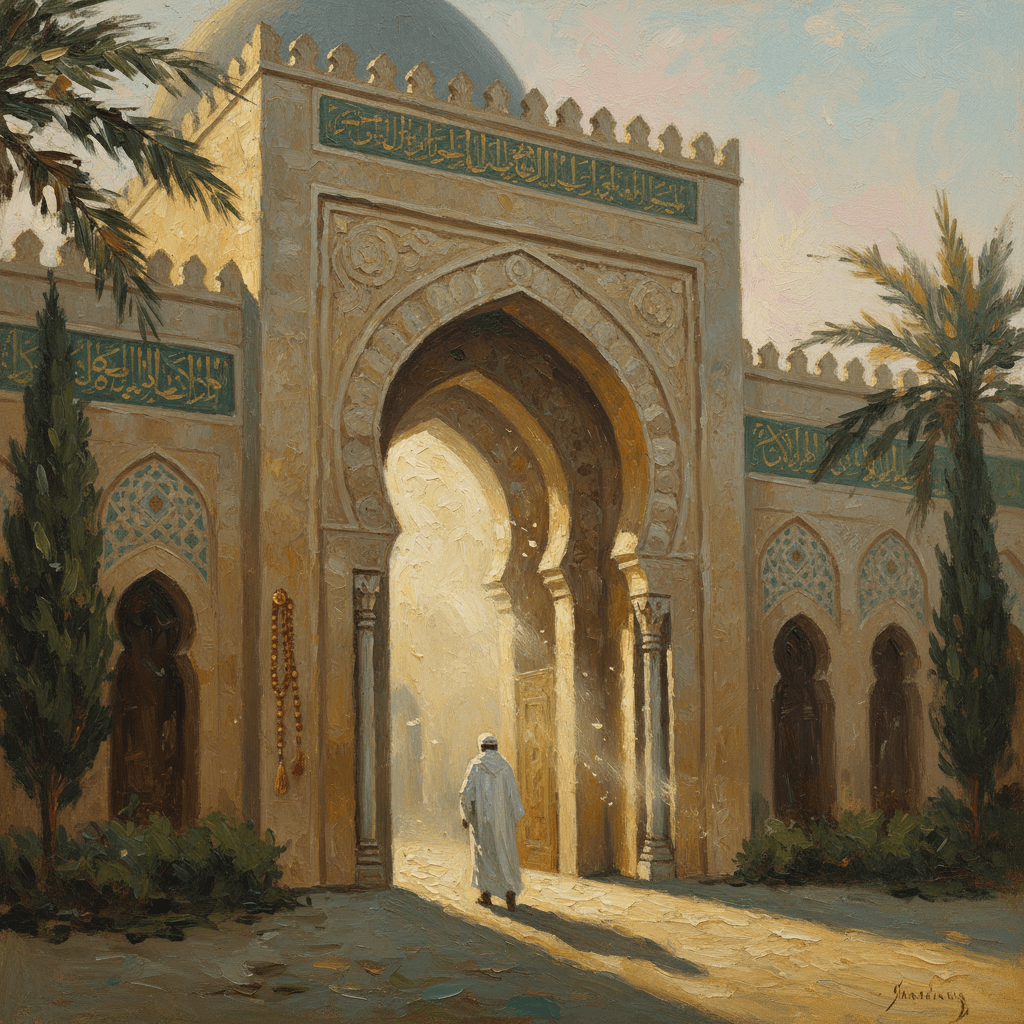
Most Muslims have said La Ilaha Illallah thousands of times. In the adhan five times a day. In the shahada. In dhikr after salah. On the lips of the dying. In moments of awe and fear.
But how often do we stop to feel the full weight of what this phrase actually says?
It is not just a password into Islam. It is not just a ritual phrase. It is a complete claim about reality — a declaration that reshapes the way you see everything: your work, your relationships, your fears, your hopes, your death.
Understanding La Ilaha Illallah at its full depth is a lifelong project. This is where it begins.
The Full Meaning — Negation and Affirmation
The phrase has two parts, and both are essential:
لَا إِلَٰهَ إِلَّا اللَّهُ
La ilaha illallah
"There is no deity worthy of worship except Allah."
La ilaha — "There is no deity." This is the negation. It strips away everything that might compete for ultimate loyalty in your heart: money, status, approval of people, your own desires, fear of death. None of these things deserve to be your ilah — the thing you organize your life around, fear most, love most, or sacrifice for most.
Illallah — "Except Allah." This is the affirmation. After clearing the space, you place Allah alone in the center.
This is tawhid — the oneness of Allah — not as an abstract theological fact but as a living orientation of the heart. It answers the deepest question: what is your life for? Who do you ultimately serve?
Why This Is Harder Than It Sounds
The scholars of Islamic spirituality note that the real struggle of La Ilaha Illallah is not intellectual. Most Muslims believe it cognitively. The struggle is nafs: the lower self constantly installs little idols in the space that should be Allah's alone.
Fear of what people think of you — that is a little idol. Pursuing money in ways that compromise your deen — that is a little idol. Letting your phone notifications determine your emotional state — that is a little idol.
Every time these things take the place in your heart that only Allah deserves, you are living as though La Ilaha is incomplete — as though there IS another deity besides Allah controlling your choices.
Understanding the shahada is, in part, identifying and dismantling these substitutes.
The Prophet's Teaching on This Phrase
The Prophet ﷺ spoke about this dhikr constantly:
أَفْضَلُ الذِّكْرِ لَا إِلَهَ إِلَّا اللَّهُ
Afdhalud-dhikri la ilaha illallah
"The best remembrance is: La Ilaha Illallah."
— (Tirmidhi 3383 — hasan)
He also said:
مَنْ كَانَ آخِرُ كَلَامِهِ لَا إِلَهَ إِلَّا اللَّهُ دَخَلَ الْجَنَّةَ
Man kana akhiru kalami-hi la ilaha illallah dakhala al-janna
"Whoever's last words are La Ilaha Illallah will enter Paradise."
— (Abu Dawud 3116)
The phrase is the best dhikr to live by. It is the best statement to die upon. Between living and dying, it is the anchor.
Why Modern Muslims Struggle With Its Full Meaning
We say it, but do we mean it — fully? For many Muslims, La Ilaha Illallah has become a ritual phrase: something said in the adhan, in dhikr sessions, at funerals. The daily practice of letting it actually challenge your lifestyle has faded.
The scholars describe three levels of engagement:
- Verbal declaration — saying the words (required for accepting Islam)
- Intellectual conviction — believing what the words mean (required for the declaration to be valid)
- Lived application — allowing the declaration to govern your choices, priorities, and fears (the lifelong work)
Most of us live at level 1 or 2. Level 3 is where the transformation happens — and the nafs resists it fiercely, because it requires putting Allah above:
- Career pressure that conflicts with salah
- Social relationships that pull you toward haram
- Desires that your lower self insists are harmless
This is why building the habit of saying La Ilaha Illallah with full presence — not as background noise but as a renewed commitment — matters so much.
Make La Ilaha Illallah Your Daily Anchor
DeenBack tracks your daily dhikr including tahlil — helping you build the consistent remembrance habit that gradually aligns your whole life with what La Ilaha Illallah actually means.


Free download. Premium features available in-app.
How to Build La Ilaha Illallah Into Your Daily Life
Say it with understanding, not just habit. When you say La Ilaha Illallah in your morning adhkar or after salah, pause for one breath on the La ilaha part. Feel what it negates in your own life today. Then let Illallah fill that space. This takes five extra seconds. It changes everything about the practice.
Use it as a reset in moments of anxiety. When fear of people, fear of failure, or fear of the future rises — that is ilah-substitution happening in real time. Say La Ilaha Illallah and mean the negation: this thing I'm afraid of is NOT my ultimate master. Only Allah is.
Include it in your morning and evening adhkar. The morning and evening adhkar include La Ilaha Illallah wahdahu la sharika lah 10 times — with full rewards attached. See how to do morning adhkar for the complete practice.
Attach it to transitions. Walking from one room to another. Entering the car. Opening a work email. These micro-moments are opportunities to say La Ilaha Illallah and reorient your heart. The Prophet ﷺ remembered Allah constantly — in movement, at rest, in all conditions.
Let it challenge specific behaviors. Once a week, ask yourself: what am I currently treating as an ilah besides Allah? What am I more afraid of than displeasing Allah? What am I pursuing in a way that overrides my deen? The shahada is an ongoing audit — not just a one-time declaration.
Related Practices
The phrase La Ilaha Illallah gains even more depth alongside other foundational phrases. Understanding the meaning of Allahu Akbar — "Allah is the Greatest" — gives the affirmation its full force. The meaning of Alhamdulillah (All praise is for Allah) is the response to the understanding of tawhid: if only Allah deserves worship, then all gratitude also belongs to Him alone.
Common Questions
Is saying La Ilaha Illallah without wudu permissible? Yes — dhikr and remembrance of Allah do not require wudu. You can say La Ilaha Illallah in any state, at any time. Wudu is required only for specific acts of worship (salah, touching the Quran).
What is the difference between La Ilaha Illallah and the full shahada? The first shahada is: La ilaha illallah Muhammadun rasulullah — "There is no deity worthy of worship except Allah, and Muhammad is His messenger." The tahlil (saying La Ilaha Illallah alone in dhikr) is a shortened form used in dhikr and is valid and highly rewarded.
Is there a specific number to say for maximum reward? The Prophet ﷺ mentioned that saying La Ilaha Illallah wahdahu la sharika lah, lahul mulk wa lahul hamd wa huwa 'ala kulli shay-in qadir 100 times in a day has specific rewards attached to it (Sahih Bukhari 6403). But any amount, said with presence, has value.
A Phrase That Has Never Stopped Mattering
The first human to say La Ilaha Illallah — in the sense of submitting to Allah alone — was Adam. The last generation of believers before the Day of Judgment will say it. Between those two moments, billions of human beings have staked their lives and deaths on these four words.
You are one of them. Say it like it is the most important thing you will say today — because it might be.
Build the Dhikr Habit That Anchors Your Faith
DeenBack helps you track your daily tahlil and dhikr streaks — because the most beloved deeds to Allah are small, consistent acts done with intention.
Free download. Premium features available in-app.
Frequently Asked Questions
What does La Ilaha Illallah mean in English?
La Ilaha Illallah means: 'There is no deity worthy of worship except Allah.' More precisely: there is nothing that rightfully deserves the worship, obedience, love, or ultimate devotion of the heart except Allah alone. It is both a negation (La Ilaha — no god) and an affirmation (Illallah — except Allah).
Is La Ilaha Illallah the most important phrase in Islam?
Yes. It is the first half of the shahada (testimony of faith), the declaration that makes someone a Muslim. The Prophet ﷺ called it the best dhikr: 'The best remembrance is La Ilaha Illallah.' (Tirmidhi 3383)
How many times should I say La Ilaha Illallah per day?
There is no fixed obligatory number. Some scholars recommend 100 times daily, based on hadith narrations about abundant dhikr. What matters more than a count is saying it with presence and understanding. The Prophet ﷺ would say it constantly — in and out of formal worship.
What is the difference between La Ilaha Illallah and Allahu Akbar?
La Ilaha Illallah affirms the exclusive right of Allah to be worshipped — it is a declaration of monotheism. Allahu Akbar means 'Allah is the greatest' — it affirms Allah's supremacy over everything. Both are among the most valuable phrases in dhikr, and they appear together in the tahlil and takbir traditions.
Can I say La Ilaha Illallah while walking or doing chores?
Yes — and this is highly encouraged. The Prophet ﷺ said the remembrance of Allah can be done in any state (with wudu or without, standing, sitting, lying down). Saying La Ilaha Illallah while walking, cooking, or doing chores is one of the simplest and most powerful acts of worship available to you.