
- Published on
Kalima Tayyiba Meaning — The Most Powerful Words a Muslim Speaks
- Authors

- Name
- Ahmad
- Role
- Senior Marketing Manager, Islamic education • Deen Back
بِسْمِ اللهِ الرَّحْمٰنِ الرَّحِيْمِ
In the name of God, the Most Gracious, the Most Merciful.
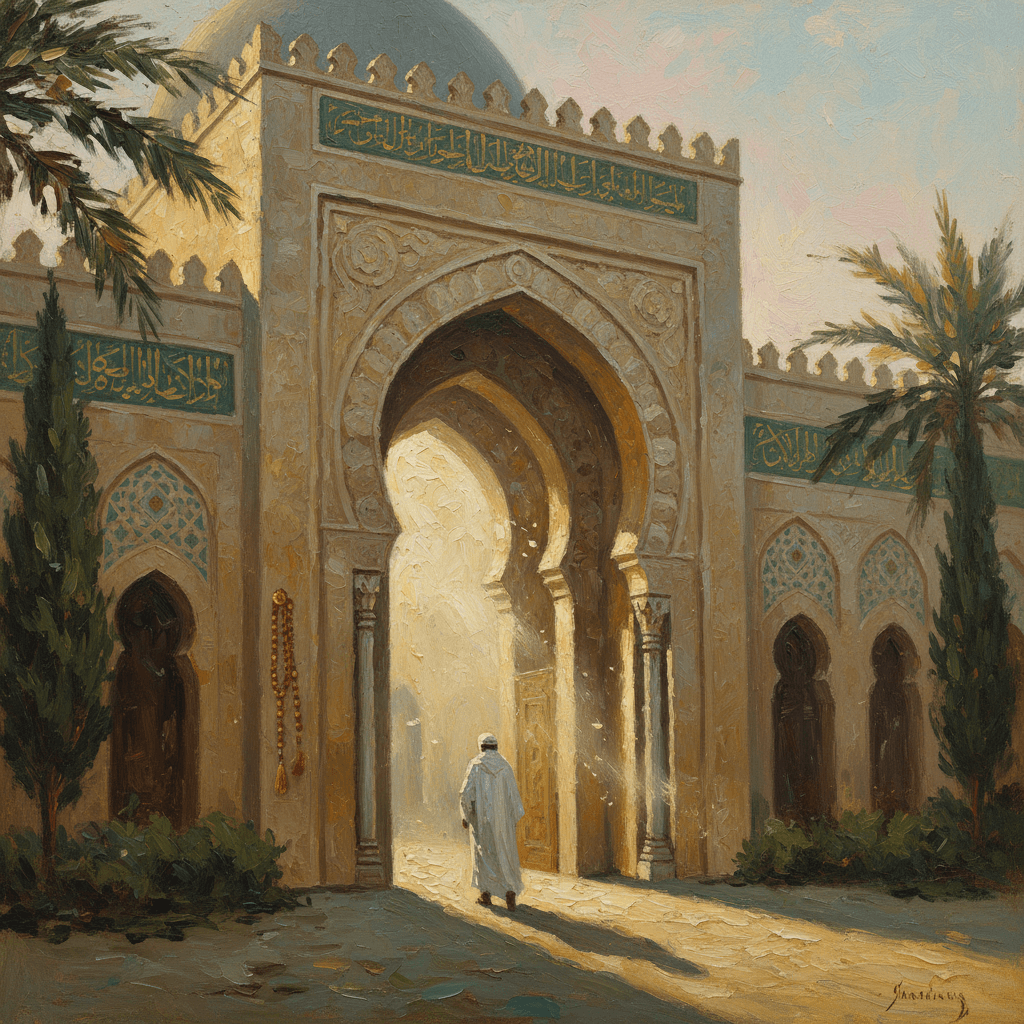
Four words. Seventeen Arabic letters. The most important sentence a human being can ever speak.
La ilaha illallah — there is no god but Allah. This is the Kalima Tayyiba, the pure word, the good word. It is the declaration that launched a faith, the last words the Prophet ﷺ prayed his Ummah would say at death, and the single statement that the entire edifice of Islamic practice rests upon.
Most Muslims have said it thousands of times. Few have ever sat with it long enough to feel its full weight.
What Kalima Tayyiba Actually Means
The word tayyiba (طيبة) means pure, clean, good, wholesome. It is the opposite of what is corrupt or impure. When the Quran uses this word to describe a statement, it means a statement that is fundamentally, completely, perfectly good — in its truth, its effect, and its spiritual weight.
Allah uses this exact imagery in the Quran:
أَلَمْ تَرَ كَيْفَ ضَرَبَ اللَّهُ مَثَلًا كَلِمَةً طَيِّبَةً كَشَجَرَةٍ طَيِّبَةٍ أَصْلُهَا ثَابِتٌ وَفَرْعُهَا فِي السَّمَاءِ
Alam tara kayfa daraba Allahu mathalan kalimatan tayyibatan kashajaratin tayyibatin asluha thabitun wa far'uha fis-sama'
"Have you not considered how Allah presents an example — a good word (kalima tayyiba) is like a good tree, whose root is firmly fixed and whose branches are in the sky."
— (Surah Ibrahim, 14:24)
A tree with roots fixed deep in the earth, branches reaching into heaven. That is what La ilaha illallah is. The deeper the roots of genuine belief go, the higher the fruits of righteous action reach.
Breaking Down the Words
La ilaha illallah contains a negation and an affirmation — and both matter:
La ilaha — "There is no god." Before affirming anything, you are clearing the field. Everything you have ever placed your ultimate trust in, relied on exclusively, or made the organizing principle of your life — this statement says: that is not God. Not money. Not status. Not a relationship. Not yourself. Not your nafs.
illallah — "except Allah." Then, into the cleared space, the truth is affirmed. One God, one ultimate reality, one locus of all power, mercy, and sovereignty.
This structure — la before illa — is deliberate. You cannot truly affirm Allah until you have genuinely let go of your other false gods. The nafs (lower self) resists this, because it wants to maintain its own small thrones. La ilaha illallah is the act of dismantling them.
The Story Behind the Kalima
When the Prophet ﷺ began preaching in Mecca, the polytheists asked a simple question: what do you want from us? He told them: say La ilaha illallah. They reacted with shock. The Quran records their response: "Has he made the gods into one God? This is indeed a strange thing." (Surah Sad, 38:5)
The statement was revolutionary because it was total. It did not just add Allah to their list of gods — it erased all others. The Meccans understood what they were being asked to give up: the social structures, the power dynamics, the tribal hierarchies that rested on polytheism. La ilaha illallah was not just theology. It was a complete reordering of what you live for.
Two decades later, as the Prophet ﷺ lay dying, his final audible words were La ilaha illallah. (Sahih Bukhari 6510) He came into the world with the Kalima. He left with it. And he left with us the instruction that if we can, we should try to do the same.
How to Make Kalima Tayyiba Your Daily Anchor
Knowing the meaning is one thing. Making it real in your daily life is another. Here is how:
Morning dhikr — say it with intention. The best time to say La ilaha illallah is after Fajr. Even ten repetitions, said slowly with attention to the meaning, can set the tone for the entire day. The Prophet said: "Whoever says La ilaha illallah one hundred times, it is as if he has freed ten slaves, one hundred good deeds are recorded for him, and one hundred sins are wiped away." (Sahih Bukhari 3293)
Use it as a reset during the day. When you feel anxious, angry, or tempted — say it once with full presence. La ilaha illallah. No ultimate power except Allah. Your anxiety is about something that, ultimately, is not god. Your temptation is pulling you toward something that is not god. This statement cuts through the noise.
Make it your last thought before sleep. The Prophet said that whoever says La ilaha illallah before sleeping will be protected. Make it the last sentence your lips form each night.
Understand that speed defeats the purpose. Many Muslims race through dhikr as if speed equals reward. The Prophet loved consistent small deeds. Ten deliberate repetitions of La ilaha illallah are worth more than a hundred mindless ones. Slow down.
Track Your Daily Kalima Tayyiba Practice
DeenBack helps you build a consistent daily dhikr habit — including tracking your La ilaha illallah repetitions so they become the anchor your day is built around.


Free download. Premium features available in-app.
Signs That It Is Taking Root
How do you know La ilaha illallah is moving from your tongue to your heart?
You start to notice when you are putting something in Allah's place. You catch yourself treating worry as though it has more power than it does. You catch your nafs demanding something as though that thing were ultimate. And then you say La ilaha illallah — and mean it.
You become less reactive to what people think of you. Because if Allah is the only God, then approval from creation is nice but not necessary. You become more honest. You become more willing to act rightly when it is costly. These are not dramatic spiritual experiences — they are the slow, quiet fruit of a tree that is growing deeper roots.
Common Questions
Is Kalima Tayyiba the same as the Shahada? Closely related but technically distinct. The Shahada (testimony of faith) is the full declaration: La ilaha illallah Muhammadur rasulullah — both parts together. The Kalima Tayyiba specifically refers to the first part. Both are essential to Islamic belief.
Can a non-Muslim say La ilaha illallah and become Muslim? The Shahada requires both parts — La ilaha illallah AND Muhammadur rasulullah. Intention also matters. Many scholars require that the person understand the basic meaning. Simply saying the words without intention does not make one Muslim.
Does saying La ilaha illallah protect from the fire of Hell? The Prophet indicated that sincere belief, expressed through the Kalima, is the foundation for entering Jannah — but sincerity must be backed by action and genuine belief, not just lip service. This is why the Prophet qualified it with "from the heart" (min qalbihi). (Sahih Bukhari 99)
For deeper spiritual grounding, see what is taqwa in Islam — taqwa is where the Kalima becomes a way of living — and dua for steadfastness for the supplication that holds your belief firm through difficulty. The dua for guidance is the natural companion when you want your Kalima belief to translate into a lived direction.
The Word That Contains Everything
La ilaha illallah is not just a religious phrase. It is a complete philosophy of life.
It says: your ultimate source is Allah. Your ultimate accountability is to Allah. Your ultimate hope is in Allah. Everything else — achievement, relationship, health, wealth — is real but secondary. Real but temporary. Real but not god.
Say it today. Say it tomorrow. Say it every day until it stops being something you say and starts being something you are.
Make La Ilaha Illallah Your Daily Foundation
DeenBack helps you track your dhikr practice and build the consistency that turns the Kalima from a phrase into a way of seeing — and living — every moment.
Free download. Premium features available in-app.
Frequently Asked Questions
What is the Kalima Tayyiba?
Kalima Tayyiba (الكلمة الطيبة) literally means 'the pure word' or 'the good word.' It refers to La ilaha illallah — 'There is no god but Allah.' It is the first half of the Shahada (testimony of faith) and the most fundamental statement in Islam.
What is the difference between Kalima Tayyiba and the Shahada?
The Shahada (testimony of faith) is the full statement: La ilaha illallah Muhammadur rasulullah — 'There is no god but Allah and Muhammad is His messenger.' The Kalima Tayyiba specifically refers to the first part: La ilaha illallah. Both are essential, and they are closely related.
How many times should I say La ilaha illallah?
There is no strict required number in the daily adhkar, though many scholars recommend saying it 100 times in the morning, which carries enormous rewards according to hadith. Any number with sincerity is beneficial. It can be said as part of formal dhikr sessions or naturally throughout the day.
What reward does saying La ilaha illallah carry?
The Prophet said: 'The best dhikr is La ilaha illallah' (Tirmidhi 3383). He also said: 'Whoever says La ilaha illallah sincerely from the heart will enter Jannah.' (Sahih Bukhari 99). The reward is immense, but sincerity — not mechanical repetition — is what activates it.
Can saying Kalima Tayyiba erase sins?
Yes. The Prophet said that La ilaha illallah washes away sins. However, this applies to minor sins and works in conjunction with overall repentance and righteous action — it is not a magic formula to be said without meaning while continuing to commit major sins deliberately.