
- Published on
Is Plastic Surgery Haram? The Islamic View on Changing Your Body
- Authors

- Name
- Ahmad
- Role
- Senior Marketing Manager, Islamic education • Deen Back
بِسْمِ اللهِ الرَّحْمٰنِ الرَّحِيْمِ
In the name of God, the Most Gracious, the Most Merciful.
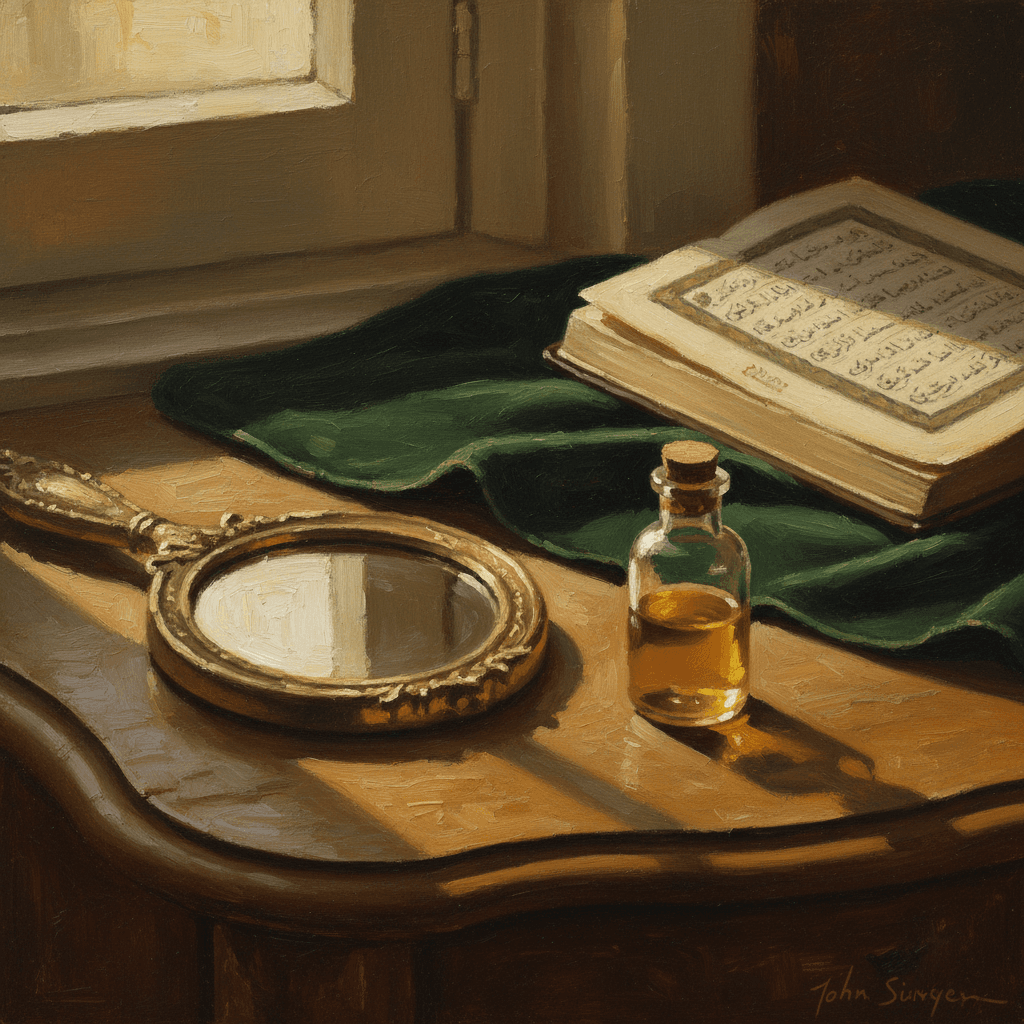
You look in the mirror and there is something you wish was different. Maybe you have thought about it for years. You have seen the procedures advertised, you know people who have had them, and you wonder: would it actually make me feel better about myself? And then: is this even something Islam allows?
This is a question that deserves a careful, compassionate answer — not a quick ruling that dismisses what you are feeling. The desire to look and feel your best is human. What Islam addresses is the specific action you take in response to that desire, and more importantly, what is driving it.
The Quick Answer
Plastic surgery falls into two categories in Islamic law:
Reconstructive / corrective surgery: For defects from birth, accidents, or illness — generally permissible, and scholars have even said it is merciful to allow it.
Purely cosmetic surgery: To change features you dislike for reasons of vanity or social pressure — prohibited by the majority of scholars.
The Quran records Iblis promising to corrupt humanity:
وَلَآمُرَنَّهُمْ فَلَيُغَيِّرُنَّ خَلْقَ اللَّهِ
"And I will command them, and they will alter the creation of Allah." — (Surah An-Nisa, 4:119)
This verse is the primary evidence scholars use for the prohibition on cosmetic alteration of healthy body parts.
What the Quran and Sunnah Say
The Prophet ﷺ specifically cursed the practitioners and recipients of certain permanent body alterations:
لَعَنَ اللَّهُ الْوَاشِمَاتِ وَالْمُسْتَوْشِمَاتِ وَالنَّامِصَاتِ وَالْمُتَنَمِّصَاتِ وَالْمُتَفَلِّجَاتِ لِلْحُسْنِ الْمُغَيِّرَاتِ خَلْقَ اللَّهِ
"Allah has cursed those women who tattoo and those who have themselves tattooed, those who remove facial hair and those who have it removed, and those who file their teeth for beauty — those who alter the creation of Allah." — (Sahih al-Bukhari 5931)
The key phrase at the end: al-mughayyirat khalq Allah — those who alter Allah's creation. Scholars extend this principle to surgical procedures that permanently alter healthy physical features purely for cosmetic reasons.
However, the same tradition includes an exception the Companions recognized. When a woman named Umm Ya'qub challenged this ruling, Ibn Mas'ud replied that the prohibition was about tahassun — beautification for vanity — not about correcting genuine defects or harm. This distinction is foundational to how Islamic scholars have always approached this question.
The reconstructive exception: If someone was born with a cleft palate, lost an ear in an accident, or had reconstructive surgery after a mastectomy — these are treated as restoring what was lost, not altering what was given. The Prophet ﷺ said:
إِنَّ اللَّهَ لَمْ يَضَعْ دَاءً إِلَّا وَضَعَ لَهُ دَوَاءً
"Allah has not created a disease without creating a cure for it." — (Sahih al-Bukhari 5678)
Medical necessity changes the ruling. Pure vanity does not create necessity.
Why This Is Actually Hard
Social media has made this question orders of magnitude harder than it was ten years ago. You are not just comparing yourself to people around you — you are comparing yourself to a curated, filtered, surgically-modified global standard that does not actually exist in real life.
The nafs responds to insecurity with a logical-seeming solution: fix it. If you do not like your nose, change it. If you feel insecure about your body, alter it. The external solution feels more concrete than the internal work.
But here is what actually happens in most cases: the specific insecurity gets addressed, and a new one appears. Because the root problem was never the nose — it was the insecurity. And insecurity cannot be surgically removed.
The Prophet ﷺ said about contentment (qana'a):
قَدْ أَفْلَحَ مَنْ أَسْلَمَ وَرُزِقَ كَفَافًا وَقَنَّعَهُ اللَّهُ بِمَا آتَاهُ
"Successful is the one who submits to Islam, is provided with enough, and is made content by Allah with what He has given him." — (Sahih Muslim 1054)
The work of qana'a — contentment — is harder than surgery. But it actually solves the problem.
What to Do About It — Practical Steps
Step 1: Name what you are actually feeling
Not "I want to change my nose." Dig deeper: "I feel like people judge me by it." Or: "I feel like I would be more confident if I changed it." Or: "I see someone online with a different body and I feel like mine is wrong." Name the actual feeling. It tells you what the real work is.
Step 2: Investigate the source of the insecurity
Most appearance insecurity has a specific source — a comment someone made, years of comparison to others, a social environment with very narrow beauty standards. Understanding where it came from helps you see it for what it is: an external wound, not an objective truth.
Step 3: Work on what Islam actually prescribes
For appearance-based insecurity, Islam prescribes:
- Gratitude for what your body can do, not what it looks like
- Reducing comparison by limiting exposure to filtered, altered images
- Strengthening iman, which genuinely reduces the hold of worldly concerns on your heart
- Physical health — exercise, proper nutrition, good sleep — which naturally improves how you look and feel without altering your creation
Step 4: If there is a genuine medical or psychological case, consult a scholar
There are cases that sit on the line — a feature that causes genuine psychological harm, not just mild discomfort. In these cases, consult a knowledgeable Islamic scholar who can assess your specific situation. This is different from acting on general dissatisfaction.
You may also want to look at specific related rulings: is a BBL haram, is botox haram, and is lip filler haram cover specific procedures in more detail.
Build Confidence From the Inside Out
Real confidence comes from iman, gratitude, and consistent spiritual habits — not from changing your appearance. DeenBack helps you build the inner work that actually changes how you feel.


Free download. Premium features available in-app.
A Dua for Accepting Yourself
اللَّهُمَّ حَسَّنْتَ خَلْقِي فَحَسِّنْ خُلُقِي
Allahumma hassanta khalqi fahassin khuluqi.
"O Allah, You have made my physical form beautiful, so beautify my character." — (Musnad Ahmad 3823, narrated that this was recited when looking in the mirror)
This dua reframes everything. Instead of asking Allah to change what you see in the mirror, you ask Him to beautify what cannot be seen — your akhlaq, your character, your soul. That is the work that truly matters.
Common Questions
What about hair transplants?
Hair transplants have their own ruling, which many scholars consider permissible because the hair used is your own and the procedure addresses a natural loss rather than altering a healthy feature. It occupies a different category than nose jobs or augmentations.
Is wearing makeup to cover imperfections haram?
No. Wearing modest, appropriate makeup to care for your appearance is permissible. The ruling on permanent surgical alteration does not apply to temporary cosmetic products that can be removed. The issue with plastic surgery is its permanent, irreversible nature.
What if I had surgery before I knew it was haram?
Tawbah (sincere repentance) is available for any sin, including this one. What has been done cannot be undone, but your relationship with Allah can be repaired through sincere return to Him. Do not let guilt over past actions become a barrier to returning to your deen.
Are there halal alternatives to address appearance concerns?
Yes — and they are more sustainable. Diet, exercise, quality sleep, good skincare, appropriate modest fashion, and posture all have significant effects on appearance without any question of permissibility. Many Muslims who focus on their health rather than surgery end up looking and feeling far better within a year than they would have from a surgical procedure.
Closing
The honest answer to why so many people want plastic surgery is this: we live in a world that profits from your insecurity. The cosmetic surgery industry exists because making you feel inadequate is extraordinarily lucrative.
Islam cuts through this. Your body is amanah — a trust from Allah. It is not a product to be upgraded. It is a gift to be cared for, used for worship, and returned to Allah in gratitude.
Work on your health. Work on your character. Work on your iman. These are the things that will make you genuinely happy with who you are.
Real Self-Improvement Starts on the Inside
DeenBack helps you build the daily Islamic habits — gratitude, dhikr, consistency — that develop the inner confidence no surgery can create.
Free download. Premium features available in-app.
Frequently Asked Questions
Is plastic surgery haram in Islam?
Plastic surgery is divided into two categories. Reconstructive surgery — to correct a defect from birth, accident, or illness — is generally permissible and sometimes even recommended. Purely cosmetic surgery to alter features you dislike for reasons of vanity or social pressure is considered haram by the majority of scholars, based on the Quranic prohibition on altering Allah's creation without necessity.
What is the Islamic ruling on rhinoplasty (nose jobs)?
A nose job for purely cosmetic reasons — you dislike your nose's shape — is considered haram by the majority of scholars. If a deviated septum or structural defect causes breathing difficulty or genuine medical impairment, corrective surgery is permissible. The line is: medical necessity vs. vanity-driven alteration.
Is breast augmentation haram in Islam?
Purely cosmetic breast augmentation — done for body image reasons or to please others — is considered haram by the majority of scholars. Reconstructive procedures after mastectomy due to cancer are generally considered permissible as they restore rather than alter Allah's original creation for non-medical reasons.
What does 'changing Allah's creation' mean in Islam?
Surah An-Nisa (4:119) quotes Iblis saying he would command people to alter Allah's creation. Scholars use this verse as evidence that cosmetically altering healthy body parts for vanity is prohibited. The principle is that your body is an amanah (trust) from Allah and should not be permanently altered for non-medical reasons.
Is it haram to feel unhappy with your appearance?
No. Feeling dissatisfied with your appearance is a human experience, not a sin. The sin lies in acting on that dissatisfaction in prohibited ways. Islam teaches you to work on accepting your body as Allah's creation while addressing dissatisfaction through spiritual growth, not physical alteration. Many Muslims find that deeper iman reduces the pull of appearance-based insecurity significantly.