
- Published on
Is Hair Transplant Haram? The Islamic Ruling on Hair Restoration
- Authors

- Name
- Ahmad
- Role
- Senior Marketing Manager, Islamic education • Deen Back
بِسْمِ اللهِ الرَّحْمٰنِ الرَّحِيْمِ
In the name of God, the Most Gracious, the Most Merciful.
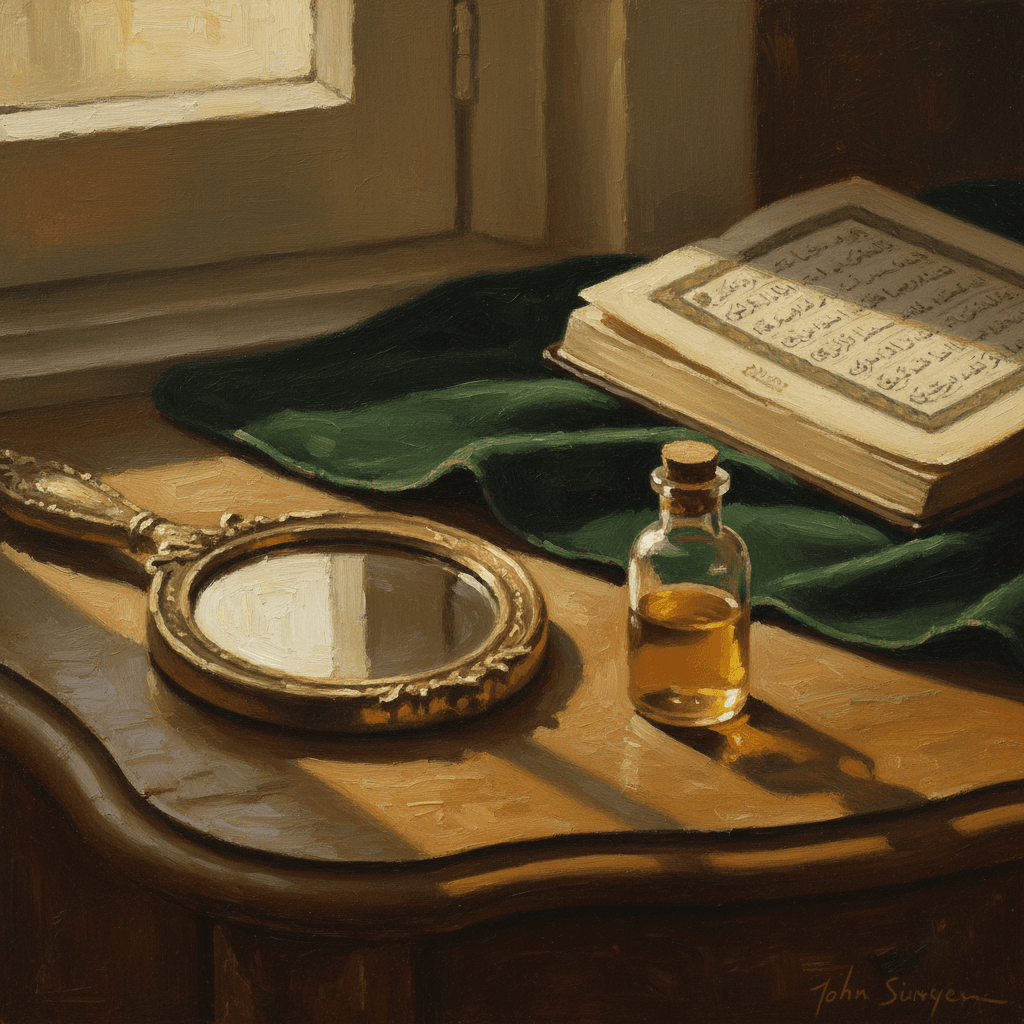
Hair loss is one of those things nobody really talks about — but quietly affects millions of Muslims. It does not announce itself. It happens gradually, and then one day you look in the mirror and something has shifted. For men it often starts in their twenties. For women it can come after pregnancy, illness, or hormonal changes. Either way, the emotional weight is real.
You are not shallow for caring about it. Hair is part of how we present ourselves to the world. Losing it can shake your confidence, affect how you carry yourself, and feed a low-level anxiety that is hard to name. And then someone tells you about hair transplants — and you wonder: is this something I am allowed to pursue, or does Islam say I just have to accept it?
This article gives you the actual ruling, the nuance, and the honest questions you need to ask yourself before deciding.
The Quick Answer
A hair transplant using your own hair is permissible according to the majority of contemporary Islamic scholars.
The key verse scholars cite when discussing cosmetic procedures is from Surah An-Nisa, where Shaytan describes his strategy against humanity:
وَلَآمُرَنَّهُمْ فَلَيُغَيِّرُنَّ خَلْقَ اللَّهِ
Wa-la-amurannahum fa-layughayyirunna khalqallah
"And I will command them so they will change the creation of Allah." — (Surah An-Nisa, 4:119)
The crucial distinction scholars make is between altering what Allah created — which is prohibited — and restoring what was lost, which is generally permitted. Hair loss is something that happened to your body. Using your own hair follicles to restore what was naturally yours is not the same as surgically reshaping a feature for vanity. This is the distinction that separates hair transplants from procedures like Botox or tattoos, where the intention is to alter, not restore.
What the Quran and Sunnah Say
The Prohibition on Altering Creation
The hadith that forms the backbone of cosmetic procedure rulings was narrated by Ibn Masud:
لَعَنَ اللَّهُ الْوَاشِمَاتِ وَالْمُسْتَوْشِمَاتِ وَالنَّامِصَاتِ وَالْمُتَنَمِّصَاتِ وَالْمُتَفَلِّجَاتِ لِلْحُسْنِ الْمُغَيِّرَاتِ خَلْقَ اللَّهِ
La'ana Allahu al-washimati wal-mustaushmati wal-namisati wal-mutanammisati wal-mutafallijati lil-husni al-mughayyirat khalqallah
"Allah has cursed those who do tattoos and those who have them done, those who pluck the eyebrows and those who have them plucked, and those who file their teeth for the purpose of beauty — those who alter the creation of Allah." — (Sahih al-Bukhari 5931)
Notice what these practices have in common: they are done lil-husni — for beautification — and they alter something that was intact. This is the definition of taghyir khalqillah that scholars apply to prohibited cosmetic procedures.
The Permission for Restoration
The Sunnah also establishes the opposite principle. In a well-known incident, a Companion whose nose was severed in battle was permitted to use a replacement nose. This is restoration — returning function and appearance to something that was taken. The Prophet ﷺ also established the foundational legal maxim:
لَا ضَرَرَ وَلَا ضِرَارَ
La darara wa-la dirar
"Harm shall not be inflicted or reciprocated in Islam." — (Sunan Ibn Majah 2341)
Hair loss — especially from alopecia, chemotherapy, burns, or disease — causes genuine psychological and social harm. Islam does not demand you suffer unnecessarily when a legitimate, halal restoration is available.
Three Categories of Hair Transplant
Autologous graft (your own hair): Permissible according to the majority. Your own follicles, relocated. No foreign substance. This is the standard modern FUE or FUT transplant.
Another person's hair: More contested. Some scholars permit it under necessity; others prohibit it based on the sanctity of another person's body. Consult a qualified scholar with your specific situation.
Synthetic or artificial hair: Generally not permissible. This parallels the prohibition on wigs — introducing artificial material to simulate what was not there is closer to deception than restoration.
Why This Is Actually Hard
If the ruling is relatively clear, why does the decision still feel heavy?
Because hair loss hits something deeper than hair. The nafs is not just worried about follicles. It is worried about attractiveness, about being seen as old or diminished, about what a spouse or colleagues think. Social media makes it worse — feeds are full of thick-haired men and women, and hairline comparison is real even if nobody names it.
There is also a subtler nafs trap: framing a cosmetic desire as a medical one. "My hair loss is causing me stress" is technically true for almost everyone who experiences it. But stress alone is not the darura (necessity) that unlocks a broader permissibility. The honest question is not "can I justify this Islamically?" It is: "am I pursuing this from genuine self-care, or because the world has convinced me I am defective?"
Your inner voice may be saying:
- "It is my own hair, so what is the harm?"
- "This is not vanity — this is restoration"
- "Once I fix this, I can focus on more important things"
Some of those thoughts are completely legitimate. Others are the nafs using reasonable-sounding language to chase dunya validation. Only honest muhasabah (self-accounting) can tell you which is which.
Practical Steps
Step 1: Identify Whether This Is Restoration or Alteration
Ask yourself clearly: are you restoring hair that you lost — due to genetics, illness, hormonal change, or aging — or are you trying to achieve something you never naturally had? If your hair loss is related to a medical condition (alopecia areata, thyroid issues, chemotherapy, burns), the case for permissibility is strongest.
If it is standard male-pattern baldness progressing since your twenties, the majority of scholars still permit autologous transplants — but your intention and honesty about that intention matter.
Step 2: Ensure It Uses Your Own Hair
An autologous hair graft — taking follicles from the back of your own head and transplanting them to thinning areas — is the permissible type according to the majority. Your own hair. Your own body. No foreign material introduced.
Using another person's hair raises separate scholarly concerns. Using synthetic or artificial hair enters impermissible territory for most scholars. Make sure you know exactly what procedure is being proposed.
Step 3: Consult Both a Qualified Islamic Scholar and a Medical Professional
Do not make this decision based on general articles alone. Speak with a scholar who can assess your specific situation, your intentions, and the nature of your hair loss. At the same time, consult a reputable medical professional to understand the actual procedure, its permanence, and its risks.
Build the daily accountability habits that make hard decisions clearer
Deen Back helps you develop daily habits of dhikr, reflection, and honest self-accounting — so decisions like this come from taqwa, not just desire.


Free download. Premium features available in-app.
Step 4: Check Your Intention Honestly
The Prophet ﷺ said: Innama al-amalu bin-niyyat — actions are by their intentions. Sit with the question: why do I actually want this?
If the honest answer is "I want to feel like myself again after illness took my hair" — that is a wholesome intention. If the honest answer is "I want to look younger so I am more attractive to others" — that is the nafs talking, and no procedure will fill that hole for long.
Step 5: Redirect Body Image Anxiety Through Dhikr
Whether or not you proceed, the anxiety around your appearance needs a spiritual response alongside any medical one. Daily dhikr reconnects you to who you are before Allah — not how you look in the mirror. Reducing social media exposure to hair and beauty content is a practical form of nafs management. For the broader framework on what makes something permitted or prohibited in Islam, see halal vs haram. And for building the daily habits that make contentment more than just a slogan, see how to build daily Islamic habits.
Dua for Contentment and Strength
اللَّهُمَّ إِنِّي أَسْأَلُكَ الرِّضَا بَعْدَ الْقَضَاءِ
Allahumma inni as'aluka ar-rida ba'da al-qada'
"O Allah, I ask You for contentment after Your decree." — (Ibn Abi Shaybah, authenticated by scholars)
Say this when the mirror is unkind. Say it when comparison stirs something in you. It is not a dua of passivity — it is a dua of grounded acceptance that does not require you to suffer, but asks whether the suffering is coming from the situation itself or from an expectation the world placed on you.
Common Questions
Is a hair transplant haram?
For autologous hair transplants using your own follicles, the majority of contemporary scholars consider it permissible, treating it as restoration rather than alteration of Allah's creation. The key conditions: your own hair only, no artificial or donor material, and an intention rooted in genuine wellbeing rather than chasing dunya beauty standards.
Is it haram to use another person's hair for a transplant?
Scholars differ. Some permit it in cases of genuine need where autologous grafting is insufficient. Others prohibit it because it involves using parts of another human body, raising issues around bodily sanctity. The safer and majority position is to use only your own hair. If autologous grafts are not medically viable for your situation, take this specific question to a qualified scholar.
Does a hair transplant count as changing the creation of Allah?
Not the way the prohibition is understood by most scholars. The taghyir khalqillah prohibition targets vanity-driven alteration of intact features — like the examples in the hadith above. Restoring hair that was lost, using your own follicles, is analogous to reconstructive surgery — which scholars broadly permit. You are not arguing with how Allah made you; you are restoring what circumstances took. Compare this to procedures like those discussed in is a BBL haram, where the question is different because the goal is aesthetic alteration rather than restoration.
Is it haram for women to get a hair transplant?
The ruling is the same for women. Women experiencing alopecia, significant hormonal hair loss, or thinning from medical causes may pursue autologous hair transplantation under the same conditions. Hair loss can be particularly painful for women given cultural expectations, and Islam does not require enduring it when a halal restoration is available. Scholars also advise preferring a female practitioner where possible.
This Is Not a Test You Have to Fail
Hair loss is a real struggle. It affects how you feel in your own skin, and that matters. Islam does not ask you to pretend it does not.
What Islam asks is that you approach the decision with honesty: honest about what you are restoring versus what you are chasing, honest about whose standards you are serving, and honest about whether the anxiety underneath will actually be resolved by the procedure or whether it needs a different kind of attention.
The ruling gives you room. The wisdom is in how you use that room. Consult scholars, check your intention, and build the inner practices that make contentment real alongside whatever external decision you make. You were created, as the Quran says, in the best of forms. That declaration does not depend on your hairline.
Build the daily habits that make self-acceptance real, not just a platitude
Deen Back helps you track dhikr, build daily reflection habits, and strengthen the inner confidence that does not depend on how the mirror treats you.
Free download. Premium features available in-app.
Frequently Asked Questions
Is a hair transplant haram?
Using your own hair (autologous grafting) for a transplant is considered permissible by the majority of contemporary scholars. This is restoration of what was lost, not fundamental alteration of what Allah created. The condition is that it uses your own hair follicles, not synthetic material or another person's hair.
Is it haram to use another person's hair for a transplant?
Using hair from another person is more contested among scholars. Some permit it under necessity, while others prohibit it on the grounds that using another person's body parts without clear necessity is not permitted. The majority position leans toward impermissibility unless there is a compelling medical case. Consult a qualified scholar for your specific situation.
Does a hair transplant count as changing the creation of Allah?
Scholars distinguish between restoration and alteration. Changing the creation of Allah (tabdil khalqillah) refers to altering what was given to you — not to restoring what was lost. An autologous hair transplant that moves your own follicles to restore your original hairline is closer to restoration than alteration, which is why the majority consider it permissible.
Is it haram for women to get a hair transplant?
The same ruling applies. Women experiencing hair loss — from alopecia, medical treatment, or other causes — may pursue autologous hair transplantation. The conditions are the same: own hair grafts, no foreign material, and the intention of restoring what was lost rather than dramatically altering one's natural appearance.