
- Published on
Is Music Haram? A Practical Guide to Letting Go
- Authors

- Name
- Ahmad
- Role
- Senior Marketing Manager, Islamic education • Deen Back
بِسْمِ اللهِ الرَّحْمٰنِ الرَّحِيْمِ
In the name of God, the Most Gracious, the Most Merciful.
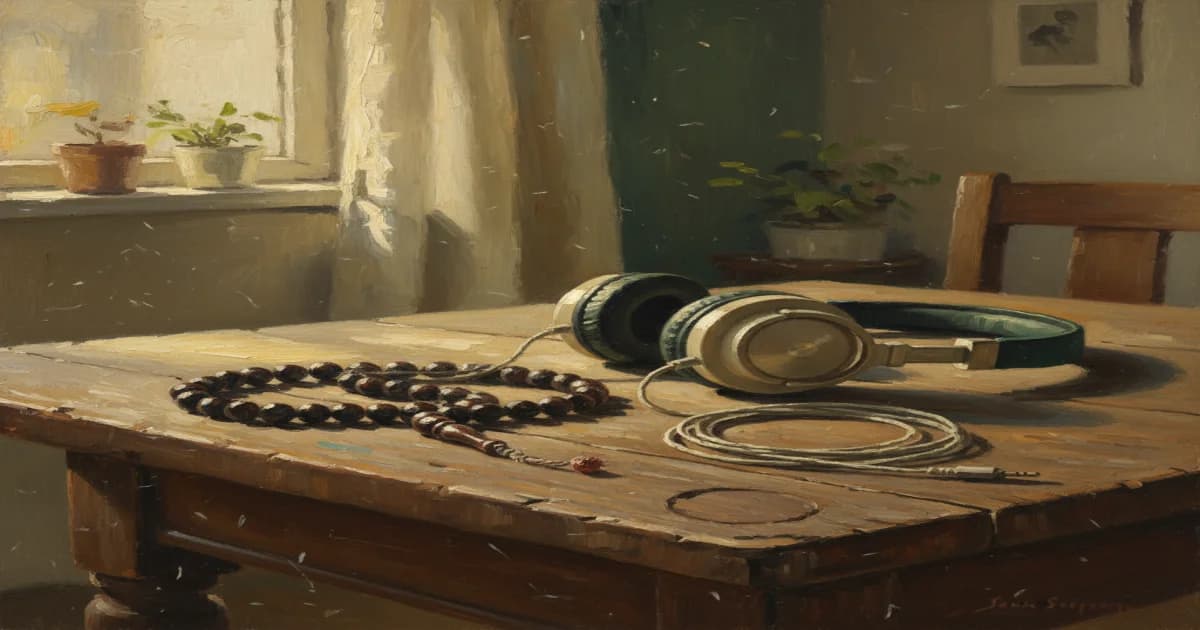
You are reading this because part of you already knows the answer. Maybe you have heard the hadith before, or felt that pull of guilt every time you press play. The question is not really whether music is haram — it is whether you are ready to do something about it.
This is not going to be a dry fatwa. This is about the real struggle of letting go of something your nafs has made feel essential to your daily life.
The Short Answer
The majority of Islamic scholars, across all four madhabs, consider musical instruments haram based on clear hadith evidence. The Prophet ﷺ said:
"There will be among my ummah people who will regard adultery, silk, alcohol, and musical instruments as permissible." — (Sahih al-Bukhari 5590)
This hadith is significant because it groups musical instruments alongside things that are unambiguously forbidden. The Prophet ﷺ warned that a time would come when people would try to make these things acceptable — and here we are.
A minority of scholars, from the Zahiri school and some Maliki jurists, have permitted certain forms of music. But even they would agree: if music is distracting you from remembrance of Allah, it has become harmful for you personally.
What the Quran and Sunnah Say
Allah says in the Quran:
وَمِنَ النَّاسِ مَن يَشْتَرِي لَهْوَ الْحَدِيثِ لِيُضِلَّ عَن سَبِيلِ اللَّهِ
"And among the people is he who buys idle talk (lahw al-hadith) to lead others astray from the path of Allah." — (Surah Luqman, 31:6)
Ibn Masud, Ibn Abbas, and other companions interpreted lahw al-hadith as singing and music. This is the most widely held tafsir of this verse.
The Prophet ﷺ also said:
"There will be people from my ummah who will seek to make lawful: fornication, silk for men, wine, and musical instruments." — (Sahih al-Bukhari 5590)
The evidence is there. But knowing the ruling was never the hard part, was it? If you are ready to take action, learning how to build daily Islamic habits is a great next step.
Why This Is Actually Hard
Let us be honest. Music is not like alcohol — you do not need to seek it out. It is everywhere. In the car, at the mall, in every app, in every advertisement. Your brain has been wired since childhood to associate music with emotion, comfort, and energy.
Your nafs will give you every excuse:
- "It is just background noise"
- "I only listen to clean lyrics"
- "It helps me focus"
- "I will quit after Ramadan"
That voice? That is your lower self negotiating. It is the same voice that says "just five more minutes" before Fajr. Recognizing it is the first step to beating it.
The real challenge is not intellectual — you already know the ruling. The challenge is emotional. Music fills a void. To quit, you need to fill that void with something better.
What to Do About It — Practical Steps
This is the part that matters. Knowing music is haram changes nothing if you do not act. Here is how to actually make the shift:
Step 1: Audit Your Triggers
For one week, notice every time you reach for music. Is it during your commute? When you are stressed? While cooking? Write down the trigger and the emotion behind it. You cannot replace a habit you do not understand.
Step 2: Replace, Do Not Just Remove
Cold turkey rarely works for deep habits. The key is replacing the void with something better. Here are your best alternatives:
- Quran recitation — start with reciters whose voice resonates with you (Mishary Rashid, Abdul Rahman Mossad)
- Nasheeds without instruments — a permissible bridge while you transition (for the full ruling, see is it haram to listen to nasheed)
- Islamic podcasts — knowledge fills the silence in a meaningful way
- Silence and dhikr — the most powerful replacement. Say SubhanAllah 33 times during your commute instead
Step 3: Change Your Environment
Delete music apps. Unsubscribe from Spotify. Remove playlists from your phone. Make the haram option harder to access and the halal option easier. This is not about willpower — it is about designing your environment for success.
Step 4: Build a Dhikr Streak
Every day you choose dhikr over music is a win. Track it. Watch the streak grow. When you see 7 days, then 14, then 30 — your identity starts to shift from "someone who is trying to quit music" to "someone who remembers Allah daily."
Replace music with dhikr — and track your streak
Deen Back helps you build a daily dhikr habit with streak tracking, prayer-time reminders, and guided self-control tools.


Free download. Premium features available in-app.
Step 5: Have a Dua Ready for Weak Moments
When the urge hits — and it will — have a dua loaded and ready:
اللَّهُمَّ أَعِنِّي عَلَى ذِكْرِكَ وَشُكْرِكَ وَحُسْنِ عِبَادَتِكَ
"O Allah, help me to remember You, thank You, and worship You well." — (Abu Dawud 1522)
Say it out loud. The act of speaking dhikr interrupts the craving.
Dua for Strength Against the Nafs
When the pull feels too strong, turn to Allah with sincerity:
رَبَّنَا لَا تُزِغْ قُلُوبَنَا بَعْدَ إِذْ هَدَيْتَنَا وَهَبْ لَنَا مِن لَّدُنكَ رَحْمَةً إِنَّكَ أَنتَ الْوَهَّابُ
"Our Lord, do not let our hearts deviate after You have guided us, and grant us mercy from Yourself. Indeed, You are the Bestower." — (Surah Aal-Imran, 3:8)
And remember — tawbah is always open. The Prophet ﷺ said:
"Allah is more pleased with the repentance of His servant than one of you who finds his lost camel in the desert." — (Sahih Muslim 2750)
Every time you slip, come back. That is not weakness — that is jihad al-nafs.
Common Questions
Is listening to nasheeds a good alternative?
Nasheeds without musical instruments are generally permissible and can help during the transition period. Many Muslims find them a useful bridge. Over time, you may find that Quran recitation itself becomes more fulfilling than any nasheed. Use nasheeds as a stepping stone, not a permanent replacement. The related question of is singing haram covers the ruling on vocals specifically, which many people ask about alongside music.
How long does it take to stop craving music?
Most people report significant reduction in cravings after 2-3 weeks of consistent replacement with Quran and dhikr. The first week is the hardest. After 30 days, many feel genuinely at peace without it. Track your daily habits to see the pattern.
What about background music I cannot control?
At a mall, a restaurant, or someone else's car — you are not sinful for hearing what you cannot avoid. The sin is in deliberately seeking it out. In situations you cannot control, make silent dhikr. Turn the moment into worship.
My friends all listen to music — how do I handle that?
You do not need to lecture anyone. Lead by example. When you are in control (your car, your phone), play Quran or nasheeds. When asked, keep it simple: "I am trying something different." Most people respect quiet conviction more than loud preaching. If you need support on your journey, reach out — you are not alone in this.
Your Journey Starts Now
You did not land on this page by accident. Something inside you — the part that loves Allah more than the playlist — brought you here. That is your fitrah speaking over your nafs.
You do not have to be perfect. You just have to start. One day without music. Then two. Then a week. Allah says:
أَلَا بِذِكْرِ اللَّهِ تَطْمَئِنُّ الْقُلُوبُ
"Verily, in the remembrance of Allah do hearts find rest." — (Surah Ar-Ra'd, 13:28)
The peace you are looking for in music? It was always in dhikr.
Start your music-free streak today
Track your daily dhikr, set reminders tied to prayer times, and build the self-control that lasts. Your nafs does not stand a chance.
Free download. Premium features available in-app.
Frequently Asked Questions
Is all music haram or just some types?
The majority of scholars consider musical instruments haram based on hadith evidence. Some scholars permit vocals without instruments (nasheeds). A minority view, notably from some Maliki and Zahiri scholars, permits certain forms. Regardless of where you land, if music is pulling you away from dhikr and salah, that is a sign your nafs needs attention.
What if I keep going back to music after quitting?
Relapsing is part of the process, not a sign of failure. The Prophet ﷺ said Allah loves the repentance of His servant. Each time you return to dhikr after a slip, you are training your nafs. Track your streak in Deen Back and aim to beat your last record — progress is not perfection.
How do I deal with music in social situations?
You do not need to make a scene. Use earbuds with Quran recitation or nasheeds in public. In cars, suggest a podcast or recitation. At events you cannot control, make silent dhikr. The goal is managing your environment, not isolating yourself.
Can nasheeds replace music?
Nasheeds without instruments are generally permissible and can serve as a bridge while you reduce your dependency on music. Over time, many Muslims find that Quran recitation itself becomes more satisfying than any nasheed. Start with nasheeds, but do not stop there.