
- Published on
Is It Haram to Listen to Nasheed? What Muslims Should Know
- Authors

- Name
- Ahmad
- Role
- Senior Marketing Manager, Islamic education • Deen Back
بِسْمِ اللهِ الرَّحْمٰنِ الرَّحِيْمِ
In the name of God, the Most Gracious, the Most Merciful.
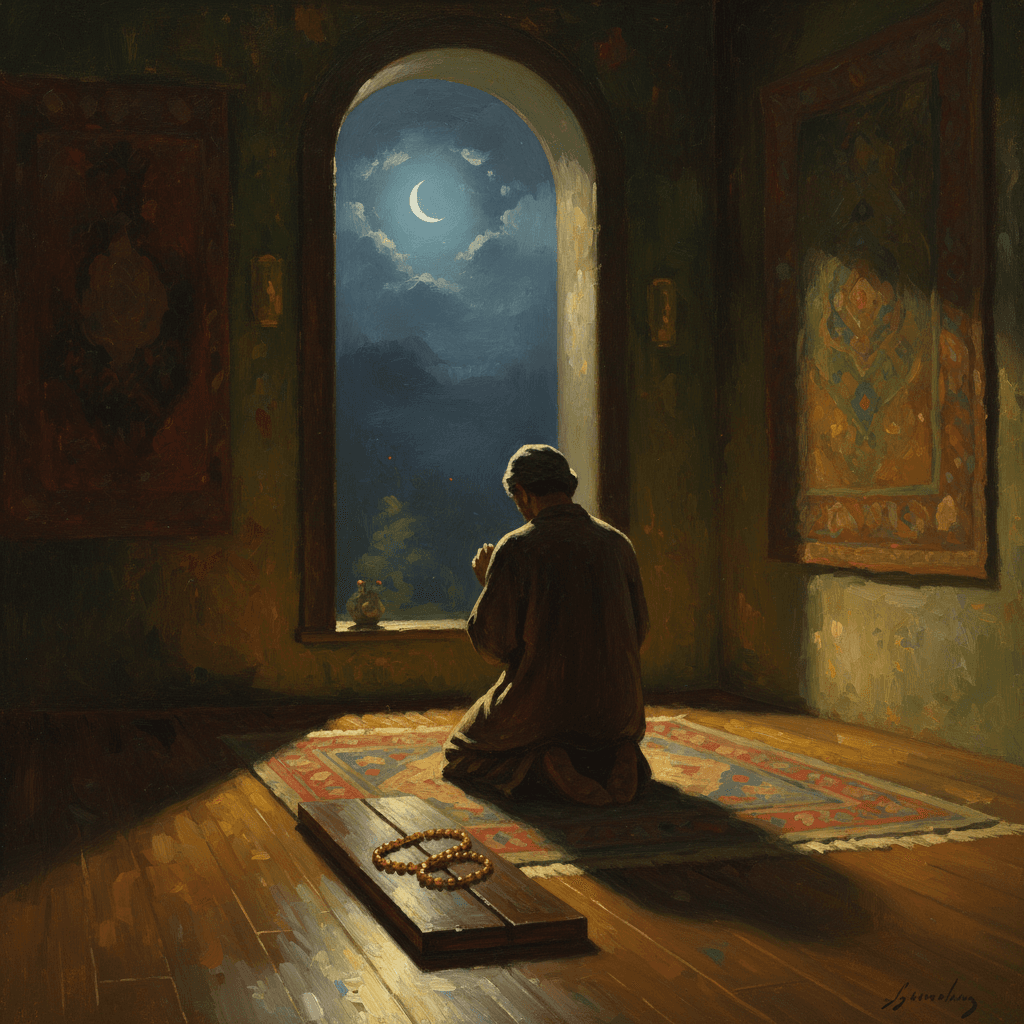
You might be asking this because you are trying to get away from music and someone told you nasheed is a safe alternative. Or maybe you have been listening to nasheeds for years and someone told you that some of them are haram. Either way, the answer matters — because if you are using nasheeds as a spiritual tool, you want to make sure they are actually working for you, not against you.
The good news: there is a clear framework here. And it is actually quite practical.
The Short Answer
Nasheeds — Islamic vocal compositions without melodic instruments — are generally permissible according to the majority of scholars, with clear conditions. They are not categorically haram.
The Prophet ﷺ permitted the duff (hand drum) on occasions of joy and celebration:
"Announce this marriage and beat the duff for it." — (Tirmidhi 1089)
The classical scholars distinguished between vocal poetry with Islamic content and music with instruments. A nasheed is closer to the former — and when it contains no melodic instruments and the content is permissible, it falls within the bounds of what is allowed.
The conditions scholars generally require:
- No melodic instruments — voice only, or with duff/percussion at most
- Permissible content — praise of Allah, love of the Prophet ﷺ, encouragement toward good
- Not used excessively — not to the point of displacing Quran, salah, or dhikr
- No gender-mixing content that is provocative or inappropriate
What the Scholars Say
Imam Al-Nawawi, Ibn Taymiyyah, and most classical scholars permitted vocal poetry and singing without instruments as long as the content was appropriate. Ibn Hazm went further, permitting instruments, but this is a minority position.
The concern arises with modern nasheeds that are:
- Produced with full music arrangements (instruments clearly present)
- Styled like pop songs with romantic themes barely disguised as Islamic content
- More focused on emotional entertainment than remembrance of Allah
The Prophet ﷺ warned:
"There will be people from my ummah who will seek to make lawful: fornication, silk, wine, and musical instruments." — (Sahih al-Bukhari 5590)
Some scholars argue that producing a nasheed in the style of pop music — even if the words are Islamic — is an attempt to make music permissible through relabelling. This is worth taking seriously when choosing what you listen to.
Why This Is Actually Hard
The nasheed question is genuinely complex because the market is enormous and varied. You have:
- Pure vocal nasheeds from artists like Mishary Rashid or Sami Yusuf's early vocal-only work
- Contemporary produced nasheeds with full musical arrangements
- Anasheed that blur into pop music with an Islamic veneer
- Quran recitation styled as nasheed (clearly permissible)
Your nafs — especially if you are trying to move away from music — will gravitate toward the most music-like nasheed it can find. That is how the transition from "I only listen to nasheed now" slowly drifts back toward music: the nasheed gets more produced, more instrumental-sounding, more entertaining, until the distinction disappears.
The question to ask honestly: am I listening to this because it builds my connection with Allah, or because it satisfies the same craving music used to satisfy?
What to Do — Using Nasheed Well
Step 1: Know What You Are Listening To
Before adding a nasheed to your regular rotation, listen carefully:
- Are there melodic instruments (piano, guitar, strings, synthesisers)?
- Is the content praising Allah and the Prophet ﷺ, or is it vague enough to be secular?
- Does listening to it put you in a state of spiritual elevation, or just emotional enjoyment?
Pure vocal nasheeds with Islamic content are your safest and most spiritually valuable choice. See our article is music haram for the broader context on where the line is drawn.
Step 2: Use Nasheed as a Bridge, Not a Destination
If you are transitioning from music to nasheed, that is a real and meaningful step. But nasheed should be a bridge, not a permanent residence. The goal is Quran recitation — Allah says:
أَلَا بِذِكْرِ اللَّهِ تَطْمَئِنُّ الْقُلُوبُ
"Verily, in the remembrance of Allah do hearts find rest." — (Surah Ar-Ra'd, 13:28)
The heart that is satisfied by Quran recitation is at a higher spiritual station than the heart that needs nasheed. Use nasheeds to get there — then let the Quran take over.
Step 3: Build a Listening Hierarchy
Create a hierarchy for what plays in your home and ears:
- Quran recitation — first and most
- Permissible nasheeds (vocal only, Islamic content) — second
- Islamic podcasts/lectures — third
- Everything else — should barely exist
This is not about depriving yourself — it is about feeding your soul with what actually nourishes it. Building daily Islamic habits includes what you put into your ears.
Step 4: Recognise When Nasheed Has Become a Substitute for Quran
If you find yourself reaching for nasheed instead of Quran when you need spiritual comfort — that is a signal worth paying attention to. The Prophet ﷺ said:
"Whoever reads the Quran and acts upon it, his parents will be crowned on the Day of Resurrection with a crown whose light is brighter than the light of the sun." — (Abu Dawud 1453)
Nasheed is permissible. Quran is divine speech. They are not equivalent.
Build a Quran habit that goes beyond nasheed — track your daily recitation
Deen Back helps you build consistent daily Quran recitation and dhikr habits. Use it to track your progress from nasheed to Quran as your primary source of peace.


Free download. Premium features available in-app.
Dua When Listening or Reciting
Before reciting or listening to Quran:
أَعُوذُ بِاللَّهِ مِنَ الشَّيْطَانِ الرَّجِيمِ
"I seek refuge with Allah from the accursed Shaytan." — (Surah An-Nahl, 16:98)
And after reciting or engaging in dhikr:
سُبْحَانَكَ اللَّهُمَّ وَبِحَمْدِكَ أَشْهَدُ أَنْ لَا إِلَهَ إِلَّا أَنْتَ أَسْتَغْفِرُكَ وَأَتُوبُ إِلَيْكَ
"Glory be to You, O Allah, and praise. I testify there is no god but You. I seek Your forgiveness and repent to You." — (Abu Dawud 4858)
Common Questions
Are anasheed about the Prophet ﷺ permissible?
Praising the Prophet ﷺ through poetry and singing is an established Islamic tradition — the qasidah burda and other classical forms of prophetic praise have been practiced for centuries. As long as the content is doctrinally sound (not attributing divine qualities to the Prophet ﷺ) and the form is permissible (no instruments), this is generally encouraged.
What about children's Islamic songs that teach Islamic knowledge?
Educational songs for children — teaching the alphabet, Islamic concepts, the names of Allah — have been treated more leniently by scholars because of their educational benefit. The key concern (instruments) applies here too, but the educational purpose is weighed alongside it.
Is listening to adhan a type of nasheed?
The adhan is dhikr and a formal Islamic act — it is not categorised as nasheed. Listening to adhan recitations is encouraged and carries its own reward. The Prophet ﷺ said to say what the muadhdhin says when you hear the adhan.
I mix nasheed with music in my playlist. Is that acceptable?
Having haram music in your playlist alongside nasheed does not make the music permissible — and the juxtaposition can work against your goal of moving away from music. See the broader discussion in halal vs haram on how intention and context interact with rulings.
Your Spiritual Listening, Upgraded
Nasheeds, used correctly, can be a powerful tool on the path to Allah. They can carry the remembrance of Allah through your day, uplift your spirit when salah feels distant, and ease the transition away from music that used to fill your time.
But they are a rung on a ladder, not the top. The top is Quran — the actual speech of Allah, which the Prophet ﷺ described as "the best of all speech."
Use the nasheed as a bridge. Keep walking. The destination is worth it.
Make Quran your daily companion — not just your occasional playlist
Deen Back helps you build the habit of daily Quran recitation and dhikr so the Quran becomes as natural as breathing. Start your streak.
Free download. Premium features available in-app.
Frequently Asked Questions
Is it haram to listen to nasheed?
Nasheeds without musical instruments are generally permissible (halal) according to the majority of scholars. The key conditions: no instruments (or only duff/percussion), the content must be permissible (praising Allah, the Prophet ﷺ, or Islamic themes), and it should not lead to excessive entertainment that displaces Quran and dhikr.
What makes a nasheed haram?
A nasheed becomes haram when: it contains musical instruments beyond the duff (drum), the content includes haram themes (romance, worldly glorification, mixing of genders in a provocative manner), the production style is indistinguishable from pop music aimed purely at entertainment, or it is used as a substitute for Quran rather than a stepping stone toward it.
Can nasheed replace music in my life?
Nasheeds can be a valuable transition tool when moving away from music. Many Muslims use them as a bridge. However, the goal should be to eventually find your primary spiritual nourishment in the Quran itself — the Prophet ﷺ described the heart's contentment as coming through remembrance of Allah, not entertainment, even permissible entertainment.
Are modern nasheeds with instruments like piano or oud haram?
Most scholars who permit nasheeds only permit them without melodic instruments. A nasheed produced with a full musical arrangement (keyboards, strings, bass) crosses into the category of music, and the majority of scholars would consider it haram. The vocal-only nasheed is the established permissible form.
Is it permissible to listen to nasheeds during Ramadan?
Yes — permissible nasheeds remain permissible during Ramadan. However, the scholars encourage prioritising Quran recitation and dhikr during Ramadan over any entertainment, even permissible kinds. Ramadan is the optimal time to upgrade from nasheed to Quran as your primary listening.