
- Published on
Is Cremation Haram? What Islam Says About Burial
- Authors

- Name
- Ahmad
- Role
- Senior Marketing Manager, Islamic education • Deen Back
بِسْمِ اللهِ الرَّحْمٰنِ الرَّحِيْمِ
In the name of God, the Most Gracious, the Most Merciful.
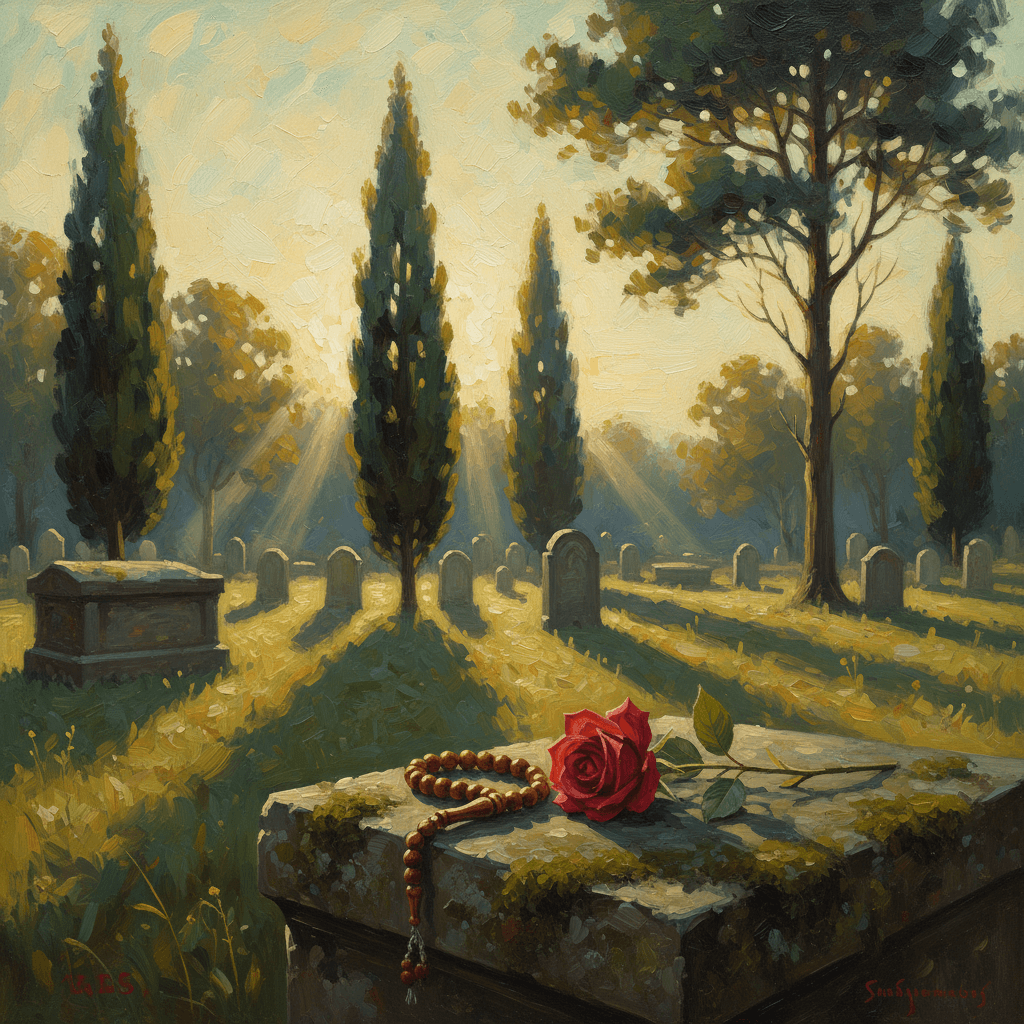
There are moments in grief when clarity is the last thing you have. Someone you love has passed, and suddenly you are navigating funeral arrangements, family expectations, and cultural traditions — all while trying to hold yourself together. If you are a Muslim caught between a family that favours cremation and the knowledge that Islam has something to say about this, you are in a genuinely hard place.
This is not an obscure question. Cremation is the norm in many cultures, and Muslims living in non-Muslim-majority countries or in mixed families encounter this pressure regularly. Understanding the ruling clearly — and having the words to explain it — matters more than you might think.
The Quick Answer
Cremation is haram in Islam. This is not a matter of scholarly dispute. All four major schools of Islamic law — Hanafi, Maliki, Shafi'i, and Hanbali — are in complete agreement: the Islamic way to handle the deceased is burial in the earth, not cremation. The prohibition is not merely cultural preference. It is rooted in direct prophetic guidance and the Quran's message about the sanctity of the human body.
"And do not kill yourselves. Indeed, Allah is ever Merciful to you." — Quran 4:29
"We have certainly honoured the children of Adam." — Quran 17:70
These verses establish that the human body carries a dignity that must be preserved — even after death.
What the Quran and Sunnah Say
The Prophet Muhammad (peace be upon him) gave explicit instruction about burial. He said:
"Breaking the bone of a dead person is like breaking the bone of a living person." — Sunan Abu Dawud 3207
This hadith is striking. Even after death, the body of a Muslim retains a form of sanctity. Scholars derived from this that any act that damages or destroys the body without necessity — cremation burns the body to ash — violates this sanctity.
The Prophet (peace be upon him) also commanded the rapid and dignified burial of the deceased:
"Hasten with the funeral rites." — Sahih al-Bukhari 1315
Burial in the earth is the assumed meaning here — the Prophet never had anyone cremated, and it was not the practice of any Muslim in the early generations of Islam.
Additionally, the Quran connects burial to the very nature of human creation:
"From it We created you, and into it We will return you, and from it We will extract you another time." — Quran 20:55
This verse directly speaks of the earth as the place of return after death — grounding the burial practice in theology, not just law.
Why This Is Actually Hard
Knowing the ruling is one thing. Living it when you are surrounded by family members who do not share your faith — or who do share your faith but are influenced by cultural norms — is another challenge entirely.
The pressure can come from several directions. A spouse from a different background may expect cremation as the "default." Elderly parents may have already pre-arranged cremation without knowing the Islamic ruling. Western countries often make cremation the cheaper, more convenient option. And when you are grieving, the last thing you want is to fight with family over burial logistics.
Your nafs (lower self) might try to negotiate: "Does it really matter at this point? They're already gone." That is the voice of grief and avoidance, not clarity. The ruling exists for a reason, and the fact that it is uncomfortable to enforce does not change what it is.
If you are in this situation, you need practical steps — not just a ruling on paper. Our broader guide on halal vs haram explains how to think through difficult Islamic rulings when the answer is uncomfortable.
What to Do — Practical Steps
1. Have the Conversation Before Death Comes
The time to plan for Islamic burial is before someone passes. If you have elderly parents or relatives, speak with them now about your wishes and theirs. Document your preference for Islamic burial in writing. Some countries allow you to register a legal burial preference. Use that.
2. Connect with Your Local Mosque
Most mosques in non-Muslim-majority countries have a janazah (funeral) committee or a point of contact for Islamic funeral arrangements. Get their number before you need it. When someone passes, call the mosque first. They can help coordinate everything from ghusl (ritual washing) to burial.
3. Know That You Have the Right to Insist
If you are the next of kin of a deceased Muslim, you have both the Islamic obligation and, in many countries, the legal right to insist on burial according to the deceased's religious beliefs. Calm, clear communication of the Islamic requirement — "Our faith requires burial in the ground" — is often sufficient. You do not need to be aggressive; you need to be clear and early.
4. Prepare Financially
One reason families choose cremation is cost. Islamic burial can be more expensive, especially in countries where it is not the norm. Funeral insurance schemes exist in many Muslim communities, as does community support. Talk to your mosque about sadaqah funds for funeral costs. Preparing for this in advance removes one major pressure point.
5. Use Grief as a Spiritual Wake-Up Call
Death is the ultimate reminder. Allah says:
"Every soul will taste death." — Quran 3:185
When you encounter death — even the death of someone else — use it as a moment to strengthen your own relationship with Allah. Our article on dua for the deceased can help you honour your loved one through prayer, and dua for guidance is a powerful companion when you are navigating a difficult decision.
Prepare Your Spiritual Life Before Death Arrives
DeenBack helps you build daily habits of dhikr, dua, and worship so that when difficulty comes, you are already grounded in your faith.


Free download. Premium features available in-app.
Dua for the Deceased
When someone passes, say this dua with sincerity:
إِنَّا لِلَّهِ وَإِنَّا إِلَيْهِ رَاجِعُونَ
Inna lillahi wa inna ilayhi raji'un
"Indeed, we belong to Allah, and indeed to Him we will return." — Quran 2:156
And for the deceased specifically:
اللَّهُمَّ اغْفِرْ لَهُ وَارْحَمْهُ وَعَافِهِ وَاعْفُ عَنْهُ
Allahumma ighfir lahu warhamhu wa 'afihi wa'fu 'anhu
"O Allah, forgive him, have mercy on him, grant him well-being, and pardon him." — Sahih Muslim 963
Common Questions
Is cremation haram even in an emergency?
Scholars make narrow exceptions for extreme circumstances — such as a mass disaster where burial is impossible or a contagious disease that makes handling the body dangerous. These are genuine emergencies determined by necessity, not preference. Under normal conditions, there is no valid exception.
What if a Muslim was cremated without their knowledge or consent?
If a Muslim was cremated against their expressed wishes, or if they simply did not know the ruling, the sin is on those responsible — not on the deceased. Allah judges by what is in a person's power. The mercy of Allah is vast, and He does not hold someone accountable for what was done to them.
Is it haram to visit a cremation memorial or ash scattering?
Attending a memorial service is different from participating in the cremation. Scholars differ on the degree of participation that crosses a line. As a general principle, you should not actively affirm or celebrate a practice that is haram. Silently attending out of respect for a non-Muslim loved one is viewed more leniently than leading prayers for cremated remains or helping scatter ashes. Consult a scholar for your specific situation.
What about donating the body to science instead of burial?
Body donation involves significant physical intervention, including dissection. Scholars are divided on this, with many permitting it under conditions of genuine medical necessity and with arrangements for eventual burial of the remains. This is a more nuanced discussion than cremation, which is uniformly prohibited. Consult a scholar before making this decision.
Closing
The ruling on cremation is one of the clearest in Islamic law. Burial in the earth is obligatory. Cremation destroys what must be preserved. This is not about rigidity — it is about honouring a covenant of dignity that Islam extends to every human being, alive or dead.
If you are facing pressure to allow cremation for a Muslim family member, you are not being extreme by insisting on Islamic burial. You are fulfilling an obligation. Do it with compassion, with clear communication, and with the knowledge that you are doing what is right.
And when death comes close — as it does for all of us — let it draw you closer to Allah, not further away. The best preparation for death is a life of consistent worship and good character.
Build the Habits That Matter Before It Is Too Late
DeenBack helps you stay consistent with prayer, dhikr, and dua — so that your daily life reflects the faith you want to carry until your last breath.
Free download. Premium features available in-app.
Frequently Asked Questions
Is cremation haram in Islam?
Yes. The overwhelming scholarly consensus across all four major madhabs is that cremation is haram for Muslims. Islam mandates burial in the ground as the proper way to treat the deceased.
What if non-Muslim family members want to cremate a Muslim?
Muslim scholars agree that other Muslims in the family have an obligation to insist on Islamic burial. You should politely but firmly communicate the religious requirement. If there is no other Muslim, any practicing Muslim in the community can step in to ensure proper burial.
What if I am far from my home country — can I still have an Islamic burial?
Yes. Most countries allow burial in the ground. Islamic funeral homes and mosques in many non-Muslim-majority countries can arrange a proper janazah and burial. Contact your local mosque as soon as possible.
Is it haram to attend a cremation ceremony for a non-Muslim loved one?
Attending is a sensitive issue. Scholars generally advise against participating in the cremation ceremony itself, though you may pay respects in other ways. Consult a local scholar for guidance specific to your situation.
What happens spiritually to a Muslim who is cremated?
Allah's mercy is vast. A Muslim who is cremated against their will or through ignorance is not condemned. The sin, if any, falls on those responsible for the decision if they knew the ruling. Allah judges by intention and ability.