
- Published on
Dua When Feeling Overwhelmed: Islamic Supplications for Heavy Moments
- Authors

- Name
- Ahmad
- Role
- Senior Marketing Manager, Islamic education • Deen Back
بِسْمِ اللهِ الرَّحْمٰنِ الرَّحِيْمِ
In the name of God, the Most Gracious, the Most Merciful.
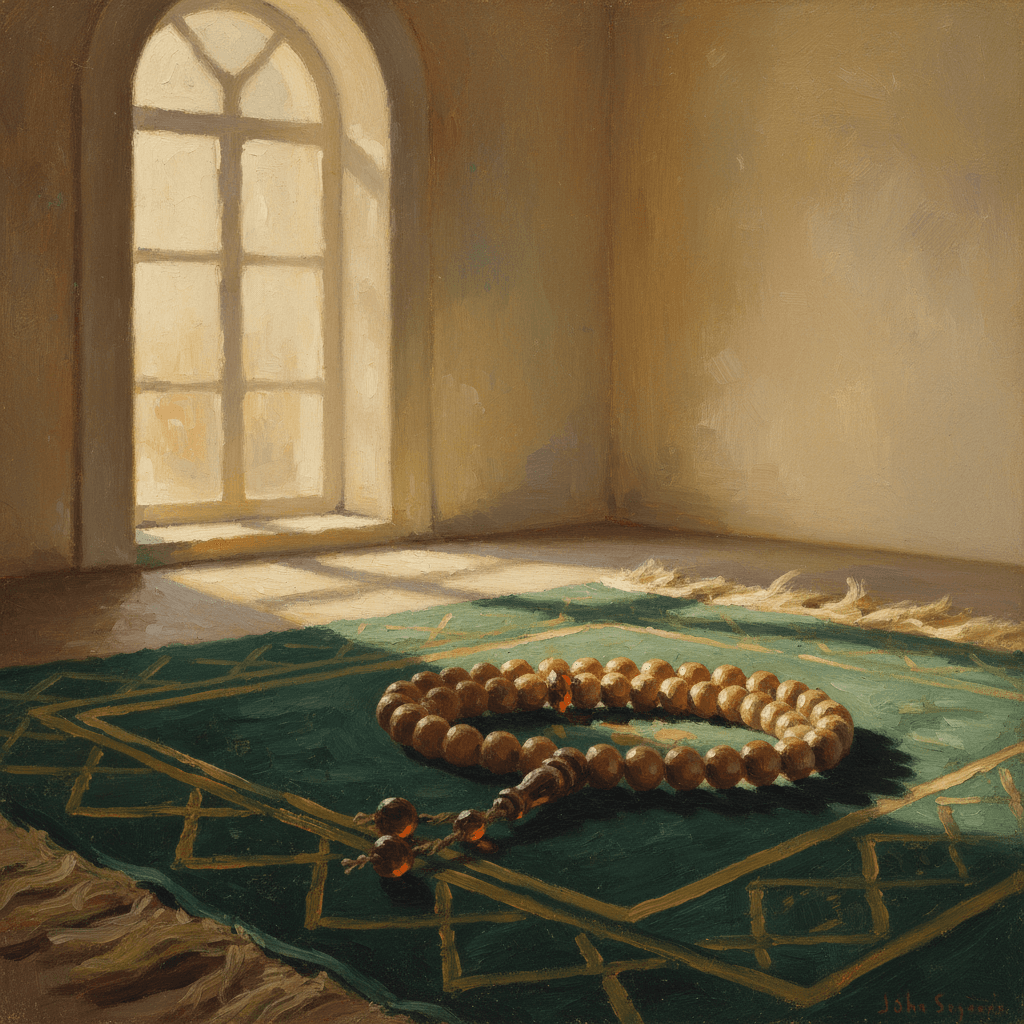
There is a specific kind of heaviness that is different from sadness, different from fatigue, different from ordinary stress. It is the feeling of too much — too many responsibilities, too many worries, too many things demanding your attention simultaneously while the floor seems to be giving way beneath you.
You cannot think clearly. You cannot prioritize. You cannot even articulate what you need. Everything is just too much.
This feeling has a name in Arabic: karb. Distress. Constriction. And the Prophet ﷺ — who experienced loss, exile, war, betrayal, and the weight of prophethood — had specific words for exactly this moment.
The Dua for When Things Feel Impossible
اللَّهُمَّ لَا سَهْلَ إِلَّا مَا جَعَلْتَهُ سَهْلًا، وَأَنْتَ تَجْعَلُ الْحَزْنَ إِذَا شِئْتَ سَهْلًا
Allahumma la sahla illa ma ja'altahu sahlan, wa anta taj'alul-hazna idha shi'ta sahlan
"O Allah, nothing is easy except what You make easy, and You, if You will, can make difficulty easy."
— (Ibn Hibban 974, authenticated by Al-Albani)
This dua does something specific: it reframes the situation entirely. The problem is not that the task is too hard, the burden too heavy, the day too long. The only question is whether Allah has made it easy yet. And He can, whenever He wills.
That shift — from "I cannot do this" to "Ya Allah, make this easy for me" — is not denial of the difficulty. It is a proper assignment of it.
The Dua of Yunus — For When You Feel Completely Swallowed
لَّا إِلَٰهَ إِلَّا أَنتَ سُبْحَانَكَ إِنِّي كُنتُ مِنَ الظَّالِمِينَ
La ilaha illa anta subhanaka inni kuntu minaz-zalimin
"There is no deity except You; exalted are You. Indeed, I have been of the wrongdoers."
— (Quran, Surah Al-Anbiya 21:87)
Prophet Yunus said this from the darkest place imaginable — inside the belly of a whale, in the depths of the ocean, at night. No darker place exists. And Allah says: "We responded to him and saved him from the distress. And thus do We save the believers." (21:88)
When overwhelm feels like being swallowed — when there seems to be no light, no air, no way out — this is the dua. It is not dramatic. It is an honest acknowledgment: there is only You, and I have fallen short. That honesty to Allah, in the worst moment, is what moved a man from the belly of a whale to dry land.
The Story Behind Overwhelm in Islamic History
The Prophet ﷺ faced moments of karb repeatedly. The year known as Aam al-Huzn — the Year of Sorrow — saw the deaths of his wife Khadijah and his uncle Abu Talib in the same period. The Prophet was socially and emotionally attacked from multiple directions while grieving deeply. The Quran responded to his state in Surah Ad-Duha: "Your Lord has not abandoned you, nor has He become displeased." (93:3)
Allah validated the feeling. He did not minimize it or say the Prophet had no reason to feel overwhelmed. He acknowledged the darkness and then reminded him of the light.
That is the model for how to hold overwhelm in Islam: not denial, not catastrophizing, but honest acknowledgment followed by redirection toward the One who controls all outcomes.
How to Build a Practice That Prevents Overwhelm from Becoming Despair
The difference between overwhelm that passes and overwhelm that spirals is often what you do in the first five minutes of feeling it.
Have the dua ready before you need it. The worst time to search for a dua is when you are already in karb. Memorize Allahumma la sahla illa ma ja'altahu sahlan this week. When the feeling hits, the words will be ready.
Say it out loud. Vocalizing the dua, even quietly, engages a different part of your mind than silent internal recitation. The Prophet would often make dua aloud in private moments of difficulty. Speaking to Allah is different from thinking about Allah.
Ground in the body through wudu. When overwhelm hits, make wudu. The physical ritual — water on face, arms, head — is a sensory interrupt. And the state of wudu changes the quality of your dua.
Pray two rakats. The Prophet's prescription for worry was salah. "Prayer was his solace," as Aisha described it. Two rakats — not a long session, just two — provides structure when everything feels structureless. Add the dua for ease in sujood.
Use the Hasbunallah formula consistently. Hasbunallahu wa ni'mal-wakil — "Allah is sufficient for us and He is the best Disposer of affairs." (Quran 3:173) The Prophet Ibrahim said this when thrown into fire. The Companions said it when warned of an army approaching. This dua is for when the stakes feel existentially high, not just inconvenient.
Talk to someone. Overwhelm compounds in isolation. The Prophet encouraged believers to share burdens. Talking to a trusted friend, mentor, or counselor is Islamically supported — it is not a lack of tawakkul.
Build Your Resilience Practice Before You Need It
DeenBack helps you build the daily dua habits that create spiritual resilience — so when overwhelm hits, your heart already knows where to turn.


Free download. Premium features available in-app.
Related Duas for Heavy Moments
Dua for when hardship feels unending:
رَبِّ إِنِّي مَسَّنِيَ الضُّرُّ وَأَنتَ أَرْحَمُ الرَّاحِمِينَ
Rabbi inni massaniyad-durru wa anta arhamur-rahimin
"My Lord, adversity has touched me, and You are the Most Merciful of the merciful."
— (Quran, Surah Al-Anbiya 21:83 — the dua of Prophet Ayyub in his illness)
Dua for tawakkul when you cannot control the outcome:
حَسْبِيَ اللَّهُ لَا إِلَٰهَ إِلَّا هُوَ ۖ عَلَيْهِ تَوَكَّلْتُ
Hasbiyallahu la ilaha illa huwa, alayhi tawakkaltu
"Allah is sufficient for me; there is no deity except Him. Upon Him I rely."
— (Quran 9:129)
For specific anxiety symptoms that accompany overwhelm, see dua for anxiety. For the darkness that can follow sustained overwhelm, see dua for dark times. When overwhelm turns into deeper sadness, see dua for sadness. For the long-term practice of building resilience, see dua for hardship.
Common Questions About Feeling Overwhelmed
Is it a sin to feel overwhelmed? No. Emotions are not sins. What matters is what you do with them. Feeling overwhelmed is human. Turning to Allah with that feeling is faith. Letting it drive you to sinful coping — numbing, escaping, transgression — is what needs attention.
How do I stop the cycle of overwhelm coming back? The cycle usually returns when the underlying situation is unchanged. Dua for ease is not a substitute for addressing the source. If it is workload, the answer may include better boundaries. If it is relationships, it may require conversation. If it is mental health, it may require professional support. Dua opens the door; action walks through it.
The Quran says Allah does not burden a soul beyond what it can bear — so why does it feel like too much? That Quranic promise (2:286) means Allah will not place you in a situation that is cosmically impossible for a human to survive. It does not mean you will feel fine at all times. The nafs exaggerates. The day feels impossible; the week, manageable. Part of faith is trusting that the long arc of your story is in good hands, even when the present moment is genuinely hard.
What if I cannot focus to make dua because I am too overwhelmed? Say just one line. La ilaha illa anta subhanaka. Three words. That is the Yunus dua, and he was in a whale. You do not need eloquence. You need direction — toward Allah. The rest follows.
You Are Not Meant to Carry This Alone
The nafs will tell you to manage it. To push through. To not burden anyone with your struggle. And sometimes there is wisdom in composure.
But Allah is not "anyone." He is not burdened by your distress. He says: "Call upon Me and I will respond to you." (Quran 40:60) That is not a conditional offer. It is a promise.
Overwhelm is an invitation: stop managing everything yourself and bring it to the One who actually manages everything. Say the words. Make the dua. Let the feeling be what it is — a signal pointing you toward the only One who can actually relieve it.
Let Dua Be Your First Response, Not Your Last Resort
DeenBack builds the daily supplication habit that ensures when overwhelm hits, turning to Allah is instinctive — not something you remember after exhausting every other option.
Free download. Premium features available in-app.
Frequently Asked Questions
What dua should I say when I feel overwhelmed?
The Prophet taught: 'Allahumma la sahla illa ma ja'altahu sahlan, wa anta taj'alul-hazna in shi'ta sahlan' — 'O Allah, nothing is easy except what You make easy, and You can make hardship easy if You will.' (Ibn Hibban 974, authenticated) Say this specifically when things feel impossible.
Is feeling overwhelmed a sign of weak faith?
No. The Prophets experienced overwhelm — Ibrahim faced his people alone, Musa fled Egypt in fear, Yunus ended up in the belly of a whale. Overwhelm is a human experience. What faith provides is the response: turning to Allah rather than turning away.
What is the dua of Prophet Yunus for moments of overwhelm?
La ilaha illa anta subhanaka inni kuntu minaz-zalimin — 'There is no deity except You; exalted are You. Indeed, I have been of the wrongdoers.' (Quran 21:87) Said from inside a whale in complete darkness, this is the dua for when you feel swallowed by circumstances.
How do I stay calm when everything is too much?
The Prophet taught: 'Hasbiyallahu la ilaha illa huwa, alayhi tawakkaltu' — 'Allah is sufficient for me; there is no deity except Him. Upon Him I rely.' (Quran 9:129) Said 7 times at morning and evening, this builds a baseline of tawakkul that prevents overwhelm from becoming despair.
Should I seek professional help alongside making dua?
Yes. The Prophet encouraged seeking medicine and help. Feeling chronically overwhelmed may signal burnout, anxiety disorders, or depression that benefit from professional care. Dua and therapy work together — neither replaces the other.