
- Published on
Dua for Work: Islamic Supplications for a Blessed and Productive Workday
- Authors

- Name
- Ahmad
- Role
- Senior Marketing Manager, Islamic education • Deen Back
بِسْمِ اللهِ الرَّحْمٰنِ الرَّحِيْمِ
In the name of God, the Most Gracious, the Most Merciful.
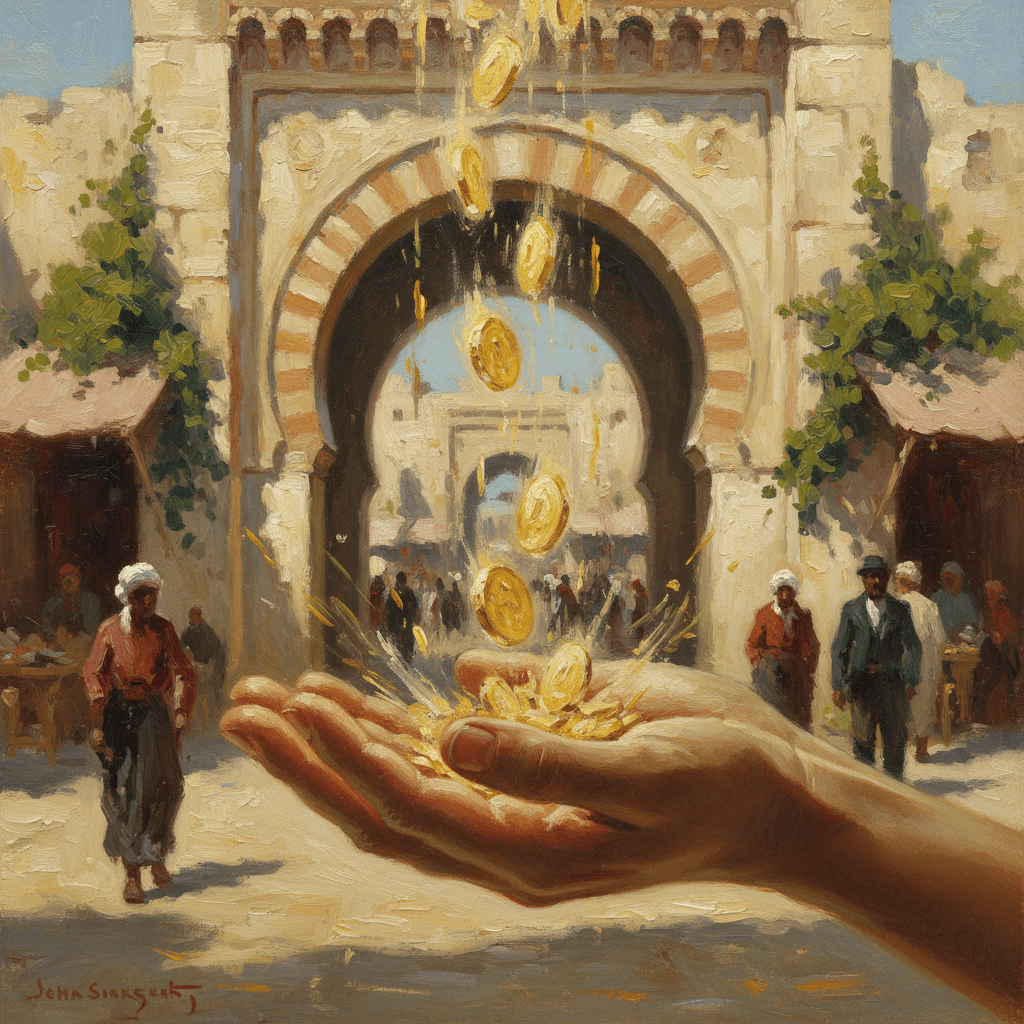
Most of us spend more waking hours at work than anywhere else. More than with family. More than in prayer. More than doing anything we would call spiritual.
The question Islam asks is not: how do I escape work to find spirituality? The question is: how do I bring my spirituality into my work?
The Prophet ﷺ was himself a working man — a trader, a leader, a builder of community. He did not separate his worship from his worldly engagement. He brought Allah into everything, including the moments between tasks, the walk to the marketplace, the beginning of a day's labor.
The duas for work are not just about productivity. They are about turning your working hours into an ongoing act of worship.
The Dua Before Starting Work — Bismillah and Tawakkul
بِسْمِ اللَّهِ تَوَكَّلْتُ عَلَى اللَّهِ وَلَا حَوْلَ وَلَا قُوَّةَ إِلَّا بِاللَّهِ
Bismillahi tawakkaltu 'alallahi wa la hawla wa la quwwata illa billah
"In the name of Allah, I place my trust in Allah, and there is no power or might except with Allah."
— (Abu Dawud 5095; Tirmidhi 3426 — authenticated)
This is one of the most comprehensive short duas in the Sunnah. When you say it before beginning work, it contains three essential elements:
- Bismillah — you begin in Allah's name, placing the work under His authority
- Tawakkul — you declare trust in Allah, releasing anxiety about results
- La hawla wa la quwwata illa billah — you acknowledge that your ability to do anything comes entirely from Allah
The scholar Ibn Qayyim called this phrase kanzun min kunuz al-jannah — one of the treasures of Paradise. Saying it before your first task of the day is a complete reset of your spiritual orientation.
The Morning Dua for Good Provision and Accepted Work
اللَّهُمَّ إِنِّي أَسْأَلُكَ عِلْمًا نَافِعًا وَرِزْقًا طَيِّبًا وَعَمَلاً مُتَقَبَّلاً
Allahumma inni as'aluka 'ilman nafi'an wa rizqan tayyiban wa 'amalan mutaqabbalan
"O Allah, I ask You for beneficial knowledge, good provision, and accepted deeds."
— (Sunan Ibn Majah 925)
Said specifically after Fajr, this dua sets the intention for the entire workday. It asks that your work not just be productive but nafi' (beneficial) and tayyib (wholesome). In asking for amal mutaqabbal — accepted deeds — you are asking that your work count for something beyond a paycheck.
The Story Behind Working With Bismillah
The Companions of the Prophet ﷺ were not people who sat in seclusion from the world. Abu Bakr رضي الله عنه was a cloth merchant. Umar رضي الله عنه traded grain. Khadijah رضي الله عنها was a successful businesswoman before and during her marriage to the Prophet. Abd ar-Rahman ibn Awf رضي الله عنه became one of the wealthiest men in Arabia through honest trade.
What united them was not that they avoided the marketplace — it was that they brought Allah into the marketplace. They said bismillah at the beginning of transactions, practiced honest speech, avoided usury and deception, and maintained their daily prayers even when business was active.
The Prophet ﷺ said: "The honest, trustworthy merchant will be with the prophets, the truthful, and the martyrs." (Tirmidhi 1209). Work done with integrity and dhikr is not a distraction from the spiritual path. It is the spiritual path, walked in a different arena.
How to Make Dua and Dhikr Part of Your Workday
You do not need silence or seclusion to remember Allah at work. You need small, anchored practices that fit into the rhythm of actual working life.
Begin with Bismillah before every task. Before opening your laptop, before answering a call, before entering a meeting — say Bismillah. It takes one second. Over a full workday, you may say it dozens of times. Each repetition is a micro-act of worship that keeps your heart connected to Allah throughout the hours.
Say Alhamdulillah when something works. When a task completes, when a problem is solved, when an email goes through — say Alhamdulillah. This prevents the subtle pride that builds when we take credit for what Allah enabled.
Use the commute for adhkar. Whether you drive, take the train, or walk — the commute is unstructured time that most people fill with distraction. The morning and evening adhkar from the Sunnah take under ten minutes and can be completed during a commute. The Prophet's morning adhkar include supplications specifically for protection and provision throughout the day.
Take brief dhikr breaks. Between focus blocks, instead of scrolling social media, spend two minutes on tasbih: Subhanallah, Alhamdulillah, La ilaha illa Allah, Allahu Akbar. This is the practice the Prophet described as planting trees in Paradise (Sahih Bukhari 6406).
Pray on time, even at work. The five daily prayers are the backbone of the working Muslim's spiritual structure. Missing Dhuhr or Asr because of work pressure is a spiritual cost that compounds over time. Even a brief, clean salah on a prayer mat in a corner of the office rebuilds the connection that work tends to erode.
Bring Dhikr Into Every Hour of Your Workday
DeenBack tracks your daily adhkar, prayer streaks, and Islamic habits — helping you stay spiritually consistent even through the busiest work weeks.


Free download. Premium features available in-app.
Related Duas to Pair With Your Work Practice
Dua when entering the marketplace (or beginning business):
لَا إِلَهَ إِلَّا اللَّهُ وَحْدَهُ لَا شَرِيكَ لَهُ لَهُ الْمُلْكُ وَلَهُ الْحَمْدُ يُحْيِي وَيُمِيتُ وَهُوَ حَيٌّ لَا يَمُوتُ بِيَدِهِ الْخَيْرُ وَهُوَ عَلَى كُلِّ شَيْءٍ قَدِيرٌ
La ilaha illallahu wahdahu la sharika lah, lahul mulku wa lahul hamdu, yuhyi wa yumitu, wa huwa hayyun la yamut, biyadihil khayr, wa huwa ala kulli shay'in qadir
"None has the right to be worshipped but Allah alone, Who has no partner. His is the dominion, and His is the praise. He brings life and causes death, and He is Ever-Living and will never die. In His hand is all good, and He is able to do all things." — (Tirmidhi 3428)
For building the overall morning spiritual foundation before work, the dua for after Fajr practice sets the right tone for every working day. The dua for rizq covers the broader practice of asking Allah for wholesome provision in all its forms. The dua for the marketplace is specifically authenticated for those in business or trade environments. For the deeper habit-building framework, how to build daily Islamic habits provides a comprehensive guide to making these practices stick.
Common Questions About Dua and Work
Can I make dua silently in my heart during work hours? Yes — and this is one of the highest forms of dhikr. The Quran praises those who remember Allah standing, sitting, and lying on their sides (3:191). Silent dhikr in the midst of work is a living practice of that verse.
What if my work environment makes it hard to maintain Islamic values? This is one of the real challenges of working life, and the nafs will always find ways to rationalize compromise. The morning dua for amal mutaqabbal — accepted deeds — is partly a protection: it asks Allah to keep your work aligned with what He accepts, even when the environment pushes otherwise.
Does intention matter for ordinary work tasks? Yes. The Prophet ﷺ said: "Actions are by intentions" (Bukhari 1). Even filing documents or answering emails can be an act of worship if done with the intention of fulfilling your responsibility honestly, providing for your family, and serving others well.
Is it wrong to want career success and financial growth? No. Asking Allah for rizq — provision — is explicitly encouraged in the Quran and Sunnah. Wanting to advance, earn more, and do meaningful work is a natural and legitimate desire. The discipline is in how you pursue it: with honesty, without compromising the halal/haram boundary, and with regular gratitude for what you already have.
Work Is Not the Opposite of Worship
The separation between "religious life" and "working life" is not Islamic — it is a modern import. In the prophetic model, the whole day belonged to Allah. The trader's honesty was worship. The farmer's care for the land was worship. The artisan's precision was worship.
Your working hours can be the same. Start with Bismillah. End with Alhamdulillah. Fill the spaces between with the brief, powerful dhikr of the Sunnah.
The barakah you are asking Allah for in your work is not separate from the barakah in your worship. It flows from the same source.
Make Every Workday a Day of Barakah
Track your daily duas, morning adhkar, and dhikr habits with DeenBack — building the spiritual consistency that transforms ordinary work into an act of worship.
Free download. Premium features available in-app.
Frequently Asked Questions
What dua should I say before starting work?
The Prophet taught Bismillahi tawakkaltu alallahi wa la hawla wa la quwwata illa billah — In the name of Allah, I place my trust in Allah, and there is no power or might except with Allah. (Abu Dawud 5095). This establishes that your work begins under Allah's name and authority.
Is there a dua for barakah in work?
Yes — the morning supplications (adhkar al-sabah) are the primary tools for calling barakah into your day. Specifically: Allahumma inni as'aluka ilman nafi'an wa rizqan tayyiban wa amalan mutaqabbalan (Ibn Majah 925) asks Allah for beneficial work and good provision, said after Fajr.
Does Islam teach us to balance work with worship?
Yes, explicitly. Allah says: But do not forget your share of the world (Quran 28:77). Work is not spiritually inferior to worship — when done with the right intention, it is worship. The Prophet was also a trader and encouraged honest work as a means of self-sufficiency.
What if I hate my job — should I still make dua for it?
Yes. Dua for barakah in your current work does not mean you are committed to staying forever. It means asking Allah to make your current situation meaningful while you work toward something better. Gratitude and dua in a difficult job often opens unexpected doors.
How do I avoid burnout Islamically?
The Prophet said: The deeds most loved by Allah are those done consistently, even if small (Bukhari 6464). Consistent small dhikr throughout the workday — saying Subhanallah between tasks, Alhamdulillah when something works — builds a spiritual rhythm that counteracts burnout better than any productivity hack.