
- Published on
Dua for Pain: What the Prophet Taught Us About Suffering
- Authors

- Name
- Ahmad
- Role
- Senior Marketing Manager, Islamic education • Deen Back
بِسْمِ اللهِ الرَّحْمٰنِ الرَّحِيْمِ
In the name of God, the Most Gracious, the Most Merciful.
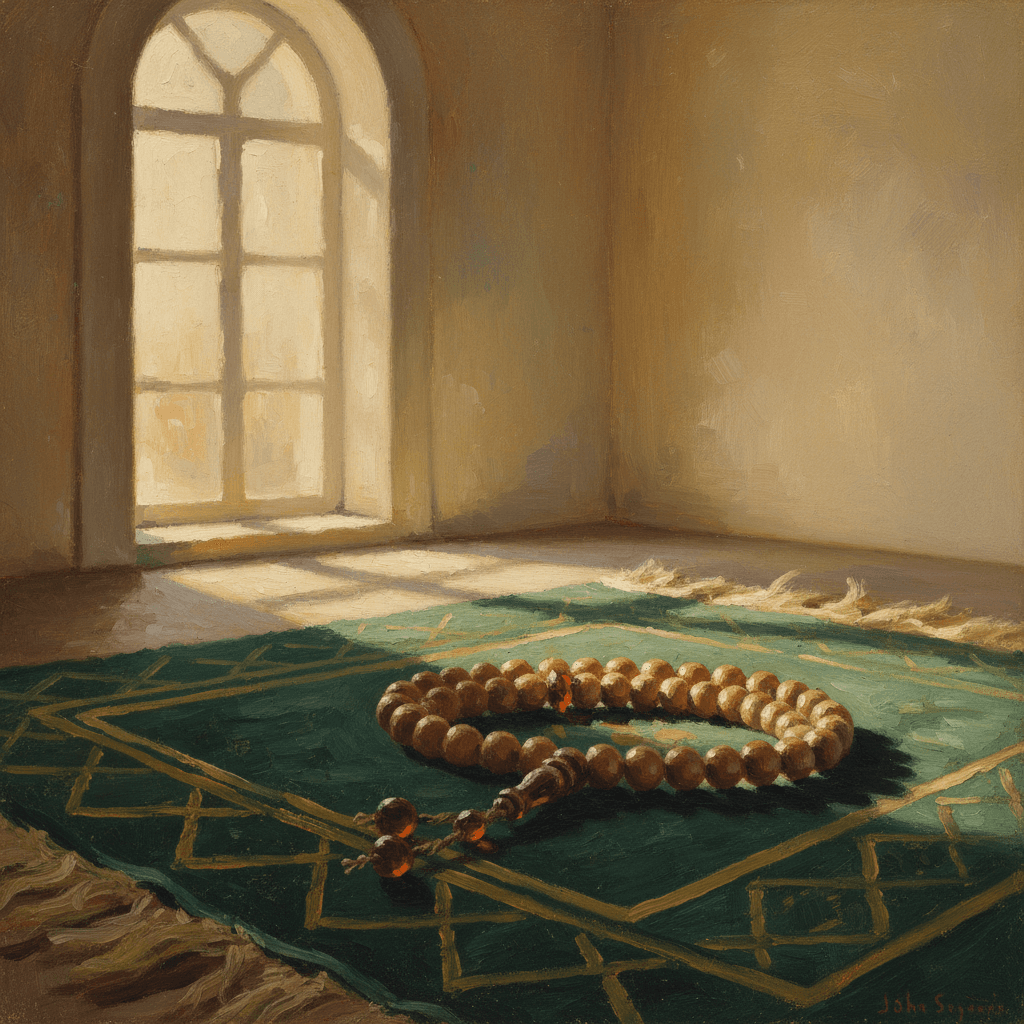
Pain is one of the few things that makes us completely honest.
When it arrives — whether in the body or the heart — all the distractions fall away. The pretenses, the routines, the things we use to keep ourselves busy. Pain cuts through all of it and leaves you face to face with your own limitation.
Islam meets that moment with something no painkiller, no distraction, and no human comfort can fully offer: a direct line to the One who created you and who holds complete control over everything — including your pain.
The Prophet (peace be upon him) knew suffering. He lost children. He lost his wife Khadijah, his protector Abu Talib, his friends in battle. He was physically hurt, socially rejected, and once poisoned. He was not spared pain — but he was given the tools to carry it.
Those tools are for us too.
The Dua for Physical Pain
The specific Sunnah practice for physical pain:
Place your right hand on the area of pain (or have someone else place their hand on the sick person's body), then say:
بِسْمِ اللَّهِ (three times)
Bismillah. Bismillah. Bismillah.
Then say seven times:
أَعُوذُ بِاللَّهِ وَقُدْرَتِهِ مِنْ شَرِّ مَا أَجِدُ وَأُحَاذِرُ
A'udhu billahi wa qudratihi min sharri ma ajidu wa uhadhiru.
"I seek refuge in Allah and His power from what I feel and what I fear." — (Sahih Muslim 2202)
'Uthman ibn Abi al-'As (may Allah be pleased with him) came to the Prophet (peace be upon him) complaining of pain in his body. The Prophet (peace be upon him) told him to place his hand where it hurt, say Bismillah three times, then say the refuge dua seven times. 'Uthman later reported that Allah removed what he suffered and he always instructed his family with this practice.
The physical touch + the words: This is a form of Islamic healing that combines spiritual seeking with human presence. When caring for someone in pain, the hand placed with intention is itself part of the practice.
The Dua for Emotional and Spiritual Pain
For grief, anxiety, sorrow, depression, and the deeper aches that have no obvious physical location:
اللَّهُمَّ إِنِّي عَبْدُكَ وَابْنُ عَبْدِكَ وَابْنُ أَمَتِكَ نَاصِيَتِي بِيَدِكَ مَاضٍ فِيَّ حُكْمُكَ عَدْلٌ فِيَّ قَضَاؤُكَ أَسْأَلُكَ بِكُلِّ اسْمٍ هُوَ لَكَ سَمَّيْتَ بِهِ نَفْسَكَ أَوْ أَنْزَلْتَهُ فِي كِتَابِكَ أَوْ عَلَّمْتَهُ أَحَدًا مِنْ خَلْقِكَ أَوِ اسْتَأْثَرْتَ بِهِ فِي عِلْمِ الْغَيْبِ عِنْدَكَ أَنْ تَجْعَلَ الْقُرْآنَ رَبِيعَ قَلْبِي وَنُورَ صَدْرِي وَجَلَاءَ حُزْنِي وَذَهَابَ هَمِّي
Allahumma inni 'abduka wabnu 'abdika wabnu amatika, nasiyati biyadika, madin fiyya hukmuka, 'adlun fiyya qada'uka, as'aluka bi kulli smin huwa laka sammayta bihi nafsaka aw anzaltahu fi kitabika aw 'allamtahu ahadan min khalqika awista'tharta bihi fi 'ilmil-ghaybi 'indaka an taj'alal-Qur'ana rabi'a qalbi wa nura sadri wa jala'a huzni wa dhahaba hammi.
"O Allah, I am Your servant, son of Your servant, son of Your maidservant. My forelock is in Your hand. Your command over me is forever executed. Your decree over me is just. I ask You by every name belonging to You which You named Yourself, or revealed in Your Book, or taught to any of Your creation, or which You have preserved in the knowledge of the Unseen: Make the Quran the spring of my heart, the light of my chest, the banisher of my grief, and the reliever of my distress." — (Sahih al-Bukhari 6346, similar narration)
The Prophet (peace be upon him) said: "No one afflicted with anxiety and grief says this dua except that Allah will remove their anxiety and replace their grief with joy." (Ahmad 3712)
A shorter dua for immediate moments of pain:
لَا إِلَهَ إِلَّا اللَّهُ الْعَظِيمُ الْحَلِيمُ لَا إِلَهَ إِلَّا اللَّهُ رَبُّ الْعَرْشِ الْعَظِيمِ
La ilaha illAllahu al-'Adhim al-Halim, la ilaha illAllahu rabbul-'arshil-'adhim.
"There is no god but Allah, the Magnificent, the Forbearing. There is no god but Allah, Lord of the Magnificent Throne." — (Sahih al-Bukhari 7426)
The Prophet (peace be upon him) would say this when something distressing came to him. It is a declaration of Allah's greatness in the middle of the feeling that everything is falling apart.
Why Pain Exists — and What It Does
The nafs experiences pain as injustice. "Why me? Why this? Why now?"
Islam offers a different frame — not to dismiss the pain, but to locate it within a larger reality:
The Prophet (peace be upon him) said: "No fatigue, illness, anxiety, grief, harm, or sadness befalls a Muslim — even a thorn that pricks him — except that Allah expiates some of his sins for it." (Sahih al-Bukhari 5641)
Every moment of genuine pain, carried with patience and trust in Allah, is an act of expiation. You are being lightened. Debts you do not know you owe are being settled. The ledger is being cleaned — not through punishment, but through purification.
This does not make the pain stop. It does not make the grief go away. But it changes the meaning of the pain, which changes how you carry it.
Build Sabr in the Hard Moments
Consistent dhikr, daily duas, and spiritual habits built in easy times become your support in hard times. Build the foundation before you need it.


Free download. Premium features available in-app.
Ruqyah — Quranic Healing
The Prophet (peace be upon him) used to recite Surah Al-Falaq (113) and Surah An-Nas (114) when ill, blowing into his hands and wiping over his body. Aisha (may Allah be pleased with her) narrated that when the Prophet fell ill, she would recite these surahs over him and wipe with his own hand. (Sahih al-Bukhari 5735)
Simple ruqyah practice:
- Make wudu
- Recite Al-Fatihah, Ayat al-Kursi (2:255), Al-Ikhlas (112), Al-Falaq (113), An-Nas (114) — each three times
- Blow gently into your hands
- Wipe over the body, especially the area of pain
- Repeat
This is not magic. It is supplication with physical expression — the same principle as the hand-on-pain practice of Sahih Muslim 2202.
Dua and Medical Treatment — Not Opposites
A common misunderstanding: "If I make dua, I should not need medicine."
This is incorrect. The Prophet (peace be upon him) said: "Make use of medical treatment, for Allah has not made a disease without appointing a remedy for it, except one disease: old age." (Abu Dawud 3855)
Seek treatment. See your doctor. Take your medication. Make dua. These are the same act, approached from different angles. Allah is the ultimate healer (Ash-Shafi), and He may choose to heal through a doctor's hands, a medication's effect, or direct relief. All paths to healing come from Him.
Related Duas for Pain and Distress
The dua for anxiety addresses the mental and emotional layer of suffering that often accompanies physical pain.
The dua for forgiveness — sometimes pain leads to reflection about one's sins, and tawbah during illness is one of the most spiritually productive responses to suffering.
Common Questions
What if the dua doesn't seem to be working?
Dua does not "work" like medication with a predictable timeline. It is communication with Allah, and Allah responds in the way and time that is best. Sometimes relief comes immediately. Sometimes it comes gradually. Sometimes the relief is not physical at all but a spiritual strength to carry what remains. Trust the process. Do not stop making dua.
Can I make dua for someone else's pain?
Absolutely. Dua for a sick person in their absence is especially encouraged. The Prophet (peace be upon him) said that when a Muslim makes dua for their absent brother, the angels say: "And for you the same." (Sahih Muslim 2733). Visit the sick, pray for them, and remind them of these duas.
Is it wrong to ask Allah to remove pain immediately?
No. The Prophet (peace be upon him) made dua for himself and for others to be healed. Asking for immediate relief is not impatience — it is natural supplication. What matters is the follow-up: if relief does not come immediately, you maintain your trust in Allah and continue making dua, adding prayers for sabr (patience).
I feel angry at Allah for the pain I'm experiencing. What do I do?
Be honest in your dua. Tell Allah exactly what you feel — even the anger. Ayyub (AS) called out to Allah directly: "Harm has touched me and You are the most merciful of the merciful." (Surah Al-Anbiya, 21:83). He did not suppress his state. He brought it to Allah. That honesty, combined with trust, is the believer's way through pain.
Closing
Pain has come for you. And while it is here, you have a choice about how you meet it.
You can meet it with the tools the Prophet (peace be upon him) left: hand on the wound, seven repetitions of seeking refuge, dua in the darkness, Quran as the spring of your heart.
You can meet it with the knowledge that every prick of pain, every sleepless night, every weight on your chest is being seen and counted and turned into something lighter.
You are not suffering alone. You are suffering in the company of a Lord who decreed it, a Prophet who modeled carrying it, and a dua that reaches Him directly.
Say it. Mean it. And let it carry you.
Stay Connected to Allah Through Difficulty
Build a daily dua and dhikr habit that becomes your anchor when pain comes. Consistent remembrance is what carries you through the hard times.
Free download. Premium features available in-app.
Frequently Asked Questions
What is the dua for pain in Islam?
The Sunnah dua for physical pain is to place your hand on the painful area and say: Bismillah (three times), then: A'udhu billahi wa qudratihi min sharri ma ajidu wa uhadhiru (seven times) — I seek refuge in Allah and His power from what I feel and what I fear. This is recorded in Sahih Muslim 2202.
Is there a dua for emotional pain and grief?
Yes. For grief and distress: Allahumma inni abduka ibn abdika... (the full dua of distress) from Sahih al-Bukhari 6346. Also: La ilaha illAllahu al-'Adhim al-Halim, La ilaha illAllahu rabbul-'arshil-'adhim — There is no god but Allah, the Magnificent, the Forbearing (Sahih al-Bukhari 7426). These duas redirect the heart from pain to the only One who can truly relieve it.
Does pain have spiritual reward in Islam?
Yes. The Prophet (peace be upon him) said: No fatigue, illness, anxiety, grief, harm, or sadness befalls a Muslim — even a thorn that pricks him — except that Allah expiates some of his sins for it (Sahih al-Bukhari 5641). Pain is not punishment. For the believer, it is purification.
Can ruqyah (Quranic healing) help with pain?
Yes. The Prophet (peace be upon him) used to recite Al-Fatihah, Al-Falaq, and An-Nas when ill, blowing into his hands and wiping over his body. Aisha (RA) also performed ruqyah for him during illness. Reading Quran over oneself or a sick person is a Sunnah practice. Ayat al-Kursi (2:255) is particularly recommended for protection and healing.
Should I still seek medical treatment while making dua for pain?
Yes, absolutely. Islam encourages seeking medical treatment alongside dua. The Prophet (peace be upon him) said: Make use of medical treatment, for Allah has not made a disease without appointing a remedy for it (Abu Dawud 3855). Dua and medicine are not opposites — they work together. Seek treatment and maintain your dua.