
- Published on
Dua for Opening Fast (Iftar): The Supplication That Completes Your Fast
- Authors

- Name
- Ahmad
- Role
- Senior Marketing Manager, Islamic education • Deen Back
بِسْمِ اللهِ الرَّحْمٰنِ الرَّحِيْمِ
In the name of God, the Most Gracious, the Most Merciful.
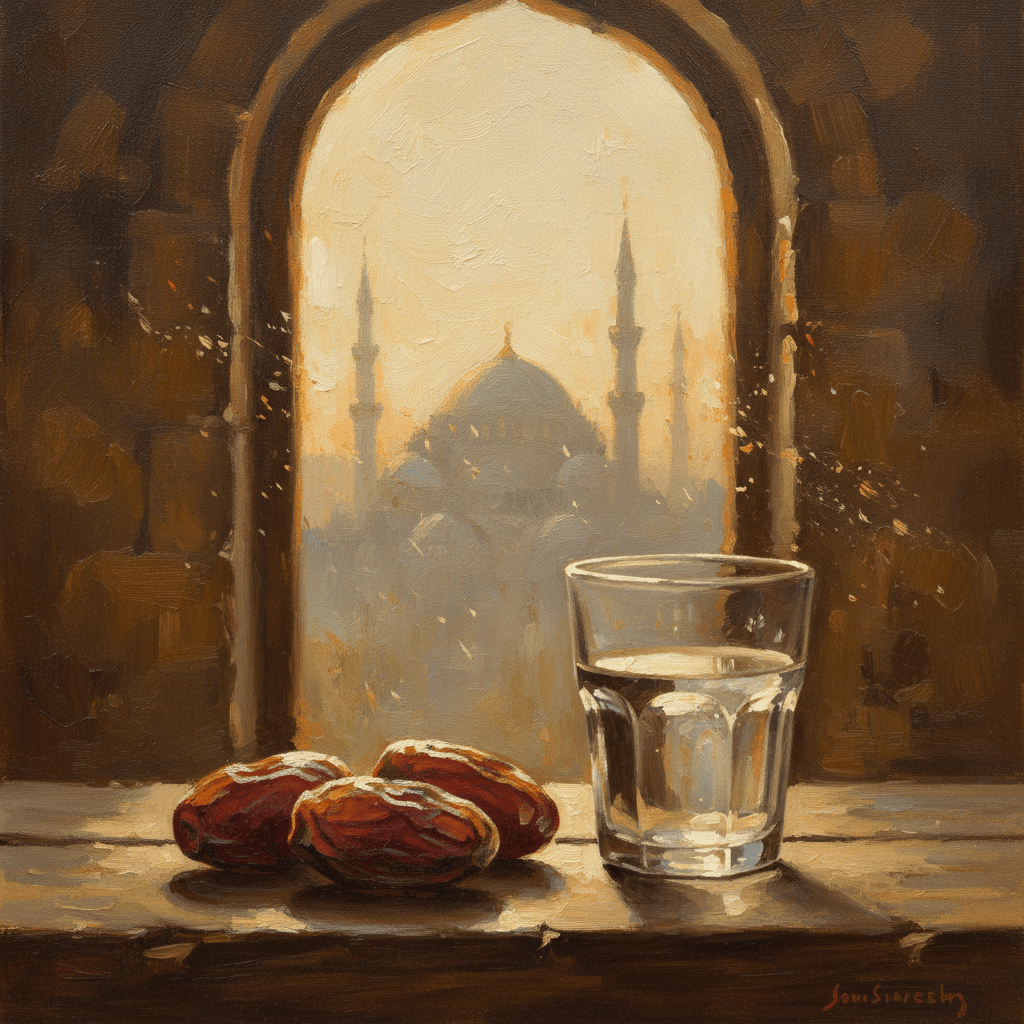
The sun dips below the horizon. The adhan echoes. You reach for that first date, that first sip of water. Your body has been waiting for this moment all day. But before the food touches your lips — there is a dua. A few words that transform a simple meal into an act of worship that earns you a reward no amount of money could buy.
Most people rush through iftar. They grab the date, chug the water, and dive into the food. They forget that this exact moment — the moment of breaking fast — is one of the times when Allah is most likely to accept your dua. Do not waste it.
The Dua
The most authentic dua for opening the fast, narrated directly from the Prophet (peace be upon him):
ذَهَبَ الظَّمَأُ وَابْتَلَّتِ الْعُرُوقُ وَثَبَتَ الأَجْرُ إِنْ شَاءَ اللَّهُ
Dhahaba adh-dhama'u wabtallatil-'uruqu wa thabatal-ajru in sha Allah.
"The thirst has gone, the veins have been moistened, and the reward is assured, if Allah wills." — (Sunan Abu Dawud 2357)
When to say it: At the exact moment you break your fast — right as the Maghrib adhan is called and you take your first bite or sip. Not after you finish eating. Not during the meal. Right at the breaking point.
Why this dua and not the other one? Many Muslims use the dua "Allahumma inni laka sumtu wa ala rizqika aftartu" (O Allah, for You I fasted and with Your provision I break my fast). This dua is widely known but its chain of narration is classified as da'if (weak) by hadith scholars including Al-Albani. It is not sinful to say it, but the dua above from Abu Dawud has a stronger chain and is closer to the Sunnah.
The Story Behind It
The Prophet (peace be upon him) would break his fast before praying Maghrib — not after. He would eat a few dates or drink water, say the dua, and then pray. This tells you something important about priorities: breaking the fast is itself an act of worship, not just a physical need.
He also taught us that the fasting person has a special status at iftar:
"Three people whose dua is not rejected: the fasting person until they break their fast, the just ruler, and the oppressed person." — (Sunan al-Tirmidhi 3598)
Think about that. All day long, your fast has been building up spiritual credit. And at the moment of iftar, you have a direct line to Allah that is guaranteed not to be rejected. This is not the time to scroll through your phone. This is the time to pour your heart out.
The companions understood this. They would prepare their most important duas for this moment. They did not just say the iftar dua and move on — they followed it with personal supplications for everything they needed in this life and the next.
How to Make This Dua Part of Your Daily Life
The iftar dua should not be something you do on autopilot. Here is how to turn it into a transformative daily habit.
Create a pre-iftar ritual:
- Five minutes before Maghrib, stop whatever you are doing
- Sit down with your dates and water prepared
- Make wudu if possible (not required, but elevates the moment)
- Prepare your heart: what are you going to ask Allah for today?
Build a dua list for iftar:
- Keep a running list of things you want to make dua for
- Each day at iftar, say the Sunnah dua first, then go through your list
- Include: personal needs, family, sick loved ones, the ummah, guidance, forgiveness
- Having a list prevents you from blanking out in the moment
Make it a family practice:
- If you break fast with family, make dua together
- Teach children the iftar dua early — they will carry it for life
- Take turns making dua out loud so everyone says ameen
Track your consistency:
- During Ramadan, you break fast every day — that is 30 guaranteed dua sessions
- But fasting is not just for Ramadan. Mondays and Thursdays, the white days (13th, 14th, 15th of each Islamic month), and voluntary fasts throughout the year all give you this special iftar dua moment
- The more you fast, the more access you have to this powerful time
Never Miss Your Iftar Dua
Track your fasting days, build dua habits, and make every iftar count. Ramadan or not, your fasting journey deserves consistency.


Free download. Premium features available in-app.
Do not rush to eat:
- The nafs wants food immediately. It has been waiting all day.
- But the soul wants dua. It has been waiting for this moment too.
- Give your soul its portion first. Thirty seconds of focused dua before diving into food. Your nafs can wait half a minute more.
Related Duas
Dua for beginning the fast (suhoor):
وَبِصَوْمِ غَدٍ نَوَيْتُ مِنْ شَهْرِ رَمَضَانَ
Wa bisawmi ghadin nawaitu min shahri Ramadan.
"I intend to fast tomorrow in the month of Ramadan."
While the intention for fasting can be made in the heart without words, many scholars recommend verbalizing it. Pair this with the dua for beginning fasting.
Dua when you see others eating while you fast:
If someone offers you food while you are fasting, the Prophet (peace be upon him) taught us to say:
إِنِّي صَائِمٌ
"I am fasting." — (Sahih al-Bukhari 1904)
Simple, dignified, and a reminder to yourself and others of what you are doing.
Dua for the host who provides iftar:
If someone invites you to break your fast at their home:
أَفْطَرَ عِنْدَكُمُ الصَّائِمُونَ وَأَكَلَ طَعَامَكُمُ الأَبْرَارُ وَصَلَّتْ عَلَيْكُمُ الْمَلاَئِكَةُ
"May the fasting people break their fast at your table, may the righteous eat your food, and may the angels send blessings upon you." — (Sunan Abu Dawud 3854)
Common Questions
Can I break my fast with anything or does it have to be dates?
The Sunnah is to break fast with fresh dates, then dry dates, then water. But if none of these are available, any halal food or drink is permissible. The ruling is about not delaying iftar unnecessarily, not about restricting what you eat. The dua is the same regardless of what you break your fast with.
What if I forget to say the dua?
Say it when you remember, even if you have already started eating. The reward is in the remembrance. Do not let one missed moment discourage you from making it a habit. The goal is consistency over perfection — missing one dua does not erase all the ones you have made.
Can I make dua in my own language at iftar?
Yes. The Sunnah dua in Arabic carries special reward because it is the words of the Prophet (peace be upon him). But your personal supplications after the Sunnah dua can be in any language. Allah understands every word and every thought. Speak from your heart.
Is the iftar dua only for Ramadan?
No. Any time you fast — whether it is Ramadan, Monday and Thursday fasts, the Day of Arafah, Ashura, or any voluntary fast — the iftar dua applies and the special status of the fasting person's dua at iftar is active. This is one more reason to build a regular fasting habit beyond Ramadan.
Closing
Every fast is a gift. And every iftar is a door that opens between you and Allah — a door that He promised would not be closed to you. The question is: will you walk through it with a prepared heart and a ready tongue, or will you rush past it chasing dates and samosas?
Build the habit. Say the dua. Make your list. Pour your heart out at iftar every single day — in Ramadan and beyond. The One who gave you the strength to fast all day is listening at the moment you break it.
Do not waste that moment.
Make Every Iftar Count
Track your fasting days, build daily dua habits, and turn every iftar into a moment of transformation. Your streaks build strength.
Free download. Premium features available in-app.
Frequently Asked Questions
What is the dua for opening fast (iftar)?
The most authentic dua for opening the fast is: Dhahaba adh-dhama'u wabtallatil-'uruqu wa thabatal-ajru in sha Allah — The thirst has gone, the veins have been moistened, and the reward is assured if Allah wills (Sunan Abu Dawud 2357). This is reported from the Prophet (peace be upon him) and is the strongest narration for the iftar dua.
When exactly should I say the iftar dua?
Say it at the moment you break your fast — right as you take the first bite or sip. The Sunnah is to break the fast as soon as the Maghrib adhan is called, without delay. The dua should be said at this moment, not after you have finished eating. This is one of the times when dua is most likely to be accepted.
Is Allahumma inni laka sumtu the correct iftar dua?
The dua 'Allahumma inni laka sumtu wa ala rizqika aftartu' (O Allah, for You I fasted and with Your provision I break my fast) is widely used but its chain of narration is weak according to hadith scholars. It is not wrong to say it, but the stronger, more authenticated dua is 'Dhahaba adh-dhama'u wabtallatil-uruqu wa thabatal-ajru in sha Allah' from Sunan Abu Dawud.
Can I make additional dua at iftar time?
Yes, and you should. The Prophet (peace be upon him) said that the fasting person has a dua that is not rejected at the time of breaking the fast (Sunan Ibn Majah 1753). After saying the Sunnah iftar dua, add your personal supplications — for yourself, your family, the ummah. This is one of the most powerful moments for dua in the entire day.
Do I need to be in wudu to say the iftar dua?
No. You do not need wudu to make dua at any time. Dua can be made in any state, at any place, in any position. Simply say the dua with sincerity and focus at the moment you break your fast. Of course, being in a state of purity is always better when possible, but it is not a requirement for dua.