
- Published on
Dua for Medina: Supplications When Visiting the City of the Prophet
- Authors

- Name
- Ahmad
- Role
- Senior Marketing Manager, Islamic education • Deen Back
بِسْمِ اللهِ الرَّحْمٰنِ الرَّحِيْمِ
In the name of God, the Most Gracious, the Most Merciful.
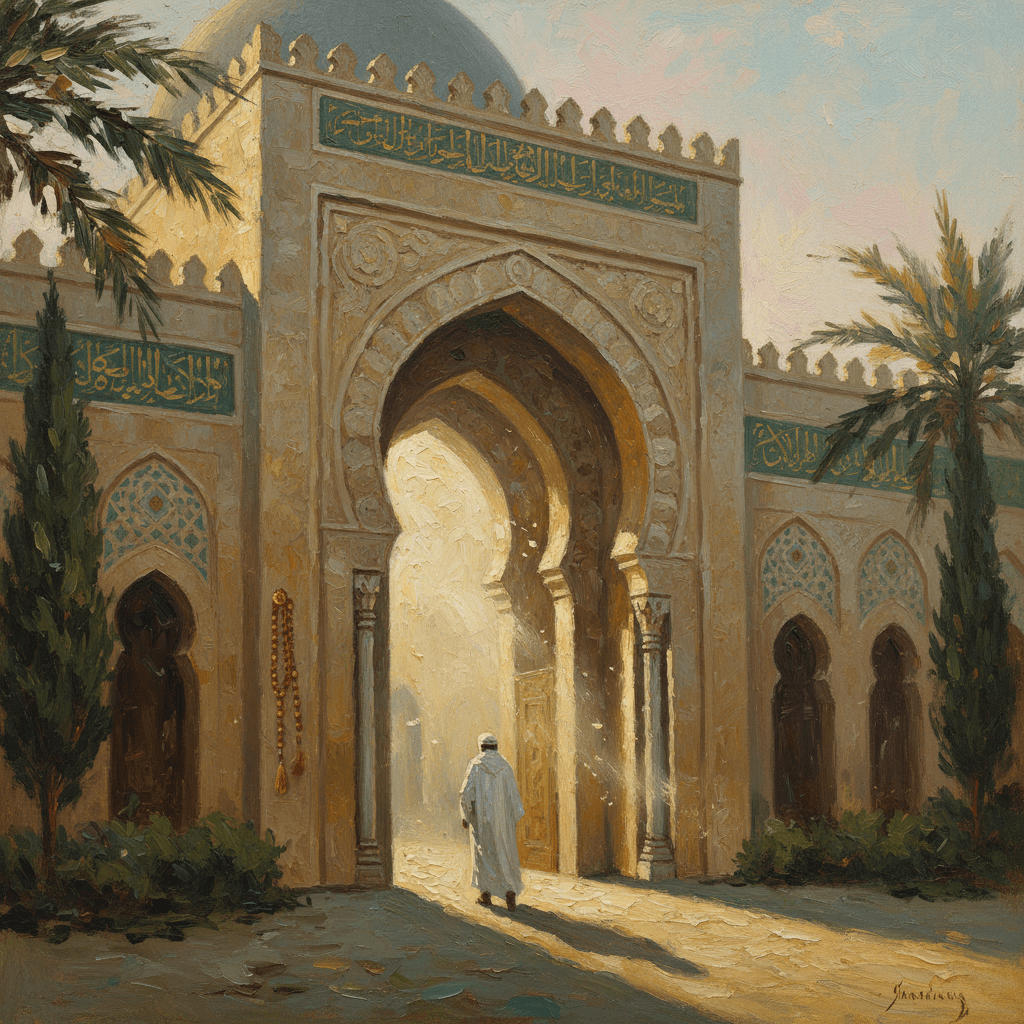
Why This Dua Matters
Medina is not Mecca.
Mecca's sacredness comes from the House of Allah — the Kaaba, the oldest place of worship on earth. Medina's sacredness comes from a person — the Prophet Muhammad (peace be upon him), who chose it as his home, built his mosque there, and was buried there.
This difference changes the quality of what you feel when you arrive.
In Mecca, there is awe — the grandeur of the Haram, the circling crowds, the weight of the oldest structure in Islam. In Medina, there is something quieter. You are visiting the home of someone you love. Someone who prayed here, walked these streets, taught his companions in this city, and whose blessed grave is steps from where you will stand.
The Prophet (peace be upon him) said: "Whoever visits me after my death is like the one who visited me during his life." (Abu Dawud 2044)
Knowing what to say when you arrive — at the city gates, at the mosque doors, at the grave, in the Rawdah — means you enter the presence of Medina with full awareness of where you are.
The Duas
When entering Medina:
اللَّهُمَّ هَذَا حَرَمُ نَبِيِّكَ فَاجْعَلْهُ لِي وِقَايَةً مِنَ النَّارِ وَأَمَانًا مِنَ الْعَذَابِ
Allahumma hadhihi haramu nabiyyika fa-aj'alhu li wiqayatan minan-nar wa amanan minal 'adhab.
"O Allah, this is the sanctuary of Your Prophet, so make it for me a protection from the Fire and safety from punishment."
Increase your salawat — blessings on the Prophet — as you approach the city. The Quran commands it: "Indeed, Allah confers blessing upon the Prophet, and His angels bless him. O you who have believed, ask blessings upon him and greet him with peace." (Surah Al-Ahzab, 33:56)
When entering Masjid an-Nabawi:
Enter with the right foot, say Bismillah was-salatu was-salamu 'ala Rasulillah, then:
اللَّهُمَّ افْتَحْ لِي أَبْوَابَ رَحْمَتِكَ
Allahumma iftah li abwaba rahmatika.
"O Allah, open for me the gates of Your mercy." — (Sahih Muslim 713)
At the grave of the Prophet (peace be upon him):
Stand facing the grave — not facing it as you face the qibla, but facing the Prophet — and say:
اَلسَّلَامُ عَلَيْكَ يَا رَسُولَ اللَّهِ وَرَحْمَةُ اللَّهِ وَبَرَكَاتُهُ
Assalamu 'alayka ya Rasulallah wa rahmatullahi wa barakatuh.
"Peace be upon you, O Messenger of Allah, and the mercy and blessings of Allah."
Then send salawat:
اللَّهُمَّ صَلِّ عَلَى مُحَمَّدٍ وَعَلَى آلِ مُحَمَّدٍ كَمَا صَلَّيْتَ عَلَى إِبْرَاهِيمَ وَعَلَى آلِ إِبْرَاهِيمَ إِنَّكَ حَمِيدٌ مَجِيدٌ
Allahumma salli 'ala Muhammadin wa 'ala ali Muhammadin kama sallayta 'ala Ibrahima wa 'ala ali Ibrahim. Innaka Hamidun Majeed.
"O Allah, bestow blessings upon Muhammad and upon the family of Muhammad, as You bestowed blessings upon Ibrahim and upon the family of Ibrahim. Indeed, You are Praiseworthy and Glorious." — (Sahih Bukhari 3370)
In the Rawdah (the garden between the pulpit and the grave):
Pray two rak'ah if possible. Then make personal dua — this is a garden of Paradise. The dua made in the Rawdah carries a significance that few other locations on earth hold.
The Story Behind It
When the Prophet (peace be upon him) migrated from Mecca to Medina — the Hijra that marks the beginning of the Islamic calendar — the people of Medina (the Ansar, the Helpers) came out to receive him singing:
Tala'al badru 'alayna — "The full moon has risen over us."
This was not performance. This was the arrival of the Prophet at the city that would become the first Islamic state, the home of the first Muslim community, and the center of revelation for the final decade of the Prophet's life.
Every corner of Medina holds a story. The mosque he built — Masjid Quba — the first mosque in Islam. The road he walked to deliver the first Friday khutbah. The spots where his companions sat and learned from him directly.
The Rawdah — the Garden — was the Prophet's own description. He said: "Between my house and my pulpit is a garden from the gardens of Paradise." (Sahih Bukhari 1196) Scholars note this has both a literal and eschatological meaning: it will be raised on the Day of Judgment as an actual garden of Paradise.
When you stand in the Rawdah, you are standing in a location the Prophet himself defined as a garden of Paradise. There is nowhere on earth quite like this.
How to Make Your Visit to Medina Count
Most pilgrims have a few days in Medina — some as few as a day and a half. The way those hours are used makes an enormous difference.
Before arriving: Prepare personal duas as you would for Mecca. The Rawdah is one of the most accepted places for dua on earth. What do you need from Allah? Have it ready. Do not arrive at the Rawdah and find yourself unsure what to ask.
Prioritize the Rawdah early: The Rawdah, particularly the women's section, can only be accessed at specific times. Check the schedule and arrive early. The experience of praying two rak'ah in a garden of Paradise — regardless of the crowds — is worth planning around.
Repeat the salawat constantly in Medina: The closer you are to the Prophet's city, the more appropriate it is to increase your salawat. The Prophet said: "Whoever sends one blessing upon me, Allah sends ten blessings upon them." (Sahih Muslim 408) In Medina, this should be near-constant.
Visit Masjid Quba: The Prophet said that praying two rak'ah in Masjid Quba is like performing Umrah. (Tirmidhi 324) He visited it every Saturday and encouraged his companions to do the same. This is one of the easiest high-reward acts in Medina.
Protect your heart in Medina: Medina has a particular quality of spiritual clarity. Many pilgrims report unusual openness of the heart there. Use it for dua and reflection, not for shopping or extended social conversation. The hours in Medina are few and do not return.
Carry Medina Home With You
DeenBack helps you sustain the salawat and dua habits you build in Medina — track your daily blessings on the Prophet, build dhikr streaks, and keep the spiritual connection of the city alive through consistent daily practice.


Free download. Premium features available in-app.
Related Duas
Dua for Mecca — Mecca and Medina are the two sacred cities most pilgrims visit together. The duas for Mecca cover the Kaaba, tawaf, and Zamzam — natural companions to the Medina duas.
Dua for Hajj — the complete guide to Hajj supplications, of which visiting Medina is often a part.
Duas for Umrah — Umrah shares the pilgrimage context with visiting Medina. Most Umrah pilgrims visit both cities.
Dua for travel — the journey to Medina begins with the prophetic travel duas, sanctifying the journey from home to the Prophet's city.
Dua for protection — the morning and evening adhkar maintain spiritual and physical protection throughout the pilgrimage, including the days in Medina.
Common Questions
Do I make dua to the Prophet at his grave?
No — and this distinction is important. You address the Prophet with salam (peace/greeting) and send salawat. The dua itself — the supplication — is made to Allah. You do not ask the Prophet to grant requests; you greet him, send blessings, and make your dua to Allah. The grave of the Prophet is a place of sending greetings and salawat, not a place of supplication directed at the deceased.
What if I cannot reach the Rawdah due to crowds?
Pray wherever you are in Masjid an-Nabawi. A prayer in the Prophet's mosque carries multiplied reward regardless of the exact location within it. If you cannot reach the Rawdah's green carpet area, do not spend your time frustrated — pray where you are, make dua, and make salawat. The Prophet's mosque in its entirety is a blessed place.
Is there a specific time to visit the grave?
You can visit any time the mosque is open. Many pilgrims find the quieter hours — after Fajr or in the early afternoon — allow for more peace and presence than the peak times. There is no prescribed time, but avoiding the most crowded prayer times can allow for a more meaningful visit.
Can women visit the grave of the Prophet?
Yes — the section for women to pass by the grave and send salam is accessible at specific times. Women also have access to the Rawdah at designated times. Check the current schedule from Masjid an-Nabawi, as this changes seasonally and with construction.
What should I bring home from Medina?
Beyond the physical (dates from Medina are Sunnah, Zamzam water is a gift), the most important thing to bring home is the habit of salawat. The Prophet said: "The closest of people to me on the Day of Judgment are those who send the most blessings upon me." (Tirmidhi 484) A daily habit of salawat, built in Medina and sustained at home, is the best remembrance of the visit.
Closing
Medina is the city that received the Prophet when Mecca rejected him. It is the city where Islam was built — not as an idea but as a lived community. The mosque, the streets, the graves of the companions in Baqi — all of it is saturated with a history that belongs to every Muslim.
When you stand at the grave and say Assalamu 'alayka ya Rasulallah — you are greeting the man who changed the world by first changing himself, then his community, then history. You are standing in the closest physical proximity to him available in this life.
Say the salam. Send the salawat. Pray in the Rawdah. Make your personal duas to Allah in the garden He called a piece of Paradise.
And when you leave, carry the salawat home. Say it daily. The Prophet will know.
Build Your Daily Salawat Habit
DeenBack helps you track your daily salawat on the Prophet — build the habit that brings you closest to him on the Day of Judgment, starting with the visit to Medina and sustained every day after.
Free download. Premium features available in-app.
Frequently Asked Questions
What is the dua when entering Medina?
When entering Medina, it is recommended to say the entering-a-town dua: Allahumma hadhihi haramu nabiyyika fa-aj'alhu li wiqayatan minan-nar wa amanan minal 'adhab — O Allah, this is the sanctuary of Your Prophet, so make it for me a protection from the Fire and safety from punishment. You should also increase your salawat on the Prophet upon approaching his city.
What do I say when visiting the grave of the Prophet?
Upon approaching the Prophet's grave, say: Assalamu 'alayka ya Rasulallah wa rahmatullahi wa barakatuh — Peace be upon you, O Messenger of Allah, and the mercy and blessings of Allah. Then send salawat: Allahumma salli 'ala Muhammad wa 'ala ali Muhammad kama sallayta 'ala Ibrahim wa 'ala ali Ibrahim — O Allah, bestow blessings on Muhammad and on the family of Muhammad as You bestowed blessings on Ibrahim and the family of Ibrahim (Sahih Bukhari 3370).
What is the Rawdah and why is dua there special?
The Rawdah is the area between the Prophet's pulpit (minbar) and his grave. The Prophet (peace be upon him) said: Between my house and my pulpit is a garden from the gardens of Paradise (Sahih Bukhari 1196). Praying and making dua in the Rawdah carries the significance of being literally in a piece of Paradise. The area is marked by a green carpet in Masjid an-Nabawi and pilgrims seek to pray at least two rak'ah there.
Is visiting Medina obligatory for Hajj?
Visiting Medina is not an obligation of Hajj — Hajj can be performed without visiting Medina. However, visiting is strongly recommended and highly meritorious. The Prophet said: Whoever visits me after my death is like the one who visited me during my life (Abu Dawud 2044, graded hasan by some scholars). Most pilgrims visit Medina either before or after Mecca.
What is special about praying in Masjid an-Nabawi?
The Prophet (peace be upon him) said: A prayer in my mosque is better than one thousand prayers elsewhere, except the Masjid al-Haram (Sahih Bukhari 1190). Praying 40 prayers consecutively in the Masjid an-Nabawi (without missing any) is reported to free one from hypocrisy and Fire — a practice many pilgrims undertake over 8 days. Beyond the multiplied reward, Masjid an-Nabawi is the mosque the Prophet himself built and prayed in.