
- Published on
Duas for Umrah: The Supplications to Say at Every Step of Your Journey
- Authors

- Name
- Ahmad
- Role
- Senior Marketing Manager, Islamic education • Deen Back
بِسْمِ اللهِ الرَّحْمٰنِ الرَّحِيْمِ
In the name of God, the Most Gracious, the Most Merciful.
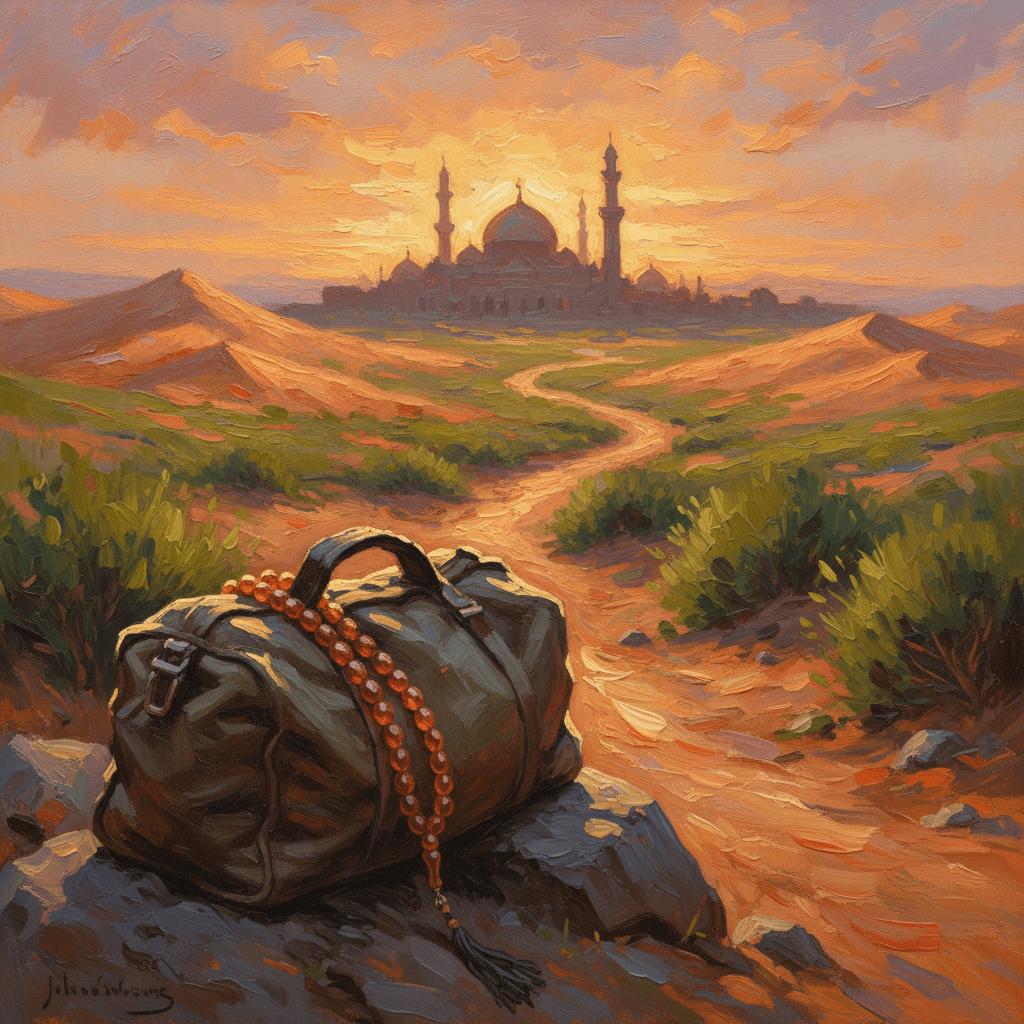
You have planned and saved and waited. You are finally going.
Or maybe you went years ago and still remember the feeling when the Kaaba came into view for the first time — how your throat tightened and your eyes went wet before you even knew what was happening. That moment is not something you can manufacture. But the supplications you say in that place — those you can prepare for.
Umrah is a short but intense act of worship. It has clear steps: ihram, tawaf, sa'i, and shaving. Each one has its own supplications from the Sunnah. If you go without knowing them, you will spend half the journey trying to recall fragments of duas from memory while being jostled by thousands of other pilgrims. Prepare now, while you are calm, so that when you are there, your heart is free to be fully present.
The Duas — Step by Step
At the Miqat: Entering Ihram
Before crossing the Miqat, complete your ritual purification (ghusl), wear your ihram garments, and perform two voluntary rakahs. Then make your intention and begin the Talbiyah:
لَبَّيْكَ اللَّهُمَّ لَبَّيْكَ، لَبَّيْكَ لَا شَرِيكَ لَكَ لَبَّيْكَ، إِنَّ الْحَمْدَ وَالنِّعْمَةَ لَكَ وَالْمُلْكَ، لَا شَرِيكَ لَكَ
Labbayk Allahumma labbayk, labbayka la sharika laka labbayk, innal-hamda wan-ni'mata laka wal-mulk, la sharika lak.
"Here I am, O Allah, here I am. Here I am, You have no partner, here I am. Verily all praise, grace, and sovereignty belong to You. You have no partner." — (Bukhari 1549)
Recite the Talbiyah continuously — quietly when in private, aloud when in public — until you begin your tawaf.
First Sight of the Kaaba
When the Kaaba comes into view, raise your hands and make dua. This is one of the moments in which supplications are accepted. The Prophet (peace be upon him) would say:
اللَّهُمَّ زِدْ هَذَا الْبَيْتَ تَشْرِيفًا وَتَعْظِيمًا وَتَكْرِيمًا وَمَهَابَةً
Allahumma zid hadhal-bayta tashrifan wa ta'ziman wa takriman wa mahaba.
"O Allah, increase this House in honor, reverence, dignity, and awe." — (Shafi'i, Musnad; narrated by Ibn Jurayj)
Follow this with your own personal dua — whatever is heaviest on your heart.
During Tawaf: At the Black Stone
At the start of each circuit, face the Black Stone, say Bismillah, and either kiss it (if possible), touch it, or simply point to it:
بِسْمِ اللهِ وَاللَّهُ أَكْبَرُ
Bismillahi wallahu akbar.
"In the name of Allah, and Allah is the Greatest." — (Abu Dawud 1873)
Between the Black Stone and the Yemeni Corner, the Quran prescribes:
رَبَّنَا آتِنَا فِي الدُّنْيَا حَسَنَةً وَفِي الْآخِرَةِ حَسَنَةً وَقِنَا عَذَابَ النَّارِ
Rabbana atina fid-dunya hasanatan wa fil-akhirati hasanatan wa qina 'adhaban-nar.
"Our Lord, give us good in this world and good in the Hereafter and protect us from the punishment of the Fire." — (Quran 2:201; Abu Dawud 1892)
This dua between the two corners is among the most beloved supplications in all of Islam. The Prophet recited it constantly in Makkah.
During Sa'i: At Safa and Marwa
When you reach Safa, face the Kaaba and say:
إِنَّ الصَّفَا وَالْمَرْوَةَ مِنْ شَعَائِرِ اللَّهِ
Innas-Safa wal-Marwata min sha'a'irillah.
"Indeed Safa and Marwa are among the symbols of Allah." — (Quran 2:158; Muslim 1218)
Then face the Kaaba, raise your hands, and say Allahu akbar three times. Make dua freely. The Prophet (peace be upon him) would spend a long time at Safa and Marwa in supplication. (Muslim 1218)
Between Safa and Marwa, walk freely while making dhikr and dua. When you reach the green markers (for men: run between them), say:
رَبِّ اغْفِرْ وَارْحَمْ وَأَنْتَ الْأَعَزُّ الْأَكْرَمُ
Rabbigh-fir warham wa antal-a'azzul-akram.
"My Lord, forgive and have mercy — You are the Most Mighty, the Most Generous." — (Ibn Majah 2989; sunnah.com)
The Story Behind It
The dua between the Yemeni Corner and the Black Stone — Rabbana atina fid-dunya hasanatan — is not simply a beautiful supplication. It was the Prophet's (peace be upon him) preferred response to a specific moment at a specific place.
Abdullah ibn al-Sa'ib reported: "I was walking with the Prophet between the Yemeni Corner and the Black Stone, and I heard him say: Rabbana atina fid-dunya hasanatan wa fil-akhirati hasanatan wa qina 'adhaban-nar." (Abu Dawud 1892)
The Prophet did not invent this dua — it is from the Quran, Surah Al-Baqarah 2:201. But he chose this exact location, between these two sacred corners of the Kaaba, as the moment to say it. That is a deliberate teaching. The dua that covers both worlds — everything good here, and protection from the Fire — belongs in the holiest place on earth.
As for sa'i: the running between Safa and Marwa is a direct re-enactment of Hajar's search for water for her son Ismail. She did not know relief was coming — she was exhausted and desperate — and yet she did not stop moving. The sa'i is a reminder that effort and trust go together in Islam. You walk, and you ask.
How to Make These Duas Part of Your Preparation
Here is the problem most people face: they arrive in Makkah overwhelmed, and if they have not memorized the duas beforehand, the entire experience is spent catching up instead of being present.
Prepare in stages before you leave:
Week one: memorize the Talbiyah completely. Say it in the car, before bed, during your commute. It should flow automatically before you land.
Week two: work on the dua between the two corners — Rabbana atina fid-dunya hasanatan. This one is worth having word-perfect because you will say it up to seven times.
Week three: learn the dua at Safa and the intention of the sa'i. Read the story of Hajar so the sa'i carries meaning when you walk it.
Use a written card during Umrah itself:
There is no shame in holding a small card with the duas during your circuits. Many scholars have done this. What matters is that you are saying the right words with understanding — not performing from memory while your heart is elsewhere.
On return — continuing the habit:
The spiritual state of Umrah fades if it has nothing to land on. When you return, the duas you said at the Kaaba should not stay there. The Rabbana atina dua especially — add it to your daily routine. Say it after every fard salah. It is the most comprehensive dua for this life and the next.
If you want to track your daily dua practice after returning from Umrah, a structured habit tracker helps enormously in the weeks when the spiritual high is still high but life is already pulling you back.
Keep the Umrah Spirit Alive at Home
DeenBack helps you carry the duas and dhikr of your Umrah journey into daily life — with streak tracking, reminders, and a full library of authentic supplications.


Free download. Premium features available in-app.
Related Duas
Dua for travel: Before departing for Umrah, say the dua for a traveller — it covers the journey itself and is from the Sunnah of every long trip.
Dua for Arafah: If your Umrah is connected to Hajj or you are near the season, the dua for Arafah is one of the most powerful supplications in the Islamic calendar and deserves dedicated preparation.
Dua for forgiveness: Umrah wipes out minor sins between it and the last Umrah. Pair it with the dua for forgiveness for a complete spiritual reset.
Dua for entering the masjid: Before stepping into Masjid al-Haram, say the dua for entering masjid — the house of Allah has a specific etiquette of entry that the Prophet (peace be upon him) practiced.
Common Questions
Is there a set dua to say at each round of tawaf?
No specific dua is prescribed for each individual circuit. The dua between the Yemeni Corner and the Black Stone is the one verified sunnah dua for tawaf. For the rest of your circuits, you may say any dhikr, recite Quran, or make personal dua. The practice of assigning specific duas to specific rounds is not established in the authentic Sunnah.
Can women perform Umrah without a mahram?
This is a matter of scholarly difference. The majority position requires a mahram for a woman traveling to perform Umrah. However, some contemporary scholars permit it for organized group travel under certain conditions. Consult a trusted scholar for a ruling specific to your situation.
How many times can you perform Umrah in one trip?
You can perform multiple Umrahs in a single trip. After completing one Umrah, you go to the nearest Miqat (many pilgrims travel to Masjid Aisha in Tan'im), re-enter ihram, and perform another. This is valid and practiced.
What should you do if you forget a dua during tawaf?
Do not panic and do not stop your circuit. Simply continue making whatever dhikr comes naturally — SubhanAllah, Alhamdulillah, Allahu Akbar, la ilaha illallah — and return to the prescribed dua when you remember it. The scholars are clear that tawaf done without specific memorized duas is still valid.
Is the dua made at the Kaaba guaranteed to be answered?
The Prophet (peace be upon him) said that supplication is not rejected in certain places, and the area around the Kaaba is among the most cited. But "acceptance" does not always mean immediate granting — it may mean the harm equivalent is deflected, or the answer is stored for the Hereafter. Make dua with certainty and leave the form of the answer to Allah.
Closing
You may only get one Umrah in your lifetime. Or you may be among those Allah grants it to many times. Either way, the preparation you do now — memorizing these words, understanding their context, making your heart ready — is itself an act of worship.
The Kaaba has stood since Ibrahim (peace be upon him) built it. Millions of people have stood where you will stand, and said what you are about to say. When you raise your hands at first sight of the Kaaba and the words come — that is not performance. That is the thread connecting you to every believer who has come before.
Prepare Your Umrah Dua Practice Today
DeenBack gives you every authentic Umrah supplication with Arabic, transliteration, and meaning — so you arrive ready, not scrambling.
Free download. Premium features available in-app.
Frequently Asked Questions
Is there a specific dua for each step of Umrah?
Yes. The Prophet (peace be upon him) had specific supplications for entering ihram, for tawaf, for kissing or touching the Black Stone, for the Yemeni Corner, and for sa'i. Many of these are found in Abu Dawud, Ibn Majah, and Nasa'i.
What do you say when you first see the Kaaba?
When the Kaaba comes into view, raise your hands and make dua — this is one of the moments when supplication is accepted. The Prophet (peace be upon him) would raise his hands and say Allahumma zid hadhal-bayta tashrifan — O Allah, increase this House in honor. Then make your personal dua freely.
Can you make dua in your own language during Umrah?
Yes. The prescribed supplications should ideally be said in Arabic as narrated from the Prophet (peace be upon him). But between those, during tawaf and sa'i, you can and should also make dua in your own language from your heart — Allah hears every tongue.
What is the dua for putting on ihram?
After completing two rakahs at the Miqat and making the intention for Umrah, say: Labbayk Allahumma 'umratan — Here I am O Allah, for Umrah. Then begin the Talbiyah: Labbayk Allahumma labbayk, labbayka la sharika laka labbayk, innal-hamda wan-ni'mata laka wal-mulk, la sharika lak.
When does the Talbiyah stop during Umrah?
For Umrah, you stop reciting the Talbiyah when you arrive at the Masjid al-Haram and begin tawaf. Unlike Hajj where it continues until the stoning of Jamarat, in Umrah the Talbiyah ends at the start of tawaf.