
- Published on
Dua for the Kaaba: What to Say When You Stand Before It
- Authors

- Name
- Ahmad
- Role
- Senior Marketing Manager, Islamic education • Deen Back
بِسْمِ اللهِ الرَّحْمٰنِ الرَّحِيْمِ
In the name of God, the Most Gracious, the Most Merciful.
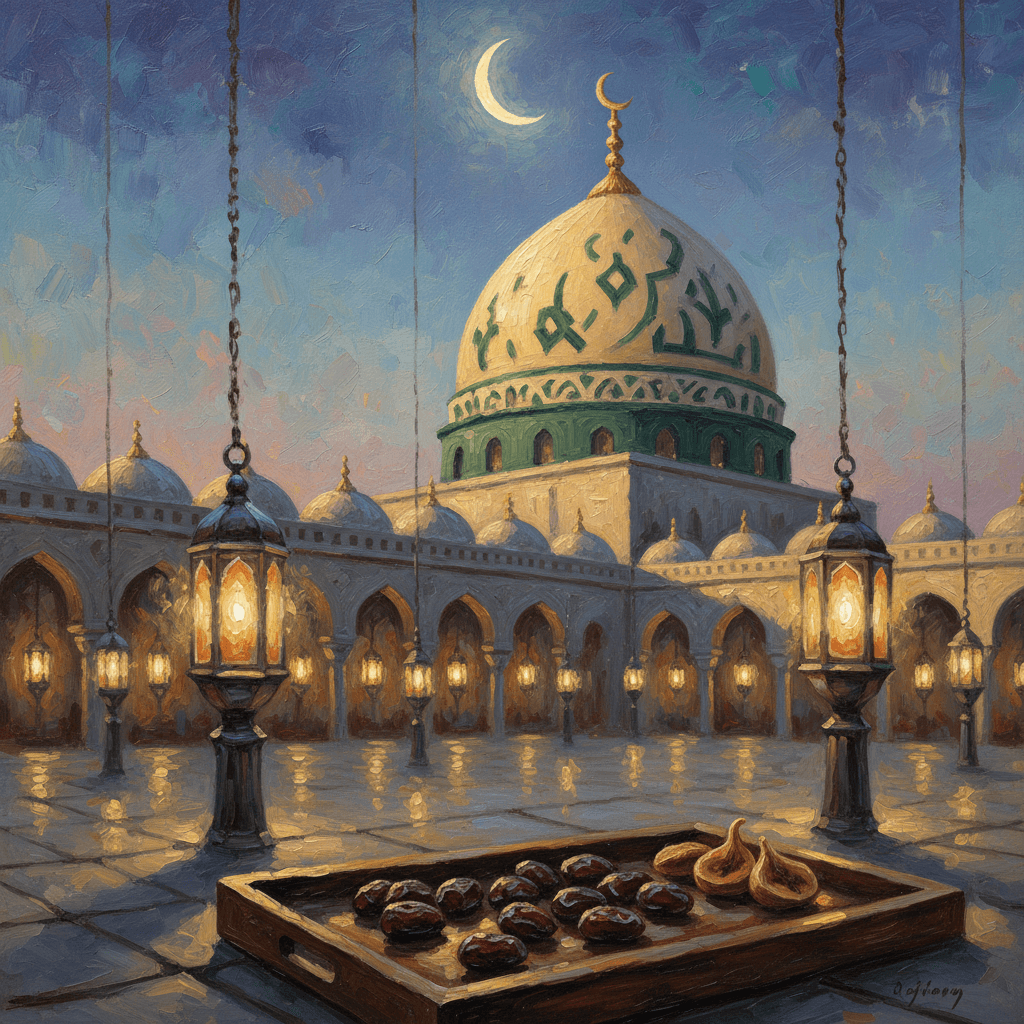
Why the Dua for the Kaaba Matters
There is a moment that every Muslim who has made Hajj or Umrah describes in a way that is almost impossible to explain to those who have not yet been.
The gates of Masjid al-Haram. The first glimpse through the arches. And then the Kaaba — smaller than you expected from photographs, closer than you imagined, more present than any image prepared you for.
Scholars across generations have narrated that this moment of first sight is one of the windows when dua is most likely accepted. Not a popular belief or folk custom — narrated from the Prophet (peace be upon him), who prepared his companions specifically for this moment.
Most pilgrims are so overwhelmed that they forget to make dua. Or they say Allahu Akbar and stand there without words, the window passing while emotion floods everything else out.
Coming prepared — with specific duas held in the heart before you arrive — is how you turn a moment of overwhelming beauty into one of the most powerful dua sessions of your life. The Kaaba is a destination. It is also a window. And windows close.
The Duas for the Kaaba
At the first sight of the Kaaba, raise your hands and make personal dua. This is the most important moment.
Some scholars recommend beginning with:
اللَّهُمَّ زِدْ هَذَا الْبَيْتَ تَشْرِيفًا وَتَعْظِيمًا وَتَكْرِيمًا وَمَهَابَةً، وَزِدْ مَنْ شَرَّفَهُ وَكَرَّمَهُ مِمَّنْ حَجَّهُ أَوِ اعْتَمَرَهُ تَشْرِيفًا وَتَكْرِيمًا وَتَعْظِيمًا وَبِرًّا
Allahumma zid hadhal bayta tashreefan wa ta'dheeman wa takriman wa mahabatan, wa zid man sharrafahu wa karramahu mimman hajjahu awit'amarahu tashreefan wa takriman wa ta'dheeman wa birran.
"O Allah, increase this House in honor, reverence, dignity, and awe. And increase those who honor and revere it — among those who perform Hajj or Umrah — in honor, dignity, reverence, and righteousness."
Then make your personal dua. This is the core. Your specific requests — for health, forgiveness, a relationship, a sin you want to leave, a provision you need — said while looking at the Kaaba with your hands raised.
Beginning tawaf — at the Black Stone, say Bismillah, Allahu Akbar and begin. During crowded conditions, pointing toward the Black Stone and saying this is valid and what the Prophet showed is permissible.
Between the Yemeni Corner and the Black Stone on every circuit:
رَبَّنَا آتِنَا فِي الدُّنْيَا حَسَنَةً وَفِي الْآخِرَةِ حَسَنَةً وَقِنَا عَذَابَ النَّارِ
Rabbana atina fid-dunya hasanatan wa fil-akhirati hasanatan wa qina 'adhaban-nar.
"Our Lord, give us good in this world and good in the Hereafter, and protect us from the punishment of the Fire." — (Surah Al-Baqarah, 2:201)
The Prophet (peace be upon him) specifically recited this between these two corners on every circuit. Seven circuits means seven repetitions. This dua covers this world and the next — there is nothing more comprehensive to ask for.
At the Multazam — the area between the Black Stone and the door of the Kaaba — press your chest and hands against the wall if you can reach it, and make dua. The scholars narrate this as among the places where dua is accepted. If the crowd is too dense to reach it, make dua from where you are while facing it.
The Story Behind These Duas
When Ibrahim (AS) completed the construction of the Kaaba with his son Ismail, their final act before stepping back was a dua:
رَبَّنَا تَقَبَّلْ مِنَّا
Rabbana taqabbal minna.
"Our Lord, accept from us." — (Surah Al-Baqarah, 2:127)
Two prophets. The house of Allah standing before them. And their first instinct was supplication — accept this from us. Not pride, not announcement — dua.
That prayer was accepted. The house still stands. More than two million people circle it every Hajj. Billions have made tawaf around it since Ibrahim's time.
When the Prophet (peace be upon him) entered Mecca at the Conquest — after years of persecution, migration, and war — he did not enter in triumph. He entered on camelback, head bowed so low in humility that his beard nearly touched the saddle. The first act when he reached the Kaaba was tawaf. Not celebration. Worship.
His companion Abdullah ibn Abbas (may Allah be pleased with him) narrated that the Prophet specifically taught the dua between the Yemeni Corner and the Black Stone — because the Prophet left no moment of proximity to the Kaaba uncultivated. Every step of tawaf was a conversation with Allah, shaped and deliberate.
The Kaaba was built for exactly this. Not as a monument to Ibrahim. Not as a religious landmark. As a place where human beings can turn their hearts fully to the Creator, without intermediaries, without distractions, without anything between the person and their Lord.
How to Prepare for This Dua Before You Go
Most Muslims will not be at the Kaaba this week or this month. But the dua habit that makes the Kaaba meaningful — the one that allows you to walk through those gates ready — is built long before you arrive.
The first sight of the Kaaba is overwhelming. Pilgrims who have cultivated a daily dua practice at home — who are used to turning to Allah with specific, heartfelt words every day — move naturally into that window of acceptance when it opens. Pilgrims who have not cultivated that practice often stand there overcome with emotion but without words, the window closing before they find them.
Start keeping a personal dua list. Not a generic list of good things — a specific one. Write down the names of people you want to pray for. Write down specific situations in your life that need Allah's intervention. Write the exact words you would say to Allah if you were standing at the Kaaba today.
Because in a sense, you can say them today. The Kaaba is the direction — it is not the location of Allah. Allah is not in the Kaaba. The Kaaba is a focal point for unified worship. Your dua in your room, said with a focused heart, reaches the same One whose house the Kaaba is.
Build the habit of dua after every salah. Consistency in small duas now builds the capacity for the larger duas at the Kaaba. The Prophet (peace be upon him) said: "The most beloved deeds to Allah are those that are most consistent, even if they are small." (Sahih Bukhari 6464) The dua muscle is real — it grows with use and atrophies without it.
Learn the duas for tawaf before you go. The Rabbana atina dua is short enough to memorize in a day. The dua for first sight of the Kaaba can be written on a card you carry. Come to the sacred house with your words already prepared — you will be grateful for it when the sight of the Kaaba fills your entire vision and the words need to be already there.
Build Your Dua Habit Before You Reach the Kaaba
DeenBack helps you build a daily dua and dhikr practice so that when you stand before the Kaaba, your heart is ready. Track your duas, build streaks, and arrive at the sacred house fully prepared.


Free download. Premium features available in-app.
Related Duas
Dua for Mecca — the complete guide to duas throughout the Sacred City: entering Masjid al-Haram, first sight of the Kaaba, drinking Zamzam, and every significant moment of your time in Mecca.
Dua for Hajj — the essential supplications for every stage of Hajj, from the Talbiyah at the beginning through Arafat, Muzdalifah, and the farewell tawaf.
Duas for Umrah — Umrah is centered on the tawaf around the Kaaba and the sa'i. These duas are the foundation for all worship at the Sacred Mosque.
Dua for entering the masjid — the prophetic dua for entering any mosque, which carries its fullest weight when the mosque is Masjid al-Haram.
Dua for Medina — most pilgrims visit Medina alongside Mecca. The duas for the Prophet's Mosque are the natural companion to the duas at the Kaaba.
Common Questions
Is there one specific prescribed dua for the Kaaba?
There is no single mandatory formula — but there are narrated moments and narrated duas. The Rabbana atina dua between the Yemeni Corner and Black Stone is the most established. The first sight of the Kaaba is a window for personal dua. The Multazam is narrated as a place of accepted supplication. These moments are established; the words within them (beyond the specific narrated ones) are your own personal conversation with Allah.
What if I am too overwhelmed to make dua when I see the Kaaba?
This is common. Many pilgrims report the first sight left them speechless, in tears, unable to form coherent words. The dua does not require eloquence — "O Allah" said with a full heart is accepted. If words fail you, raise your hands and let the weight of the moment itself be your communication to Allah. The tears of a believer at the Kaaba are not a failure to make dua — they are dua in themselves.
Can I make dua in English at the Kaaba?
Yes — personal dua can be made in any language. The Arabic duas narrated from the Prophet carry specific weight and are recommended, but Allah understands every language. Sincerity is the condition, not Arabic fluency. If you know the Arabic, use it; if your heart speaks most clearly in another language for personal requests, make those requests as clearly and sincerely as you can.
What if I cannot go to Mecca?
The spiritual orientation toward the Kaaba — the qibla — is available to every Muslim in every salah. Five times daily, you turn your body toward the sacred house. The dua made facing the qibla reaches the same One regardless of whether you are in Mecca or across the world. Fasting on the Day of Arafah (the 9th of Dhul Hijjah), giving charity during the first ten days of Dhul Hijjah, and increasing dhikr during that period are all ways of connecting to the spiritual intensity of the Kaaba from wherever you are.
Should I prepare a written list of duas to bring to the Kaaba?
Yes — this is strongly recommended. The emotion of the moment can make it difficult to remember what you intended to say. Scholars who have made Hajj multiple times often advise bringing a written list of specific requests to make at the Kaaba, the Multazam, at Zamzam, and at Arafat. The list itself is an act of preparation — it forces you to think clearly in advance about what you need from Allah, which deepens the sincerity of the dua when you make it.
Closing
Ibrahim built the Kaaba and then made one dua when he finished: Rabbana taqabbal minna — our Lord, accept from us.
That is the posture of the Kaaba. Not a particular formula but an orientation: bringing what you have, asking Allah to accept it, and trusting that He will.
When you stand before the Kaaba — whether that is this year, in a decade, or held only as a hope in the heart — come with that posture. Prepared words. Specific needs. A heart that has been practicing turning to Allah long before it reached the Sacred House.
The habits you build now, the daily dua practice, the consistency of turning to Allah in the ordinary — that is the preparation that makes the extraordinary moment of the Kaaba into something more than a sight. It becomes a conversation with the One who built it into existence through a prophet's obedience.
Keep the Spirit of the Kaaba Alive Every Day
DeenBack makes it easy to build the dua and dhikr habits that connect you to the spiritual intensity of the Kaaba — wherever you are. Start your streak today.
Free download. Premium features available in-app.
Frequently Asked Questions
What dua do you say when you first see the Kaaba?
When you first see the Kaaba, raise your hands and make personal dua — this is narrated as one of the moments when dua is most likely accepted. Some scholars recommend saying Allahu Akbar three times and then asking for whatever is in your heart. There is no single prescribed formula, but coming prepared with specific duas is strongly advised.
Can you make personal dua at the Kaaba?
Yes — personal dua at the Kaaba, especially at the Multazam (the area between the Black Stone and the Kaaba door), is encouraged and narrated as highly accepted. Bring a list of what you need from Allah and make each dua specifically.
What is the dua said between the Yemeni Corner and the Black Stone?
The Prophet (peace be upon him) specifically recited Rabbana atina fid-dunya hasanatan wa fil-akhirati hasanatan wa qina adhaban-nar between the Yemeni Corner and the Black Stone on every circuit of tawaf. This is from Surah Al-Baqarah (2:201).
How do I prepare spiritually before reaching the Kaaba?
Write down your personal duas before you arrive — specific requests for health, forgiveness, provision, guidance. The spiritual intensity of the first sight of the Kaaba passes quickly; coming prepared means using that window fully rather than scrambling for words in the overwhelm of the moment.
Is touching the Black Stone obligatory during tawaf?
No — kissing or touching the Black Stone is a sunnah, not obligatory. During crowded conditions, pointing toward it and saying Bismillah, Allahu Akbar is perfectly valid and what most pilgrims do. Tawaf is valid with or without being able to touch the Stone.