
- Published on
Dua for Increase in Rizq: Supplications to Expand Your Provision
- Authors

- Name
- Ahmad
- Role
- Senior Marketing Manager, Islamic education • Deen Back
بِسْمِ اللهِ الرَّحْمٰنِ الرَّحِيْمِ
In the name of God, the Most Gracious, the Most Merciful.
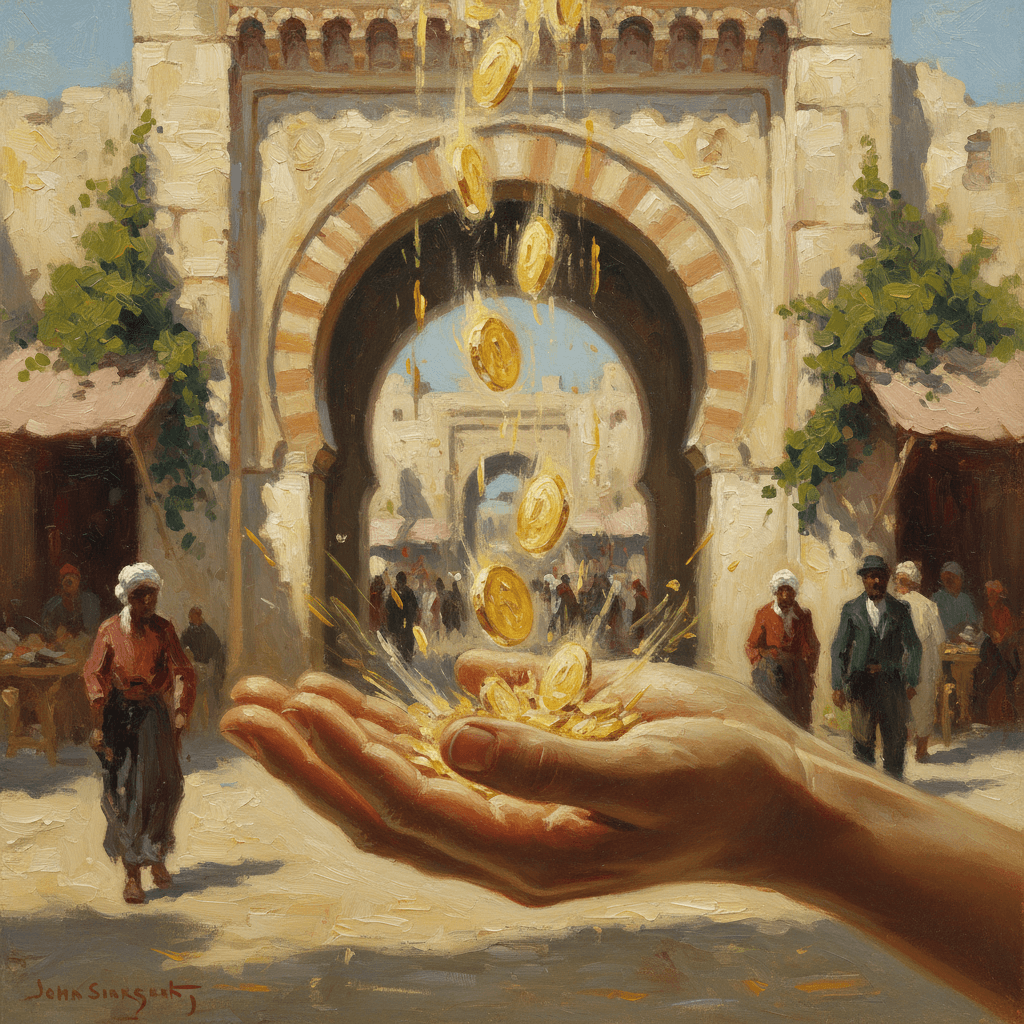
Money stress is one of the most quietly damaging forces in a Muslim's daily life. It creates anxiety, tests marriages, strains relationships, and can push people toward shortcuts that cross lines they swore they never would.
And yet, Islam has a complete framework for approaching provision — not just "work hard and trust Allah" in the abstract, but specific duas, specific Sunnah actions, and a theological understanding of rizq that fundamentally changes how you relate to it.
Rizq is broader than money. It is all provision — income, food, health, children, peace of mind, time, opportunity. And the duas for increase in rizq are asking for all of it, not just the financial piece.
The Primary Dua for Increase in Rizq
اللَّهُمَّ اكْفِنِي بِحَلَالِكَ عَنْ حَرَامِكَ، وَأَغْنِنِي بِفَضْلِكَ عَمَّنْ سِوَاكَ
Allahumma akfini bihalaalika an haraamik, wa aghnini bifadlika amman siwaak
"O Allah, suffice me with Your lawful things against Your forbidden ones, and make me rich with Your grace, independent of all others besides You."
— (Tirmidhi 3563, classified hasan)
This dua does something important: it asks for sufficiency in the halal before asking for increase. And it asks to be made independent — not dependent on other people's generosity or charity, but on Allah's direct provision. The combination protects against two common failures: turning to haram when the halal seems insufficient, and developing dependence on human relationships for your financial stability.
The Dua for Good Provision After Fajr
اللَّهُمَّ إِنِّي أَسْأَلُكَ رِزْقًا طَيِّبًا وَعِلْمًا نَافِعًا وَعَمَلًا مُتَقَبَّلًا
Allahumma inni as'aluka rizqan tayyiban wa 'ilman nafi'an wa 'amalan mutaqabbalan
"O Allah, I ask You for good provision, beneficial knowledge, and accepted deeds."
— (Ibn Majah 925, authenticated)
The Prophet specifically recommended this dua after the Fajr prayer. The three requests together form a complete framework: rizq tayyib (provision that is good and pure), 'ilm nafi' (knowledge that actually benefits you), and 'amal mutaqabbal (deeds that Allah accepts). These three together constitute a truly prosperous life.
Notice it asks for tayyib rizq — not the maximum amount, but the good kind. Provision that is halal, barakah-filled, and uncomplicated by guilt or harm.
The Story Behind Rizq in the Quran
The Quran contains one of the clearest statements about the mechanism of rizq expansion. Prophet Nuh told his people:
"Say: 'Ask forgiveness of your Lord — indeed, He is ever Forgiving. He will send rain upon you in abundance, give you increase in wealth and children, and provide for you gardens and provide for you rivers.'" (Surah Nuh 71:10-12)
The equation is direct: istighfar (seeking forgiveness) unlocks provision. Not because Allah withholds rizq as punishment, but because sins create spiritual constriction that prevents provision from flowing.
The Prophet ﷺ confirmed this principle: "Whoever regularly seeks forgiveness, Allah will provide for him relief from every worry, a way out from every difficulty, and provision from where he did not expect." (Abu Dawud 1518)
This shifts the frame entirely. When provision feels tight, the Islamic response is not only to work harder or strategize more cleverly — it is to make istighfar a daily practice and watch the doors open.
How to Build Habits That Attract Rizq
The Sunnah contains multiple explicit actions that expand provision. These are not folklore — they are stated in Quran and authentic hadith.
Maintain family ties. The Prophet said: "Whoever would like his rizq to be increased and his lifespan to be extended, let him maintain his ties of kinship." (Bukhari 5986) If there is a family relationship that has been cut — a parent, a sibling, a relative — making the effort to repair it is one of the most documented rizq-expanding actions in the Sunnah.
Give sadaqah consistently. "Sadaqah does not decrease wealth." (Muslim 2588) The nafs resists this because it feels counter-intuitive. But the principle operates spiritually and practically — generosity recalibrates your relationship to money and opens channels of provision that stinginess closes.
Pray Fajr on time. "O Allah, bless my Ummah in their early morning hours." (Tirmidhi 1212) The Prophet specifically made dua for barakah in the early morning. The discipline of Fajr prayer creates the mental and spiritual conditions for a productive, barakah-filled day. Consistent Fajr attendance is correlated in the Sunnah with abundance.
Make the Fajr dua for rizq a non-negotiable. After Fajr adhkar, say Allahumma inni as'aluka rizqan tayyiban wa 'ilman nafi'an wa 'amalan mutaqabbalan every single day. Not occasionally — every day. The Prophet's habit was consistency, even in small deeds.
Recite Surah Al-Waqiah regularly. While the hadith about Surah Al-Waqiah are debated in terms of chain, the broader Sunnah of Quran recitation for barakah is well-established. Many scholars and practitioners include this surah in their evening routine for provision.
Build the Daily Habits That Attract Rizq
DeenBack helps you track your Fajr prayer, daily istighfar, and sadaqah habit — the consistent Sunnah practices that expand provision from the inside out.


Free download. Premium features available in-app.
Related Duas for Provision
Dua of Ibrahim for provision:
رَبِّ إِنَّهُنَّ أَضْلَلْنَ كَثِيرًا مِنَ النَّاسِ ۖ فَمَن تَبِعَنِي فَإِنَّهُ مِنِّي ۖ وَمَنْ عَصَانِي فَإِنَّكَ غَفُورٌ رَّحِيمٌ
Rabbij'al hadha baladan aminan warzuq ahlahu minal-thamarati man amana minhum billahi wal-yawmil-akhir
"My Lord, make this a secure city and provide its people with fruits — those who believe among them in Allah and the Last Day."
— (Quran, Al-Baqarah 2:126)
Dua for barakah in provision and earnings:
اللَّهُمَّ بَارِكْ لَنَا فِيمَا رَزَقْتَنَا
Allahumma barik lana fima razaqtana
"O Allah, bless for us what You have provided for us."
For the broader dua for rizq, see dua for rizq. For barakah in wealth specifically, see dua for barakah in wealth. For those starting a new business venture, see dua for new business. For the practice of regular istighfar that the Quran links to provision, see how to make istighfar a daily habit.
Common Questions About Dua for Rizq
Does dua for rizq mean I do not need to work hard? No. Tawakkul (trust in Allah) does not mean passivity. The Prophet tied his camel before trusting Allah. Dua is the spiritual investment; work is the practical one. Both are required. Dua without work is deficiency; work without dua is arrogance.
My finances are very tight right now — what should I prioritize? Prioritize istighfar and sadaqah, even small amounts. These seem counter-intuitive when money is scarce, but they address the spiritual dimension of provision that practical effort alone cannot reach. Even a small consistent sadaqah habit — daily or weekly — shifts something.
Is it permissible to ask Allah for a specific amount of money? Yes, with the condition that the purpose is halal. The Prophet made dua for specific companions' wealth by name. Asking for a specific income target, a home, financial freedom from debt — all of these are permissible and appropriate. Be specific in your dua.
I have been making dua for years and my rizq has not increased. What am I doing wrong? Nothing may be wrong. Rizq from Allah comes in forms and timing that we cannot predict. It may also be that certain doors need opening first — a family tie repaired, istighfar that addresses a specific pattern, sadaqah that breaks a barrier. Review the Sunnah actions holistically. And consider: the answer to the dua may also be that the current provision is exactly what is needed for your growth.
Provision Belongs to Allah — Not to Circumstances
The nafs believes in scarcity. It believes provision comes from jobs, networks, skills, timing — and when those external factors are uncertain, the nafs panics.
The believer's foundation is different. Rizq is from Allah. He has distributed it equitably according to His wisdom, and He responds to sincere supplication by opening doors, creating opportunities, and bringing provision through channels you did not see coming.
You cannot control the economy or the market or the timing. But you can turn to the One who controls all of those things and ask — with specific words, consistently, at the best times.
That is what the dua for increase in rizq is: a declaration that you know where provision actually comes from, and you are asking the Source directly.
Build the Provision Habits the Prophet Taught
DeenBack helps you track your daily dua for rizq, Fajr prayer streak, and sadaqah habit — building the consistent Sunnah practice that invites barakah into your provision.
Free download. Premium features available in-app.
Frequently Asked Questions
What is the best dua for increase in rizq?
The Prophet taught: 'Allahumma akfini bihalaalik an haraamik wa aghnini bifadlika amman siwaak' — 'O Allah, suffice me with Your lawful things against Your forbidden ones, and enrich me from Your grace over all others.' (Tirmidhi 3563, hasan)
Does istighfar (seeking forgiveness) increase rizq?
Yes, explicitly. The Prophet Nuh told his people: 'Ask forgiveness of your Lord — He is ever Forgiving. He will send rain upon you in abundance, and give you increase in wealth and children.' (Quran 71:10-12) Consistent istighfar is one of the most cited Sunnah actions for expanding rizq.
What Sunnah actions expand rizq?
The Prophet identified several: maintaining family ties (silat ar-rahim extends rizq and lifespan), consistent charity (sadaqah does not decrease wealth), Fajr prayer on time (barakah enters the day), and regular istighfar. These are not superstitions — they are stated in Quran and Sunnah.
Is it permitted to ask Allah for more money?
Yes. The Quran includes duas for good in this world and the next. The Prophet made dua for specific companions' wealth. Asking for halal provision, financial ease, and abundance is entirely appropriate in Islam. The condition is that the request remains lawful and is not sought through forbidden means.
What is the dua for barakah in earnings?
Say Bismillah before any financial transaction, recite the dua after Fajr: 'Allahumma inni as'aluka rizqan tayyiban' (O Allah, I ask You for good provision), and maintain sadaqah as a practice. The combination of these creates a framework for barakah in what you earn.