
- Published on
Dua for Heartbreak: Islamic Supplications for Healing and Moving Forward
- Authors

- Name
- Ahmad
- Role
- Senior Marketing Manager, Islamic education • Deen Back
بِسْمِ اللهِ الرَّحْمٰنِ الرَّحِيْمِ
In the name of God, the Most Gracious, the Most Merciful.
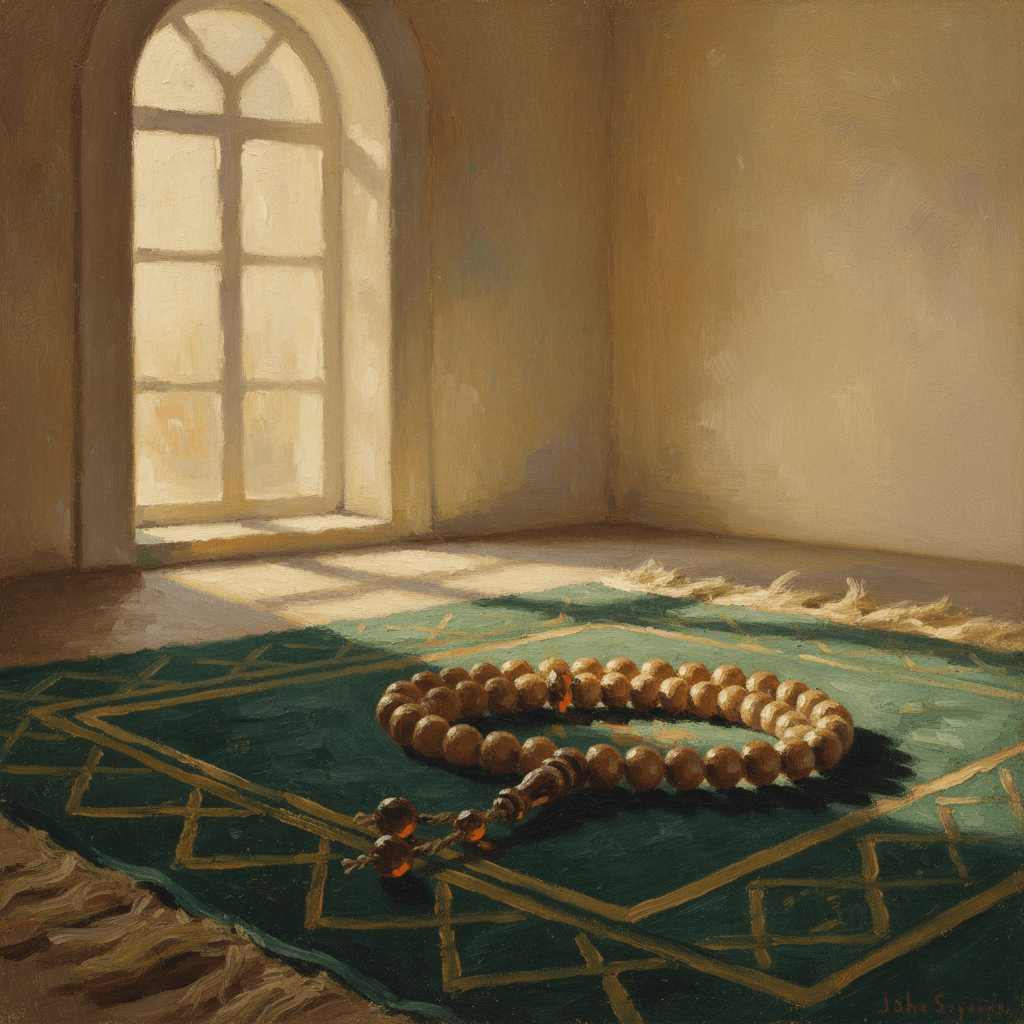
There is a particular kind of pain that comes from heartbreak — different from ordinary sadness, different from grief over a loss. It is the pain of wanting something deeply and being refused. The pain of a future that was almost certain, now gone. The pain of feeling like part of yourself was invested somewhere that no longer exists.
Islam does not dismiss this pain. The Quran is full of stories that involve broken hearts: Yaqub ﷺ weeping for Yusuf until he lost his sight. Maryam ﷺ crying out alone under a palm tree. Prophet Yunus ﷺ enclosed in complete darkness after things did not go the way he planned.
What the Quran offers in every one of these stories is not a promise of restored circumstances. It is a promise of Allah's presence — and eventually, of a goodness the person could not have imagined when they were in the midst of the pain.
The dua for heartbreak is the bridge between the hurt you feel now and the healing that is coming.
The Dua for Heartbreak — Asking for Allah's Mercy
اللَّهُمَّ رَحْمَتَكَ أَرْجُو فَلَا تَكِلْنِي إِلَى نَفْسِي طَرْفَةَ عَيْنٍ
Allahumma rahmataka arju fala takilni ila nafsi tarfata 'ayn
"O Allah, I hope for Your mercy — do not leave me to myself for even the blink of an eye."
— (Abu Dawud 5090; authenticated as hasan)
This dua is remarkable in its honesty. It does not ask Allah to immediately fix the situation. It does not demand explanation or resolution. It simply says: I cannot handle this on my own. Do not leave me to deal with it alone.
The phrase tarfata 'ayn — the blink of an eye — reveals how vulnerable the supplicant feels. Even for one instant, being left to your own nafs in the middle of heartbreak is too much to bear. This dua admits that fully, without shame.
The Quran's Promise — Relief After Hardship
فَإِنَّ مَعَ الْعُسْرِ يُسْرًا إِنَّ مَعَ الْعُسْرِ يُسْرًا
Fa inna ma'al-'usri yusra, inna ma'al-'usri yusra
"For indeed, with hardship will be ease. Indeed, with hardship will be ease."
— (Quran, Surah Ash-Sharh, 94:5-6)
Allah repeated this twice in two consecutive verses. The scholars say that in Arabic, when an indefinite noun is repeated, it can refer to a different thing each time. But when a definite noun is repeated, it refers to the same thing. "Hardship" (al-'usr) is definite and repeated — there is one hardship. "Ease" (yusr) is indefinite and repeated — there are at least two eases. With every single difficulty, Allah sends multiple forms of relief.
Whatever heartbreak you are carrying right now — that hardship is named in this verse. And multiple eases are attached to it.
The Story Behind These Duas
The dua of Abu Dawud 5090 comes from the broader tradition of prophetic supplications for moments of spiritual and emotional vulnerability. The phrase "do not leave me to myself for even a blink of an eye" appears in other forms in the Sunnah, reflecting the deep prophetic understanding that the nafs — the lower self — is particularly dangerous when the heart is in pain.
Heartbreak activates the nafs in specific ways. It whispers: you are not worthy. It whispers: this proves you should stop trying. It whispers: Allah has abandoned you. Or sometimes — it whispers the opposite extreme: if Allah truly cared, this would not have happened.
These are the lies the nafs tells in pain. The dua is a direct counter: I am not relying on my nafs's conclusions about this situation. I am relying on Your mercy. Do not let me be alone with my nafs's interpretation.
The Quran's repeated promise of ease (94:5-6) was revealed during a period when the Prophet ﷺ was personally burdened and grieving. It was not a general theological principle delivered in comfortable times. It was a specific divine reassurance given to a heart that was aching. It applies to your heart now.
How to Make Dua the Center of Your Healing
Healing from heartbreak is not passive. It requires active orientation toward Allah through the grief, not waiting until the grief passes to return to worship.
Say the mercy dua every night before sleep. Night is when heartbreak speaks loudest — the quiet, the absence, the thoughts that replay. Before lying down, say Allahumma rahmataka arju fala takilni ila nafsi tarfata 'ayn deliberately, with awareness of what you are asking. You are asking Allah to be with you in the night that is coming.
Use sujood as your private space with Allah. The Prophet ﷺ said the closest the slave comes to the Lord is in prostration (Sahih Muslim 482). During the voluntary prostrations of your prayers, bring the heartbreak to Allah in sujood. Do not rehearse the story of what happened — bring the feeling. The grief, the longing, the confusion. Lay it down in sujood and ask Allah to hold it.
Recite Surah Ash-Sharh until you believe it. Some people recite 94:5-6 as a reminder until the truth of it becomes felt, not just known. In times of heartbreak, there can be a gap between knowing intellectually that ease follows hardship and actually feeling the truth of that promise. Recite it daily. Let it move from the mind to the heart.
Make istikhara dua a regular practice. If the heartbreak involves confusion about whether a relationship or situation was right — or anxiety about what comes next — the dua for istikhara is specifically designed for seeking Allah's guidance in matters of the heart and life direction. Use it.
Do not let heartbreak interrupt your salah. This is the nafs's favorite move: pain becomes a reason to miss prayers, which deepens the sense of disconnection, which intensifies the pain. Guard your salah especially ferociously when your heart is broken. Those five anchors are what keep you from drifting completely.
Stay Consistent in Worship When Your Heart Is Broken
DeenBack helps you maintain your daily prayer, dua, and dhikr streaks even through the painful seasons — keeping the spiritual habits that carry you toward healing.


Free download. Premium features available in-app.
Related Duas for Healing and Guidance
Hasbiyallahu — when the heart needs to release the outcome:
حَسْبِيَ اللَّهُ لَا إِلَٰهَ إِلَّا هُوَ عَلَيْهِ تَوَكَّلْتُ وَهُوَ رَبُّ الْعَرْشِ الْعَظِيمِ
Hasbiyallahu la ilaha illa huwa alayhi tawakkaltu wa huwa rabbul 'arshil 'azim
"Allah is sufficient for me — there is no deity except Him. Upon Him I rely, and He is the Lord of the Magnificent Throne." — (Quran 9:129 — said 7 times morning and evening)
For pain that has physical dimensions — the ache in the chest that heartbreak literally causes — the dua for pain covers additional supplications. When heartbreak connects to anxiety about the future, the dua for anxiety is a powerful companion. For seeking guidance about what comes next, dua for guidance is the right starting point. And when the grief needs the broader frame of tawbah and turning back to Allah, dua for repentance provides the right foundation.
Common Questions About Dua and Heartbreak
Is it permissible to make dua for someone specific to come back to me? Dua for guidance — yours and theirs — is always appropriate. Asking Allah to bring a specific person into your life, or back into it, is permissible, though it is wise to add: if it is good for me and for them. The qualifier matters because Allah's knowledge of what is truly good exceeds your current desire.
What if the heartbreak is from a haram relationship? The pain is still real and Allah still hears you. Bring it to Allah with honest tawbah — acknowledge the wrong, ask for forgiveness, ask for healing. The door of tawbah is open precisely for this. The pain of ending a haram situation, though genuinely hard, is choosing what Allah wants over what the nafs wants. That choice has weight with Allah.
Why does heartbreak sometimes feel like loss of faith? Because the nafs tries to turn every painful experience into evidence against Allah's care. This is one of Shaytan's most sophisticated strategies. The feeling of distance from Allah during heartbreak is the nafs's interpretation — not the reality. Allah is closer to you in your pain than the nafs will ever allow you to feel. The dua is how you reach past the nafs's filter to what is actually true.
How do I know when I am healed? Healing is less a destination and more a direction. You are moving toward healing when you can make dua without the raw overwhelm returning every time. When you can think about the situation without the pain dominating. When you can say Alhamdulillah genuinely — not as performance but as actual acknowledgment that even this has been a mercy. You will know. It comes slowly, then all at once.
What Comes After the Heartbreak
The Quran says about the story of Yusuf ﷺ: "Indeed in their stories is a lesson for those of understanding." (12:111). Yusuf's story is specifically a story about what comes after heartbreak — after betrayal, imprisonment, and years of unanswered prayers.
What came after was not just restoration. It was a station that could not have been reached any other way.
You do not know what is on the other side of this particular door closing. You do not need to see it to trust that Allah has placed it there with purpose.
Say the dua. Maintain your salah. Keep turning. The ease is with the hardship — not after it. Right now, in the middle of it, ease is being woven in.
Turn Heartbreak Into a Season of Deeper Tawakkul
DeenBack tracks your daily supplications, prayer streaks, and Islamic habits through the painful seasons — helping you emerge with a stronger connection to Allah than you started with.
Free download. Premium features available in-app.
Frequently Asked Questions
What is the best dua for healing a broken heart?
Allahumma rahmataka arju fala takilni ila nafsi tarfata ayn — O Allah, I hope for Your mercy; do not leave me to myself for even the blink of an eye (Abu Dawud 5090). This dua acknowledges that without Allah's continuous mercy, the heart cannot heal itself. It is honest, humble, and completely reliant on the One who can actually mend what is broken.
Does Islam address heartbreak from a failed relationship?
Yes. While Islam discourages relationships outside of marriage, the pain of unrequited love, the end of an engagement, or a marriage that failed is real and acknowledged. The response is not shame but redirection: turn the pain into dua, use it to deepen tawakkul, and allow it to become the motivation for seeking a better path with Allah's guidance.
How long does healing from heartbreak take Islamically?
There is no prescribed timeline in Islam. The Prophet comforted grieving people over different periods and never shamed prolonged grief. Healing is not linear. What Islam discourages is using grief as a reason to abandon worship or fall into despair — not the grief itself. Heal at the pace your heart needs, with dua throughout.
Is it wrong to feel devastated over a heartbreak?
No. The nafs is real, attachment is real, and loss is real. The Prophet wept at genuine losses. Feeling devastated does not indicate spiritual failure. What matters is where you take the devastation: toward Allah in supplication and eventual healing, or toward despair and distance from worship.
Can dua bring someone back or change their feelings?
Dua for guidance — for yourself and for others — is always appropriate. However, the goal of dua in heartbreak is primarily your own healing, clarity, and submission to Allah's decree rather than changing a specific outcome. If it is good for you, Allah can arrange it. If it is not, trust that His knowledge exceeds your desire.