
- Published on
Dhul Jalali wal Ikram Meaning — Lord of Majesty and Honour
- Authors

- Name
- Ahmad
- Role
- Senior Marketing Manager, Islamic education • Deen Back
بِسْمِ اللهِ الرَّحْمٰنِ الرَّحِيْمِ
In the name of God, the Most Gracious, the Most Merciful.
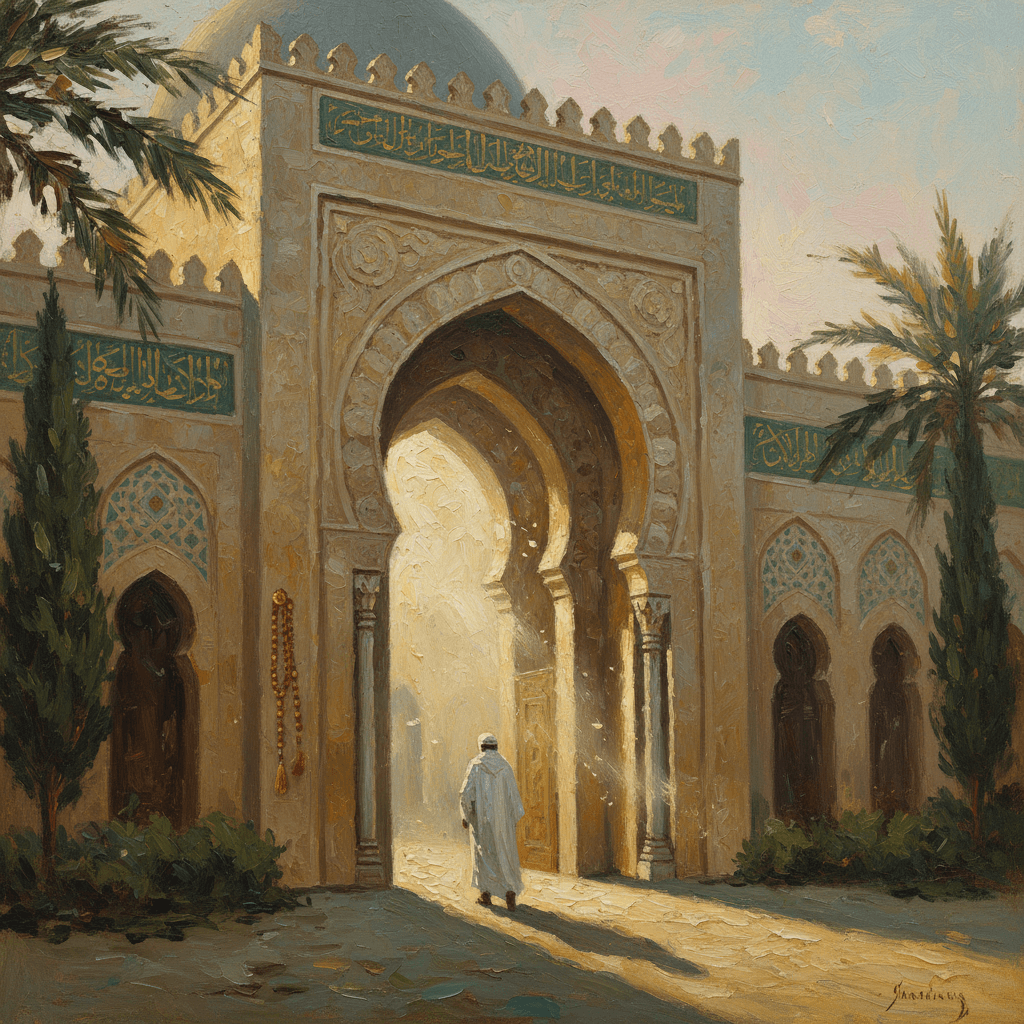
There is a name of Allah that the Prophet ﷺ singled out for special attention — not just by including it in a list, but by actively commanding his Companions to make it a constant in their supplications. That name is Dhul Jalali wal Ikram: the Possessor of Majesty and Honour.
Of all the 99 names of Allah, this is the only one the Prophet ﷺ specifically instructed believers to "persist in saying." That distinction tells you something important about its weight.
What Does Dhul Jalali wal Ikram Mean?
The name consists of three Arabic words:
ذُو (Dhu) — Possessor of, Owner of
الْجَلَالِ (Al-Jalal) — Majesty, greatness, awe-inspiring grandeur
وَالْإِكْرَامِ (wal-Ikram) — And honour, generosity, nobility
Together: ذُو الْجَلَالِ وَالْإِكْرَامِ
Dhul Jalali wal Ikram — "The Possessor of Majesty and Honour"
The two components represent two dimensions of Allah that pull the believer in complementary directions:
Al-Jalal is what humbles you. It is the attribute of absolute greatness that overwhelms the ego, quiets arrogance, and reminds you of your smallness. Allah's jalal is the reason angels cover their faces, mountains tremble when He reveals His glory, and the Prophet Musa عليه السلام fell unconscious when he caught a glimpse of what the mountain could not bear.
Al-Ikram is what draws you close. It is the attribute of generous honour and noble treatment — the same root as karama (dignity) and karam (generosity). Despite His infinite majesty, Allah honours His creation with gifts, mercy, attention, and love. The One who could ignore His slaves entirely instead listens to every whispered dua.
The pairing is not accidental. It describes a relationship: you approach Allah with awe (jalal) and He responds to you with honour (ikram).
The Quranic Verses
Dhul Jalali wal Ikram appears twice in the Quran, both in Surah Ar-Rahman:
وَيَبْقَىٰ وَجْهُ رَبِّكَ ذُو الْجَلَالِ وَالْإِكْرَامِ
"But there will remain the Face of your Lord, Possessor of Majesty and Honour."
— (Surah Ar-Rahman, 55:27)
This verse comes immediately after the declaration that everything in existence will perish. The empires, the mountains, the stars — all of it will end. Only the Face of Allah, characterised by jalal and ikram, will remain. It is the theological foundation of zuhd (detachment from the world): if everything will go, why build your life around it?
The second occurrence closes the surah:
تَبَارَكَ اسْمُ رَبِّكَ ذِي الْجَلَالِ وَالْإِكْرَامِ
"Blessed is the name of your Lord, Possessor of Majesty and Honour."
— (Surah Ar-Rahman, 55:78)
Tabaraka — blessed, exalted, abundant in goodness. The entire surah catalogues Allah's blessings to creation (fa bi-ayyi ala'i rabbikuma tukadhdhibani — "which of your Lord's favours will you deny?") and closes by affirming that the source of all of it, Allah Himself, is exalted and possesses majesty and honour.
The Prophetic Command to Repeat This Name
The most significant aspect of Dhul Jalali wal Ikram is the explicit Prophetic instruction attached to it. The Prophet ﷺ told his Companions:
"Persist in saying: Ya Dhul Jalali wal Ikram."
— (At-Tirmidhi 3524, classified as sahih)
The word used — alizzuu — means to cling to, to be persistent with, to make it your habit. This is the same instruction logic that underlies all great Islamic habit-building: consistency in small deeds is more beloved to Allah than large but irregular ones.
He also said, as narrated by Mu'adh ibn Jabal: "Shall I not teach you a dua by which Allah will grant you relief from your worries of this world and the next?" Then he taught: Ya Dhul Jalali wal Ikram. (Ibn Hibbaan, authenticated by Al-Albani)
How Dhul Jalali wal Ikram Transforms Your Spiritual Life
Understanding this name changes how you approach your day. When you feel anxious about provision, reputation, or the future — you have forgotten al-Jalal. You are treating your circumstances as bigger than the One who controls them.
When you feel too ashamed or small to make dua — you have forgotten al-Ikram. You are treating your sins as bigger than Allah's generosity toward His creation.
The name holds both truths simultaneously:
- He is so great that your problems are genuinely small before Him.
- He is so generous that even the smallest request from the smallest servant is heard and honoured.
This is the spiritual state the 99 names of Allah collectively build — a heart that is simultaneously humbled and filled with hope.
Incorporating It Into Your Daily Dhikr
The Prophet ﷺ gave a direct instruction on how to use this name. Here is a practical daily structure:
After each salah: Add Ya Dhul Jalali wal Ikram to your post-prayer dhikr. Seven or eleven times is a natural addition after your regular tasbih.
When making dua: Begin or end your personal supplications with this name. It opens the dua from a position of recognition — acknowledging who you are speaking to before stating what you need.
When feeling overwhelmed: Replace anxious self-talk with this name. Say it repeatedly — ten or twenty times. The act of naming Allah's majesty and generosity is itself a form of spiritual reorientation.
Before sleeping: Recite it as part of your evening adhkar. The last thing your conscious mind rests on matters.
For a deeper practice, study the benefits of reciting the 99 names of Allah and the practical guide to memorizing the 99 names — Dhul Jalali wal Ikram becomes most powerful when you understand it within the full fabric of the divine names.
Build a Daily Dhikr Habit Around the Names of Allah
DeenBack helps you track your dhikr streaks and daily practice — including specific names like Dhul Jalali wal Ikram that the Prophet ﷺ instructed us to persist in saying.


Free download. Premium features available in-app.
Signs of Progress
How do you know that Dhul Jalali wal Ikram is working in your heart?
You feel genuinely humbled in salah. Not performed humility, but an actual sense of smallness before the One possessing jalal.
Your duas become more honest. When you know Allah's ikram, you stop pretending you are okay. You ask for what you actually need, because you know He will not be bothered by the size of the request.
Difficulties stop feeling final. Things that once felt catastrophic — a failed exam, a broken relationship, a financial loss — begin to feel proportional. Next to jalal, nothing in your life is as enormous as it seems.
Gratitude becomes easier. The ikram — the lavish generosity of a God who honours His creation — becomes visible in what you previously took for granted.
Common Questions
Can I make a specific dua using this name, or just repeat it?
Both. Repeating the name itself is a form of dhikr (remembrance). You can also phrase specific requests: "Ya Dhul Jalali wal Ikram, ease this difficulty for me" or "Ya Dhul Jalali wal Ikram, grant me tawbah and Your mercy."
Is there a specific count recommended for this dhikr?
The Prophet ﷺ said to "persist" — which scholars interpret as making it a consistent habit rather than specifying a count. Common practices include 7, 11, 33, or 100 repetitions. The most important number is whichever one you maintain daily.
How is this name different from Al-Aziz or Al-Jabbar?
Al-Aziz and Al-Jabbar emphasise power and might. Dhul Jalali wal Ikram is unique in combining majesty with generosity toward creation — it is not just awe-inspiring greatness, but greatness paired with honour shown to you specifically. That combination is why the Prophet ﷺ gave it special emphasis.
The Name That Changes Your Relationship With Allah
Most of our spiritual struggles come from a skewed picture of Allah — too demanding and too distant, or too familiar and not great enough. Dhul Jalali wal Ikram corrects both distortions.
He is the Possessor of Majesty — greater than anything that is worrying you right now.
He is the Possessor of Honour — generous enough to hear you, honour you, and respond to you.
Begin tonight. Say Ya Dhul Jalali wal Ikram after your next salah. Mean it. Let the words do their work on the heart.
Track Your Journey Through the Names of Allah
DeenBack makes it easy to build consistent dhikr practices around the most powerful names — helping your heart absorb what your tongue repeats.
Free download. Premium features available in-app.
Frequently Asked Questions
What does Dhul Jalali wal Ikram mean?
Dhul Jalali wal Ikram means 'Possessor of Majesty and Honour' or 'Lord of Majesty and Generosity.' It refers to Allah's absolute greatness (jalal) combined with His boundless generosity and honour toward His creation (ikram).
How many times is Dhul Jalali wal Ikram mentioned in the Quran?
The name Dhul Jalali wal Ikram appears twice in the Quran — in Surah Ar-Rahman (55:27) and Surah Ar-Rahman (55:78). Both occurrences emphasise that Allah alone possesses true majesty and honour.
What is the benefit of repeating Dhul Jalali wal Ikram in dhikr?
The Prophet ﷺ specifically commanded his Companions to repeat this name in supplication, saying: 'Persist in saying Ya Dhul Jalali wal Ikram.' It is a dua that acknowledges Allah's absolute sovereignty while requesting His generous mercy.
Is Dhul Jalali wal Ikram one of the 99 names of Allah?
Yes. It is considered one of the most exalted of the 99 names — and notably, it is the only name among them that the Prophet ﷺ specifically instructed believers to persist in saying during supplication.
What is the difference between jalal and ikram in Allah's name?
Jalal (جَلَال) refers to Allah's majesty, greatness, and awe-inspiring power — the attribute that humbles creation. Ikram (إِكْرَام) refers to His generosity, honour, and nobility — the attribute that draws creation toward Him with hope.