
- Published on
Al-Khaliq Meaning: The Creator — Understanding This Name of Allah
- Authors

- Name
- Ahmad
- Role
- Senior Marketing Manager, Islamic education • Deen Back
بِسْمِ اللهِ الرَّحْمٰنِ الرَّحِيْمِ
In the name of God, the Most Gracious, the Most Merciful.
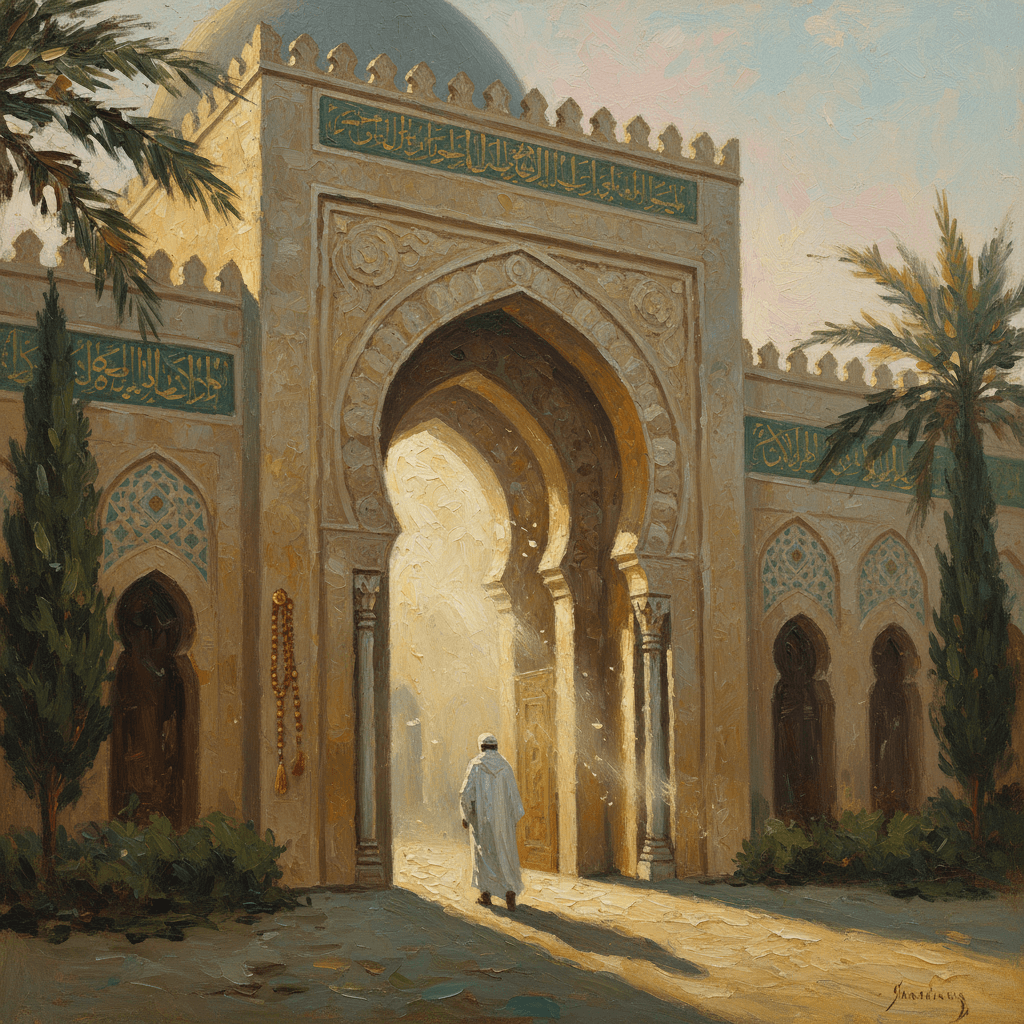
Every time you look at your hands, at a child's face, at the pattern on a leaf — you are looking at something that came from nothing. Not from raw materials rearranged. Not from a recipe already written in physics. From nothing, into existence, by Allah.
That act of creation — absolute, effortless, and continuous — is what the name Al-Khaliq points to. It is one of the most reality-shifting of Allah's names if you spend time with it properly.
What Al-Khaliq Actually Means
الخَالِقُ
Al-Khaliq
"The Creator" / "The One who creates from nothing with precise measure"
The root kh-l-q (خ-ل-ق) in Arabic is rich with meaning. It carries the sense of:
- Creating (khalq) — bringing into existence
- Measuring and proportioning (qadr) — creation is never random, always precise
- Ordaining (taqdir) — each created thing has its measure and its time
When you say Allah is Al-Khaliq, you are not just saying He made things. You are saying He made them with perfect proportion, perfect wisdom, and absolute intention. Nothing is an accident. Nothing is improvised.
The Quran states it explicitly:
اللَّهُ خَالِقُ كُلِّ شَيْءٍ وَهُوَ عَلَىٰ كُلِّ شَيْءٍ وَكِيلٌ
Allahu khaliku kulli shayin wa huwa 'ala kulli shayin wakeel
"Allah is the Creator of all things, and He is the Maintainer of all things."
— (Surah Az-Zumar, 39:62)
Kulli shayin — every single thing. Not most things. Not the important things. Everything. Including the things you are most anxious about. Including the things you cannot see. Including you.
The Three Creation Names of Allah in Surah Al-Hashr
One of the most powerful passages in the Quran about Allah's creative nature appears at the end of Surah Al-Hashr (59:24):
هُوَ اللَّهُ الْخَالِقُ الْبَارِئُ الْمُصَوِّرُ
Huwallahul-khaliqul-bari'ul-musawwiru
"He is Allah, the Creator, the Originator, the Fashioner."
Three names in sequence, each adding a layer:
- Al-Khaliq — the Creator who decrees and designs
- Al-Bari — the Originator who brings forth the creation from nothingness
- Al-Musawwir — the Fashioner who gives each creation its unique shape and form
Your face, your voice, the specific arrangement of your personality, your capacity for love and for failure — all of this passed through all three stages. You were decreed (Al-Khaliq), originated (Al-Bari), and shaped (Al-Musawwir) by Allah.
This is not just theology. It is deeply personal.
Why Modern Muslims Struggle to Feel This Name
We live in an age that has explanations for almost everything. The Big Bang explains the origin of the universe. Evolution explains the diversity of life. Neuroscience explains consciousness. Chemistry explains emotion.
And so many Muslims move through life with a kind of low-level spiritual numbness — intellectually believing in Allah as Creator but functionally living as if the universe runs itself.
The nafs loves this arrangement. A self-sufficient universe requires no surrender, no tawakkul, no genuine dependence on Allah. You can keep your spiritual life in a compartment while the rest of your life operates on secular autopilot.
Al-Khaliq breaks this arrangement if you let it. Because every single explanation — every causal chain, every physical law, every evolutionary process — operates within a framework that Allah himself created. The Big Bang happened. Allah created the conditions for the Big Bang to happen. This is not a God-of-the-gaps argument. It is the recognition that creation is not a one-time act — it is continuous. Every photon, every heartbeat, every thought is maintained in existence by Al-Khaliq right now.
How to Practice Living With Al-Khaliq Daily
Say "Ya Khaliq" in your dua. Calling on Allah by this name when asking for something new — a new beginning, a change in character, a door you cannot open — is a powerful act. You are asking the One who creates from nothing to create in your life what does not yet exist.
Use it as a mirror for arrogance. Every time you feel pride in your intelligence, your achievement, or your beauty — remember Al-Khaliq. You did not create your mind. You did not create the talent. You did not create the connections that got you there. You arrived into a body and a context you did not choose, with capacities you did not earn. Gratitude follows naturally.
Use it as an antidote to despair. Every time you think "I cannot change — this is just who I am" — remember that the One who created you from nothing can create in you what was not there before. Tawbah, character change, spiritual growth — these are all acts of creation. You cannot create them. But you can ask Al-Khaliq to.
Meditate on creation — not abstractly, but specifically. Pick one thing today — an orange, a spider's web, your own heartbeat — and spend two minutes genuinely thinking about the precision required to create it. This is not new-age mindfulness. This is the Quran's repeated instruction: afala yanzuroon — do they not look? (Surah Al-Ghashiyah, 88:17)
Connect the name to your salah. In sujood, you are physically expressing what Al-Khaliq means — you, the created, prostrating before the Creator. Let the name be in your mind when you go down. This is what we mean by khushu — presence with meaning.
Learn the Names of Allah, Change How You Live
DeenBack helps you build daily dhikr and reflection habits — including the 99 Names of Allah — so that theological truth becomes lived spiritual reality, not just information.


Free download. Premium features available in-app.
Signs That Al-Khaliq Is Becoming Real for You
- Arrogance loses its grip — you find it harder to take excessive pride in things you did not ultimately create
- Despair loses its grip — you know that what cannot be created by human effort can still be created by Allah
- You start noticing creation more — not as background scenery but as active evidence of an active Creator
- Your duas become more personal: "Ya Khaliq, create in my heart what I need to love You better"
- You feel a different quality of submission in salah — prostration feels like what it is, not just a posture
Common Questions
Is there a specific dhikr using Al-Khaliq? There is no specifically prescribed dhikr for Al-Khaliq from the Sunnah. You can include it in your personal dua: "Ya Khaliq, Ya Bari, Ya Musawwir — fashion my heart toward Your obedience." Reciting the 99 names of Allah in the morning and evening is a general practice. See benefits of reciting 99 names of allah for more.
Is the human act of creating — art, children, buildings — also called khalq? Yes, the word khalq is used in Arabic for human creation, but always in a qualified sense. Human creation always works with existing material. Only Allah's khalq is absolute — from nothing, by command alone. In the Quran, the word for human creative acts more commonly uses san'a (craftsmanship) rather than khalq.
How is Al-Khaliq different from Al-Qadir (the All-Powerful)? Al-Qadir speaks to Allah's ability and power to do anything. Al-Khaliq speaks to the specific act of creating. You might say Al-Qadir is the capacity; Al-Khaliq is the specific exercise of that capacity in bringing creation into existence.
The Name That Changes Everything
Most of our spiritual problems — arrogance, despair, anxiety, ingratitude — trace back to forgetting who created us and who maintains us.
When Al-Khaliq becomes real to you, arrogance has nowhere to stand. Despair has no logic. Anxiety about what you cannot control dissolves when you realize that the One in control is the same One who created control itself.
Spend one week making Al-Khaliq a word you say daily — in dua, in reflection, in salah. Notice what shifts.
Related reading: al-malik-meaning, al-aziz-meaning, and names-of-allah-for-protection for other Names that transform daily life.
Make the Names of Allah Part of Your Daily Worship
DeenBack builds the daily habit of dhikr and remembrance — so you carry Al-Khaliq and His other names with you through the entire day, not just in moments of crisis.
Free download. Premium features available in-app.
Frequently Asked Questions
What does Al-Khaliq mean?
Al-Khaliq (الخالق) means The Creator. It comes from the root kh-l-q, meaning to create, measure, and proportion. Unlike human creativity, which works with existing materials, Allah's creation is from nothing — ex nihilo. This name emphasizes that everything that exists was brought into being solely through Allah's will and power.
Where is Al-Khaliq mentioned in the Quran?
Al-Khaliq appears multiple times in the Quran. Most notably in Surah Al-Hashr (59:24): 'He is Allah, the Creator (Al-Khaliq), the Originator (Al-Bari), the Fashioner (Al-Musawwir). To Him belong the most beautiful names.' Also in Surah Az-Zumar (39:62): 'Allah is the Creator of all things, and He is the Maintainer of all things.'
What is the difference between Al-Khaliq and Al-Bari?
Al-Khaliq refers to Allah's act of creation in terms of planning, measuring, and decreeing. Al-Bari refers to the bringing of creation into distinct existence — the origination. Al-Musawwir refers to the shaping and form-giving. All three names appear together in Surah Al-Hashr 59:24, showing different dimensions of the same act of creation.
How do you use Al-Khaliq in dua?
You can call on Allah through this name when asking for help with new beginnings, creative endeavors, or when you feel that your life needs reshaping. Say: 'Ya Khaliq, create in my heart the love of what pleases You' or 'Ya Khaliq, fashion my character upon the way of Your Prophet.'
What is the benefit of reflecting on Al-Khaliq?
Reflecting on Allah as Al-Khaliq dissolves arrogance, builds gratitude, and removes the anxiety of feeling in control. When you truly internalize that Allah created everything — including you, your abilities, your flaws, and your potential — you stop taking credit for what is not yours and stop despairing over what you cannot create yourself.