
- Published on
Al-Haqq Meaning: Understanding the Name of Allah That Is Ultimate Truth
- Authors

- Name
- Ahmad
- Role
- Senior Marketing Manager, Islamic education • Deen Back
بِسْمِ اللهِ الرَّحْمٰنِ الرَّحِيْمِ
In the name of God, the Most Gracious, the Most Merciful.
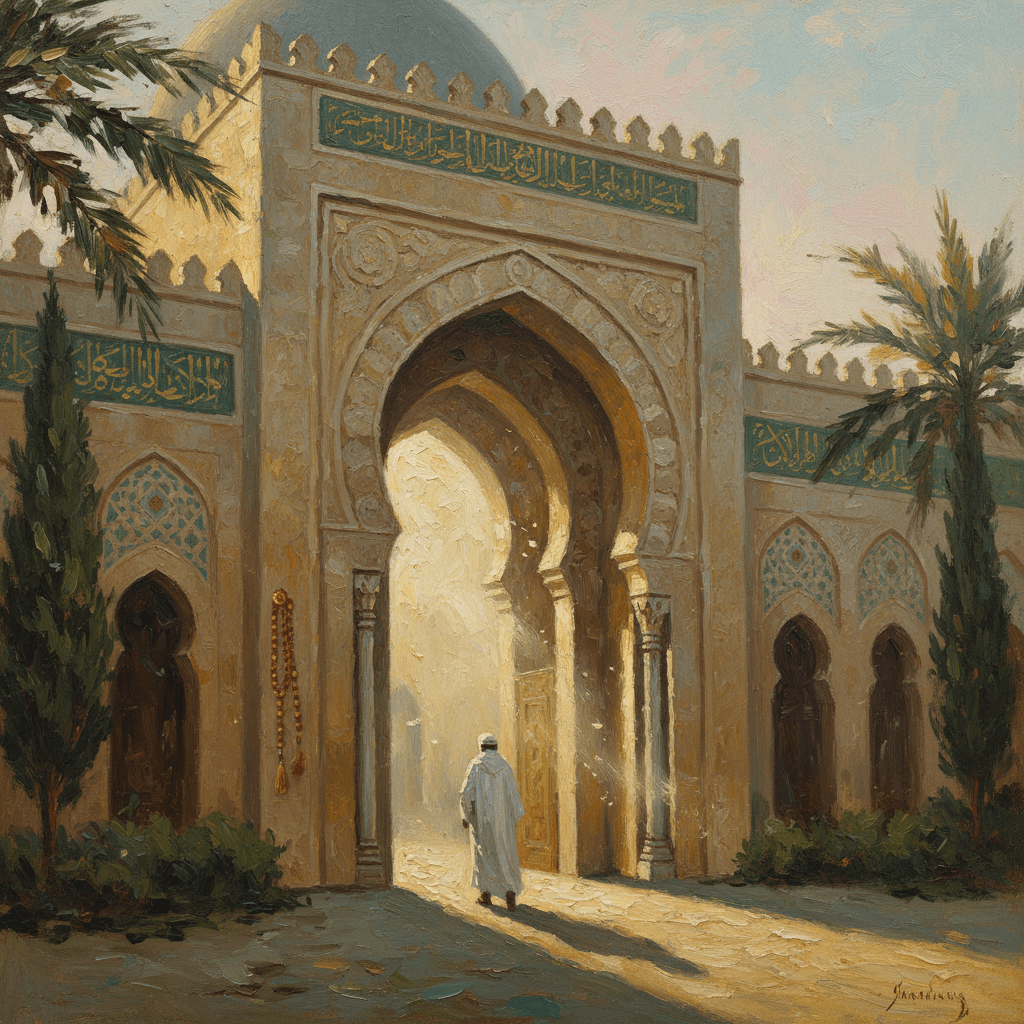
We live in a world saturated with claims. Everyone has a truth. Every brand, every ideology, every influencer presents their version of reality. And the more noise there is, the harder it becomes to know what is actually real.
Then you encounter the name Al-Haqq — and it cuts through everything.
What Al-Haqq Actually Means
Al-Haqq (الحق) is derived from the root h-q-q (ح-ق-ق), which means that which is firm, established, and necessarily real. It describes something that cannot be otherwise — that is what it is by nature, not by circumstance.
When applied to Allah, Al-Haqq means:
He is the only Self-Existing Reality. Every created thing exists because Allah caused it to exist and sustains it. If Allah withdrew His sustaining power, everything would cease. Allah's existence, by contrast, is not dependent on anything — He was before the universe, and He will be after it. That uncaused, self-sustaining existence is Haqq.
His word is the standard of truth. Allah says in Surah Al-An'am (6:73): "His word is the truth (Haqq), and to Him belongs the dominion the Day the Horn is blown." Every promise Allah makes is Haqq — it will happen exactly as stated. Every warning is Haqq — not a possibility but a certainty.
Everything besides Him is relative. The Prophet ﷺ said in his famous Tahajjud dua: "Anta al-Haqq, wa qawluka al-Haqq, wa liqa'uka Haqq" — "You are the Truth, Your word is truth, and the meeting with You is truth." (Sahih Bukhari 1120). This places Allah's nature, His speech, and the Day of Judgment in the same category: all of them are Haqq — all of them are going to happen exactly as described.
Think of it this way: if your existence is like a candle flame, Allah's existence is like the sun. The flame exists — but it depends on the wax, the oxygen, the match. The sun just is. Al-Haqq is that kind of existence.
Why Modern Muslims Struggle to Live by This Name
We live in an age of relativism — the idea that truth is subjective, personal, and negotiable. The nafs absorbs this without noticing. We start applying relativism to the deen: "This sin is less serious for me because of my circumstances." "The ruling might have been different if scholars knew about modern life." "What's haram for most people might not apply to me."
This is the nafs talking in the language of the culture — and Al-Haqq is the antidote.
When you internalize that Allah is Al-Haqq, you internalize that His rulings are not cultural suggestions. His promises in the Quran are not encouraging metaphors. His descriptions of the Day of Judgment are not frightening stories — they are Haqq, accurate descriptions of what will actually happen.
There is a second struggle: consistency between belief and action. Most Muslims believe Allah's word is truth — but live as if the concerns of this dunya are more real and urgent. We say we believe in the akhira but act as if this world is the only real thing. That gap is the nafs avoiding Al-Haqq.
How to Connect with Al-Haqq in Daily Spiritual Life
Recite the Prophet's Tahajjud dua: The single most direct way to invoke Al-Haqq is through the dua the Prophet ﷺ himself used when rising for night prayer:
اللَّهُمَّ لَكَ الْحَمْدُ أَنْتَ نُورُ السَّمَوَاتِ وَالأَرْضِ وَمَنْ فِيهِنَّ، وَلَكَ الْحَمْدُ أَنْتَ قَيِّمُ السَّمَوَاتِ وَالأَرْضِ وَمَنْ فِيهِنَّ... أَنْتَ الْحَقُّ وَوَعْدُكَ الْحَقُّ
"O Allah, praise is Yours. You are the Light of the heavens and the earth... You are the Truth and Your promise is truth."
— (Sahih Bukhari 1120)
Begin Tahajjud with this dua. It is the Prophet ﷺ's own way of orienting himself before standing in night prayer.
Use it as a lens for truthfulness in your own life. Al-Haqq calls you to be a person of truth — in your words, your dealings, your commitments. The Prophet ﷺ said: "Truthfulness leads to righteousness, and righteousness leads to Paradise." (Sahih Bukhari 6094) Being conscious of Allah as Al-Haqq creates a natural gravity toward honest speech and honest living.
When tempted to rationalize a sin, invoke this name. Say Ya Al-Haqq and remind yourself: Allah's ruling on this is the truth. My nafs's justification is not. This simple reorientation in the moment of temptation interrupts the rationalization loop.
Connect to it during Quran recitation. When you read a ruling, a promise, or a description of the akhira in the Quran, pause and say internally: this is Haqq. This is not a story — this is the most accurate description of reality available to a human being.
Build the Daily Habits That Connect You to Al-Haqq
DeenBack helps you track dhikr, dua, and Quran habits — the consistent practice that moves the knowledge of Allah's names from the mind into the heart and the day.


Free download. Premium features available in-app.
Signs That Al-Haqq Is Shaping Your Character
Progress in living by this name shows up in practical ways:
- Your speech becomes more honest — you stop exaggerating, qualifying things unfairly, or saying what people want to hear rather than what is true
- The akhira starts feeling more real, not just more important — it has weight in your daily decision-making
- Rationalizations for sins decrease — you catch them faster and counter them with "but Allah said"
- You find yourself trusting Allah's promises more literally — believing that His provisions, His help, and His judgment are all exactly as described
For deeper engagement with Allah's names, see 99 names of Allah with meaning and asma ul husna benefits. Pairing Al-Haqq with Al-Adl (the Just) — see al adl meaning — gives a fuller picture of how Allah's truth operates alongside His perfect justice.
Common Questions
Is Al-Haqq one of the 99 names of Allah? Yes — it is explicitly listed among the names in the Quran and authenticated in the prophetic tradition. Scholars of Islamic theology ('aqidah) place it among the most fundamental divine names because it speaks to Allah's essential nature, not just His actions.
Can I call on Allah by this name in my personal dua? Absolutely. You can say Ya Haqq or Ya Al-Haqq at any time, in any language that follows the pattern. The Quran invites us to call on Allah by His beautiful names (Quran 7:180).
What is the difference between Al-Haqq and As-Samad? Al-Haqq emphasizes Allah as Ultimate Reality. As-Samad (Surah Al-Ikhlas) emphasizes Allah as the One upon whom everything depends — the Self-Sufficient Master. Both point to the same essential independence and primacy, from different angles.
How does knowing Al-Haqq help with grief or loss? Grief often carries with it a feeling that something went wrong — that the loss was a deviation from how things should be. Knowing Allah is Al-Haqq means trusting that His decree is true and right, even when it is painful. It does not remove the grief; it places it in a frame where it can be borne. See also how to be patient islamically for the practical dimension of this trust.
Closing
In a world of competing truths, the Muslim has something rare: a Reality that is not subject to opinion, not up for debate, and not going to change.
Al-Haqq — the Truth — is not a perspective. It is the foundation everything else is measured against.
Let that name change how you approach His rulings, His promises, and the choices you make today.
Know Allah by His Names, Every Single Day
DeenBack helps you build a daily dhikr habit around the names of Allah — from Al-Haqq to Ar-Rahman — so their meanings shape your heart and not just your knowledge.
Free download. Premium features available in-app.
Frequently Asked Questions
What does Al-Haqq mean?
Al-Haqq (الحق) means The Truth — the Absolute, Permanent, and Ultimate Reality. It is one of the 99 names of Allah. Unlike created things that exist temporarily, Allah's existence is the only existence that is self-sustaining and unfailingly real. Calling on Allah as Al-Haqq is calling on the One whose word, promise, and decree cannot be false.
Where is Al-Haqq mentioned in the Quran?
Al-Haqq appears multiple times in the Quran. Allah says: 'That is because Allah is the Truth (Al-Haqq), and what they call upon besides Him is falsehood.' (Quran 22:62) The Prophet ﷺ also used this name in his famous dua when waking for Tahajjud, praising Allah as Al-Haqq.
How do you use Al-Haqq in dua?
The Prophet ﷺ said in his Tahajjud dua: 'Allahumma lakal-hamd, anta nurus-samawati wal-ard... anta al-Haqq, wa qawluka al-Haqq' — 'O Allah, praise is Yours, You are the light of the heavens and the earth... You are the Truth, and Your word is truth.' (Sahih Bukhari 1120) This is a direct Sunnah model for invoking this name.
What is the difference between Al-Haqq and Al-Mubin?
Al-Haqq refers to Allah's essential nature as the Ultimate Reality and Truth. Al-Mubin means the Manifest, the Clear. Together they describe an Allah who is not only truly real but openly, evidently so — the Truth that cannot be hidden. Both names appear in the Quran and can be called upon.
How does reflecting on Al-Haqq help with daily life?
When you know that Allah is Al-Haqq — the only permanent Reality — it relativizes everything else. Difficulties feel less permanent because they are not Haqq (ultimate truth); they are temporary conditions in a temporary world. Promises from Allah feel more trustworthy because His word is the definition of truth. It is a name that builds tawakkul.