
- Published on
How to Be Patient Islamically: Building Sabr as a Daily Discipline
- Authors

- Name
- Ahmad
- Role
- Senior Marketing Manager, Islamic education • Deen Back
بِسْمِ اللهِ الرَّحْمٰنِ الرَّحِيْمِ
In the name of God, the Most Gracious, the Most Merciful.
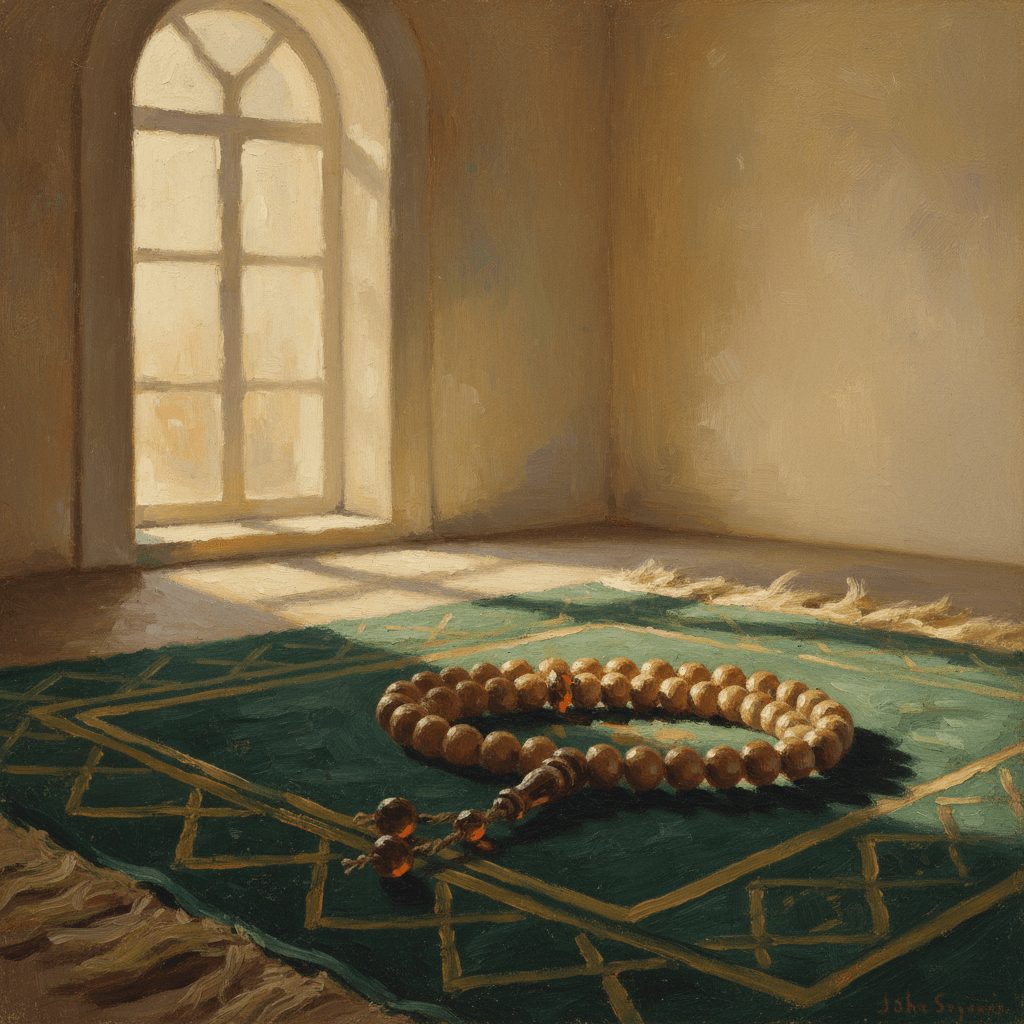
You have probably heard "have patience" hundreds of times in your life. In theory, you know it is right. You know the Quran praises it constantly. You know the Prophet ﷺ emphasized it.
The problem is that none of that knowledge helps much when you are actually in the difficulty. When the waiting is real. When the loss is fresh. When the answer has not come and you are not sure it ever will.
This is the gap between knowing what sabr is and actually building it. This guide is about the second part.
Why This Matters — Sabr Is the Most Rewarded Quality in Islam
Allah says in the Quran:
إِنَّمَا يُوَفَّى الصَّابِرُونَ أَجْرَهُم بِغَيْرِ حِسَابٍ
Innama yuwaffas-sabiruuna ajrahum bighayri hisaab
"Indeed, the patient will be given their reward without account."
— (Surah Az-Zumar, 39:10)
"Without account" is remarkable. Every deed in the Quran is rewarded by a specific multiplier — ten times, seven hundred times. Sabr has no multiplier because the reward is so large it cannot be quantified. This is either the most obscure fact in Islamic knowledge, or the most overlooked.
The Prophet ﷺ also described sabr as "a light" (Sahih Muslim 223) — the only quality in that specific hadith given the metaphor of light rather than armor or shield. Light illuminates the path. Sabr, practiced genuinely, changes how you see everything.
Step-by-Step Guide to Building Sabr
Step 1: Understand What Sabr Actually Requires
Sabr is not "just wait and don't complain." Scholars of tazkiyyah (spiritual purification) define it as three simultaneous restraints:
- Restraining the soul from despair and bitterness
- Restraining the tongue from excessive complaint
- Restraining the body from destructive actions
Notice: none of these are about hiding your feelings from Allah. You can say inna lillahi wa inna ilayhi raji'un — "To Allah we belong and to Him we return" — and cry while saying it. Sabr does not mean no tears. It means no dissolution of trust.
Step 2: Identify Your Specific Test
Sabr in the abstract is easy. Sabr in your specific test is the real practice. Write down what you are currently waiting for or struggling with. Name it. Vague "I need to be more patient" is harder to practice than "I am waiting for a job answer and it is destroying my peace."
The specificity matters because different types of sabr apply to different tests. If you are struggling to maintain worship, that is sabr in obedience. If you are fighting a specific temptation, that is sabr in avoiding sin. If you received difficult news, that is sabr in accepting divine decree. Each has its own tools.
Step 3: Make Dua Before the Test, Not Only During It
The prophetic practice was to seek Allah's help before moments of trial, not only as a response to them. The morning and evening adhkar include supplications for protection and strength that act as pre-emptive shields.
Specifically, the dua:
اللَّهُمَّ إِنِّي أَسْأَلُكَ الصَّبْرَ
Allahumma inni as'aluka s-sabra
"O Allah, I ask You for patience."
Ask for it before you need it. Asking only when you are already failing is harder than building it in advance.
Step 4: Control What You Can, Release What You Cannot
The Prophet ﷺ said: "Be mindful of Allah, and Allah will protect you. Be mindful of Allah, and you will find Him in front of you. If you ask, ask only Allah; if you seek help, seek help only from Allah. Know that if the entire creation were to gather to benefit you with something, they would not benefit you except with what Allah had already written for you." (Sunan At-Tirmidhi 2516)
This is not fatalism. It is a map for directing your energy. Focus your action on what you can influence — effort, decision, prayer, preparation. Release your anxiety about what you cannot — the outcome, the timeline, other people's choices, the decree.
Mixing these up is the source of most sabr failures. Energy poured into what is beyond you generates bitterness. Energy focused on what is within you generates momentum.
Track Your Sabr Practices Daily
DeenBack helps you build the daily worship habits — dhikr, prayer, and Quran — that form the spiritual foundation for genuine patience.


Free download. Premium features available in-app.
Step 5: Increase Salah During Difficulty
Allah says: "O you who believe, seek help through patience and prayer." (Surah Al-Baqarah, 2:153). The two are linked deliberately. The Prophet ﷺ practiced this: when something distressed him, he would go to the prayer.
If you are going through a test, add voluntary prayers. Nawafil salah — two extra units before Fajr, two after Maghrib, Duha prayer, Tahajjud — are not luxuries for the spiritually advanced. They are the specific tool the Quran recommends for moments of hardship.
See how to make tahajjud a habit for a practical entry point.
Step 6: Track the Small Wins of Sabr
Sabr does not announce its victories loudly. A day you did not complain, a moment you paused before reacting, a decision to make dhikr instead of venting — these are real. Track them somehow. Not out of pride, but because the nafs needs visible evidence that the practice is working.
Step 7: Study the Examples
The Quran gives you case studies. Prophet Ayyub (Job) — who lost health, wealth, and family and still praised Allah. Prophet Yaqub (Jacob) — who lost his son Yusuf and prayed with patience while weeping. Prophet Muhammad ﷺ — who buried children, was expelled from his city, and saw his companions tortured without abandoning the mission.
These are not fables. They are real people who built sabr under real conditions that were harder than yours. Study them. See what is sabr in Islam for the complete framework behind this quality.
Making It Stick — The Habit Science of Patience
The Prophet ﷺ said: "Whoever tries to be patient, Allah will make him patient." (Sahih Bukhari 1469)
Tries to be patient. Not "whoever is naturally patient." This is the explicit Prophetic statement that sabr is built, not born. And like any skill, it is built through consistent, deliberate practice.
Three principles for making sabr habits stick:
- Anchor sabr practices to your salah times. Five times a day, you already interrupt the nafs for Allah. This is sabr in practice. Build dhikr and dua around salah so the muscle gets practiced continuously.
- Small sabr builds big sabr. Practicing patience in a minor inconvenience — traffic, a slow person in line, a mistake at work — trains the same muscle you need for major tests. Do not wait for the big test to start practicing.
- Make tawbah quickly after impatience. When you slip — complain, panic, snap — return immediately with astaghfirullah. Rapid return after failure is the most underrated sabr skill.
Common Mistakes to Avoid
Treating sabr as the absence of emotion. Crying while making sabr is allowed. Feeling pain while making sabr is allowed. What sabr restrains is the dissolution of trust — the leap from "this is hard" to "Allah has abandoned me."
Waiting for the test to end before feeling successful. The reward for sabr does not wait for the outcome. If you maintained dignified patience during the trial, the ajr is earned regardless of whether the situation resolved the way you wanted.
Comparing your test to others. The nafs compares badly: "Other people have worse problems, so I shouldn't be struggling with this." Or: "My problems are too specific for anyone to understand." Neither comparison helps. Your test is calibrated for you. Your sabr is built in your test.
Common Questions
What if I feel angry at Allah during a trial?
This feeling is not kufr. Expressing pain to Allah is allowed — even the Prophets did it. The line is complaining about Allah to other people, or allowing the pain to become settled bitterness or denial of His wisdom. If you are feeling the pain and still turning toward Allah with it, you are practicing sabr even while struggling.
How long does it take to build genuine patience?
Sabr compounds over time like a muscle. Practitioners who have built it report that what used to break them for days now passes in hours. The timeline is months and years, not days. Start where you are.
Is there a dua specifically for patience under a specific type of hardship?
See dua for patience for a collection of authentic supplications matched to different trial situations.
Closing — Start Today, Not Tomorrow
The test you are in right now is not a delay to your growth. It is the medium through which the growth happens. Every day you maintain sabr during it is adding to the unlimited account that Allah has promised the patient.
You do not need to feel patient to begin practicing it. You only need to choose, today, to not dissolve.
Start with the dua. Add the extra salah. Track the small moments. And trust that the One who promised unlimited reward for the patient is watching every single one of them.
Build the Daily Habits That Make Sabr Possible
DeenBack supports your daily Islamic practice — salah tracking, dhikr streaks, and Quran habits — the foundation that genuine patience is built on.
Free download. Premium features available in-app.
Frequently Asked Questions
What is sabr in Islam?
Sabr (صبر) means patience, but Islamic scholars define it more precisely as restraining the soul from panic, restraining the tongue from complaining, and restraining the body from destructive action — while continuing to act rightly. It is active, not passive. The Quran mentions sabr over 90 times, making it one of the most emphasized qualities in the deen.
What are the three types of sabr?
Scholars categorize sabr into three types: sabr in obeying Allah (persisting in acts of worship even when it is difficult), sabr in avoiding sin (restraining the nafs from what is forbidden), and sabr in accepting Allah's decrees (remaining steady during hardship without bitterness or despair). All three require active effort.
What does the Quran say about patience?
The Quran says: 'O you who believe, seek help through patience and prayer. Indeed, Allah is with those who are patient.' (2:153). It also promises unlimited reward: 'Indeed, the patient will be given their reward without account.' (39:10). Sabr is one of the few deeds with no fixed multiplication — it goes to infinity.
How is Islamic patience different from just enduring?
Passive endurance simply lets time pass. Islamic sabr involves three active components: acknowledging that the trial comes from Allah, choosing not to complain or panic, and continuing to worship and act rightly despite the difficulty. A person practicing true sabr is not just surviving the test — they are actively worshipping within it.
What is the dua for patience in Islam?
One of the most powerful duas for patience is: 'Allahumma inni as'aluka s-sabra wa a'udhu bika mina l-jaza'' — O Allah, I ask You for patience and I seek refuge in You from impatience and panic. (Referenced in various hadith collections.) Another is the dua of Prophet Ayyub: 'Rabbi anni massani ad-durru wa anta arhamur-rahimeen.' (Surah Al-Anbiya, 21:83)