
- Published on
What to Say When You Make a Mistake in Islam
- Authors

- Name
- Ahmad
- Role
- Senior Marketing Manager, Islamic education • Deen Back
بِسْمِ اللهِ الرَّحْمٰنِ الرَّحِيْمِ
In the name of God, the Most Gracious, the Most Merciful.
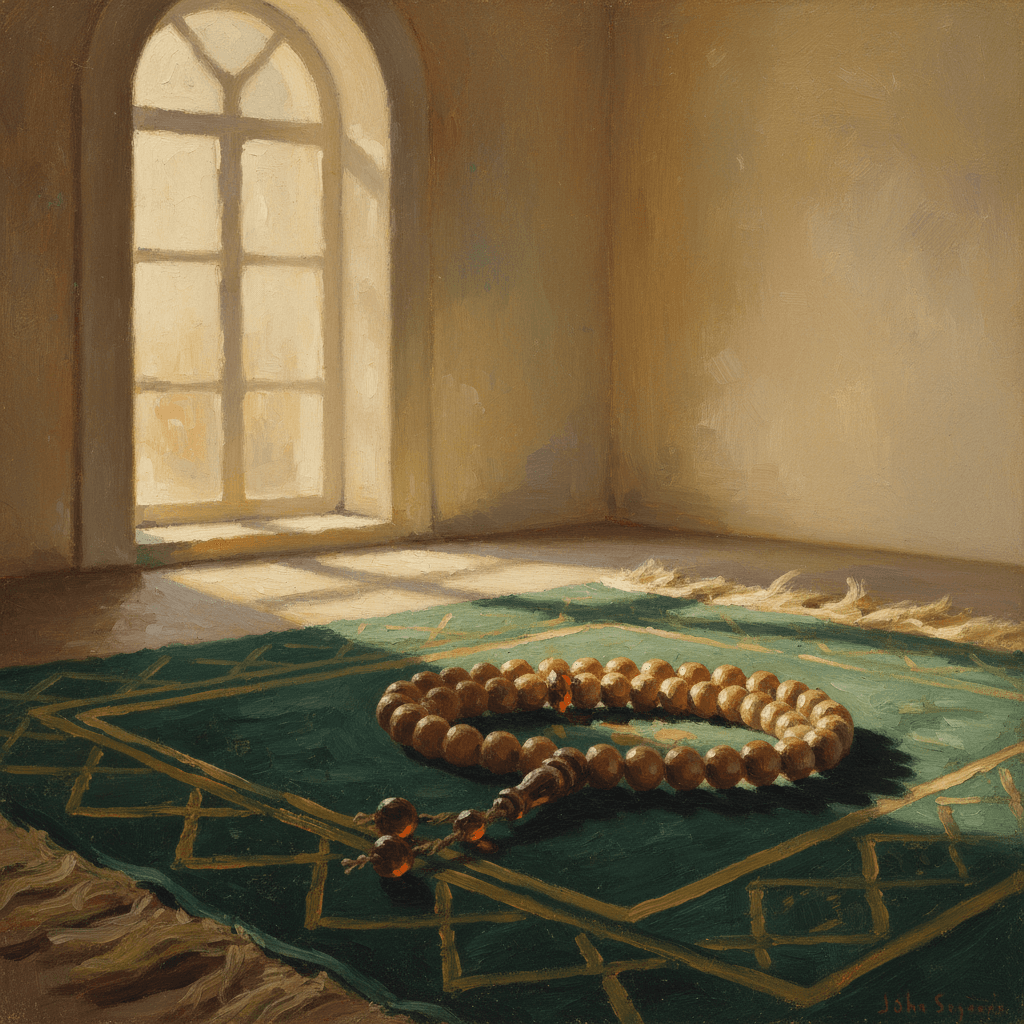
You did the thing you said you would not do again.
Maybe you lost your temper. Maybe you clicked on something you should not have. Maybe you missed salah — again. Maybe you hurt someone with your words and the look on their face told you immediately that you had gone too far.
The next few seconds are critical. What you say — and what you do — in those seconds shapes whether the mistake becomes a turning point or a pit you spiral into.
Islam gives you specific words for this moment. Words that have carried the Prophet ﷺ, the Companions, and every struggling Muslim since.
The First Thing to Say
Before anything else — the moment you realize you have made a mistake — say:
أَسْتَغْفِرُ اللَّهَ
Astaghfirullah
"I seek Allah's forgiveness."
This is not a ritual phrase or a magic formula. It is a turning of the face. The Arabic root ghafara (غفر) means to cover, to shield, to forgive — as in a helmet that covers and protects. When you say Astaghfirullah, you are asking Allah to cover your mistake and protect you from its consequences.
The Prophet ﷺ said:
مَنْ قَالَ أَسْتَغْفِرُ اللَّهَ الَّذِي لَا إِلَهَ إِلَّا هُوَ الْحَيَّ الْقَيُّومَ وَأَتُوبُ إِلَيْهِ غُفِرَ لَهُ وَإِنْ كَانَ فَرَّ مِنَ الزَّحْفِ
Man qala astaghfirullaha alladhi la ilaha illa huwal-hayyul-qayyumu wa atubu ilayhi ghufira lahu wa in kana farra minal-zahf
"Whoever says: I seek forgiveness from Allah, there is no god but Him, the Ever-Living, the Sustainer, and I repent to Him — will be forgiven, even if he fled from battle."
Even something as serious as deserting in battle — one of the major sins — is covered by sincere istighfar with this formula.
For the full meaning and power of this phrase, see astaghfirullah meaning.
The Follow-Up — The Sayyid al-Istighfar
For a serious mistake, the Prophet ﷺ taught what is called the Master of Forgiveness — Sayyid al-Istighfar:
اللَّهُمَّ أَنْتَ رَبِّي لَا إِلَهَ إِلَّا أَنْتَ خَلَقْتَنِي وَأَنَا عَبْدُكَ وَأَنَا عَلَى عَهْدِكَ وَوَعْدِكَ مَا اسْتَطَعْتُ أَعُوذُ بِكَ مِنْ شَرِّ مَا صَنَعْتُ أَبُوءُ لَكَ بِنِعْمَتِكَ عَلَيَّ وَأَبُوءُ لَكَ بِذَنْبِي فَاغْفِرْ لِي فَإِنَّهُ لَا يَغْفِرُ الذُّنُوبَ إِلَّا أَنْتَ
Allahumma anta rabbi la ilaha illa anta, khalaqtani wa ana 'abduk, wa ana 'ala 'ahdika wa wa'dika mastata't, a'udhu bika min sharri ma sana't, abu'u laka bi ni'matika 'alayya wa abu'u laka bidhanbiy, faghfir li fa innahu la yaghfirudh-dhunuba illa ant
"O Allah, You are my Lord. There is no deity but You. You created me and I am Your servant. I am upon Your covenant and promise as best I can. I seek Your refuge from the evil of what I have done. I acknowledge Your blessings upon me and I acknowledge my sin. So forgive me, for none forgives sins but You."
The Prophet ﷺ said: whoever says this during the day with firm belief and dies that day before evening will be among the people of Jannah. The same for the night. This is not a slight dua — it is a complete act of turning back to Allah.
The Complete Act of Tawbah
Saying the words is step one. Tawbah — complete repentance — requires more:
1. Genuine remorse (nadam) Not performance of sadness, but actual pain in the heart about having done what you did. The Prophet ﷺ said: "Regret is tawbah." (Ibn Majah 4252). If you do not feel regret yet, ask Allah to put it in your heart.
2. Stopping the sin immediately Tawbah while still doing the thing you are asking forgiveness for is not valid tawbah. If you cannot stop immediately for some reason, intend to stop at the earliest opportunity.
3. Firm intention not to return You do not need to guarantee that you will never sin again — that would be claiming perfection. You need a genuine intention in this moment to not return. If you slip again, you make tawbah again. The key is sincerity each time.
4. Restoring others' rights (if applicable) If your mistake involved someone else — you lied to them, hurt them, took something from them — tawbah includes making it right with them. This is a condition the Quran is clear about.
The full guide to sincere tawbah covers this in depth. And the dua for repentance has additional supplications for different situations.
Make Istighfar a Daily Habit, Not Just a Crisis Response
DeenBack helps you track your daily dhikr including istighfar — so you are regularly returning to Allah before mistakes accumulate, not just scrambling to clean up afterward.


Free download. Premium features available in-app.
What Shaytan Tells You After a Mistake
One of Shaytan's most effective strategies is not convincing you to sin — it is convincing you to despair after sinning.
The internal voice that says: "You did it again. You are hopeless. What is the point of praying or making dua when you just keep failing?" — that is not your conscience. That is waswas, and it runs in the opposite direction from what Allah tells you.
Allah says:
قُلْ يَا عِبَادِيَ الَّذِينَ أَسْرَفُوا عَلَىٰ أَنفُسِهِمْ لَا تَقْنَطُوا مِن رَّحْمَةِ اللَّهِ ۚ إِنَّ اللَّهَ يَغْفِرُ الذُّنُوبَ جَمِيعًا ۚ إِنَّهُ هُوَ الْغَفُورُ الرَّحِيمُ
"Say: O My servants who have transgressed against themselves — do not despair of the mercy of Allah. Indeed, Allah forgives all sins. Indeed, it is He who is the Forgiving, the Merciful."
— (Surah Az-Zumar, 39:53)
All sins. The verse says all sins. The only condition is returning to Allah and not associating partners with Him.
Despair is the one place tawbah cannot reach — not because Allah will not forgive, but because the person has stopped asking.
After the Mistake — What to Do Next
Once you have said the words of istighfar and made your intention for tawbah, follow up with a good deed:
وَأَتْبِعِ السَّيِّئَةَ الْحَسَنَةَ تَمْحُهَا
"Follow up a bad deed with a good deed and it will erase it."
Give sadaqah. Pray two rakats. Say a hundred subhanallah. Do one act of kindness. The good deed does not need to be grand — it needs to be sincere and immediate.
And then look at the bigger picture: what made this mistake easier? What habit, environment, or pattern set you up for this? The guide to stopping the same sin repeatedly addresses this directly — because the words of istighfar are meaningful, but changing the conditions that led to the mistake is what prevents the next one.
Common Questions
What if I am not sure I feel truly remorseful — does my tawbah count? Ask Allah to give you remorse. "Allahumma hab li tawbatan nasuha" — O Allah, give me a sincere repentance. The ability to feel remorse is itself a gift from Allah that you can ask for. Going through the motions sincerely while asking for your heart to be moved is itself a form of sincerity.
I made a mistake that hurt someone else and they do not know. Should I tell them? This depends on the situation. If confessing will reduce harm or make restitution meaningful, yes. If confessing would cause more harm than the original act, many scholars say you should make tawbah to Allah, give sadaqah on their behalf, and make dua for them without necessarily disclosing. Seek specific guidance for serious situations.
What is the dua for after making a mistake in front of others? The Prophet ﷺ taught the dua after making a mistake in conversation: Subhanakallahumma wa bihamdika laa ilaha illa anta astaghfiruka wa atubu ilayk — "Glory be to You, O Allah, and by Your praise, there is no god but You. I seek Your forgiveness and repent to You." This was taught specifically for the end of gatherings where one may have said something wrong.
Closing
When you make a mistake — the next second, not the next day — say Astaghfirullah. Turn your face back toward Allah before you do anything else.
The mistake already happened. What you do in the next moment defines whether it becomes a lesson or a chain. Allah's door is open. His mercy is vast. The path back is clear.
Walk it.
Build the Habit of Daily Istighfar
DeenBack lets you track your daily dhikr and istighfar so that returning to Allah becomes your automatic response — not just after mistakes, but as the daily rhythm of your life.
Free download. Premium features available in-app.
Frequently Asked Questions
What do Muslims say when they make a mistake?
The immediate response to a mistake is Astaghfirullah — I seek Allah's forgiveness. For more serious mistakes, the full form is: Astaghfirullaha wa atubu ilayh — I seek Allah's forgiveness and I turn to Him in repentance. These are not just words — they are the start of a return to Allah that the Prophet ﷺ modeled over 70 times daily.
What is the difference between saying Astaghfirullah and making actual tawbah?
Astaghfirullah is the verbal expression of seeking forgiveness. Tawbah (repentance) is the complete act: feeling genuine remorse, stopping the sin, intending not to return, and (if the sin involved another person) making it right with them. Astaghfirullah can be part of tawbah, but repeating the phrase without the inner commitment is incomplete repentance.
How many times should I say Astaghfirullah after a mistake?
There is no fixed number required after a single mistake. The Prophet ﷺ made istighfar more than 70 times a day as a general practice, not as a penalty system. After a specific mistake, say it sincerely until you feel the heart has genuinely turned back toward Allah. Some scholars recommend 100 times if you feel the sin was serious.
What if I keep making the same mistake?
The Prophet ﷺ said: the best of those who sin are those who repent. There is no cut-off on tawbah for the same sin — the door remains open as long as you are alive and sincerely returning each time. The goal is gradual reduction through habit-building and seeking help, not instant perfection.
Should I feel shame after making a mistake?
Healthy remorse is part of tawbah and shows your conscience is working. But shame that leads to despair, giving up, or feeling too unworthy to pray — that is from Shaytan. The Quran says: Do not despair of the mercy of Allah. Shame is productive when it motivates change; it is harmful when it paralyses you from returning to Allah.