
- Published on
Is Shrimp Haram? The Scholarly Debate Every Muslim Should Know
- Authors

- Name
- Ahmad
- Role
- Senior Marketing Manager, Islamic education • Deen Back
بِسْمِ اللهِ الرَّحْمٰنِ الرَّحِيْمِ
In the name of God, the Most Gracious, the Most Merciful.
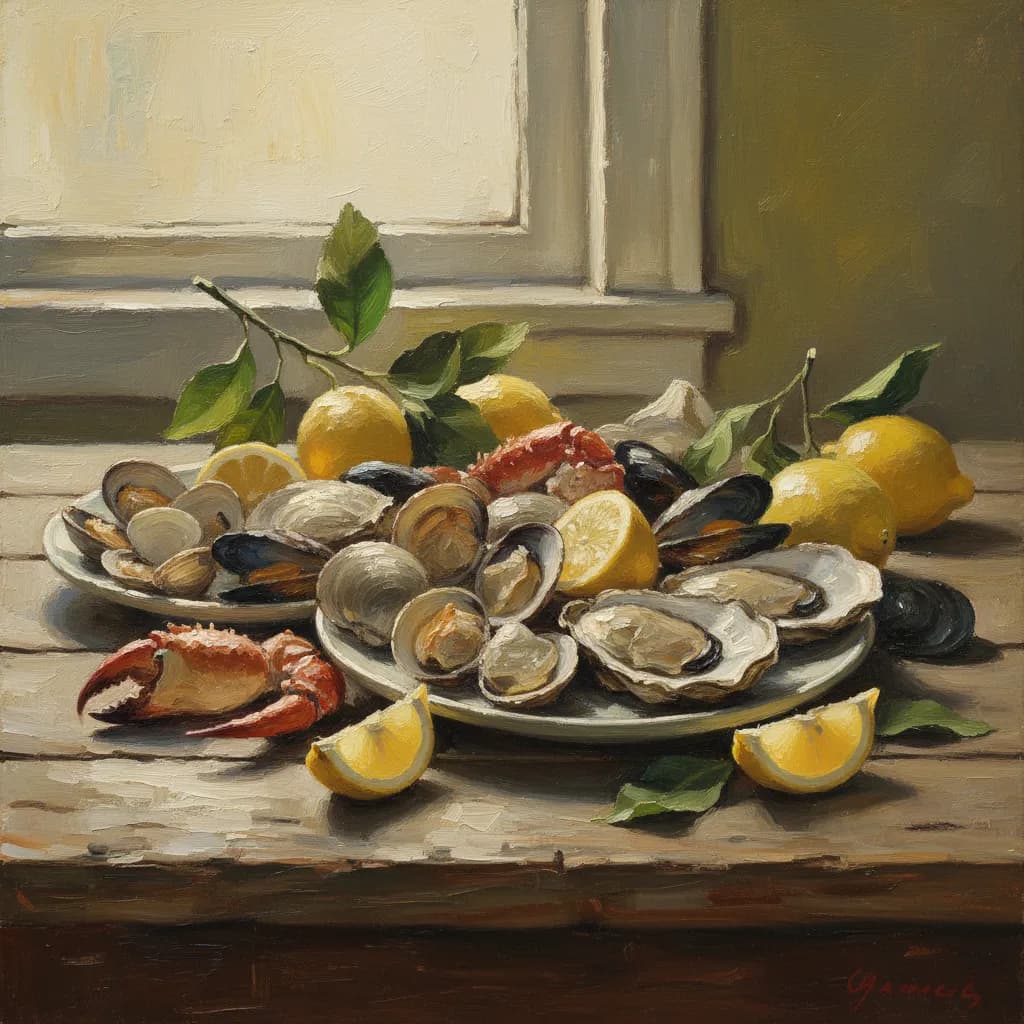
You are at a restaurant, scanning the menu. The shrimp dish looks good. But you remember someone once told you shrimp might be haram — and now you are not sure. Is this one of those strict rulings or one of those scholarly disagreements?
It is a genuine disagreement. And understanding the positions involved will help you make an informed decision rather than either eating in anxiety or avoiding unnecessarily.
The Short Answer
Shrimp is permissible according to the Maliki, Shafi'i, and Hanbali schools — the majority of global Muslims. The Hanafi school considers it haram or prohibited-by-strong-dislike (makruh tahrimi), based on a narrower interpretation of what counts as halal seafood.
The key Quranic verse:
أُحِلَّ لَكُمْ صَيْدُ الْبَحْرِ وَطَعَامُهُ مَتَاعًا لَّكُمْ وَلِلسَّيَّارَةِ
"Lawful to you is the game of the sea and its food as provision for you and for the travelers." — (Surah Al-Ma'idah, 5:96)
The disagreement is entirely about how to interpret this verse and related hadith — not about whether the verse exists.
What the Quran and Sunnah Say
The Quran makes two things clear about food from the sea: it is generally lawful, and it is a provision from Allah. The question scholars have debated for centuries is: all sea creatures, or only fish?
The majority position (Maliki, Shafi'i, Hanbali): "game of the sea" (sayd al-bahr) includes all sea creatures. The Prophet ﷺ explicitly said about the sea:
"Its water is pure and its dead animals are lawful [to eat]." — (Abu Dawud 83)
This hadith, which refers to sea creatures dying naturally, suggests a general permissibility for sea animals that does not apply to land animals. Fish, shrimp, crab, lobster — all fall within "what the sea brings forth."
The Hanafi position: the permissibility of sea creatures is restricted to fish (samak). The verse in Surah Al-An'am (6:145) lists only four prohibited categories and does not mention shrimp — but Hanafi scholars argue that shrimp does not fall under the permissible category of "sea game" either. Their evidence includes some narrations from the Companions expressing dislike for certain sea creatures.
Ibn Abbas رضي الله عنه said:
"The locusts and the fish are both halal dead, without requiring slaughter." — (Cited in fiqh texts as indicating fish as the paradigm)
This citation is used by Hanafi scholars to restrict the sea-game permissibility to fish-like creatures.
Why This Is Actually Hard
This is one of those situations where the nafs does not need to work very hard. There is a genuine scholarly difference of opinion. Two Muslims — both practicing, both knowledgeable — can reach different conclusions based on which madhab they follow.
The challenge is a different kind of nafs battle: intellectual honesty about why you are picking the ruling you are picking.
If you are Shafi'i by heritage and you eat shrimp — that is a legitimate position with strong scholarly backing. If you are Hanafi and you have recently "discovered" the Shafi'i ruling on shrimp right before a seafood restaurant dinner — that is the nafs doing scholarship on your behalf.
The principle of taqwa in cases of legitimate scholarly disagreement: follow the position of your tradition, or consult a qualified scholar from your tradition. Do not pick opinions like items from a menu based on what is convenient for this particular meal.
What to Do — Practical Steps
Step 1: Know Your Madhab
If you follow a particular school of thought, find out what its position is on shrimp and crustaceans generally. This gives you a clear, consistent framework rather than case-by-case uncertainty.
- Hanafi: avoid shrimp and crustaceans
- Maliki, Shafi'i, Hanbali: shrimp and crustaceans are permissible
If you do not know which madhab you follow — this is a good time to learn. Following a school of thought gives you consistency across hundreds of similar questions.
Step 2: Apply Consistently
Whatever ruling you follow on shrimp applies to all crustaceans: prawns, lobster, crab, langoustines. See our related articles on is lobster haram and is crab haram where the same framework applies. Inconsistency — eating shrimp but avoiding lobster based on the same principle — is a sign the nafs is selecting rulings based on preference rather than principle.
Step 3: Navigate Social Situations With Clarity
If you are Hanafi and decline shrimp at a restaurant: "I follow a stricter school of thought on seafood" is more than enough explanation. You do not need a fiqh lecture. If you are Shafi'i/Maliki and someone challenges your eating shrimp: "It is halal according to the majority of scholars" is accurate and complete.
Step 4: Use the Uncertainty Productively
This kind of scholarly disagreement — a genuine, centuries-old debate between qualified scholars — is an invitation to deepen your Islamic knowledge. Understanding why scholars differ on seafood teaches you about Quranic interpretation, hadith methodology, and legal reasoning. That knowledge makes you more confident across all future questions. See halal vs haram for the broader framework.
Build consistency in your deen — track your daily habits and intentions with Deen Back
Whether you follow Hanafi or another school, Deen Back helps you stay consistent in your practice with daily dhikr, dua, and habit tracking.


Free download. Premium features available in-app.
Dua for Guidance in Difficult Questions
اللَّهُمَّ أَرِنَا الْحَقَّ حَقًّا وَارْزُقْنَا اتِّبَاعَهُ وَأَرِنَا الْبَاطِلَ بَاطِلًا وَارْزُقْنَا اجْتِنَابَهُ
"O Allah, show us the truth as truth and grant us following it, and show us falsehood as falsehood and grant us avoiding it." — (Common Islamic dua, referenced in various hadith compilations)
When facing questions of scholarly disagreement, this dua is a reminder that the goal is not finding the most convenient ruling — it is finding and following the truth.
Common Questions
What if I have always eaten shrimp and now I am learning it might be haram (Hanafi)?
If you are Hanafi and have been eating shrimp in genuine ignorance, you are not sinful for the past. Deeds done without knowledge of the ruling are treated with leniency. Going forward, now that you know the Hanafi position, apply it consistently. There is no need for guilt about what is past — only clarity about what is next.
Is the shrimp ruling the same in all Muslim countries?
No. In many Shafi'i-majority countries (Southeast Asia, East Africa, much of the Arab world), shrimp is entirely unremarkable as a food. In South Asian communities with a stronger Hanafi tradition (Pakistan, Bangladesh, parts of India), shrimp is avoided by many practicing Muslims. The difference is not cultural arbitrariness — it reflects which scholarly tradition those communities inherited.
What about farmed shrimp versus wild shrimp?
The halal status of shrimp does not change based on whether it is farmed or wild — the ruling applies to shrimp as a category. The farming method raises other questions (environmental impact, use of feed additives) but does not change the fundamental permissibility question.
Is it safe to eat shrimp at a non-halal restaurant?
If shrimp is permissible according to your madhab, the main concern at a non-halal restaurant is cross-contamination — shrimp cooked in the same oil as pork products, or mixed with haram ingredients. For a straightforward shrimp dish at a standard Western restaurant, the risk is generally low, but if in doubt, ask about preparation methods. See the discussion in is sushi haram for a similar restaurant-context analysis.
The Wisdom in Scholarly Disagreement
This question is a gift in disguise. Not every Islamic ruling is black and white — some questions, like shrimp, represent genuine uncertainty even among the greatest scholars in history. That is not a weakness in Islam; it is a reflection of the system's intellectual honesty.
Allah made the sea and its creatures as provisions for us. He also gave us scholars who devoted their lives to understanding how to interact with those provisions righteously. Following one of those scholarly traditions — rather than picking and choosing for convenience — is how you honor both the provision and the guidance.
Stay grounded in your deen with Deen Back — daily habits, dhikr, and dua
Navigating Islamic questions takes knowledge and consistency. Deen Back helps you build both — one daily habit at a time.
Free download. Premium features available in-app.
Frequently Asked Questions
Is shrimp haram in Islam?
It depends on the school of thought. Hanafi scholars consider shrimp haram or at best makruh (disliked) because they restrict permissible sea creatures to fish only. Maliki, Shafi'i, and Hanbali scholars permit shrimp based on the Quranic verse that all sea game is lawful (5:96). The majority of scholars globally permit shrimp.
What does the Quran say about seafood?
The Quran states: 'Lawful to you is the game of the sea and its food as provision for you' (5:96). This verse is the foundation for the majority position permitting all seafood. The Hanafi school interprets 'game of the sea' more narrowly, restricting it to fish. The other three schools read it broadly to include all sea creatures.
I follow the Hanafi school. Should I avoid shrimp?
If you follow the Hanafi madhab strictly, the position is that shrimp is either haram or makruh tahrimi (prohibitively disliked) — effectively treated as haram. However, some contemporary Hanafi scholars have adopted a more permissive view. If you are Hanafi and unsure, consult a qualified scholar from your tradition.
Can I eat shrimp at a restaurant if I don't know the school of thought of the chef?
The permissibility of eating shrimp in your situation depends on which ruling you personally follow, not the chef's madhab. If you follow Shafi'i, Maliki, or Hanbali, shrimp at a restaurant is fine (assuming no other issues like cross-contamination with pork or alcohol). If you follow Hanafi, avoid it.
Is the ruling the same for prawns, langoustines, and other crustaceans?
The same scholarly debate applies to all crustaceans — prawns, lobster, crab, langoustines. Hanafi scholars prohibit them; the other three major schools permit them. See our articles on is lobster haram and is crab haram for the same discussion.