
- Published on
Is Intermittent Fasting Halal? Islam and IF Explained
- Authors

- Name
- Ahmad
- Role
- Senior Marketing Manager, Islamic education • Deen Back
بِسْمِ اللهِ الرَّحْمٰنِ الرَّحِيْمِ
In the name of God, the Most Gracious, the Most Merciful.
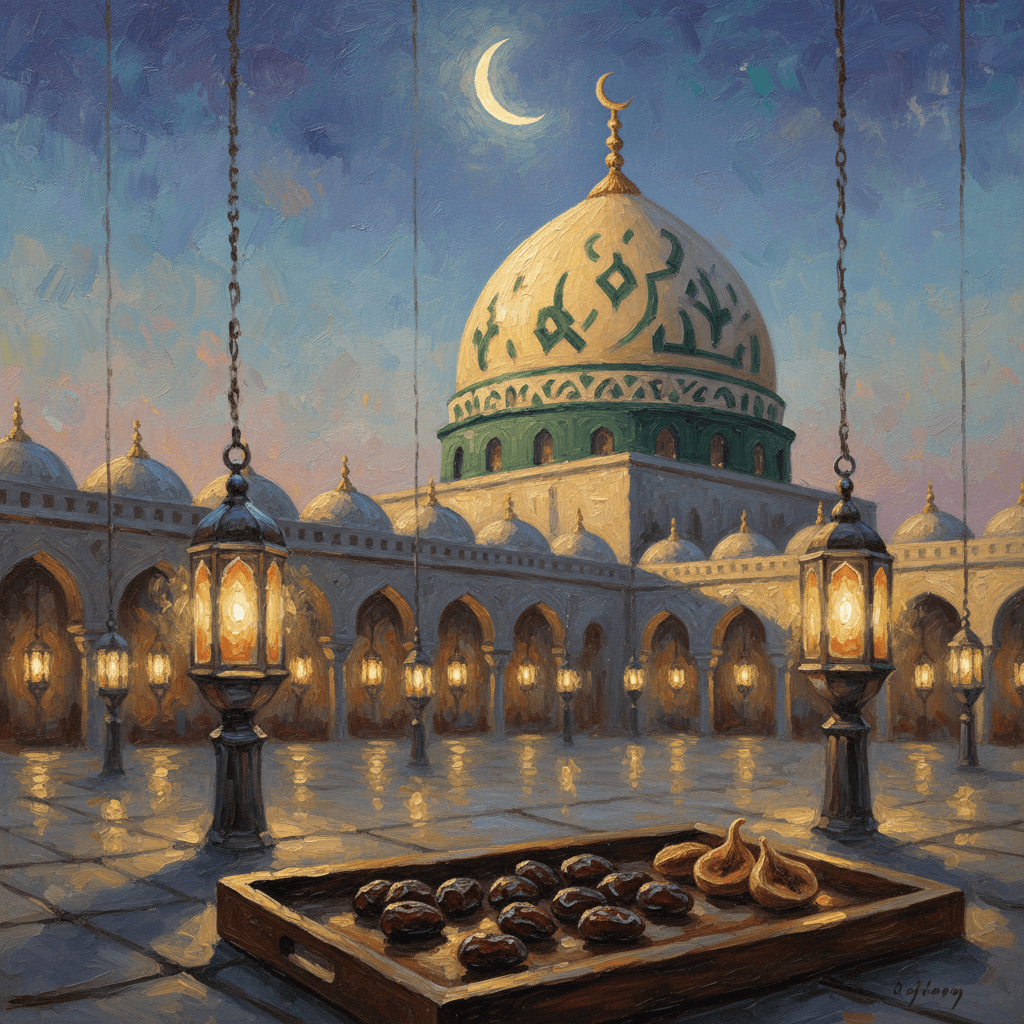
You have heard about intermittent fasting everywhere. Friends are doing 16:8, OMAD, or time-restricted eating. The health research looks compelling — metabolic benefits, mental clarity, weight loss that actually holds. And before you start, you want to know: does this fit with your deen, or is there something about the IF framework that conflicts with how Islam approaches food and fasting?
The answer is mostly good news — with some important nuances you need to understand before you begin.
The Quick Answer
Intermittent fasting is generally halal for Muslims. Restricting your eating to specific hours of the day has no prohibition in Islamic law. In fact, Muslims have a distinct advantage here: our tradition of voluntary fasting is one of the oldest established forms of intermittent fasting in human history. The Prophet ﷺ regularly fasted on Mondays and Thursdays, and encouraged fasting three days of every month (ayyam al-beedh — the 13th, 14th, and 15th of each Islamic month). There is nothing inherently prohibited about restricting eating to certain hours.
مَا مَلَأَ آدَمِيٌّ وِعَاءً شَرًّا مِنْ بَطْنٍ بِحَسْبِ ابْنِ آدَمَ أُكُلاتٌ يُقِمْنَ صُلْبَهُ
Ma mala'a adamiyyun wi'a'an sharran min batnin. Bihasbi ibni adama ukulatun yuqimna sulbahu
"No human being has ever filled a container worse than the stomach. A few mouthfuls are sufficient to keep a person's back straight."
The Prophet ﷺ also described the ideal proportion: one-third of the stomach for food, one-third for water, one-third for air. That is not a description of three large meals a day — it is guidance toward moderation that IF practitioners often arrive at through a different route.
What the Quran and Sunnah Say
Fasting is so embedded in Islamic practice that the default lifestyle of a Muslim already involves regular periods without food. During Ramadan, Muslims fast the entire day from Fajr to Maghrib — approximately 12 to 18 hours depending on location and season. This is literally intermittent fasting practiced for an entire month, every year.
The Prophet ﷺ did not limit his fasting to Ramadan. He fasted voluntarily so consistently that some companions thought he never stopped:
كَانَ يَصُومُ حَتَّى نَقُولَ لَا يُفْطِرُ وَيُفْطِرُ حَتَّى نَقُولَ لَا يَصُومُ
"He would fast until we said he would never break his fast, and he would break his fast until we said he would never fast."
This rhythmic alternation between fasting and eating — which is exactly what IF prescribes — was the natural pattern of the Prophet's life. From an Islamic standpoint, controlled restriction of eating hours for health and discipline is not a foreign concept. It is a return to something we already know.
Why This Is Actually Hard
The nafs can get confused about this in a few specific ways.
First, the identity problem. When you follow an IF schedule, you might feel like you are "fasting" in an Islamic sense and want to count it as worship. But siyam (Islamic fasting) requires specific intention for Allah's sake. IF for health reasons is a permissible worldly act — not an act of worship. Confusing the two deprives you of the spiritual clarity that comes from knowing exactly why you are doing something.
Second, the Ramadan conflict. During Ramadan, Muslims are required to eat at suhoor (before Fajr) and break the fast at Maghrib. An IF schedule that involves skipping suhoor or delaying iftar conflicts with the sunnah and the structure of Ramadan. Suhoor is specifically encouraged by the Prophet ﷺ as a source of blessing. Your IF window must yield to Ramadan's structure — not the other way around.
Third, the comparison trap. When non-Muslim colleagues and friends adopt IF for weight loss, the Muslim practitioner can feel that their religious fasting is somehow less scientific or sophisticated. The opposite is true: the Islamic tradition of fasting is the most sophisticated system of periodic food restriction ever developed, integrating physical, spiritual, and communal dimensions that health-focused IF lacks entirely.
What to Do About It — Practical Steps
Step 1: Align your eating window with Islamic rhythms. A 16:8 window with eating between Dhuhr and Isha fits naturally with Islamic life for many people. This allows you to eat after the afternoon prayer and finish before the evening prayer, keeping the structure of your day around salah rather than food timers. See dua for fasting for the supplications to accompany any fasting period.
Step 2: Never skip suhoor during Ramadan for IF reasons. Suhoor is a blessed sunnah. The Prophet ﷺ explicitly commanded it: "Have suhoor, for indeed there is barakah in suhoor." Your IF schedule must flex to accommodate Ramadan's structure, not the other way around. See dua for suhoor to start each Ramadan morning with the correct dua.
Step 3: Make a separate niyyah for Islamic voluntary fasting. If you practice IF on Mondays and Thursdays — which also happen to be sunnah fasting days — you can combine them. But make a clear Islamic intention in your heart for the Islamic fast, separate from the health intention. Each has its own purpose and reward.
Step 4: Use your fasting hours for dhikr and dua. The reduced demands of not eating can free up mental energy for remembrance of Allah. When hunger arises during your fasting window, use it as a trigger for dua — a reminder of your dependence on Allah for every form of sustenance. See dua for iftar for breaking your window correctly.
Step 5: Get medical clearance if you have health considerations. Pregnant women, nursing mothers, diabetics, those with kidney disease, and anyone with a history of eating disorders should consult a physician before starting any form of IF. Islam prohibits harming the body — and IF, if inappropriate for your health condition, would become impermissible for you specifically.
Build the Discipline of Fasting — Track Your Streak and Stay Consistent
DeenBack helps you track voluntary fasting days alongside your daily prayers and dhikr, so your spiritual discipline and physical wellness grow together.


Free download. Premium features available in-app.
Dua for Fasting
اللَّهُمَّ إِنِّي لَكَ صُمْتُ وَبِكَ آمَنْتُ وَعَلَيْكَ تَوَكَّلْتُ وَعَلَى رِزْقِكَ أَفْطَرْتُ
Allahumma inni laka sumtu wa bika amantu wa 'alayka tawakkaltu wa 'ala rizqika aftartu
"O Allah, I fasted for Your sake, I believed in You, I relied upon You, and I break my fast with Your provision."
— (Abu Dawud)
This is the dua for breaking the fast — applicable whether you are breaking an Islamic fast or your IF window. It anchors the act of eating in gratitude and acknowledgment of where all provision comes from.
Common Questions
Can IF help with my self-discipline as a Muslim?
Yes — deliberately. The practice of overriding hunger for a defined period is a training in self-control that strengthens the same muscle you use to resist haram temptations. The nafs (lower self) hates discomfort and demands immediate satisfaction. Any practice that teaches you to delay gratification and maintain control over physical desires supports your deen, not just your health.
What if I feel faint or unwell during my fasting window?
Break it without guilt. The Prophet ﷺ broke his voluntary fasts when guests arrived unexpectedly or when circumstances changed. Maintaining your health is not opposed to fasting — it is required by Islam. If you regularly feel unwell during IF, that is a signal to adjust your window, seek medical advice, or reconsider whether IF suits your body.
Is IF scientifically proven? Should I trust the research?
The evidence for IF's health benefits is growing and broadly positive, particularly for metabolic health and weight management. The Islamic permission does not depend on scientific proof — you can use permissible means even when evidence is preliminary. Evaluate the research for your specific health goals and make informed choices as you would with any dietary approach.
Does breaking my IF window with haram food still make the fast invalid?
Your IF "fast" is not a religious act, so it cannot be invalidated in the Islamic sense. But eating haram food is prohibited regardless of whether you are in a fasting window or not. The permissibility of IF is independent of the permissibility of specific foods — both questions apply simultaneously.
The Muslim Already Knows How to Fast
There is something slightly amusing about a Muslim asking whether intermittent fasting is permissible. You have been doing it — with intention, with spirituality, and with a community of one and a half billion people — since you were old enough to fast Ramadan. The modern IF movement has just given a different name and a health frame to something our tradition established fourteen centuries ago.
Use IF if it benefits you. Let it strengthen your physical discipline and your relationship with food. But never let a health trend eclipse the deeper practice it shadows. The fast that transforms you is the one done for Allah.
Fast with Purpose — Track Your Sunnah Fasting Days
DeenBack helps you log voluntary fasts, set reminders for suhoor, and track the spiritual consistency that makes every act of discipline count in your deen.
Free download. Premium features available in-app.
Frequently Asked Questions
Is intermittent fasting halal in Islam?
Yes. Intermittent fasting is generally halal when practiced for valid reasons such as health, weight management, or discipline. Restricting eating to specific hours has no prohibition in Islamic law, and the Prophet himself regularly fasted voluntarily — on Mondays and Thursdays, and three days each month.
Does intermittent fasting count as Islamic fasting?
No. Intermittent fasting for health purposes is not the same as Islamic fasting (siyam), which is an act of worship requiring a specific intention (niyyah) for Allah's sake. You can practice IF alongside Islamic fasting, but they are separate things.
Can I do intermittent fasting during Ramadan?
Your eating must follow the Ramadan schedule — suhoor before Fajr and breaking the fast at Maghrib. You cannot skip suhoor or delay breaking the fast to fit an IF window. Suhoor is a sunnah act that should not be abandoned for dietary preferences.
Is IF harmful to the body and therefore haram?
IF is considered safe and beneficial for most healthy adults by medical research. Since Islam prohibits harming the body, IF would become impermissible if it caused genuine health harm to an individual. Pregnant women, nursing mothers, diabetics, and those with eating disorders should get medical clearance before starting.
Can IF replace Islamic voluntary fasting?
Practicing IF on the same days as sunnah fasting (Mondays, Thursdays, ayyam al-beedh) is fine, but each requires a separate niyyah. IF should not replace the Islamic intention and worship dimension of voluntary fasting. The spiritual reward of siyam requires the Islamic intention.