
- Published on
Is Fasting Without Praying Haram? The Truth About Ramadan and Salah
- Authors

- Name
- Ahmad
- Role
- Senior Marketing Manager, Islamic education • Deen Back
بِسْمِ اللهِ الرَّحْمٰنِ الرَّحِيْمِ
In the name of God, the Most Gracious, the Most Merciful.
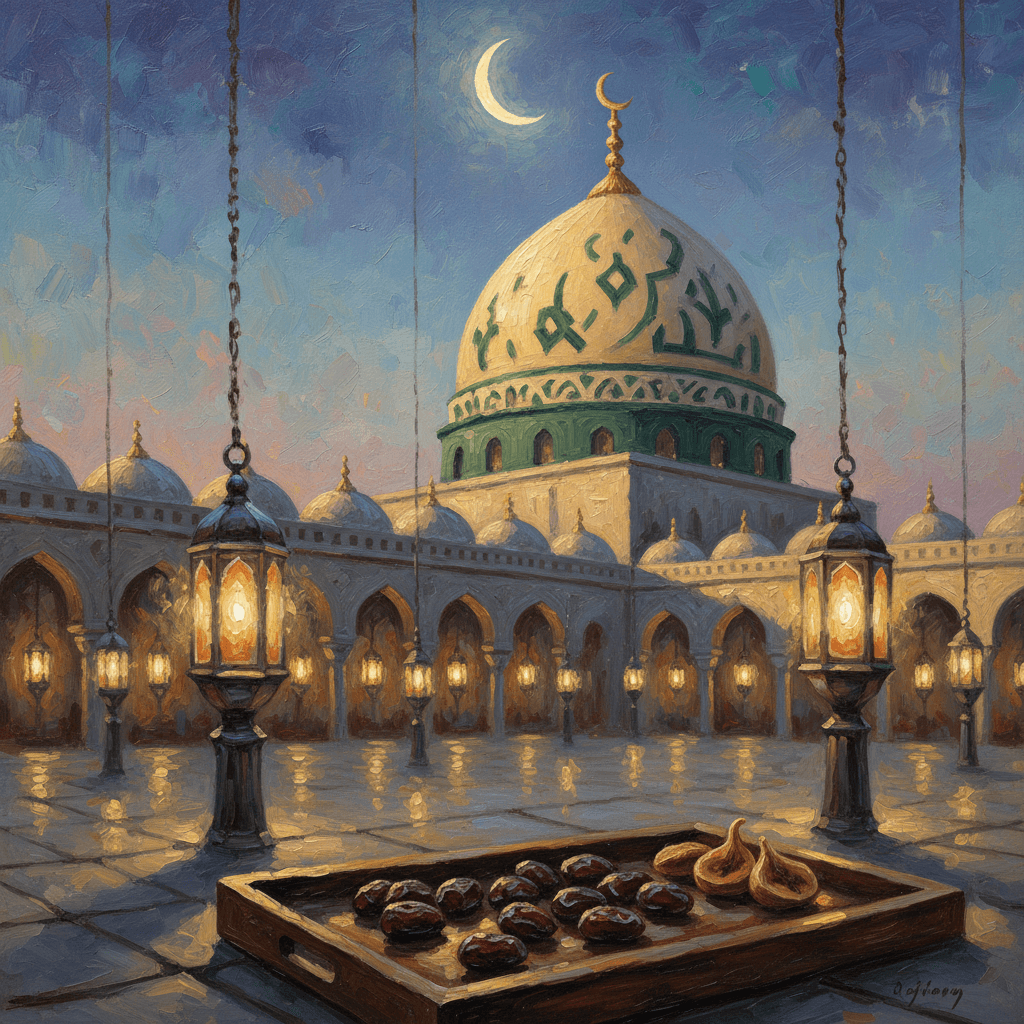
Every Ramadan, millions of Muslims who do not ordinarily pray find themselves fasting — abstaining from food and drink from dawn to sunset, making suhoor, breaking fast with dates, attending iftar gatherings. And in the back of their minds, some version of this question lives: is this even worth anything if I am not praying?
It is a real question. And the honest answer matters more than a comfortable non-answer.
The Quick Answer
Missing the five daily prayers is haram, full stop. Fasting without praying means you are fulfilling one major obligation of Islam while abandoning another. The fast is technically valid in terms of the Ramadan obligation according to the majority of scholars, but the spiritual return of fasting without prayer is deeply compromised — and not praying is a major sin that the fast cannot erase.
"Indeed, prayer prohibits immorality and wrongdoing." — Quran 29:45
The function of salah is to protect you from sin and keep you connected to Allah. Fasting without this anchor is like building a house without a foundation.
What the Quran and Sunnah Say
The obligation of fasting in Ramadan and the obligation of five daily prayers are both established unambiguously in the Quran:
"O you who have believed, decreed upon you is fasting as it was decreed upon those before you that you may become righteous." — Quran 2:183
"Indeed, I am Allah. There is no deity except Me, so worship Me and establish prayer for My remembrance." — Quran 20:14
The Prophet (peace be upon him) established prayer as the pillar of the Deen:
"The head of the matter is Islam, its pillar is prayer, and its highest peak is jihad." — Sunan al-Tirmidhi 2616
A pillar holds the structure up. Remove it, and what remains may still exist in some form, but it is not structurally sound.
On the question of whether abandoning prayer makes the fast invalid: the Hanbali school holds that abandoning prayer constitutes disbelief (kufr), which would make all acts of worship — including fasting — unaccepted. The Hanafi, Maliki, and Shafi'i schools hold that abandoning prayer without denying its obligation is a major sin but not kufr, and therefore the fast is technically valid. This is a serious scholarly disagreement, and the safest position — the one that protects your worship — is to fast AND pray.
Why This Is Actually Hard
Ramadan has a cultural weight that prayer does not always share. Breaking fast with family, iftar gatherings, the communal warmth of the month — these elements make fasting feel socially embedded in a way that prayer is not. Many Muslims return to fasting during Ramadan years before they return to prayer.
The nafs whispers: at least I am fasting. That is something. I am not that far from Islam — I observe Ramadan. The prayer is a separate project for later.
"Later" never comes without intentional action. And the nafs has used this particular justification to keep millions of Muslims fasting but not praying for decade after decade.
The deeper issue is that Ramadan is actually the ideal time to restart salah, not a separate project to handle afterward. The habits of waking for suhoor, the reduced food intake, the heightened God-consciousness, the communal ibadah — all of these create the exact conditions in which restarting prayer becomes most natural.
What to Do — Practical Steps
1. Treat This Ramadan as Your Salah Restart
If you are fasting without praying, this is your moment. Not next Ramadan. Not after Eid. Now.
The structure of Ramadan is built for this transition:
- Fajr is easy to pray when you are already awake for suhoor
- Dhuhr and Asr are natural break points during the fasting day
- Maghrib is the prayer of iftar — you are already present and celebratory
- Isha is the prayer of Taraweeh — the mosque is open and welcoming
Start with Fajr. It is the prayer that most people who are returning to salah find hardest. Do it when you wake for suhoor. Then add Maghrib at iftar. Then build from there.
Our guide on how to make praying 5 times a day a habit walks through the process of building the salah habit from scratch.
2. Understand What You Are Asking the Fast to Do Without Prayer
The purpose of Ramadan fasting is explicitly stated in Quran 2:183: "that you may become righteous (la'allakum tattaqun)." Taqwa — God-consciousness, self-restraint, the awareness that Allah sees everything — is what fasting is supposed to build. Prayer is the five-times-daily reinforcement of that awareness.
Without prayer, the fast can suppress physical appetites for a month. With prayer, the fast builds a quality of soul that continues beyond Ramadan. This is the difference between a diet and a spiritual transformation.
Use dua for fasting and dua for prayer together — treat them as a pair. The duas you make in the hunger and quiet of fasting become more powerful when anchored in the regularity of salah.
3. Handle the Guilt Productively
Many Muslims feel guilty about fasting without praying — and they should, in the productive sense of that word. Guilt that drives change is a mercy from Allah. Guilt that simply festers and paralyses is a weapon of the nafs.
Channel the guilt into action this Ramadan: make tawbah, commit to the salah, and use the fasting day to build the pre-prayer discipline. The focus and self-control you demonstrate by not eating or drinking for hours — apply that same faculty to stopping what you are doing five times a day to pray.
4. Make Up Any Missed Prayers
If you have missed years of prayers, consult your local scholar or imam about the method of making them up (qada). This is a significant undertaking, but it is not hopeless. Allah accepts tawbah at any time, and the journey back to prayer is one the Deen was designed to accommodate.
See dua for self-control for supplications specifically for the nafs-battling discipline required to restart consistent prayer after years away.
Make This the Ramadan You Add Prayer Back to Your Life
DeenBack tracks your five daily prayers alongside your fasting. Build the full worship routine — salah and sawm together — and watch how Ramadan transforms differently this year.


Free download. Premium features available in-app.
Dua for Returning to Prayer
رَبَّنَا لَا تُزِغْ قُلُوبَنَا بَعْدَ إِذْ هَدَيْتَنَا وَهَبْ لَنَا مِنْ لَدُنْكَ رَحْمَةً إِنَّكَ أَنْتَ الْوَهَّابُ
Rabbana la tuzigh qulubana ba'da idh hadaytana wahab lana min ladunka rahmatan innaka anta al-Wahhab
"Our Lord, let not our hearts deviate after You have guided us and grant us from Yourself mercy. Indeed, You are the Bestower." — Quran 3:8
This dua, made by the deeply learned believers, asks Allah to keep the heart firm. Say it when you feel the pull to fast but skip prayer — it is a prayer for the very steadfastness you need.
Common Questions
Should I tell others I am fasting if I am not praying?
This is between you and Allah. However, be honest with yourself about what you are doing and why. There is no spiritual benefit to appearing devout in public while privately avoiding salah. Use any social accountability (family iftar, community prayers) as motivation to actually pray, not just to appear to be observing Ramadan.
What if I start praying but then miss prayers again after Ramadan?
This is extremely common and it is not a reason to give up. The Prophet (peace be upon him) said:
"The most beloved deeds to Allah are those that are consistent, even if they are small." — Sahih al-Bukhari 6464
Every prayer you make is accepted. Every one you miss is an opportunity for tawbah. Missing prayers after Ramadan is not failure — it is the beginning of the continuing journey. What matters is that you keep showing up and that you never give up.
Does the reward of fasting decrease if I am not praying?
The hadith makes clear that the minimum return of fasting for someone engaged in sin is avoidance of hellfire's punishment specifically related to that fast — but the full spiritual return (the high reward promised for fasting) is associated with complete worship, including prayer. The Prophet (peace be upon him) said: "Whoever fasts Ramadan out of faith and seeking reward, his previous sins will be forgiven" — the "out of faith" and "seeking reward" framing implies a broader engagement with Islam, not isolation of one practice.
Is the salah between iftar and suhoor the only time I need to pray?
No. The five daily prayers are distinct obligations at their prescribed times. Taraweeh is additional (sunnah). The obligatory prayers of Dhuhr, Asr, Maghrib, Isha, and Fajr must each be performed in their respective time windows. See what breaks your fast to understand the fasting obligations in parallel.
Closing
Fasting and prayer are the two most visible pillars of a Muslim's daily practice. They were designed to work together — the fast training the nafs in restraint and God-consciousness, the prayer reinforcing that awareness five times every day.
Fasting without praying is fulfilling half the obligation while carrying the weight of abandoning the other half. The solution is not complicated: add the prayer. Start this Ramadan. Start with one. Start today.
Allah is Al-Wahhab — the Bestower. He gave you the will to fast. Ask Him for the will to pray.
Fast and Pray — Together, Every Day of Ramadan
DeenBack tracks both your fasts and your five daily prayers. This Ramadan, complete the picture. Build the habit that lasts beyond the month.
Free download. Premium features available in-app.
Frequently Asked Questions
Is it haram to fast without praying?
Missing the five daily prayers is haram and a major sin regardless of whether you are fasting. The fast itself is technically valid according to the majority of scholars (Hanafi, Maliki, Shafi'i) even if the person is not praying — meaning the obligation of Ramadan fasting is still discharged. However, the Hanbali school holds that the fast of someone who abandons prayer entirely is not accepted. All scholars agree that combining fasting with abandoning prayer is deeply problematic and that not praying while fasting is a serious contradiction.
Does not praying invalidate your fast?
According to the majority position (Hanafi, Maliki, Shafi'i), skipping prayer does not invalidate the fast in a technical sense — the fast remains valid in terms of the Ramadan obligation. However, the Hanbali school considers the fast of someone who abandons prayer to be unaccepted. More importantly, abandoning prayer is itself a major sin, and the spiritual benefit of the fast is severely diminished when prayer is absent. The fast and the prayer are meant to work together.
Can you make up fasts from previous Ramadans if you were not praying then?
Yes, scholars generally say you should make up missed Ramadan fasts even for periods when you were not praying. Your obligation to complete the fasting days does not depend on your prayer history. Repent sincerely, resume both prayer and fasting, and make up what you missed.
What if I fast all of Ramadan but never pray — will the fasting be rewarded?
Scholars differ on whether the fast of someone who deliberately abandons prayer is accepted. The majority says the fasting obligation is technically fulfilled. However, the concept of deeds being accepted (maqbul) versus valid (sahih) is important here. A fast may fulfill the Ramadan obligation while not being rewarded in full if it is performed without the broader framework of worship. Your best path is to fast AND pray.
Is it better to fast without praying, or to not fast at all?
It is better to fast — fasting while sinning by not praying is still fulfilling one major obligation even while neglecting another. The answer is not to drop fasting but to add prayer. If you are currently fasting without praying, this Ramadan is the perfect moment to start both.