
- Published on
Is Buying Alcohol for Non-Muslims Haram? The Honest Answer
- Authors

- Name
- Ahmad
- Role
- Senior Marketing Manager, Islamic education • Deen Back
بِسْمِ اللهِ الرَّحْمٰنِ الرَّحِيْمِ
In the name of God, the Most Gracious, the Most Merciful.
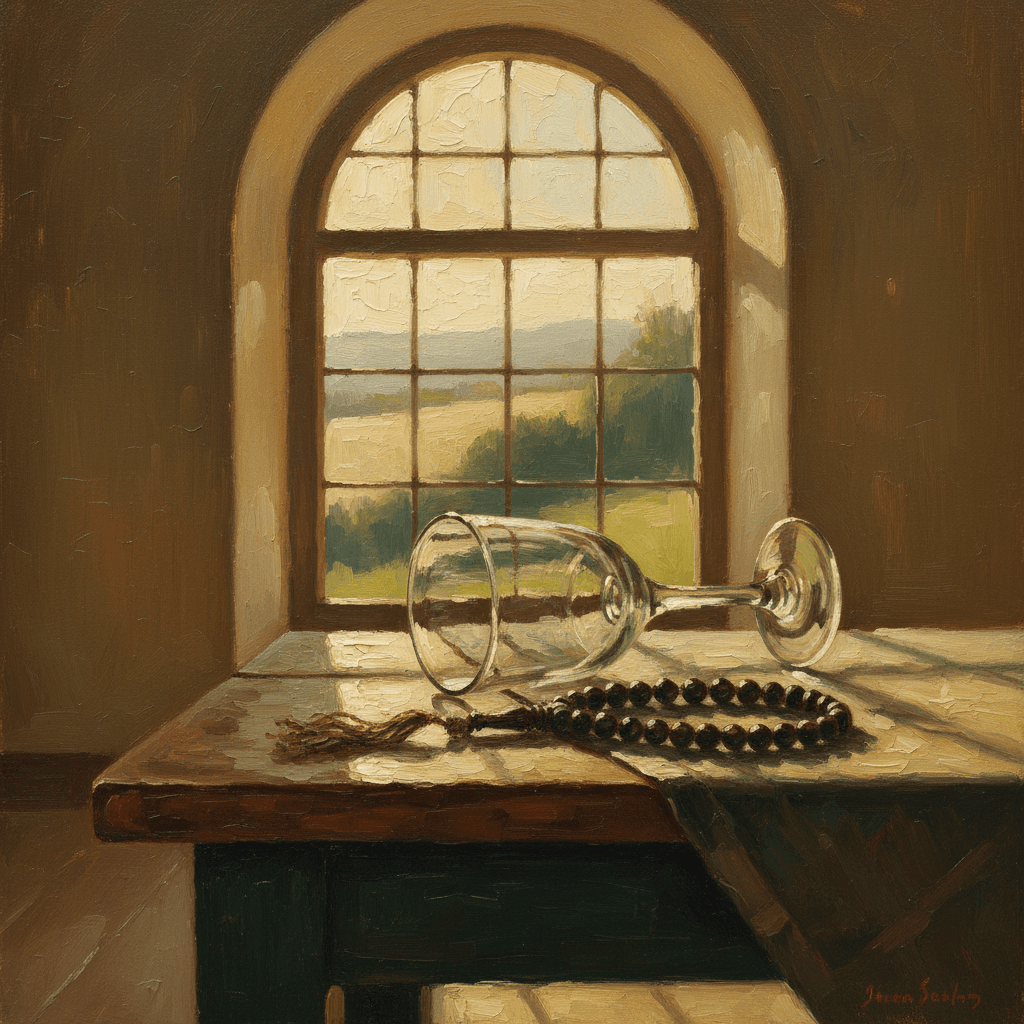
You are at the supermarket with a non-Muslim colleague who asks you to grab a bottle of wine from the next aisle while they finish their shopping. Or your neighbor asks you to pick up beer on your way to a gathering. Or you work a register and alcohol comes down the conveyor belt.
These are real situations. And the question behind all of them is the same: does Islam prohibit me from being the person who buys, carries, or handles alcohol — even for someone who is not Muslim and is not breaking their own religious rules?
The Quick Answer
Yes. Purchasing alcohol on behalf of someone else — even a non-Muslim — is considered haram by the majority of scholars. The prohibition on alcohol in Islam is not only about drinking it yourself. It extends to a chain of actions that facilitate its consumption.
"Allah has cursed alcohol and has cursed the one who drinks it, the one who pours it, the one who sells it, the one who buys it, the one who squeezes (the grapes for it), the one for whom it is squeezed, the one who carries it, and the one to whom it is carried." — Sunan Ibn Majah 3380
That list is explicit and comprehensive. The person who buys alcohol is cursed — regardless of whether they intend to drink it themselves.
What the Quran and Sunnah Say
The Quran's position on alcohol is unambiguous:
"O you who have believed, indeed, intoxicants, gambling, stone altars, and divining arrows are but defilement from the work of Shaytan, so avoid it that you may be successful." — Quran 5:90
The Arabic term used — rijs (رجس — filth, abomination) — is among the strongest terms of prohibition in the Quran. Alcohol is not just discouraged; it is classified alongside idolatry-adjacent acts as a form of defilement.
The hadith makes the prohibition even more far-reaching. The Prophet (peace be upon him) did not list only the drinker. He listed ten categories of people connected to alcohol's production and distribution. Buying it appears explicitly on that list. The purpose of the purchase — whether for personal use or for someone else — does not change what the act is: a transaction that puts alcohol into circulation.
Islamic jurisprudence also has a broader principle: assisting in sin is itself sinful. Allah says:
"And cooperate in righteousness and piety, but do not cooperate in sin and aggression." — Quran 5:2
Buying alcohol for someone — Muslim or not — is cooperation in their consumption of something Allah has declared an abomination.
Why This Is Actually Hard
Here is what makes this genuinely difficult: you might be in a situation where refusing feels rude, socially awkward, or professionally risky.
Your office culture includes alcohol. Your friends gather at venues where they drink. A family member who is not Muslim asks you to pick something up. You work a shift at a register. These are not hypothetical edge cases — they are the daily reality for many Muslims living in non-Muslim-majority societies.
The nafs will find justifications. "I'm not the one drinking it." "It's their choice, not mine." "I don't want to be preachy or rude." "My job depends on it." Each of these statements contains a grain of truth, which is what makes them effective at blunting your resolve.
But the Prophet's list is clear. It does not say "cursed is the one who drinks it, unless they were buying for a friend and didn't want to be awkward." The comprehensiveness of that list is a mercy, not a burden — it removes the ambiguity that lets the nafs negotiate.
What to Do — Practical Steps
1. Have a Simple, Non-Preachy Response Ready
You do not owe anyone a fiqh lecture. A simple, calm response works: "I don't handle alcohol — it's a religious thing. Sorry, can you grab it yourself?" Most non-Muslims — when the explanation is brief and not delivered as a judgment — respond with respect. Practice saying it so it feels natural, not defensive.
2. Don't Wait Until the Moment of Pressure
If you regularly socialise with non-Muslim friends or colleagues who drink, have the conversation before the situation arises. "I should mention — I don't buy or pour alcohol, it's a religious boundary for me. I'll happily be there, I just can't do that part." Setting this expectation in advance removes the pressure in the moment.
3. Evaluate Your Workplace Situation
If you work in a role where handling alcohol is regular and unavoidable — not an occasional item on a general supermarket conveyor, but a dedicated role in alcohol sales or service — this deserves serious thought. Many Muslims have sought different roles within the same company, or have found that honestly communicating a religious boundary to an employer leads to accommodation. Our article on is working in a bank haram explores similar questions about permissible employment.
4. Protect Your Spiritual Comfort
There is a concept in Islamic ethics of the lawful heart — that a believer feels an internal discomfort when approaching what Allah has prohibited. If you have been buying alcohol for others so regularly that it no longer registers as uncomfortable, that numbness is itself a warning sign. Protecting your spiritual sensitivity means maintaining the boundary consistently, not just when you feel like it.
5. Help Your Friends Understand — Without Lecturing
You do not need to convert your non-Muslim friends. But you can be honest about your boundaries in a way that earns their respect. People who witness a Muslim live their values quietly and consistently are often more moved than those who hear a lecture. Let your boundary be its own dawah. Our article on is alcohol haram provides the full ruling on alcohol itself, and is online gambling haram explores similar questions about facilitating prohibited activities.
Stay Grounded in Your Values Every Day
DeenBack helps you build the daily habits — dhikr, dua, accountability — that keep your connection to Allah strong so your values stay clear even under pressure.


Free download. Premium features available in-app.
Dua for Protection from Sin
When you find yourself in situations where the temptation to compromise is strong:
اللَّهُمَّ أَعِنِّي عَلَى ذِكْرِكَ وَشُكْرِكَ وَحُسْنِ عِبَادَتِكَ
Allahumma a'inni 'ala dhikrika wa shukrika wa husni 'ibadatik
"O Allah, help me to remember You, thank You, and worship You well." — Sunan Abu Dawud 1522
Common Questions
Is it haram to be at a gathering where alcohol is being served?
Scholars differentiate between attending and participating. Attending a gathering where others drink — without drinking yourself, without serving it, and without conducting yourself in ways that normalise the prohibition — is a more nuanced situation. Some scholars advise leaving if alcohol is prominent; others allow presence at mixed gatherings with non-Muslims. The clearer prohibition is on active involvement: buying, pouring, serving.
Is it haram to own a business that sells alcohol?
Yes. Selling alcohol is explicitly included in the Prophet's list of cursed parties. Owning a business that derives income from alcohol sales — a bar, a liquor store, a restaurant where alcohol is a central part of the business model — falls under this prohibition. The income from such sales is also considered impure.
What about working as a delivery driver who delivers alcohol orders?
This falls under the principle of carrying alcohol for others, which appears on the Prophet's list. Many Muslim delivery drivers have spoken with their dispatchers about avoiding alcohol deliveries and found accommodation. If your employer refuses to accommodate, this is a job worth reconsidering over time.
Is it haram to give a gift of alcohol to a non-Muslim?
Yes. Gifting something impermissible — especially when you are facilitating their consumption of it — falls under the same principle. The gift of alcohol is cooperation in its use. A more thoughtful gift is always available.
Closing
The ruling on buying alcohol extends far beyond the person holding the glass. Islam drew a wide circle around alcohol because it understood how sin operates: it always involves more than one person, more than one action, more than one choice. Every link in the chain matters.
This is not about judging non-Muslims who make different choices. It is about you — about what your hands do, what your choices participate in, and what your daily actions say about your relationship with Allah.
Hold the line. Do it calmly, clearly, without drama. And trust that a life of consistent boundaries is one of the most powerful forms of dawah available to you.
Your Values Are Your Dawah
DeenBack helps you live your deen consistently — daily prayers, dhikr, and habits that make your values visible in how you show up every day.
Free download. Premium features available in-app.
Frequently Asked Questions
Is buying alcohol for non-Muslims haram?
Yes, according to the majority of scholars. The Prophet (peace be upon him) cursed not just those who drink alcohol, but also those who carry, sell, or serve it. Purchasing alcohol on behalf of someone else falls under this prohibition.
Is it haram to work in a supermarket that sells alcohol?
Scholars differ. Working in a general supermarket where alcohol is one of many products is viewed differently from working specifically as a cashier who handles alcohol sales or as a dedicated alcohol section employee. The closer your role is to directly facilitating the sale of alcohol, the stronger the prohibition.
Can I host a gathering where non-Muslim guests will bring alcohol?
You are not obligated to prevent non-Muslim guests from their personal choices. However, actively providing alcohol or purchasing it for them is a different matter. If alcohol is present at a gathering, do not be the one who bought or served it.
Is it haram to drive a non-Muslim friend to a liquor store?
This falls under the principle of assisting in sin. Most scholars would discourage it, with stronger prohibition if you are doing so specifically to help them acquire alcohol.
What about buying alcohol-containing products like cooking wine or vanilla extract?
This is a separate question from purchasing beverage alcohol. Scholars debate the use of alcohol in food preparation differently. See our dedicated articles on vanilla extract and cooking wine for more detail.