
- Published on
How Many Times to Say Subhanallah Wa Bihamdihi Daily
- Authors

- Name
- Ahmad
- Role
- Senior Marketing Manager, Islamic education • Deen Back
بِسْمِ اللهِ الرَّحْمٰنِ الرَّحِيْمِ
In the name of God, the Most Gracious, the Most Merciful.
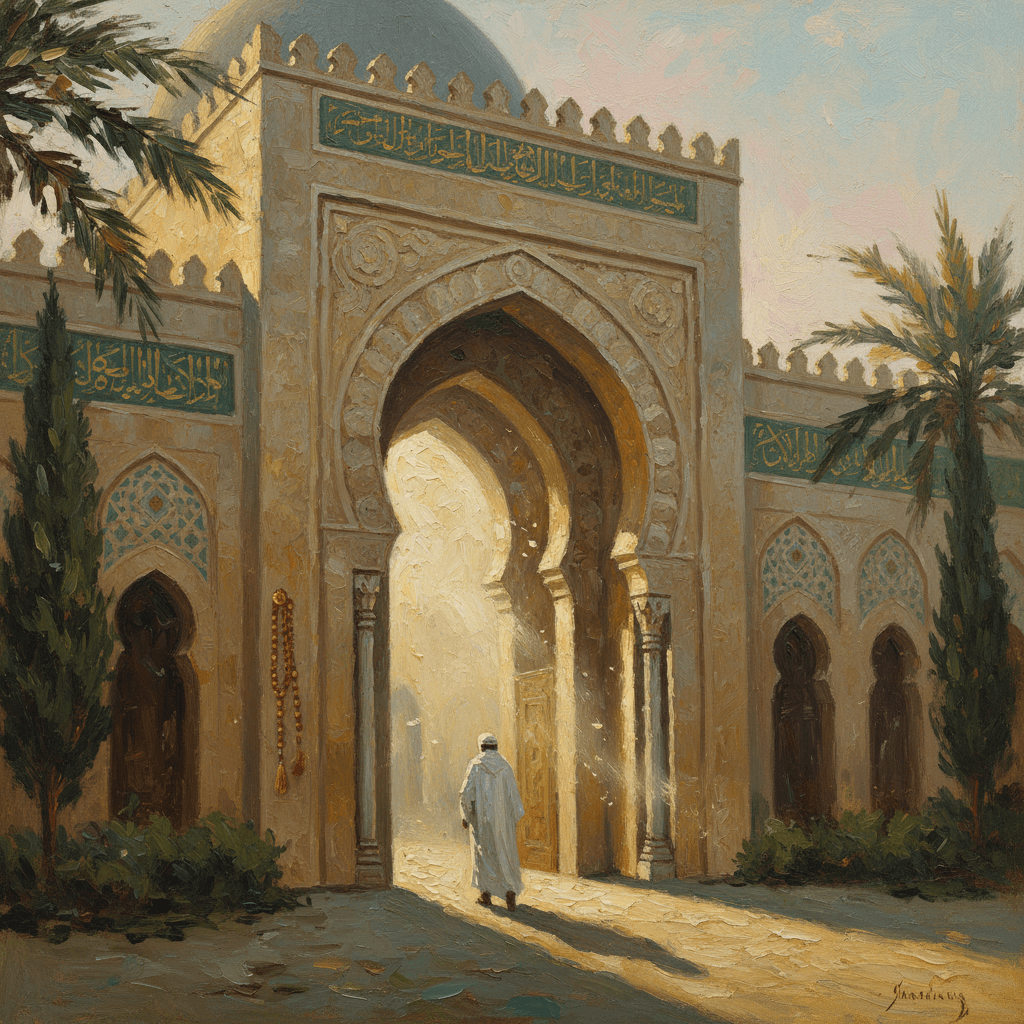
You have probably said Subhanallah dozens of times without thinking much about it. It comes out when you see something beautiful, when you hear something surprising, when you are in prayer and the words flow automatically.
But the Prophet ﷺ described a specific daily practice with this phrase — one that carries a promise so large it stops you in your tracks.
The Core Teaching
Abu Hurairah (ra) reported that the Prophet ﷺ said:
مَنْ قَالَ حِينَ يُصْبِحُ وَحِينَ يُمْسِي سُبْحَانَ اللَّهِ وَبِحَمْدِهِ مِائَةَ مَرَّةٍ لَمْ يَأْتِ أَحَدٌ يَوْمَ الْقِيَامَةِ بِأَفْضَلَ مِمَّا جَاءَ بِهِ إِلَّا أَحَدٌ قَالَ مِثْلَ مَا قَالَ أَوْ زَادَ عَلَيْهِ
Man qala hina yusbih wa hina yumsi: Subhanallahi wa bihamdihi mi'ata marratin, lam ya'ti ahadun yawmal-qiyamati bi-afdala mimma ja'a bihi, illa ahadun qala mithla ma qala aw zada 'alayh
"Whoever says in the morning and in the evening 'Subhanallah wa bihamdihi' one hundred times, no one will come on the Day of Resurrection with something better than what he came with, except one who said the same as what he said or more than him." — (Sahih Muslim 2692)
And in another narration from Bukhari:
"Whoever says 'Subhanallah wa bihamdihi' one hundred times during the day, his sins will be wiped away, even if they were like the foam of the sea." — (Sahih Bukhari 6405)
Foam of the sea. That is the magnitude of what this daily practice can clear.
What Subhanallah Wa Bihamdihi Means
سُبْحَانَ اللَّهِ وَبِحَمْدِهِ — Subhanallahi wa bihamdihi — is a phrase of two parts:
- Subhan Allah: "Glory be to Allah" — affirming that He is utterly free of all deficiency, limitation, or imperfection. This is tasbih.
- Wa bihamdihi: "And praise belongs to Him" — affirming that all goodness, beauty, and perfection that exists originates in Him. This is hamd.
Together, the phrase is a complete theological statement. Allah is perfect and without flaw. And the perfection that exists in the world is His, not independently occurring.
The Prophet ﷺ also said:
"Two phrases are beloved to the Most Merciful, light on the tongue, and heavy in the scale: Subhanallah wa bihamdihi, Subhanallah al-Azim." — (Sahih Bukhari 6406)
Light on the tongue. Heavy in the scale. This is the entire proposition of this practice — minimal effort, enormous spiritual weight.
How to Build This Into Your Day
The 100 repetitions can be spread across the day — they do not have to be said in a single sitting. But having a structure helps.
Option 1: Morning and evening split
- 50 after Fajr prayer
- 50 after Maghrib or Isha prayer
This is the most common approach and directly aligned with the "morning and evening" language of the Bukhari hadith.
Option 2: Three-part split
- 34 after Fajr
- 33 at some point during the day (lunch break, midday break)
- 33 after Maghrib
This is useful if sitting for fifty at a time feels difficult.
Option 3: Embedded in morning adhkar If you already have a morning adhkar routine, insert the Subhanallah wa bihamdihi block at the end. Morning adhkar already covers other forms of dhikr; adding 100 Subhanallah wa bihamdihi completes the session.
The key is not where you put it — the key is that you put it somewhere it will actually happen.
Track Your Daily 100 Subhanallah Wa Bihamdihi
DeenBack lets you track your daily dhikr count and build a streak around this practice — turning the Prophet's recommendation into a consistent daily habit.


Free download. Premium features available in-app.
Why Consistency Beats Intensity Here
The nafs is drawn to dramatic gestures. You want to say Subhanallah wa bihamdihi a thousand times on the day you discover this practice — and then forget about it for three weeks.
The Prophet ﷺ gave us the counter to this:
"The most beloved deed to Allah is the most regular and constant, even if it is little." — (Sahih Bukhari 6465)
One hundred times, every day, consistently — is worth infinitely more than a thousand times once a month. The spiritual benefit accumulates with consistency, not with burst effort.
Tie the practice to something you already do consistently: finishing salah, brewing your morning tea, your commute, sitting down after dinner. See how to make dhikr a daily habit for a complete framework.
Related Dhikr Practices to Build Alongside
Subhanallah wa bihamdihi is one of several simple but powerful dhikr practices the Prophet recommended as daily practice. Building them together creates a morning and evening that is genuinely protected:
- Subhanallah wa bihamdihi (100x): Major sin expiation
- La ilaha illallah (100x): See benefits of saying la ilaha illallah
- Astaghfirullah (morning and evening): See benefits of saying astaghfirullah
- Full morning and evening adhkar: See how to do morning adhkar
Each practice is independently beneficial. Together, they create a daily spiritual baseline that compounds over months into genuine transformation.
Common Questions
Can I say it while doing other things — cooking, driving, walking? Yes. Dhikr does not require exclusive focus the way salah does. You can say Subhanallah wa bihamdihi while driving, cooking, walking, or doing household tasks. The tongue moves, the heart participates where it can. This is one of the most flexible forms of worship.
Does it count if I count incorrectly? Count as best you can. If you lose track, start from your last known count. There is no punishment for imperfect counting — Allah knows your sincerity. Using a tasbih or a counter app helps with accuracy.
Is Subhanallah wa bihamdihi the same as the post-salah tasbih? Not exactly. After salah, the Prophet ﷺ taught saying Subhanallah 33 times, Alhamdulillah 33 times, and Allahu Akbar 34 times (totalling 100). This is a different practice. Subhanallah wa bihamdihi as a combined phrase, said 100 times daily, is a separate recommendation with its own specific hadith and reward.
What if I say it more than 100 times? The hadith says "no one will come with something better... except one who said the same or more." More is always permitted and brings more reward. The 100 is the minimum for the specific promise, not a cap.
The Practice That Fits Anywhere
This is one of the most accessible acts of worship in Islam — no wudu required, no specific time required, no exclusive attention required. Just a hundred repetitions of a phrase that is light on the tongue and heavy in the scale.
Start today. Say it a hundred times. Do it again tomorrow.
Build the Daily Dhikr Habit That Changes Your Heart
DeenBack helps you track your daily Subhanallah wa bihamdihi count and dozens of other dhikr practices — building the consistency that turns words into spiritual weight.
Free download. Premium features available in-app.
Frequently Asked Questions
How many times should I say Subhanallah wa bihamdihi?
The authentic hadith recommends saying it 100 times daily. The Prophet said: 'Whoever says Subhanallah wa bihamdihi one hundred times during the day, his sins will be wiped away, even if they were like the foam of the sea.' (Sahih Bukhari 6405). The 100 times can be spread throughout the day.
What is the meaning of Subhanallah wa bihamdihi?
Subhanallah wa bihamdihi (سُبْحَانَ اللَّهِ وَبِحَمْدِهِ) means 'Glory be to Allah and praise belongs to Him.' It combines two fundamental acknowledgments: that Allah is free from all deficiency (tasbih) and that all praise belongs to Him (hamd). Together they are one of the most beloved phrases to Allah.
When is the best time to say Subhanallah wa bihamdihi?
Morning and evening are specifically mentioned in narrations, but the 100 daily count can be spread across the day. Many people split it: 33 in the morning, 33 in the evening, and 34 at another time. After salah is also an excellent time.
Is there a difference between Subhanallah and Subhanallah wa bihamdihi?
Both are forms of tasbeeh (glorification of Allah). Subhanallah wa bihamdihi adds the element of hamd (praise), making it more complete. The Prophet specifically highlighted Subhanallah wa bihamdihi for the 100-times daily practice, and also said it is beloved to Allah and light on the tongue.
Can I count on my fingers or do I need a tasbih?
The Prophet ﷺ used his fingers for tasbih, calling them 'witnesses' on the Day of Judgment. A tasbih (prayer beads) is a permitted tool for counting. Both are valid. The counting method matters less than the sincerity and consistency of the recitation.