
- Published on
Dua After Jummah Prayer: Sealing Your Friday with Worship
- Authors

- Name
- Ahmad
- Role
- Senior Marketing Manager, Islamic education • Deen Back
بِسْمِ اللهِ الرَّحْمٰنِ الرَّحِيْمِ
In the name of God, the Most Gracious, the Most Merciful.
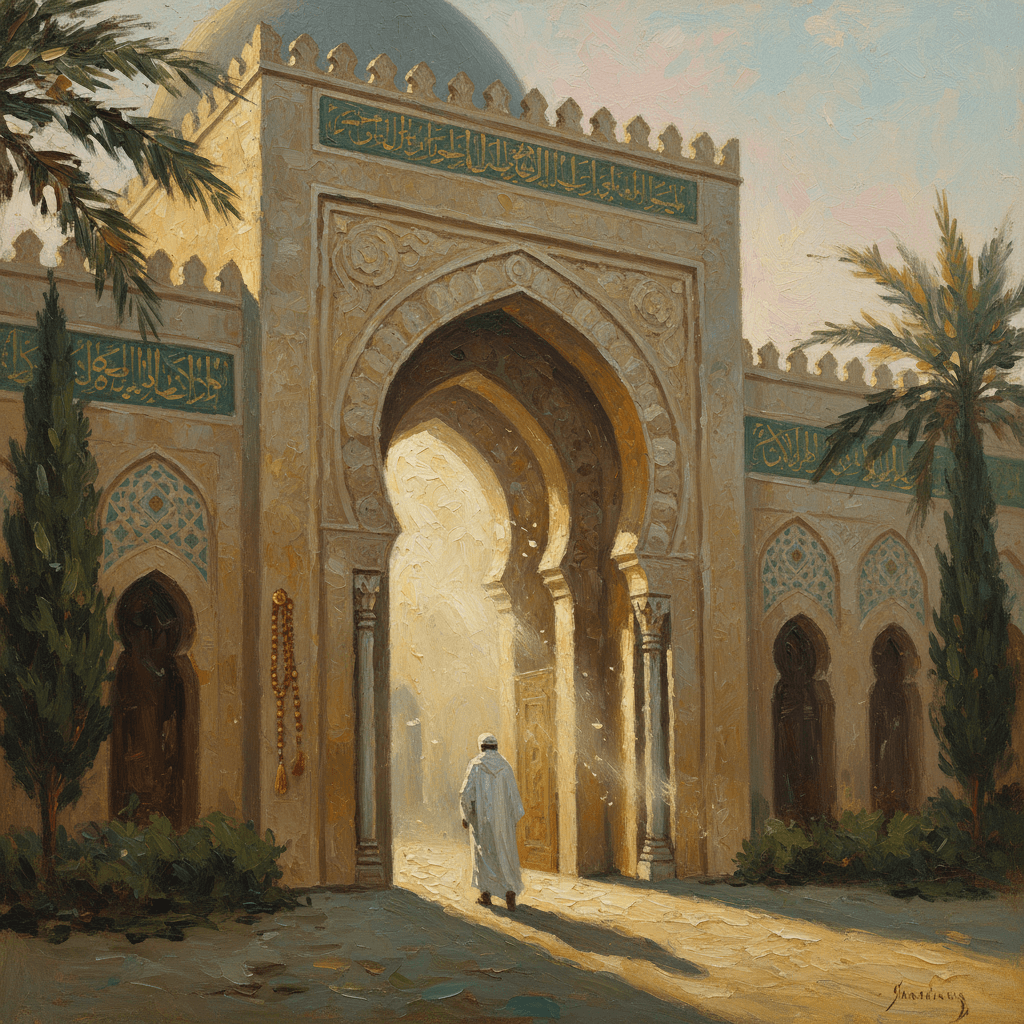
The imam says the final tasleem and the rows dissolve. Within thirty seconds, half the congregation is standing, gathering shoes, already thinking about lunch. The masjid empties the way it was filled — quickly.
This is the moment when most of the post-Jummah reward is left unclaimed.
The Prophet (peace be upon him) did not teach Jummah as a one-hour obligation sandwiched between two regular days. He taught it as the peak spiritual day of the week, with specific practices that begin the night before and continue until Maghrib. The post-prayer period is part of that architecture — and most of us skip it entirely.
The Duas After Jummah Prayer
Immediately after tasleem — istighfar and peace
أَسْتَغْفِرُ اللَّهَ ×٣
Astaghfirullah, Astaghfirullah, Astaghfirullah
"I seek Allah's forgiveness." (three times)
Then:
اللَّهُمَّ أَنْتَ السَّلَامُ وَمِنْكَ السَّلَامُ تَبَارَكْتَ يَا ذَا الْجَلَالِ وَالإِكْرَامِ
Allahumma antas-salam wa minkas-salam, tabarakta ya dhal jalali wal-ikram
"O Allah, You are Peace and from You comes peace. Blessed are You, O Possessor of majesty and honor." — (Muslim 591)
This is the standard post-salah opening used after every prayer. On Jummah, given the elevated state of the day, saying it with presence carries particular weight.
Ayat al-Kursi and closing surahs
After Jummah, recite:
- Ayat al-Kursi (Quran 2:255) — "Whoever recites it after every obligatory prayer, nothing prevents him from entering Jannah except death." (Nasa'i, authenticated)
- Surah Al-Ikhlas, Al-Falaq, An-Nas — three times each for protection
The post-Jummah sunnah prayers
The Prophet (peace be upon him) said: "Whoever prays Jummah, let him pray four rakah after it." (Muslim 881)
These four rakah are your post-Jummah sunnah. If you must leave the masjid quickly, pray two before leaving and two when you get home. Do not skip them entirely — they form part of Jummah's complete architecture.
The Story Behind Post-Prayer Duas
Ibn Abbas (may Allah be pleased with him) reported that he could tell when the Prophet had finished his obligatory prayer by hearing the raised voices in dhikr. (Bukhari 841) The transition from the structured prayer to dhikr was seamless and audible — not a quick exit.
In another narration, the Prophet said about Ayat al-Kursi after obligatory prayer: "Whoever recites it after every obligatory prayer, nothing prevents him from entering Paradise except death." This was the final act before leaving the prayer space.
What this tells us is that the Prophet understood the post-prayer moment as still sacred. The tasleem is not the end of the prayer experience — it is the transition to personal dhikr, gratitude, and request. On Jummah, this post-prayer window is elevated even further by the day's special status.
How to Build the Post-Jummah Practice
The post-Jummah routine is one of the highest-value, lowest-effort practices in Islamic worship. Five minutes after the prayer yields rewards that most people simply leave behind when they rush out.
Stay in your spot for five minutes: Make a personal rule — after Jummah tasleem, you do not get up for five minutes. Say Astaghfirullah three times, the peace dua, Ayat al-Kursi, and the closing surahs. That is two minutes. Then two minutes of personal dua. Then stand for your sunnah.
Pray your four sunnah rakah: They can be prayed in the masjid or at home. The Prophet explicitly commanded them. If the masjid is clearing out and it feels awkward to stay, move to a corner and pray. The reward is too significant to skip.
Use the afternoon for the blessed hour: After Jummah, you have approximately two to three hours until Asr, and then the Asr-to-Maghrib window is the most likely blessed hour of the day. Do not fill that window with entertainment. Protect it for personal dua, even just 10-15 minutes between Asr and Maghrib.
Complete Surah Al-Kahf if you have not yet: If you did not read it in the morning, the post-Jummah afternoon is the time. The window is from Thursday Maghrib to Friday Maghrib. Many people find post-Jummah the natural time to complete this sunnah.
End the day with gratitude: Between Maghrib and Isha, reflect briefly on what you asked for this Friday — and what you already have that you tend to overlook. The Jummah that begins with preparation and ends with gratitude becomes the spiritual rhythm around which the whole week is oriented.
Complete the Full Jummah Experience Every Week
DeenBack helps you track your post-Jummah routine — sunnah prayers, dhikr, and the blessed hour — so nothing gets left on the table of the best day of the week.


Free download. Premium features available in-app.
Related Duas
Dua after salah: The full post-salah dhikr sequence — tasbeeh, Ayat al-Kursi, and personal dua — applies after every prayer and is particularly powerful after Jummah. See dua after salah for the complete routine.
Dua for Jummah: The broader Jummah practice — salawat, the blessed hour, Surah Al-Kahf — is covered in dua for Jummah.
Dua for acceptance of deeds: Jummah is a natural time to ask Allah to accept the week's acts of worship. The dua for acceptance of deeds provides the authentic supplications for this intention.
Dua for leaving the masjid: When you do leave, say the exit dua. See dua for leaving the masjid for the complete supplication.
Common Questions
Can I do personal dua in Arabic if I am still learning?
Personal dua can be in any language. The post-prayer standard duas — Astaghfirullah, the peace dua, Ayat al-Kursi — are worth learning in Arabic because they come directly from the Prophet. For personal requests, pray in the language where your heart speaks most clearly.
What if I have to leave the masjid quickly for work?
Pray your sunnah at home as soon as you can. If even that is not possible, make the intention before leaving and say at least Astaghfirullah three times and Ayat al-Kursi on your way out. The intention to fulfill the sunnah and the partial fulfillment is far better than nothing.
Is there a difference between two and four sunnah rakah after Jummah?
Both are recorded from the Prophet and his Companions. The hadith in Muslim specifies four. If you pray at the masjid, four is the stronger practice. The minimum is two. Scholars generally consider the four rakah sunnah after Jummah to be one of the most confirmed post-prayer sunnahs.
Can I make dua for others after Jummah?
Absolutely. Making dua for other Muslims — family, the sick, the oppressed, the ummah — is one of the most rewarded forms of dua. The Prophet said: "A Muslim's dua for his brother in his absence is answered." (Muslim 2733) The post-Jummah window is an ideal time to intercede in dua for those who need it.
Closing
The Prophet (peace be upon him) described Friday as a day of worship — not just an hour of worship. The prayer is the center, but it is surrounded by practices that extend its effect throughout the day.
Most of us attend Jummah. Far fewer of us collect all that Jummah offers. The post-prayer period — five to fifteen minutes of dhikr, sunnah prayers, and personal dua — is where the rest of the barakah lives.
This Friday, stay in your spot after tasleem. Say the dhikr. Pray the sunnah. Then use the afternoon for what the Prophet called the most powerful prayer window of the week.
Never Leave Jummah Barakah on the Table Again
DeenBack helps you track your complete Friday worship routine — so every Jummah becomes the full spiritual reset it was always meant to be.
Free download. Premium features available in-app.
Frequently Asked Questions
What duas are said after Jummah prayer?
After the tasleem of Jummah, the standard post-salah duas apply: Astaghfirullah three times, Allahumma antas-salam wa minkas-salam, followed by Ayat al-Kursi, tasbeeh (33x SubhanAllah, 33x Alhamdulillah, 34x Allahu Akbar), and personal dua. The Prophet also taught specific surahs for protection after Jummah: reciting Surah Al-Ikhlas, Al-Falaq, and An-Nas three times each.
How many sunnah rakah are there after Jummah?
The Prophet (peace be upon him) said: Whoever prays Jummah, let him pray four rakah after it. (Muslim 881) Some narrations say two rakah if praying at home. The four rakah sunnah after Jummah is strongly recommended. If you pray at the masjid, pray four — or two at minimum, then two more when you get home.
Is it true that Surah Al-Kahf should be read on Friday?
Yes. The Prophet (peace be upon him) said: Whoever reads Surah Al-Kahf on the day of Jummah will have light that shines for him from this Friday to the next. (Al-Hakim, authenticated) It can be read before or after Jummah prayer — any time from Thursday Maghrib to Friday Maghrib is valid according to many scholars.
What is the best dua to make after Jummah?
There is no single prescribed dua specific to after Jummah. However, the time between Asr and Maghrib on Friday is the blessed hour when duas are most likely to be accepted. After Jummah, you have the afternoon ahead of you — use the Asr to Maghrib window for your most important personal dua of the week.
Should I rush out of the masjid after Jummah?
The habit of leaving quickly after tasleem means missing the post-salah duas, the sunnah prayers, and the peaceful state from just completing Jummah. Staying even 5 minutes after the prayer to make dhikr and dua captures a disproportionate amount of the day's barakah. The masjid on Friday afternoon — quiet, still — is a valuable place to be.