
- Published on
As-Samad Meaning: The Eternal Refuge — Allah's Name Explained
- Authors

- Name
- Ahmad
- Role
- Senior Marketing Manager, Islamic education • Deen Back
بِسْمِ اللهِ الرَّحْمٰنِ الرَّحِيْمِ
In the name of God, the Most Gracious, the Most Merciful.
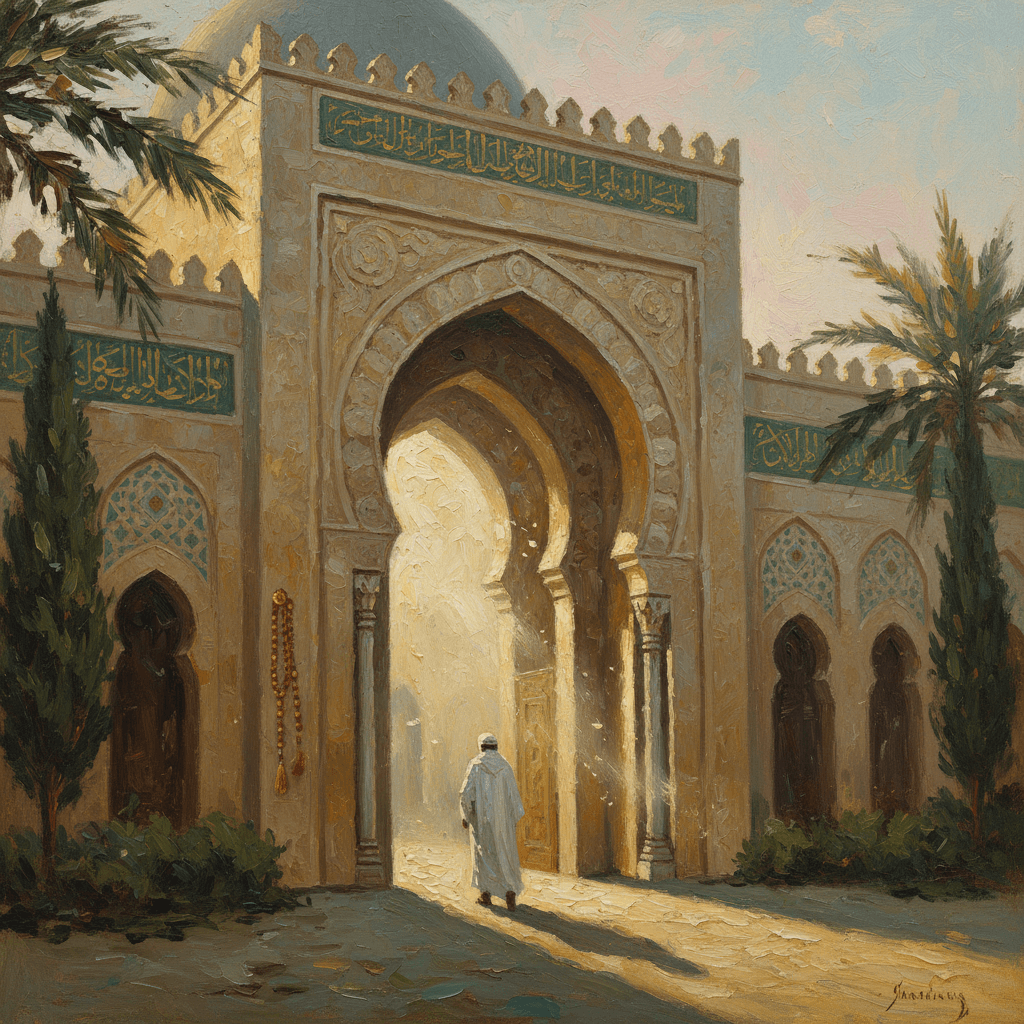
The Name You Recite Every Day Without Knowing Its Power
Every time you recite Surah Al-Ikhlas — after every salah, morning and evening, before sleep — you say:
اللَّهُ الصَّمَدُ
"Allahus-Samad." — "Allah, the Eternal Refuge."
Most people read it fluently, correctly, and at speed — without pausing on what it means. This article is about what it means, and why that matters more than you might expect.
What As-Samad Means — The Full Picture
As-Samad (الصمد) is one of the most profound names of Allah in the Quran. Scholars have given it multiple complementary definitions:
Ibn Abbas (may Allah be pleased with him): "The master whose mastery is complete. The noble one whose nobility is complete. The great one whose greatness is complete. The forbearing one whose forbearance is complete. He is Allah the Master."
Ibn Al-Qayyim: "The one upon whom creation is completely dependent for all their needs and desires."
Al-Qurtubi: "The one who is permanently sought — every being in creation turns to Him for its needs."
The Arabic root samada carries the meaning of "to intend" or "to direct oneself toward" — as in directing yourself toward someone for help. Samad is the one all direction flows toward. Every creature, in every need, whether it knows it or not, is oriented toward As-Samad.
This name appears in Surah Al-Ikhlas:
قُلْ هُوَ اللَّهُ أَحَدٌ اللَّهُ الصَّمَدُ لَمْ يَلِدْ وَلَمْ يُولَدْ وَلَمْ يَكُن لَّهُ كُفُوًا أَحَدٌ
"Say: He is Allah, Al-Ahad. Allah, As-Samad. He neither begets nor was born. And there is none comparable to Him." — (Surah Al-Ikhlas, 112:1-4)
The surah is structured as a complete description of divine nature: uniqueness (Al-Ahad), total dependency of creation on Allah (As-Samad), His transcendence of parenthood (not born, not gives birth), and His incomparability.
Why As-Samad Is Relevant to Your Daily Struggle
Think about the last time you felt desperate. Not intellectually concerned — genuinely desperate. Scrolling through your phone hoping a message arrives. Waiting for a result. Needing a person to say yes. Needing money to appear. Needing a body to heal.
Desperation is what happens when As-Samad gets replaced by created things in your emotional architecture. When you treat a person, a job, or a bank balance as though they are the source of what you need — when they are not.
The person can leave. The job can end. The bank balance can go to zero. But As-Samad is:
- Not created
- Not mortal
- Not limited
- Not indifferent to your need
- Not occasionally available
Every need you have ever had — He has been the actual source of every answer that came. The job was a vehicle. The person was a means. He is the Source.
Knowing this does not make the world's difficulties disappear. It changes what they do to you.
How to Practice As-Samad in Daily Life
Recite Surah Al-Ikhlas with reflection
When you say Allahus-Samad, pause briefly on Samad. Translate it in your mind: "Allah is the Eternal Refuge — the One I need, the One all things need." Do this for one recitation a day. Let the others be fluid; make one count fully.
Redirect need to As-Samad before turning to creation
Before asking a person for help, before checking your bank account, before googling a solution — make a brief dua to As-Samad first. This is not about avoiding practical action. It is about establishing who the real Source is before you engage the means.
اللَّهُمَّ إِنِّي أَسْأَلُكَ أَنْتَ الصَّمَدُ
"O Allah, I ask You — You are As-Samad."
Make this your opening when needs arise.
In moments of dependence on people, say "Ya Samad"
When you catch yourself desperate for someone's approval, for a person to respond, for circumstances to cooperate — say Ya Samad. Out loud if you can, silently if not. It interrupts the spiral by naming the real authority.
Pair As-Samad with morning and evening dhikr
The Prophet ﷺ said that reciting Surah Al-Ikhlas three times in the morning and evening (as part of the adhkar) earns the reward of reciting the whole Quran (Abu Dawud 5082). You are already recommended to recite it. Add the meaning.
Build a Daily Names of Allah Practice
Use DeenBack to track your dhikr — including Surah Al-Ikhlas and the names of Allah — and build the habit that transforms how you relate to need and dependence.


Free to download. A paid plan is required to use the app’s tools.
As-Samad and Tawakkul
The name As-Samad is the theological foundation of tawakkul — reliance on Allah.
Tawakkul is not passivity. The Prophet ﷺ tied his camel and then said "put your trust in Allah." He used every means available — and then released the outcome to As-Samad, who alone could determine it.
When you deeply believe As-Samad, tawakkul becomes natural rather than forced. You stop trying to control what you cannot control — not because you are giving up, but because you know the actual controller is trustworthy.
وَمَن يَتَوَكَّلْ عَلَى اللَّهِ فَهُوَ حَسْبُهُ إِنَّ اللَّهَ بَالِغُ أَمْرِهِ قَدْ جَعَلَ اللَّهُ لِكُلِّ شَيْءٍ قَدْرًا
"And whoever relies upon Allah — then He is sufficient for him. Indeed, Allah will accomplish His purpose. Allah has already set for everything a decreed extent." — (Surah At-Talaq, 65:3)
Signs of Progress
You know As-Samad is moving from your lips to your heart when:
- Dependence on people's responses decreases without you becoming cold or distant
- You make dua with less frantic energy and more quiet expectation
- When created means fail you, your first thought is "As-Samad will provide another way"
- Gratitude becomes more spontaneous — because you start seeing all good things as coming from one Source
- The need for constant reassurance from people begins to ease
Common Questions
Is As-Samad the same as saying Allah is self-sufficient? Self-sufficiency (Al-Ghani) is a related but separate concept. Al-Ghani means Allah needs nothing. As-Samad means everything needs Him. They work together: He needs nothing (Al-Ghani), and everything needs Him (As-Samad). One describes His independence; the other describes creation's dependence.
Can I call upon As-Samad specifically for financial needs? Yes — since provision (rizq) is one of the most fundamental needs of creation, As-Samad is particularly meaningful when making dua for provision. You might say: "Ya Samad, You are the source of all provision. I need provision from You." See also Names of Allah for rizq.
How many times should I recite Surah Al-Ikhlas for its full reward? The Prophet ﷺ said reciting it three times equals one full Quran recitation in reward (Sahih al-Bukhari 5013). The three times in morning and evening adhkar is the standard recommendation. Beyond that, there is no upper limit — recite as much as your heart draws you to.
Does understanding As-Samad change how I make dua? Profoundly. When you know As-Samad is the source of everything you need, dua shifts from desperate asking to confident turning. You still feel the urgency of your need — but you know you are turning to the One who actually can respond, not just hoping someone helpful might be listening.
Closing
Somewhere right now, you need something. Maybe you know exactly what it is. Maybe it is just a vague sense of lack.
Whatever it is — the address to send that need to is As-Samad.
Not as a last resort. Not after you have tried everything else. As the first address, because He is the actual source of the answer whether it comes through a person, a circumstance, or a direct change of heart.
Say it now: Allahus-Samad. Allah is the Eternal Refuge. Turn to Him.
Related: 99 Names of Allah — Ya Hayyu Ya Qayyum benefits — Asma ul Husna benefits — How to make dua that gets accepted
Connect With Allah Through His Names Every Day
DeenBack tracks your daily dhikr and names of Allah practice — turning head knowledge into heart transformation, one day at a time.
Free to download. A paid plan is required to use the app’s tools.
Frequently Asked Questions
What does As-Samad mean in Islam?
As-Samad (الصمد) is one of Allah's 99 names, meaning 'The Eternal Refuge' or 'The Self-Sufficient Master.' It describes Allah as the One upon whom all of creation depends for every need, while He depends on nothing and no one. Ibn Abbas (may Allah be pleased with him) defined As-Samad as 'the master whose mastery is complete' — He to whom all things return in need.
Where does As-Samad appear in the Quran?
As-Samad appears in Surah Al-Ikhlas (112:2): 'Allahus-Samad' — 'Allah, the Eternal Refuge.' The surah is considered equal to a third of the Quran in weight and meaning. As-Samad is its second verse, following the affirmation of Allah's oneness (Al-Ahad) in verse one. Together they describe Allah's nature: He is uniquely One and the total Source of everything.
How does As-Samad differ from other divine names like Al-Ghani?
Al-Ghani means 'The Self-Sufficient' — Allah needs nothing. As-Samad goes further: not only does Allah need nothing from creation, but everything in creation needs everything from Him. Al-Ghani describes His independence; As-Samad describes His being the ultimate destination of all need. Everything you have ever needed, every breath you have drawn, every answer to every dua — all of it flows through As-Samad.
How do I use the name As-Samad in my worship and dua?
Begin dua with 'Ya Samad' when you feel dependent on people or circumstances. Recite Surah Al-Ikhlas (which contains As-Samad) three times morning and evening. When you feel lack — of money, health, love, answers — pause and name what you need, then address it to As-Samad: 'Ya Samad, You are the one I need. Everything I am looking for is with You.' Let this reorient you away from desperation toward created things.
What is the spiritual benefit of reflecting on As-Samad?
Deeply internalising As-Samad produces emotional freedom: you stop being desperate for people's approval, resources, or circumstances to go a certain way — because you know that everything those things represent is actually in Allah's hands. It is the cure for a specific kind of nafs-disease: excessive dependence on the dunya. When you know that Allah is As-Samad, the created world loses its grip on your emotional life.