
- Published on
Al-Barr Meaning — The Source of All Goodness in Your Life
- Authors

- Name
- Ahmad
- Role
- Senior Marketing Manager, Islamic education • Deen Back
بِسْمِ اللهِ الرَّحْمٰنِ الرَّحِيْمِ
In the name of God, the Most Gracious, the Most Merciful.
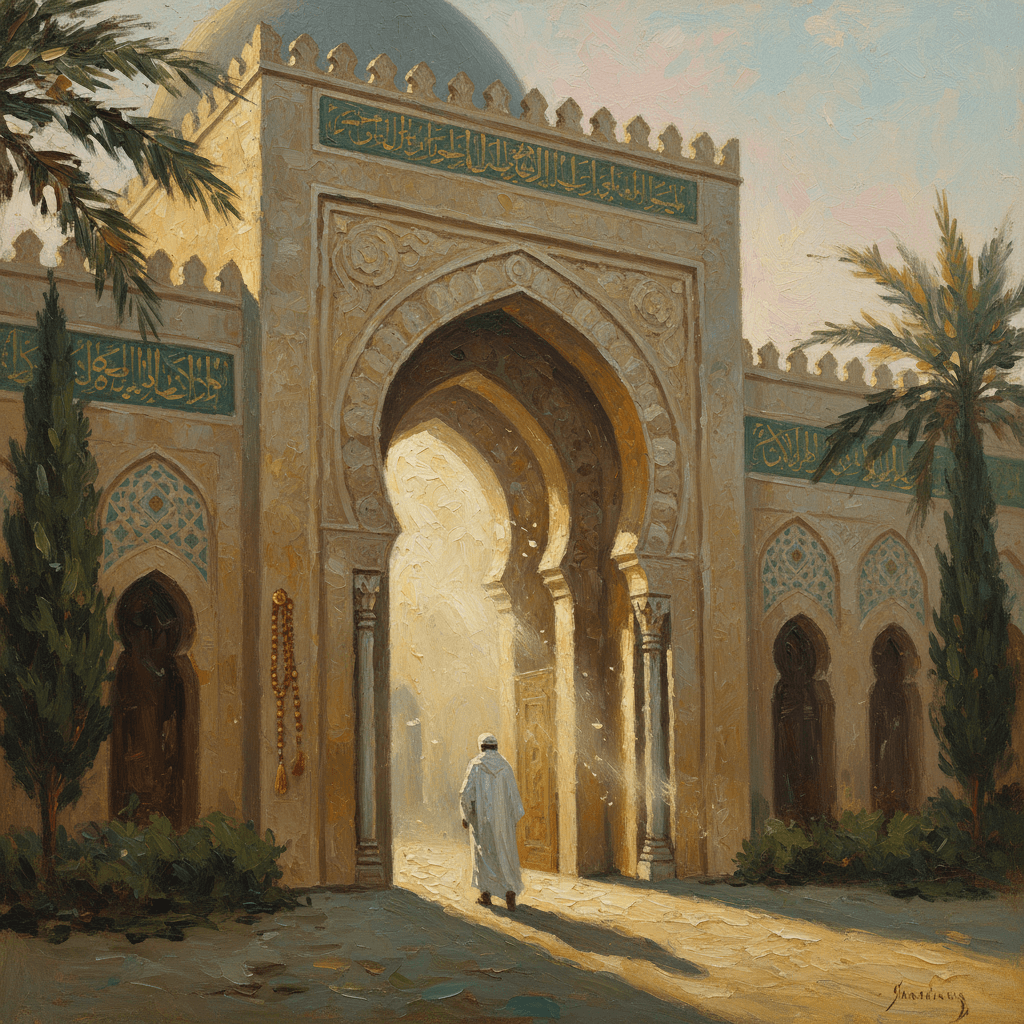
Have you ever had a moment where everything just... worked out? You got the job. The test result came back clear. Someone helped you at exactly the right time. You could call it luck. You could call it coincidence.
Or you could call it by its real name: the action of Al-Barr.
One of the most overlooked names in the 99 names of Allah is this one — Al-Barr (الْبَرُّ), The Source of All Goodness. Not just good sometimes. Not good when you deserve it. Good as a fundamental, unceasing attribute.
Understanding this name changes how you receive every blessing in your life.
What Al-Barr Actually Means
الْبَرُّ (Al-Barr) comes from the Arabic root b-r-r (ب-ر-ر), which carries the meanings of vast goodness, righteousness, truthfulness, and pure kindness. The same root gives us al-birr (البر) — the broad, comprehensive concept of righteousness that encompasses every act of sincere worship and good character.
When this root is applied to Allah, it becomes absolute. He is not merely good — He is The Good, the very origin from which all goodness in existence flows.
Think of it this way: when you experience goodness — whether from a stranger, a friend, a circumstance — that goodness has a source. Al-Barr is that source. Every kindness in creation is, at its root, a manifestation of this name.
Allah pairs this name with another in the Quran: "Indeed, it is He who is Al-Barr (The Benign), Al-Raheem (The Merciful)" (Surah Al-Tur, 52:28).
The people saying this are the people of Jannah, looking back on their lives. They are recognizing that all the goodness they ever experienced — every answered dua, every protection they received, every ease after hardship — all of it came from Al-Barr.
Why This Name Hits Differently
There is a subtle trap many Muslims fall into. We thank Allah when things go well, but we quietly take credit for the goodness in our lives. We worked hard, so we got the job. We were careful, so we avoided the accident. We made smart choices, so our family is healthy.
Al-Barr dismantles that thinking entirely.
Allah does not just enable good outcomes. He is the actual source of goodness itself. Your hard work was given to you by Al-Barr. The wisdom to make smart choices came from Al-Barr. The body that stayed healthy did so because Al-Barr willed it.
Ibn al-Qayyim wrote that recognizing Allah as the source of all good is one of the foundations of gratitude (shukr). Without it, we thank the instrument and forget the Giver. We thank our doctor, our parents, our luck — and somewhere in that accounting, Allah becomes an afterthought.
كُلُّ نِعْمَةٍ فِي الدُّنْيَا وَالآخِرَةِ فَهِيَ مِنَ اللَّهِ
"Every blessing in this world and the next is from Allah." — (Based on Surah An-Nahl, 16:53)
The Three Dimensions of Goodness
Al-Barr's goodness operates in three distinct ways:
1. Goodness in what He gives Everything Allah sends — blessings, tests, ease, difficulty — is inherently good for the believer. This is hard to accept when life is painful, but it is the logical conclusion of believing in Al-Barr. If He is the Source of Good, then whatever He decrees must contain goodness, even when we cannot see it yet.
2. Goodness in how He gives Al-Barr does not give grudgingly. He gives abundantly, generously, continuously. The Prophet (peace be upon him) said: "Allah's Hand is full; spending does not decrease it in the slightest. It overflows day and night." (Sahih Bukhari 7411). That is the character of Al-Barr.
3. Goodness in His acceptance Al-Barr accepts small deeds. He multiplies them. A person who turns back to Allah with a sincere heart — even after years of neglect — meets Al-Barr ready to pour blessings. This connects to another name: Al-Ghaffar, who forgives abundantly, working alongside Al-Barr, who gives goodness abundantly.
Why Modern Muslims Struggle to Feel This
We live in a culture that celebrates self-sufficiency. "You built this." "You earned this." "You survived this." Social media makes it easy to document your achievements and attribute them entirely to your own effort.
The nafs (lower self) loves this framing. It feeds the ego. It makes you feel independent of Allah rather than dependent on Him.
But here is the paradox: the more you internalize Al-Barr's ownership of all goodness, the less anxious you become. Because if the Source of All Good is on your side, what do you really have to fear?
This is the emotional shift that reflection on Al-Barr produces. Not passivity — you still work hard, plan carefully, make good decisions. But underneath all that effort is a deep calm: you are not the source of your own wellbeing. Al-Barr is.
Track Your Gratitude to Al-Barr Daily
Use DeenBack to build a daily habit of counting your blessings — not as a generic exercise, but as an act of worship directed at Al-Barr, the Source of All Good in your life.


Free download. Premium features available in-app.
How to Practice Al-Barr in Daily Life
Name the good things out loud. When something good happens — however small — say: "This is from Al-Barr." Name it. Credit it correctly. Over time, this retrains the nafs away from attributing goodness to coincidence or personal achievement.
Use this name in your dua. Call on Allah as Al-Barr when asking for good things: "Ya Barr, bless my work. Ya Barr, heal my family. Ya Barr, make this decision good for my deen and my dunya."
Pair it with Al-Raheem. The Quran joins these names for a reason. Al-Barr's goodness is not cold or transactional — it comes with Al-Raheem's warmth and care. When you feel that the goodness you are receiving feels personal and merciful, that is both names at work.
Let it reshape your response to difficulty. When hardship hits, remind yourself: "I believe in Al-Barr. If He has allowed this, goodness is somewhere inside it — even if I cannot see it yet." This is not toxic positivity. It is informed faith.
Signs That This Name Is Working in Your Heart
You stop resenting other people's blessings — because you know Al-Barr has enough goodness for everyone. You stop clinging anxiously to your blessings — because the Source never runs out. You start saying alhamdulillah before the dua is answered — because you trust the Giver, not just the gift.
And slowly, you become more like the people of Surah Al-Tur: the ones who, looking back, can say with full conviction — every good thing in my life came from You, Ya Barr.
Common Questions
Is Al-Barr the same as Ar-Rahman? They are related but distinct. Ar-Rahman describes the vast, all-encompassing mercy of Allah that covers all creation. Al-Barr describes the nature and source of the goodness He gives — it is all pure, all wholesome, all ultimately beneficial. You could say Ar-Rahman describes the quantity; Al-Barr describes the quality.
Can the word barr describe a human? Yes. We call children who are dutiful to their parents barr (singular) or abrar (plural). Surah Al-Infitar (82:13) speaks of the abrar — the righteous ones — being in bliss. So being barr is a quality humans can work toward, but Al-Barr as an attribute belongs exclusively to Allah.
How is this name connected to silat ur-rahm (maintaining family ties)? Al-birr — the same root as Al-Barr — is the core of righteous character, which includes honoring family ties, being truthful, and treating people with kindness. When you practice al-birr in your relationships, you are reflecting a tiny ray of what Al-Barr means at the divine level.
Does Al-Barr mean Allah only gives good things, never hardship? No — and this is important. Al-Barr's goodness encompasses what He wills, which includes trials. What the name means is that everything from Allah ultimately contains goodness, even when it does not feel that way immediately. This is consistent with the hadith: "Amazing is the affair of the believer... if good comes his way he is grateful, and if hardship comes his way he is patient, and both are good for him." (Sahih Muslim 2999)
Build the Habit of Seeing Allah's Goodness Every Day
DeenBack helps you track your daily acts of worship and gratitude — so that recognizing Al-Barr becomes not just a thought, but a consistent practice that reshapes how you see your whole life.
Free download. Premium features available in-app.
Frequently Asked Questions
What does Al-Barr mean in Arabic?
Al-Barr (الْبَرُّ) means The Truly Good, The Source of All Goodness. It comes from the root b-r-r, which carries the meaning of vast goodness, righteousness, and kindness. This name describes Allah as the One from whom all goodness originates and flows — not occasionally, but as a constant, essential attribute.
Where does Al-Barr appear in the Quran?
Al-Barr appears in Surah Al-Tur (52:28): 'Indeed, we used to supplicate Him before. Indeed, it is He who is Al-Barr (The Benign), Al-Raheem (The Merciful).' This verse is the speech of the people of Jannah, acknowledging that every good thing they received in this life and the next came from Allah alone.
What is the difference between Al-Barr and Al-Karim?
Both names describe Allah's generosity, but from different angles. Al-Karim (The Generous) describes the abundance and manner of Allah's giving — He gives freely without being asked. Al-Barr (The Good) emphasizes the pure, wholesome nature of what Allah gives — everything from Him is inherently good, beneficial, and free of harm.
How can I use Al-Barr in my daily life?
Reflect on Al-Barr when you are tempted to see your blessings as coincidences or as products of your own effort alone. Every good thing — your health, your family, the food on your table, even the ability to make dua — traces back to Al-Barr. This name is an antidote to ingratitude and a cure for anxiety about the future.
Can I make dua using the name Al-Barr?
Yes. The Prophet (peace be upon him) taught us to call on Allah by His names (Surah Al-A'raf, 7:180). You can say: 'Ya Barr, You are the Source of all that is good. Fill my life with goodness, guide me to what is good, and protect me from what harms me.'