
- Published on
Al-Awwal Meaning: The First — Understanding This Name of Allah
- Authors

- Name
- Ahmad
- Role
- Senior Marketing Manager, Islamic education • Deen Back
بِسْمِ اللهِ الرَّحْمٰنِ الرَّحِيْمِ
In the name of God, the Most Gracious, the Most Merciful.
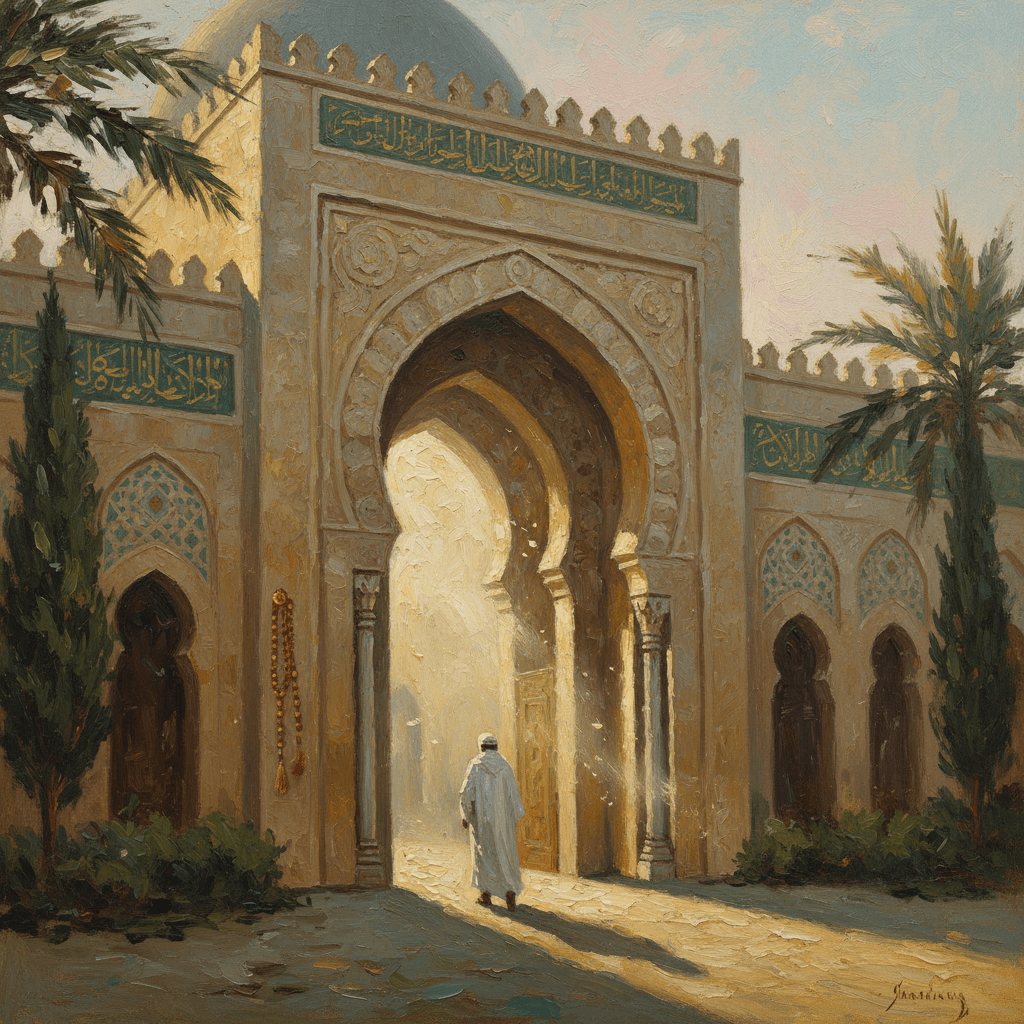
There is something quietly profound about a name that means simply: The First.
Not first in a race, or first among equals. First before anything existed. First when there was no "before" to speak of. Allah — Al-Awwal — was present when there was nothing else to be present alongside Him.
This is one of those Names of Allah that, if you sit with it long enough, starts to reorganise how you see everything.
What Al-Awwal Means
الأول — Al-Awwal — is the definitive article form of awwal, meaning first or beginning. Applied to Allah, it means He is The First in an absolute sense: the One before whom nothing existed, the One whose existence has no starting point.
The clearest Quranic verse about this Name is in Surah Al-Hadid:
هُوَ الْأَوَّلُ وَالْآخِرُ وَالظَّاهِرُ وَالْبَاطِنُ وَهُوَ بِكُلِّ شَيْءٍ عَلِيمٌ
Huwa al-awwalu wal-akhiru waz-zahiru wal-batinu wa huwa bikulli shay'in 'alim.
"He is Al-Awwal and Al-Akhir, Al-Zahir and Al-Batin, and He is Knowing of all things." — (Quran 57:3)
These four Names are always given together because they define Allah's relationship to existence from every direction:
- Al-Awwal: He was before everything
- Al-Akhir: He will remain after everything
- Al-Zahir: He is evident through His creation
- Al-Batin: He is beyond our full comprehension
Together, they describe a being whose existence encompasses all of time — from before the beginning to after the end.
The Theological Weight of "The First"
When we say Allah is Al-Awwal, we are making a specific claim: there is no moment in which He began. Philosophers and theologians sometimes ask, "Who created God?" The answer lies in this Name. Al-Awwal does not mean "the first thing that existed." It means the One who exists without being caused by anything prior.
Everything else — every atom, every moment, every galaxy — was brought into existence from nothing by the One who was already there. This is not a small idea. It means that nothing you experience, no problem you face, and no decision you make is occurring outside the awareness of the One who was First.
The Prophet ﷺ himself used these four Names in his nightly dua:
"O Allah, Lord of the seven heavens and what they shade, Lord of the earths and what they carry... You are Al-Awwal, and nothing precedes You. You are Al-Akhir, and nothing is after You. You are Al-Zahir, and nothing is above You. You are Al-Batin, and nothing is beneath You." — (Sahih Muslim 2713)
Why Modern Muslims Need This Name
Here is the honest reality. We live in a world that constantly tells us what to put first. Notifications want to be first. Deadlines want to be first. Your nafs — your lower self — wants its own comfort to be first.
The Name Al-Awwal is a direct challenge to this disorder. If Allah was first before existence itself, then placing anything else first in your life is a fundamental confusion about the nature of reality.
This is not guilt-tripping. It is a genuine reorientation. When the nafs makes excuses — "I'll pray after this," "I'll start being consistent next week," "this feels too hard right now" — the Name Al-Awwal asks you a simple question: Who was here first?
The One who was first deserves to be first in your day, first in your decisions, and first in what you build your life around. That is what ibadah at its root means: organising your entire existence around the One who was, is, and always will be.
Put Allah First — Build the Habit
Starting your morning with dhikr, Quran, and dua before anything else is how you practically put Al-Awwal first. The DeenBack app helps you build that morning routine and track it daily.


Free download. Premium features available in-app.
Al-Awwal in Daily Practice
Understanding a Name of Allah is only the beginning. The real question is how it shapes how you live.
Invoking Al-Awwal at the Start of Things
One of the most natural uses of Al-Awwal is in new beginnings. Starting a new job? Beginning a project? Entering a new phase of life? Invoke Allah by this Name:
يَا أَوَّلُ، بِاسْمِكَ أَبْدَأُ
Ya Awwal, bismika abda'u.
"O First, in Your Name I begin."
This is not a prescribed formula, but a living application of the Name. You are acknowledging that He was first before this beginning, and you are inviting His blessing into it.
Using the Prophet's Nightly Dua
The dua from Sahih Muslim 2713 (above) can be part of your evening remembrance. Saying it before sleep is an authentic practice from the Prophet himself. It is a beautiful way to end the day — acknowledging that Allah is the First, the Last, the Apparent, and the Hidden — that everything you have experienced that day was within His encompassing knowledge and care.
Pair this with the 99 Names of Allah overview and the benefits of reciting the 99 Names to build a deeper daily practice.
Reflecting on What Was "First" in Your Day
A useful evening habit: ask yourself what was actually first in your day. Not what you intended to put first, but what you actually gave your first attention to. Your phone? A task? Your anxieties?
This is not a practice of shame — it is a practice of honest awareness. The nafs will always try to slip something else into first place without you noticing. The reflection keeps you aligned.
Al-Awwal and Al-Akhir Together
These two Names are inseparable. He is The First and The Last — meaning He encompasses all of time. This pairing has a profound comfort for the person going through difficulty.
Whatever you are facing right now exists somewhere in the middle of the story. Al-Awwal was there before it started. Al-Akhir will be there after it ends. Nothing in your life is outside those two bookends. You are held in a timeframe that Allah authored entirely.
When anxiety about the future or regret about the past pulls at you, the pairing of Al-Awwal and Al-Akhir is a reminder: He was there before this, and He will be there after. You are not navigating alone.
Common Questions
Is Al-Awwal one of the 99 Names of Allah?
Yes. Al-Awwal is one of the authentic Names of Allah found explicitly in the Quran (57:3) and in authentic hadith. It is listed in collections of the 99 Names (Asma ul-Husna), and is one of the four Names mentioned together in Surah Al-Hadid.
Can I ask Allah using the Name Al-Awwal?
Absolutely. The Quran tells us: "To Allah belong the Most Beautiful Names, so call upon Him by them." (7:180) Addressing Allah as Ya Awwal or beginning a dua with this Name is a sound and meaningful practice.
How is Al-Awwal different from saying Allah has no beginning?
The statement "Allah has no beginning" is a theological description of His nature. The Name Al-Awwal is a relational Name — it describes His position relative to everything else: before all of it. Both convey the same truth but from different angles.
Should I memorise all 99 Names?
The Prophet ﷺ said: "Allah has 99 Names; whoever ahsaha (counts/comprehends/lives by them) will enter Jannah." (Bukhari 2736) Most scholars interpret ahsaha as understanding and acting on them, not merely memorising the list. For a practical approach, see how to memorize the 99 Names of Allah.
Closing
Al-Awwal is not an abstract theological concept. It is a Name you can use every morning to reorder your priorities, every evening to find comfort in what passed, and in every new beginning to invite the blessing of the One who was there first.
He was First before you existed. He will be Last after you return to Him. Everything in between — every struggle, every victory, every unanswered question — is held in those two hands.
Start your day with His Name on your lips. Let Al-Awwal be first.
Make Dhikr of Allah Your Morning First
The DeenBack app tracks your morning dhikr and dua streaks so that Allah comes first in your day — not just in intention, but in practice. Build the habit that transforms your whole day.
Free download. Premium features available in-app.
Frequently Asked Questions
What does Al-Awwal mean?
Al-Awwal (الأول) means The First — the One who existed before everything else, with no beginning. Unlike created things that have a starting point, Allah has always been. There was never a time when He did not exist. This Name affirms His absolute priority over all of creation.
Where does Al-Awwal appear in the Quran?
Al-Awwal appears in Surah Al-Hadid (57:3): 'He is Al-Awwal and Al-Akhir (The First and The Last), Al-Zahir and Al-Batin (The Manifest and The Hidden), and He is Knowing of all things.' These four Names are always mentioned together and form a complete description of Allah's relationship to time and existence.
What is the difference between Al-Awwal and Al-Qadeem?
Both names relate to Allah's eternity, but Al-Awwal is a Quranic name while Al-Qadeem (The Ancient/Pre-Eternal) is a theological description used by scholars. Al-Awwal specifically means first in sequence — that nothing preceded Him. Al-Qadeem emphasizes that His existence has no beginning or origin.
How should knowing Al-Awwal change my daily life?
Understanding Al-Awwal teaches you to put Allah first — first in the morning, first in decisions, first in your priorities. If He was first before everything, He should be first in everything. It also gives you comfort: the One who was there before creation knows exactly what you need and what is coming.
Can I use Al-Awwal in my dua?
Yes. The Prophet ﷺ used the four Names from Surah Al-Hadid 57:3 directly in dua before sleep. You can call upon Allah by this Name when asking for blessings in beginnings — a new project, a new relationship, a new stage of life. It is a powerful way to invite Allah into every fresh start.