
- Published on
Al-Hafiz Meaning: The Guardian Name of Allah and What It Means for You
- Authors

- Name
- Ahmad
- Role
- Senior Marketing Manager, Islamic education • Deen Back
بِسْمِ اللهِ الرَّحْمٰنِ الرَّحِيْمِ
In the name of God, the Most Gracious, the Most Merciful.
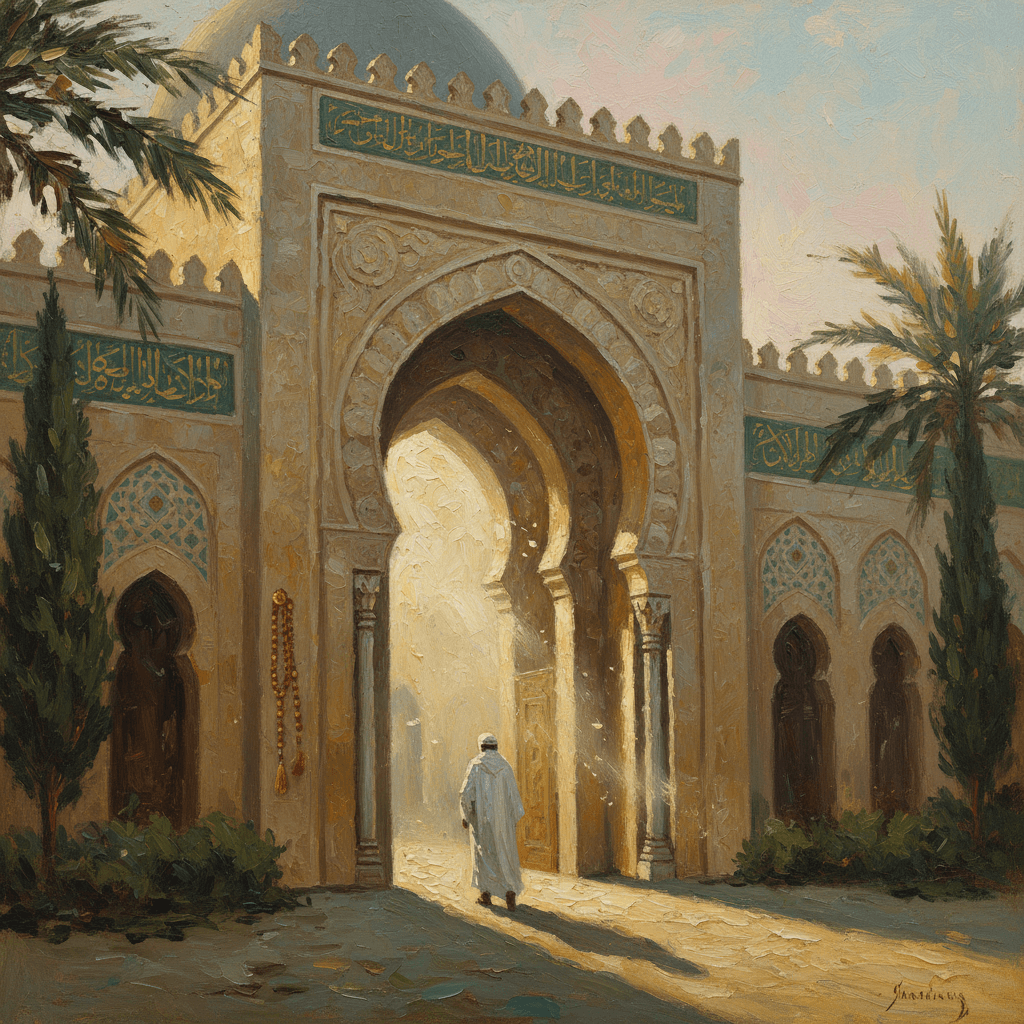
There are moments when you realize that no amount of planning, no lock on the door, no insurance policy, and no person you know can guarantee your safety. The world is too large, too unpredictable, and too out of your control for human protection to be final.
If that realization produces anxiety, you are relating to your safety incorrectly. If it produces peace, you have encountered Al-Hafiz — الحفيظ — the name of Allah that means He is the Preserver, the Guardian, the One who misses absolutely nothing.
What Al-Hafiz Really Means
Al-Hafiz comes from the Arabic root h-f-z (ح ف ظ), which carries the meaning of guarding, protecting, preserving, and keeping in memory. It is the same root as hifz — the memorization of the Quran — and hafiz — the title given to one who has memorized it.
Applied to Allah, it means He:
- Preserves all things from decay or loss without His permission
- Records every deed — no action, however small, is missed
- Guards His servants who seek His protection
- Maintains the order of the universe — the sun, moon, and stars are under His hifz
Allah says in the Quran: "Verily, We have sent down the Reminder, and We will surely preserve it." (Surah Al-Hijr, 15:9) — the Quran itself is protected by Al-Hafiz.
Prophet Yaqub رضي الله عنه, when asked to send his son Binyamin to Egypt, said:
فَاللَّهُ خَيْرٌ حَافِظًا وَهُوَ أَرْحَمُ الرَّاحِمِينَ
Fallahu khayrun hafizaw wa huwa arhamur-rahimeen
"Allah is the best of guardians, and He is the Most Merciful of those who show mercy."
— (Quran, Surah Yusuf, 12:64)
This was not a resignation. It was the trust of a man who had lost one son already and was being asked to risk another. He was not naive. He was anchored in who Al-Hafiz is.
Why Modern Muslims Lose This Anchor
We live in a risk-aware, threat-conscious world. Notifications about danger. News of violence. Economic uncertainty. The nafs (lower self) thrives in environments of perceived threat — it gives the ego the starring role in managing danger, rather than surrendering that role to Allah.
The result is that many Muslims know Al-Hafiz as a name they recite, but not as a reality they live from. You check your locks and feel safe. You buy insurance and feel protected. These are sensible actions — but if the feeling of security comes from the lock and not from Al-Hafiz, your heart has displaced the source.
Tawakkul (trust in Allah) is not about removing the lock. It is about knowing, as you turn the key, that the actual protection comes from somewhere the lock cannot reach.
How to Live Al-Hafiz in Daily Life
Invoke the name specifically for protection. When you leave the house, travel, or face a threatening situation, say:
بِسْمِ اللهِ تَوَكَّلْتُ عَلَى اللهِ، لَا حَوْلَ وَلَا قُوَّةَ إِلَّا بِاللهِ
Bismillahi tawakkaltu alallah, la hawla wala quwwata illa billah
"In the name of Allah, I place my trust in Allah. There is no power and no strength except through Allah."
— (Abu Dawud 5095 — sahih)
The Prophet ﷺ taught that whoever says this when leaving their home is told: "You are guided, protected, and shielded." Al-Hafiz is the one doing the protecting.
Recite Ayatul Kursi after every obligatory prayer. The Prophet ﷺ said: "Whoever recites Ayatul Kursi after every obligatory prayer, nothing stands between them and Paradise except death." (Nasai, authenticated by Ibn Hibban) Ayatul Kursi describes Al-Hafiz directly: "He knows what is before them and what will be after them, and they cannot encompass a thing of His knowledge... and He feels no fatigue in guarding them." (2:255)
When you are anxious about a person or situation you cannot control, name what you cannot protect and place it with Al-Hafiz. "Ya Hafiz, I cannot protect my child from what I cannot see. You see everything. I hand this to You." This is not passivity — it is the proper relationship between a servant and their Guardian.
Connect it to accountability. Al-Hafiz preserves not just what you love, but everything you do. The angels record your deeds. Al-Hafiz misses nothing. This is not meant to produce fear but awareness — the awareness that shapes behavior. When the nafs tempts you toward something wrong, Al-Hafiz knowing is often enough of a pause.
Build Daily Protection Habits With DeenBack
DeenBack tracks your morning adhkar and Ayatul Kursi habits — the daily acts of placing yourself under Al-Hafiz's protection, consistently.


Free download. Premium features available in-app.
Signs of Progress in Knowing Al-Hafiz
You are growing in your relationship with this name when:
- Unexpected good news does not make you paranoid — you receive it as from Al-Hafiz, not luck
- You take precautions without making them the source of your security
- You can pray for others' protection and feel that the prayer is being received
- Waswas (obsessive worry) over unlikely dangers loses its grip — because Al-Hafiz is already handling it
Related Names and Practices
Al-Hafiz is connected to several other names in the asma ul husna:
- Al-Wali meaning — the Protecting Friend, a close companion to Al-Hafiz
- Al-Muhaymin meaning — the Guardian over faith itself
- 99 names of Allah — explore the full set
- Dua for protection — practical supplications that invoke Allah's guardianship
Common Questions
If Al-Hafiz protects us, why do bad things happen? Preservation does not mean immunity from difficulty. Al-Hafiz protects the things that matter most — your faith, the record of your deeds, your ultimate destination — even while allowing tests that are part of your growth. Some things He protects from; some things He protects you through.
Should I stop taking safety precautions because Al-Hafiz is the real protector? No. The Prophet ﷺ famously said to a man who left his camel untied: "Tie it up, then put your trust in Allah." (Tirmidhi 2517) Taking worldly means is the Sunnah. Relying on them as the ultimate protector is the mistake.
Can I name my child Al-Hafiz? Naming a child with a Divine name directly (e.g., just "Al-Hafiz") is not appropriate, as it is an exclusive attribute of Allah. However, "Abdul-Hafiz" (servant of the Preserver) is a beautiful and valid name.
The Peace That Comes From Knowing the Guardian
The paradox of Al-Hafiz is that when you truly know Allah by this name, your anxiety about protection decreases. Not because the threats disappear, but because you realize who is actually in charge of what gets through to you.
Prophet Shuayb ﷺ told his people: "My Lord is Guardian over all things." (Hud, 11:57) He said this while being rejected and threatened. It was not denial of the threat — it was clarity about who was really in charge.
You are already under the watch of Al-Hafiz. You have been since before you were born. Everything that has reached you has passed through His knowledge and permission. And everything He has guarded from you has been kept away for reasons within His wisdom.
That is not a small comfort. That is the most comprehensive protection that exists.
Know Allah's Names — Live Differently
DeenBack helps you build the daily dhikr and Quran habits that take Allah's names from what you know to how you actually live. Start your streak today.
Free download. Premium features available in-app.
Frequently Asked Questions
What does Al-Hafiz mean in Islam?
Al-Hafiz (الحفيظ) means the Preserver, the Guardian, the All-Protecting. It refers to Allah's attribute of preserving and protecting all things — from the record of every deed to the safety of His servants.
Which verse of the Quran mentions Al-Hafiz?
Al-Hafiz appears in several places. Prophet Shuayb said: 'My Lord is Guardian over all things' (Hud, 11:57). Prophet Yusuf's father said: 'Allah is the best guardian' (Yusuf, 12:64). The name also appears in Surah Al-Infitar (82:10-12) regarding the guardian angels recording our deeds.
How do I use the name Al-Hafiz in dua?
You can say: 'Ya Hafiz, ihfazni' — O Guardian, protect me. Or invoke it in context: 'Ya Hafiz, ihfaz dinee wa ahlee wa maalee' — O Preserver, preserve my religion, my family, and my wealth. Use it especially when you feel threatened or vulnerable.
What is the difference between Al-Hafiz and Al-Wali?
Al-Wali (the Protecting Friend and Guardian) emphasizes Allah's close, loving guardianship and friendship. Al-Hafiz emphasizes His role as the Preserver and Record-Keeper — the One who misses nothing and guards everything. They are complementary.
Is there a specific dhikr for Al-Hafiz?
Repeating 'Ya Hafiz' in dhikr is a recognized practice for seeking protection. Some scholars also recommend Ayatul Kursi, which describes Allah's guardianship over the heavens and earth, as the supreme dhikr for protection.